25.2 C
Los Angeles
Thursday, October 8, 2026

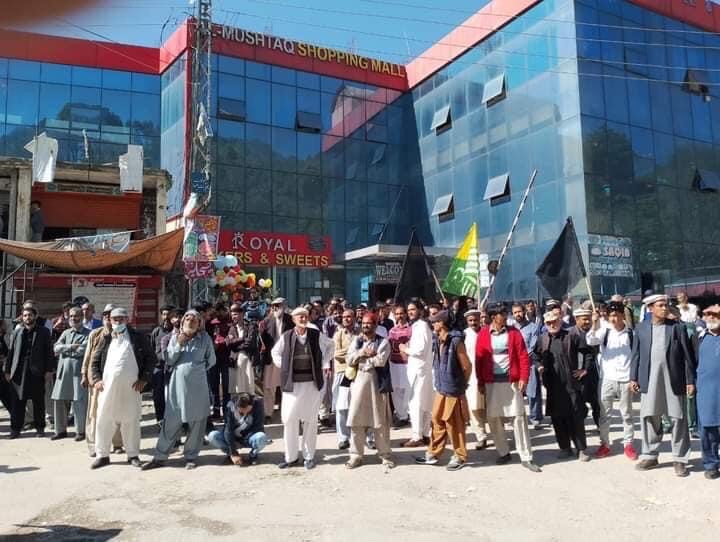
One Killed in Qallan Shooting as Shutdown Eases in Major Azad Kashmir Cities

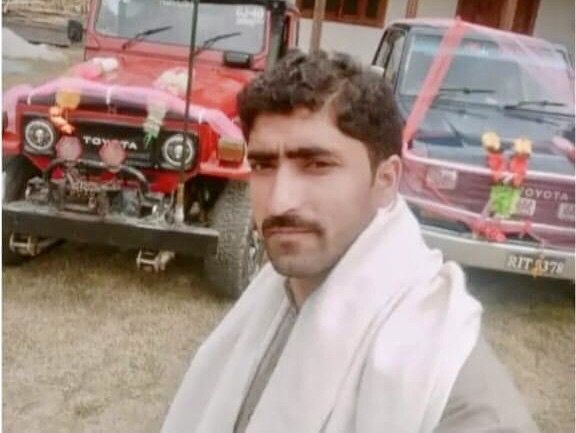
While business districts reopened in Mirpur, Muzaffarabad...

45-Year-Old Man Found Dead in Budgam’s Branwar Area

Police have launched an investigation after the...
Home Blog Page 204

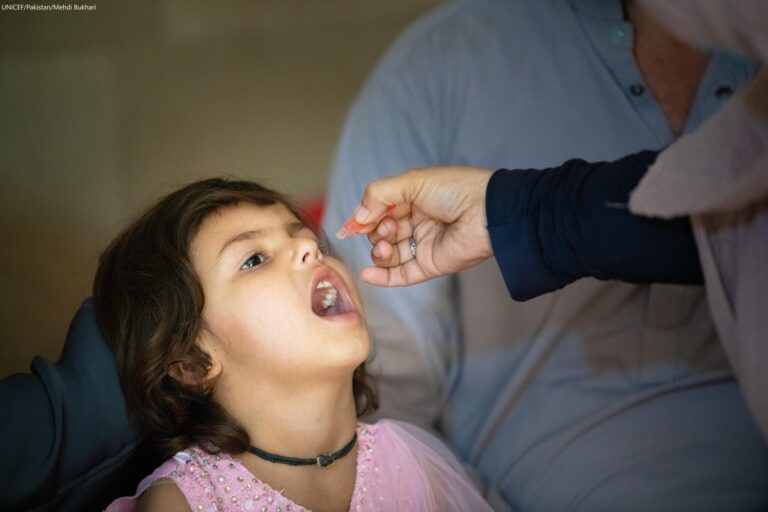
Polio Eradication Committee Reviews Outstanding Performance in Kotli District – Upcoming Campaign Targets Over 120,000 Children

    0

    Kotli (Azadi Times News – Latest): A session of the District Polio Eradication Committee was held under the chairmanship of Deputy Commissioner Chaudhry Haq Nawaz.

    The meeting revealed that in the Polio Vaccination Campaign, the district of Kotli has shown excellent performance, and the upcoming campaign will continue from November 27 to December 1, 2023.

    This time in Kotli district, over one hundred and twenty thousand children under the age of five will be administered drops, for which 556 teams have been formed.

    The meeting included officials such as SSP Mir Muhammad Abid, District Health Officer Syed Shafqat Hussain Shah, Medical Superintendent Dr. Sardar Muhammad Nasrullah Khan, Information Officer Shaukat Ali, District Mufti Abid Hussain, Focal Person Hamza Ali Syed, Deputy Director Aamir Zeb, District Coordinator Dr. Fida Hussain, WHO Dr. Arslan Raza, PSW Muhammad Aqib, DM Muhammad Rashed, HEO Mudassir Hussain, Superintendent DI O Fad Muhammad Zidi, among others.

    Addressing the session, Deputy Commissioner Kotli, Azad Kashmir stated that the government of Azad Kashmir is determined to keep Azad Kashmir polio-free. We are making every effort to enhance the immunity of children.

    Unfortunately, due to the COVID-19 pandemic, there has been a decline in children’s immunity against polio. I appeal to all parents to play their role in the polio eradication campaign and ensure that their children receive the polio drops. He further said that together, we will maintain the goal of a healthy and polio-free Azad Kashmir.

    Azad Kashmir: A Groundbreaking 12-Point Charter for Energy Transformation

    0

    Mirpur: In response to the persistent challenges in electricity management facing Azad Kashmir, a visionary 12-point charter has been proposed by Jammu Kashmir Awami Action Committee’s, aiming to redefine the region’s energy landscape.

    Advocating for fairness, accessibility, and local empowerment, this comprehensive plan outlines key initiatives poised to reshape how Azad Kashmir accesses and utilizes its abundant natural resources.

    Direct Supply from Mangla Dam:
    The charter emphasizes the urgency of directly providing 400 megawatts of electricity from Mangla Dam to Azad Kashmir.

    This move aims to secure affordable energy for residents, bypassing convoluted tariff discussions and ensuring a direct and cost-effective power supply.

    Constitutional Profits for Azad Kashmir:
    Aligning energy policies with constitutional frameworks, the charter underscores Articles 157 and 161, emphasizing that profits from electricity trading should rightfully benefit the Government of Azad Kashmir.

    This commitment seeks to instill transparency and fairness in the region’s energy sector.

    Local Benefits from Hydroelectric Power:
    Highlighting the importance of local empowerment, the charter proposes the separation of electricity generated by local projects from the national grid.

    This initiative aims to provide affordable electricity to northern districts, eliminating unjust charges commonly found in electricity bills.

    End Unfair Deductions and Adjustments:
    Addressing financial concerns, the charter calls for an end to the unjust practice of deducting electricity revenue estimates from the federal grant. Additionally, it advocates for adjusting funds collected under Neelum Jhelum Surchaj into bills, providing tax-free electricity to the people of Azad Kashmir.

    Compensation for Water Resources:
    Advocating for justice regarding water resources, the charter emphasizes the need for fair compensation.

    Historical irrigation benefits enjoyed by other provinces should be recognized, ensuring Azad Kashmir receives its rightful share of economic returns.

    Local Approval and Environmental Considerations:
    Navigating the unique constitutional status of Azad Kashmir, the charter advocates for local approval and ownership after 25 years for projects like Neelum Jhelum.

    This, coupled with comprehensive environmental assessments, aims to ensure responsible and sustainable development.

    Preventing Imperialist Exploitation:
    Taking a stand against foreign exploitation, the charter suggests implementing water usage charges on foreign hydel generation projects.

    This initiative aims to safeguard state sovereignty and prevent unwarranted exploitation by foreign entities.

    This initiative aims to safeguard state sovereignty and prevent unwarranted exploitation by foreign entities.

    Clarification on Water Use Charges:
    Challenging existing terminology used by WAPDA, the charter advocates for local laws and institutions for hydel projects. This ensures that Azad Kashmir’s unique constitutional status is recognized, promoting fairness in the energy sector.

    Azad Kashmir’s Share in the Federal Government’s NFC Award:
    Focusing on economic equity, the charter emphasizes Azad Kashmir’s rightful share in the federal NFC award. It addresses the adverse effects of the 2019 electricity tariff notification, advocating for fair compensation.

    Water for Mirpur City:
    Prioritizing essential needs, the charter calls for the provision of drinking water to Mirpur city and agricultural water to Mirpur/Bhambar. This underscores the importance of local communities and their access to vital resources.

    Cancel Federal Government Notification:
    Taking a proactive approach, the charter calls for the cancellation of the 2019 federal government notification. This ensures Azad Kashmir receives its allotted share and prevents financial losses to DISCOs.

    Policy for Resource Protection:
    The final point encapsulates the charter’s overarching vision by proposing a comprehensive policy to protect and responsibly utilize minerals, hydel generation, and other natural resources.

    This policy seeks to halt the looting of the state’s natural resources, placing them firmly in the service of the public and the state.

    In conclusion, the 12-point charter represents a roadmap for a revitalized energy landscape in Azad Kashmir.

    By addressing ownership, rights, and fair distribution of electricity, this vision strives to empower the people, uphold constitutional principles, and ensure that the region’s natural resources serve the collective well-being of its residents. Azadi Times eagerly anticipates the positive impact of these initiatives on the future of Azad Kashmir’s energy sector.

    Jhelum District Health Officer Raids Biggest Medical Store for Sale of Expired Medicines

    0

    Hattain Bala: In a recent crackdown, Dr. Tahir Raheem Mughal, the District Health Officer of Jhelum, acted upon the orders of Health Minister Dr. Ansar Abadali and Director General Health Dr. Aftab to confiscate, expire, and counterfeit drugs being sold openly.

    During the operation, Dr. Tahir Raheem Mughal stated, “There can be no compromise on the health facilities and the quality of medicines for the people of Jhelum district.

    Medicines purchased from the wholesale market of Rawalpindi will not be allowed to be sold within the district of Jhelum. Non-registered drugs, not registered with the Drug Regulatory Authority of Pakistan (DRAP), were found to contain toxic substances and were contributing to the rising mortality rates.

    The medical store involved has been penalized for supplying medicines without a bill and has been closed down as a consequence.”

    The move was applauded by the public, media, and authorities as it is a duty as well as an ongoing process to ensure the survival of future generations.

    Prince Harry and Meghan Markle Retreat from the Spotlight Amid Media Scrutiny

    0

    Following a highly active September that was marked by a flurry of public appearances and travel engagements, the Duke and Duchess of Sussex have noticeably withdrawn from the public eye during the month of October.

    Royal expert Aricia Skidmore, known for her insights on the Even the Royals podcast, suggests that this sudden shift in visibility could be attributed to a combination of reasons. While the couple might be seeking some much-needed respite after their intense schedule, there seems to be a more profound motive behind their recent reclusiveness.

    “I believe their decision to maintain a low profile is more about avoiding the harsh glare of the media rather than a singular cause,” Skidmore shared with Daily Express US.

    In the wake of criticism surrounding their consecutive travels, which sparked allegations of environmental hypocrisy in relation to their advocacy, Harry and Meghan seem to have opted for a strategic retreat from public attention.

    The couple also faced a recent depiction in a less-than-favorable light on the scripted television show Family Guy. When asked about their potential reaction to the portrayal, Skidmore expressed her hope that the couple would not take it to heart.

    “I hope they wouldn’t dignify it with a response. They must be aware that the media often spins narratives, and it’s crucial for them not to let it affect their well-being,” she added.

    Ultimately, Skidmore wishes for Prince Harry and Meghan to maintain their resilience in the face of media pressures and to continue living their lives unencumbered by external opinions and portrayals.

    Princess Kate’s Impending Role as the Sixth Queen Catherine: A Curse or a Chance for Redemption?

    0

    Azadi Times: The royal whispers surrounding Princess Kate’s future as the sixth Queen Catherine in British history have sparked curiosity and concern alike. With the impending transition of Prince William to the throne, the shadows of the past seem to loom over the possibility of a foreboding curse.

    The much-anticipated release of the book ‘The Catherine Code’ by renowned author Bob Casey has shed light on the haunting destinies of the previous Queen Catherines. From ill-fated marriages to tragic ends, these historical figures endured a tumultuous journey, leaving a chilling legacy associated with their name.

    The saga begins with Catherine of Aragon, whose heartbreaking tale of failed pregnancies and banishment under Henry VIII’s reign resonates with a sense of injustice. Followed by the unfortunate fate of Catherine Howard, whose youthful innocence was shattered by the dark secrets of the court, culminating in a tragic execution at a tender age.

    Even those who outlived their spouses, like Catherine Parr, were not spared from the mysterious grip of misfortune. The agony of her untimely demise after childbirth continues to echo through the annals of history.

    In more recent times, Catherine of Braganza faced a different form of adversity, battling false accusations of treachery, which tainted her reputation despite her innocence.

    As the world awaits the momentous ascension of Prince William and the potential rise of Princess Kate as Queen Catherine, there is a collective prayer for her to break free from the shadows of the past. Hope lingers among her admirers, desiring a brighter and happier narrative to unfold, one that defies the ominous history associated with the name Catherine.

    In the midst of this intriguing revelation, the impending coronation holds the promise of a new chapter for the monarchy, one that Princess Kate’s supporters hope will paint a different, more optimistic picture for the future Queen Catherine, thus rewriting the narrative of this historical name for generations to come.

    Jammu Kashmir Joint Awami Action Committees: The Ongoing Movement for Rights and Reforms in Azad Kashmir

    0

    EDITORIAL: The current Jammu Kashmir Joint Awami Action Committee’s movement in Azad Kashmir has sparked widespread demands for crucial reforms, including the provision of free electricity, the restoration of subsidies on essential food items, the abolition of unjust privileges enjoyed by ruling authorities, and the establishment of a National Grade Station.

    This movement has permeated every corner of Azad Kashmir, reaching every city, village, street, and neighborhood.

    Notably, more than seventy percent of the population in Azad Kashmir has united in a complete boycott of electricity bills for the past two months, leading to a substantial financial crisis for the Azad Kashmir government, which heavily relies on this revenue.

    Despite attempts by the Prime Minister of Azad Kashmir to engage in negotiations with the protestors, the stalemate continues. The resolute message from the demonstrators remains steadfast their demands must be met to prompt any meaningful discussion.

    Central to their demands is the call for free electricity, prompted by the significant power generation in the region, which has failed to translate into tangible benefits for the people.

    Instead, the electricity generation has brought devastating repercussions for cities like Mirpur and Muzaffarabad, leading to the degradation of their environment and culture and adversely impacting the local populace.

    The grievances of the movement extend beyond the scope of electricity concerns. The demonstrators highlight the urgency for effective resource management and the responsible allocation of public funds.

    Specifically, they are demanding that the revenue generated from electricity sales be reinvested for the welfare and prosperity of the people. Additionally, there is a strong demand to reinstate subsidies on essential food items, ensuring that the basic necessities remain affordable and accessible to all segments of society.

    The movement’s evolution and trajectory over the years owe much to the unwavering efforts of political workers, striving tirelessly to organize the community and rally support for their cause.

    The collective participation of various political organizations, including the National Student Federation (NSF) and the Student Liberation Front (SLF), has played a vital role in mobilizing the masses and fostering a unified front.

    However, the movement has also faced challenges from certain opportunistic individuals seeking to capitalize on the situation for their personal gains, disregarding the collective struggle of the people.

    Such acts have only served to underscore the resilience and sacrifices of genuine participants dedicated to the movement’s genuine objectives.

    The ongoing protests and demonstrations have underscored the collective consciousness of the people of Azad Kashmir, as citizens from diverse backgrounds and vocations have joined hands in solidarity to champion their fundamental rights.

    Despite attempts by the authorities to suppress the Jammu Kashmir Joint Awami Action Committee movement, the people’s unwavering resolve remains unshaken, reflecting their unwavering commitment to their cause.

    The Jammu Kashmir Joint Awami Action Committee has emerged as the driving force behind the movement, with individuals from all segments of society actively participating in the ongoing struggle. Their endurance and perseverance stand as a testament to the power of collective action and the indomitable spirit of the people.

    The movement for the rights of Azad Kashmir continues to gain momentum, fueled by the shared aspirations and determination of its citizens.

    As the movement continues to gain momentum, there remains a steadfast hope for a more equitable and just society, with the people of Azad Kashmir united in their relentless pursuit of a brighter future for their homeland.

    Tahzeeb-un-Nisa Appointed as Secretary Information for Azad Kashmir

    0

    Muzaffarabd: (Azadi Times) Respected Tahzeeb-un-Nisa has been appointed as the Secretary of Information for Azad Kashmir, previously serving as the Director-General of Tourism and Archaeological Heritage.

    She is associated with the Azad Jammu and Kashmir Administrative Services, having the honor of being the first female Assistant Commissioner, Deputy Commissioner, and Commissioner in Azad Kashmir.

    Initiating her career as an Assistant Commissioner in 2005, she became the first Deputy Commissioner of Azad Kashmir in 2013 and the first Commissioner in 2020. Prior to these roles, she has also served as the Director-General of Monitoring and Evaluation, Commissioner of Rehabilitation, and Chief Administrator of Zakat.

    Notably, she is the first female Secretary of the Azad Kashmir Administrative Services. Respected Tahzeeb-un-Nisa is a graduate and possesses expertise in legal affairs. She is recognized as a trustworthy officer within the Azad Kashmir services.

    Daughter of Detained Doctor in Azad Kashmir Appeals for Justice and Healthcare Access: Latest Updates

    0

    Muzaffarabad, Azad Jammu and Kashmir (Azadi Times)- In a fervent plea for justice and proper medical care, Sapna Hayat, the daughter of Dr. Hayat, has appealed to the Prime Minister and the Chief Justice of the Supreme Court. Dr. Hayat, a heart patient, has allegedly been denied necessary healthcare access while in custody.

    Speaking at a press conference in Muzaffarabad, Sapna Hayat highlighted the alleged mistreatment of her father by prison authorities and the accountability bureau. She emphasized that her father’s health had been deteriorating, yet he had not received any adequate medical attention during his detention.

    Sapna Hayat brought to light several instances where her father was reportedly marked absent in official meetings and sent notices, raising concerns about the fairness of the proceedings. She detailed various steps her father had taken, including reinstating employees and procuring essential medications, all of which were allegedly misrepresented by the authorities.

    Expressing her anguish, Sapna Hayat denounced the allegations of corruption against her father, stressing that no concrete evidence had been presented thus far. She condemned the treatment of her father as a heart patient, stating that keeping him in jail without proper medical care was a severe risk to his life.

    Moreover, she raised the issue of her father’s suspended salary and called for an immediate resolution to ensure justice and access to healthcare for her father. Sapna Hayat appealed to the authorities to intervene and safeguard her father’s well-being, demanding that he be released and provided with necessary medical attention.

    The case of Dr. Hayat has garnered significant attention, with concerns mounting over his health and the handling of his situation. As the appeal for justice and healthcare access intensifies, the spotlight remains on the authorities to address the grievances and ensure a fair and transparent resolution to the ongoing ordeal.

    Mysterious Disappearance of Khwaja Shahid Worries Neelum Valley Residents

    0

    Neelum Valley: (Azadi Times) In a shocking turn of events, Khwaja Shahid, a resident of the scenic Neelum Valley, has gone missing for the past four days, leaving behind his wife and two children anxiously awaiting his return.

    The distressing incident has left the entire community in a state of turmoil and uncertainty.

    According to local journalist Wasi Khawaja, Khwaja Shahid was last seen purchasing fruits worth 1400 Pakistani rupees from a shop in Mir Saqina Changun in Neelam Valley.

    Witnesses reveal that he was not alone at the time of the purchase, as five or six other individuals were accompanying him.

    However, these companions have since returned, while Khwaja Shahid remains unaccounted for.

    In an unfortunate twist, Indian media outlets have falsely claimed the death of unknown person Kupwara sector.

    Residents have vehemently denied these allegations, emphasizing the need for accurate reporting and factual representation by the media.

    This incident is not an isolated one in the region. Neelum Valley has been grappling with criminal activities linked to the drug mafia, as revealed by former ASP Neelum Maqsood Abbasi in a recent disclosure.

    The presence of multiple gangs involved in illicit activities has raised concerns among the locals, urging law enforcement agencies to take swift action to curb the rising lawlessness.

    Maachi Shah’s murder in the Keran sector, the abduction of a metric student in Lawat Bala, the killing of five individuals in Dhakki Chiknar, and the recent disappearance of a young man in the Saawan Naar area highlight the pervasive security challenges in the region.

    The prevalent drug smuggling rings have infested the serene landscape, perpetuating fear and jeopardizing the safety of the valley’s residents.

    It is imperative that law enforcement agencies effectively root out these criminal elements to restore peace and tranquility in the region.

    The details of three gangs involved in drug smuggling, along with concrete evidence, have been compiled, and concerned authorities have been notified to take immediate action.

    The community remains hopeful that the authorities will apprehend those responsible and restore peace and security to the once serene Neelum Valley.

    Sri Lanka defeated, India qualifies for the semi-finals

    0

    Azadi Times: In the 33rd match of the ICC World Cup, India defeated Sri Lanka by 302 runs after a one-sided contest in the World Cup.

    Batting line of Sri Lanka crumbled against the fierce Indian bowling attack, with the wall of their batting lineup collapsing at 55 runs in the 20th over.

    Kasun Rajitha scored 14, and Angelo Mathews scored 12 runs before being bowled out, while Mahesh Thikshana managed 12 runs before returning to the pavilion, and Madushanka contributed 5 runs before getting dismissed. Five Sri Lankan players were out at zero.

    On the Indian side, Mohammed Shami took 5 wickets by giving away 18 runs, while Mohammed Siraj claimed 3 wickets for 16 runs. Jasprit Bumrah and Ravindra Jadeja each took one wicket.

    With a substantial margin of 302 runs, India has advanced to the semi-finals of the World Cup, becoming the first team to reach the semi-finals. The Indian team remains unbeaten in the tournament, having won all seven matches, while Sri Lanka has managed to win only 2 out of 7 matches.

    Earlier, the Indian team’s opener, Rohit Sharma, failed to give a good start, scoring only 4 runs before returning to the pavilion. Shubman Gill and Virat Kohli established a partnership of 189 runs, but Gill scored 92 and Kohli scored 88 before getting out. Among other players, KL Rahul scored 21, and Suryakumar Yadav contributed 12 runs.

    On the Sri Lankan side, Dhananjaya de Silva claimed 5 wickets, giving away 80 runs, and Dushmantha Chameera took one wicket, while two players were dismissed after scoring runs.

    Sri Lanka vs. India match: Three players from India were out.

    India’s Squad:


    Captain: Rohit Sharma, Shubman Gill, Virat Kohli, Shreyas Iyer, KL Rahul, Ravindra Jadeja, Shardul Thakur, Jasprit Bumrah, Kuldeep Yadav, and Mohammed Siraj.

    Sri Lanka’s Squad:


    Captain: Dasun Shanaka, Dhananjaya de Silva, Pathum Nissanka, Sadeera Samarawickrama, Charith Asalanka, Dushmantha Chameera, Angelo Mathews, Mahesh Thikshana, Kasun Rajitha, Dhananjaya Lakshan, and Dhananjaya de Silva.