Sunday, March 22, 2026
9.3 C
Srinagar
Home Blog Page 24

Rare ‘Al-Sarah’ Plant Discovered for the First Time in Saudi Royal Reserve

0

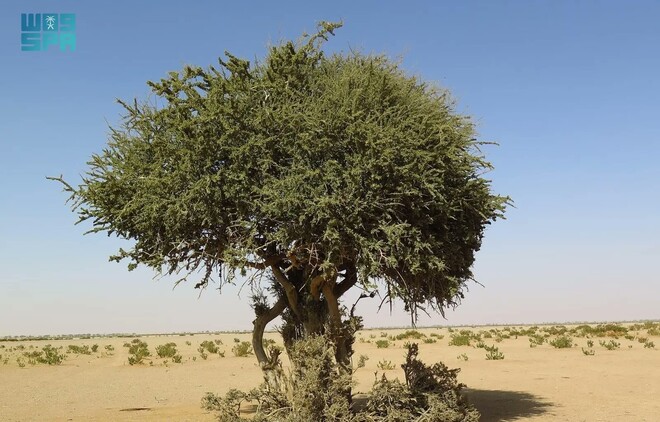
RIYADH — The King Abdulaziz Royal Reserve Development Authority has announced the discovery of a rare plant species named “Al-Sarah” within the protected forest zones of the reserve — marking the first recorded sighting of its kind in the region.

According to the Saudi Press Agency (SPA), the plant was found in an arid and semi-arid environment, demonstrating an extraordinary ability to withstand harsh weather conditions and drought — a characteristic that has made it highly valuable for environmental and conservation studies.

Comprehensive Protection Plan Launched

Engineer Maher Al-Qathmi, CEO of the Royal Reserve Development Authority, stated that a comprehensive protection plan was launched immediately after survey teams reported the finding to the central control center.

“The area surrounding the plant has been fenced off to prevent any possible damage,” Al-Qathmi said. “In addition, a permanent monitoring system has been established to ensure its long-term preservation.”

To raise awareness among visitors, the authority has installed an information board near the site explaining the environmental importance of the plant and highlighting the need to protect such rare species from extinction.

Rehabilitation and Propagation Efforts

As part of the conservation strategy, the Royal Reserve’s nurseries have begun planting Al-Sarah seeds with the goal of reintroducing the species to other suitable locations within the reserve. Officials believe that cultivating the plant in multiple areas will strengthen biodiversity and help restore ecological balance in arid zones.

Experts describe the Al-Sarah as a “desert survivor”, capable of maintaining greenery even under severe drought conditions. Due to increasing climate stress and habitat loss, the plant’s population has been rapidly declining — prompting authorities to prioritize its protection under the kingdom’s national biodiversity framework.

Part of Saudi Arabia’s Broader Environmental Vision

The discovery aligns with Saudi Arabia’s broader environmental initiatives aimed at restoring degraded lands and combating desertification. The Royal Reserves Authority has been actively working to monitor endangered plant species, protect natural habitats, and expand reforestation efforts in line with the Saudi Green Initiative.

In recent years, the King Abdulaziz Royal Reserve has gained global recognition for its innovative approach to land restoration and conservation, which has been showcased at international environmental conferences.

Officials say that the discovery of Al-Sarah highlights the importance of ongoing research and field surveys across Saudi Arabia’s protected areas. “Every new finding brings us closer to understanding the richness and resilience of our natural environment,” Al-Qathmi added.
Israeli Strikes Resume in Gaza as Fragile Ceasefire Falters

0

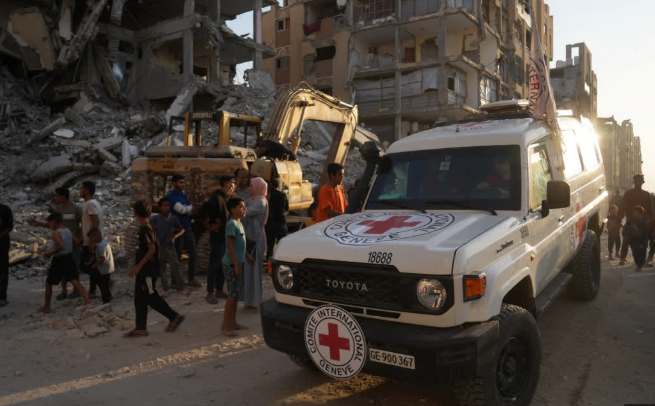
GAZA CITY — Israeli air and ground forces launched a series of attacks across the Gaza Strip on Sunday, shattering a fragile sense of calm and dimming hopes for the durability of a U.S.-brokered ceasefire agreed earlier this month.

According to Gaza residents and Israeli media reports, heavy bombardments and gunfire were heard in the southern cities of Rafah and Khan Younis. Eyewitnesses told Reuters that Israeli tanks advanced near the eastern town of Abasan, with explosions reported throughout the southern belt of the enclave.

The latest escalation marks one of the most significant breaches of the ceasefire since it came into effect on October 11, following more than two years of intense warfare between Israel and Hamas.

Airstrikes and Civilian Casualties

The Gaza Civil Defense Department confirmed that at least 21 Palestinians were killed in Sunday’s airstrikes targeting several densely populated areas, including Suwida in central Gaza. Officials said that “many of those killed were ordinary civilians,” with rescue teams struggling to retrieve bodies from the debris.

Earlier in the day, health authorities reported the deaths of two Palestinians in northern Gaza’s Jabalia area, where Israeli strikes reportedly hit residential zones.

“These attacks come at a time when people were beginning to hope for stability,” said a Gaza-based humanitarian worker, who described the renewed bombardment as “a tragic reminder that peace in Gaza remains painfully elusive.”

Israel Blames Hamas for Renewed Hostilities

The Israeli military accused Hamas of reigniting the conflict, alleging that the group launched multiple attacks against Israeli forces stationed within the Gaza perimeter.

According to an Israeli army spokesperson, the assaults included a rocket attack and a sniper incident, both of which targeted troops in Israeli-controlled sectors inside Gaza. “These are clear violations of the ceasefire agreement,” the spokesperson said, emphasizing that the military “will respond to any threat to Israeli soldiers or civilians.”

Israeli media outlet The Times of Israel claimed that airstrikes in Rafah were carried out after militants allegedly attacked Israeli troops in the area. However, the report did not provide independent verification of the claim or identify its source.

When contacted for confirmation, a spokesperson for the Israeli government referred inquiries to the military. The Israel Defense Forces (IDF) declined to comment further on the operation or its objectives.

Hamas Accuses Israel of Breaking Ceasefire

In response, senior Hamas official Izzat al-Rishq denied that the group initiated any hostilities, accusing Israel of repeatedly breaching the terms of the ceasefire. “Hamas remains committed to maintaining the truce,” he said, “but Israel continues its aggression through airstrikes and ground incursions.”

Al-Rishq warned that continued Israeli violations could “undermine all efforts toward stability and lead the region into another cycle of violence.”

Political analysts note that both sides appear to be using the ceasefire to consolidate their strategic positions. “Each new flare-up tests the boundaries of the ceasefire,” said a Middle East analyst based in Amman. “For Israel, these operations are justified as preemptive defense; for Hamas, they symbolize resistance. But for civilians, the cost is always unbearable.”

A Fragile Peace Under Strain

The current truce, brokered with U.S. mediation earlier this month, had been viewed with skepticism from the outset. With trust between both sides nearly eroded after years of bloodshed, observers warn that even minor incidents risk escalating into full-blown confrontation.

In Gaza, where two million residents remain trapped under blockade, the latest violence has deepened humanitarian fears. Hospitals already strained by shortages of medicine and fuel are now treating a new influx of wounded civilians.

“This renewed fighting underscores the fragility of the ceasefire and the absence of a long-term political solution,” said a senior United Nations official familiar with the situation. “Without genuine dialogue, Gaza will continue to swing between temporary pauses and devastating violence.”

As night fell over Gaza, the sound of explosions continued to echo through Rafah and Khan Younis — a stark reminder that even after repeated rounds of mediation, the road to peace in the besieged territory remains uncertain.

Pakistan Cyber Crime Lodges Case Against Kashmiri Leader Sardar Aman Khan Over “Anti-State” Slogans

0

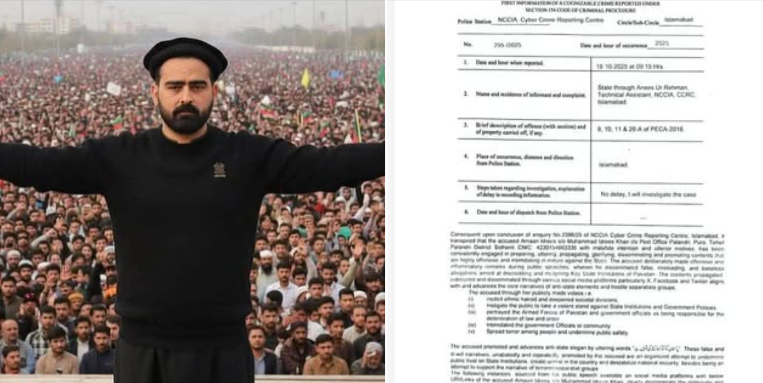
Muzaffarabad (The Azadi Times) — The National Cyber Crime Investigation Agency (NCCIA) in Islamabad has filed a First Information Report (FIR) against Sardar Aman Khan, a prominent Kashmiri political activist and member of the Jammu and Kashmir Joint Awami Action Committee (JKJAAC), accusing him of posting “anti-Pakistan” content and slogans on social media platforms.

According to official documents, the FIR was registered under various sections of Pakistan’s Prevention of Electronic Crimes Act (PECA) 2016, including Sections 9, 10, 11, and 26-A.
Authorities allege that Aman Khan “shared statements inciting hatred against the state and its institutions,” both online and during public addresses.

Officials confirmed that the NCCIA has launched a detailed probe to examine the origin and scope of the shared content.
An agency spokesperson said:

“Any online activity promoting hostility, hate speech, or provocation against the state will be dealt with under the law.”

“Freedom cannot be silenced,” says Aman Khan

In a short statement to local media, Sardar Aman Khan dismissed the charges as a “politically motivated attempt to silence Kashmiri voices.”
He said:

“Did the execution of Maqbool Bhat stop the Kashmiri struggle for freedom?
Did the imprisonment of Yasin Malik end our movement?
No — these actions only strengthen our resolve.”

He emphasized that no arrests or restrictions can suppress the Kashmiri people’s call for self-determination, adding that “Kashmir’s struggle will continue, no matter who is jailed or silenced.”

Viral Video and Past Arrest

According to The Azadi Times sources, the viral video circulating across social media from Pakistan to India is two years old, recorded at the time of Aman Khan’s earlier arrest in Poonch.
In the footage, Aman Khan is seen addressing supporters, reaffirming his commitment to Kashmir’s freedom movement.
The video has resurfaced amid the current FIR, sparking renewed debate online.

Online Reactions: “Kashmir belongs to its people”

Following the NCCIA’s move, several Kashmiri activists, journalists, and diaspora members voiced strong concern, calling the case an attempt to curb dissent in the region.
Social media users reiterated that:

“Kashmir is neither India nor Pakistan — it belongs to its own people.”

Digital rights organizations also urged Pakistani authorities to respect freedom of expression, warning that criminalizing political opinion could deepen alienation in disputed territories.

This case reflects a broader trend of tightening control over online expression in Pakistan-administered Jammu and Kashmir, where political figures, journalists, and student leaders have increasingly faced scrutiny for their social media activity.

Legal observers argue that while Article 19 of Pakistan’s Constitution guarantees free speech, laws such as PECA 2016 grant authorities sweeping powers to interpret “anti-state” content — often without clear definitions.

Human rights groups have described such actions as part of a growing digital crackdown that limits Kashmiris’ ability to express political dissent, particularly regarding self-determination.

As the investigation unfolds, the case against Sardar Aman Khan once again highlights the fragile balance between dissent and state control in Pakistan-administered Kashmir.
For many in the region, it symbolizes a larger reality — that in the digital era, speaking for freedom often comes at a personal cost.

The Low-Fat Lie: How Cutting All Fat Could Be Harming Your Health

0

If you’ve ever reached for fat-free yogurt, skimmed milk, or low-fat biscuits in the name of health, you’re not alone. For years, these products were touted as the golden ticket to weight loss. Yet, as global research advances, experts are sounding the alarm: eliminating all fats may be undermining your health rather than helping it.

Contrary to popular belief, fat isn’t the enemy—in fact, the right kinds are essential. From powering your brain to balancing hormones, healthy fats play a role you can’t afford to ignore.

How the World Became Obsessed with Low-Fat Diets

The low-fat revolution took off in the 1980s, when early studies linked saturated fats to heart disease. Seizing the opportunity, food manufacturers flooded stores with “fat-free” alternatives. But there was a hidden trade-off: to make these products palatable, companies often added extra sugar, refined carbs, and sodium.

“Many low-fat items are just as calorie-dense as their regular versions—sometimes worse,” explains Dr. Sarah Linden, a nutrition researcher at the University of Chicago Medicine. “When you take out fat, you often lose flavor and texture, which manufacturers compensate for with unhealthy additives.”

By the 1990s, “fat-free” had become a global phenomenon. Yet, as the trend peaked, so did rates of obesity and type 2 diabetes—suggesting that the low-fat approach was far from a silver bullet.

What Science Says About Fat and Your Body

A low-fat diet is typically defined as one where less than 30% of daily calories come from fats. While this may sound sensible, long-term studies—including those from the National Institutes of Health (NIH)—show that such diets rarely lead to sustained weight loss. In many cases, participants regained weight quickly after returning to normal eating patterns.

Why? Because fat is not just a source of calories—it’s a fundamental component of wellness. Here’s what happens when you include healthy fats in your diet:

  • Better Vitamin Absorption: Vitamins A, D, E, and K are fat-soluble. Without dietary fat, your body can’t effectively use them, which may impact immunity, bone strength, and vision.

  • Sharper Brain Function: Your brain is nearly 60% fat. Omega-3s—found in fish, walnuts, and flaxseeds—support memory, focus, and cognitive health.

  • Balanced Hormones: Fats help produce key hormones like estrogen and testosterone.

  • Natural Appetite Control: Fats slow digestion, helping you feel full longer and reducing unnecessary snacking.

  • Healthier Skin and Hair: Essential fats maintain cell integrity, contributing to glowing skin and strong hair.

“When people cut out all fats, they’re not just reducing calories—they’re stripping away nutrients their bodies need to thrive,” says Dr. Amina Khan, a clinical dietitian at Aga Khan University Hospital.

The Hidden Dangers of a No-Fat Diet

Eliminating fats might seem like a straightforward way to cut calories, but it can backfire in surprising ways:

  1. Nutrient Deficiencies: Without fats, your body can’t absorb certain vitamins, potentially leading to brittle bones, poor night vision, and a weaker immune system.

  2. Increased Hunger: Low-fat meals often lack satiety, leading to cravings and overeating—especially of sugary or processed foods.

  3. Slower Metabolism: Very low-fat intake can disrupt thyroid function and energy levels, making it harder to maintain a healthy weight.

  4. Mood Swings and Hormonal Issues: Fats help regulate serotonin. A severe lack can contribute to irritability, anxiety, or depression.

How to Eat Fat the Right Way: A Modern Approach

Instead of fearing fat, today’s nutritionists encourage choosing wisely. Not all fats are created equal—and learning the difference can change your health trajectory.

Embrace These Fats:

  • Monounsaturated Fats: Think olive oil, avocados, and almonds. These support heart health and help control blood sugar.

  • Polyunsaturated Fats: Found in salmon, chia seeds, and flaxseeds. Rich in omega-3s, these boost brain function and fight inflammation.

Limit or Avoid:

  • Trans Fats: Often present in margarine, fried foods, and packaged snacks. These increase bad cholesterol and inflammation.

By prioritizing whole foods and healthy fats, you can stabilize appetite, improve insulin sensitivity, and foster sustainable weight management—all without feeling deprived.

The Final Word

The belief that “fat makes you fat” is an outdated myth. Modern science confirms that the type and quantity of fat matter more than whether it’s present in your diet.

Rather than chasing “low-fat” labels, focus on balance: incorporate avocados, nuts, olive oil, and fish into your meals. Listen to your body—it often knows what it needs.

True wellness doesn’t come from extreme restriction, but from nourishing yourself with intention and knowledge.

Hardik Pandya Sparks Buzz Over Rumoured Relationship with Mahika Sharma

Indian cricketer Hardik Pandya has once again become the centre of social media attention — this time not for his game, but for his rumoured new relationship with actress and model Mahika Sharma.

The internet went into a frenzy after fans noticed that Pandya had seemingly made his relationship “Instagram official” with Mahika. Their latest beachside photos have left little to the imagination, with fans convinced that “the soft launch is finally over.”

Vacation Photos Fuel Speculation

Pandya recently shared a series of vacation photos from a seaside getaway, where Mahika Sharma can be seen by his side.
One image shows the two smiling at the beach, while another captures the pair dressed up for what appears to be a party night.

Adding to the speculation, Mahika also posted cryptic Instagram stories, sharing Pandya’s picture with emojis of a pink ribbon, cake, and candles — sparking curiosity among fans who believe something special is brewing.

Fans React Online

Social media quickly caught fire. One user wrote, “Hardik’s soft launch is over — it’s official now.”
Another commented, “They look radiant together; definitely made for each other.”
Some even joked, “Hardik’s quietest but clearest love announcement yet.”

Past Relationships

This comes a year after Pandya’s mutual separation from model and actress Natasa Stankovic in July 2024. The two share a son, Agastya, whom they co-parent amicably.

Pandya’s name has previously been linked with actress Esha Gupta, though she clarified that “we only spoke for a few months — it never turned into a relationship.”

Kim Reviews Grand Military Parade; Hwasong-20 ICBM Unveiled Before Foreign Guests

0

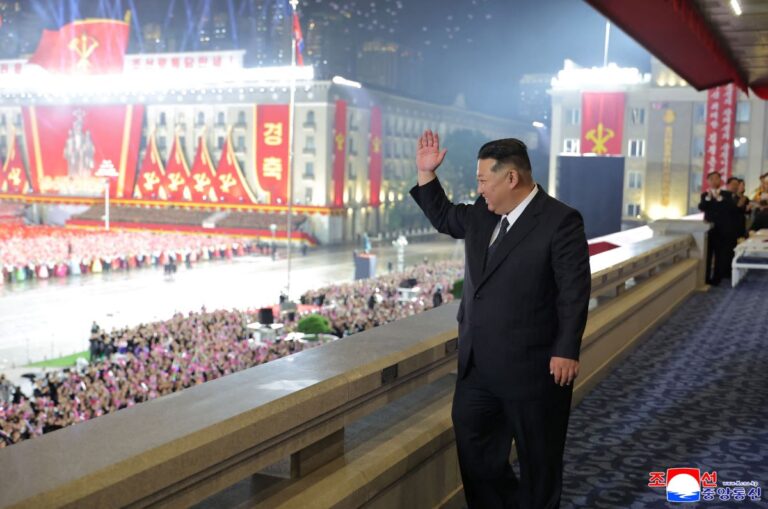
Pyongyang: North Korean leader Kim Jong Un inspected a large military parade in Pyongyang on Friday that showcased a new intercontinental ballistic missile the state media called the country’s “most powerful” nuclear-capable weapon. The event, held to mark the 80th anniversary of the ruling Workers’ Party, took place in the presence of senior foreign guests including Chinese Premier Li Qiang, former Russian president Dmitry Medvedev, and Vietnam’s Communist Party chief To Lam.

State broadcaster KCNA and international news agencies showed columns of weaponry, with the newly revealed Hwasong-20 ICBM as the centrepiece. Pyongyang labelled the system its most powerful strategic nuclear delivery capability; analysts, however, note key technical questions remain concerning its guidance and the re-entry ability of nuclear warheads.

Commenting on the missile’s significance, Carnegie Endowment analyst Ankit Panda described the Hwasong-20 as the “apotheosis” of North Korea’s long-range delivery ambitions and said the system could enter a testing phase before the end of the year. He and other experts warned that the design may be intended to carry multiple warheads, a development that would complicate missile-defence calculations.

Beyond the Hwasong-20, observers reported the parade displayed a range of advanced systems: hypersonic ballistic missiles, cruise missiles, new rocket launchers and launchers for suicide drones. The spectacle underlined Pyongyang’s dual emphasis on augmenting both strategic deterrence and conventional strike capabilities.

In his address, Kim praised the armed forces, including those serving abroad and framed the military as essential not only to national defence but to the regime’s wider socialist mission. “Our army must be an invincible force that destroys every danger,” he said, according to state reports, using the parade to project deterrence and internal unity.

The parade and the presence of high-profile foreign delegations will be closely watched in capitals across East Asia and the West, where officials have already expressed concern about advances in Pyongyang’s long-range missile capabilities and their implications for regional stability.

Dengue Cases Surge in Jammu as Infections Cross 1,500 Mark

0

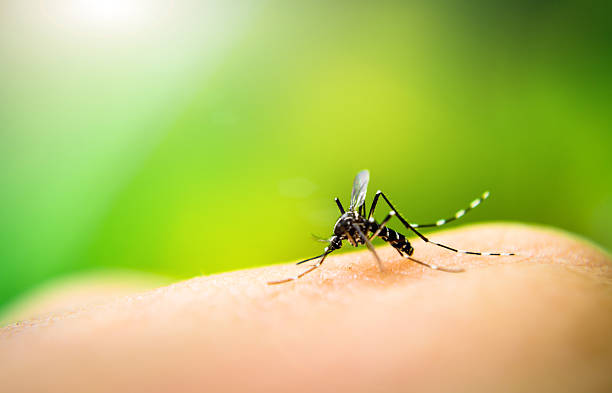
Jammu, Indian-administered Kashmir: Dengue infections continue to spread across parts of Jammu, with the Udhampur district emerging as one of the most affected areas. According to the latest figures released by the Directorate of Health Services, Jammu, the total number of recorded dengue cases has now reached 1,573.

While health officials noted a decline in overall dengue cases compared to last year, certain districts particularly Kathua and Udhampur, have seen a sharp and worrying rise. As of October 8, 2025, Kathua has reported 452 cases and Udhampur 168 cases, marking a significant increase from the same period last year.

In contrast, Jammu district which typically reports the highest number of infections has shown a marked improvement. This year, 674 cases were recorded compared to 1,689 during the same time in 2024. Of these, 498 cases emerged from municipal areas and 176 from non-municipal zones.

Comparative data shows that Kathua’s infections have nearly doubled from 231 in 2024 to 437 in 2025, while Udhampur’s tally has risen from 95 to 161 by early October. On October 8 alone, 91 new cases were confirmed out of 310 tests conducted — 59 males and 32 females tested positive.

Health authorities have so far conducted 17,141 dengue tests this year — nearly the same volume as 2024 (17,238 tests). Officials warn that stagnant water and poor sanitation remain key sources of mosquito breeding and are urging residents to remain vigilant.

“People must eliminate standing water sources around their homes, use mosquito repellents and nets, and seek medical attention immediately in case of symptoms,” said an official from the Directorate of Health Services.

Public health experts have expressed concern over the regional disparity, emphasizing the need for targeted vector-control campaigns in Udhampur and Kathua to prevent a broader outbreak as temperatures remain conducive for mosquito breeding.

Tags: #Jammu #Udhampur #Kathua #Dengue #PublicHealth #VectorBorneDiseases #TheAzadiTimes #KashmirNarrative

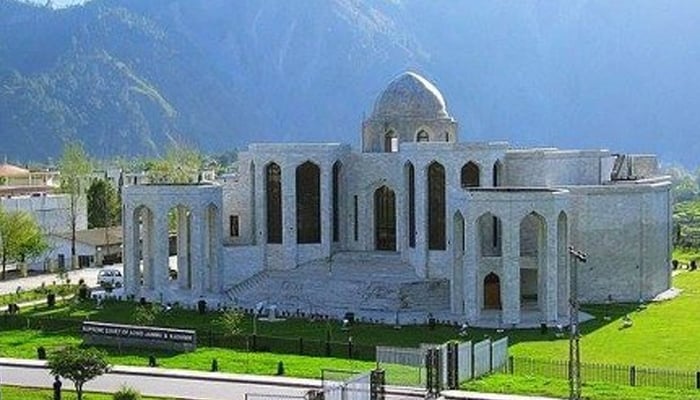
Tight Contest in AJK Supreme Court Bar Elections as Lawyers Cast Votes in Muzaffarabad

0

Muzaffarabad — The elections for the Supreme Court Bar Association are underway in Muzaffarabad today, with 482 registered lawyers from across the region exercising their right to vote. The contest for the presidency is expected to be closely fought between Raja Aftab Khan, a former president of the Central Bar, and Advocate Bilqees Rasheed Minhas.

While most candidates for other positions have already been elected unopposed, the presidential race has drawn particular attention due to its competitive nature and the influence the position carries within the legal fraternity of the region.

Polling began early Saturday morning and is being held under the supervision of the Election Committee of the Supreme Court Bar Association. Results are expected later tonight, determining the leadership for the 2025–2026 term.

Observers say this year’s elections reflect both generational shifts and evolving perspectives within the legal community, as younger advocates push for institutional reform and greater transparency within the bar associations.

Crackdown on Overseas Job Scam Agents in Mirpur: Committees Formed to Expose Fraud

0

Mirpur, Pakistan-administered Kashmir — Authorities in Mirpur have responded to a surge in complaints against fake visa and employment agents by establishing district-level inquiry committees. The move aims to shield job seekers from being exploited through promises of overseas employment.

Residents allege that several unlicensed agents and agencies lure people with foreign job offers, collect substantial sums under the guise of visa processing, and then vanish. When victims press for refunds, they are often intimidated or threatened into silence, officials say.

Described by local leaders as a “serious criminal and social issue,” the matter has prompted urgent administrative action. The newly formed committees will audit, verify, and hold accountable any person or firm involved in overseas recruitment within their districts.

Structure of Inquiry Committees (District-Level):

  • Mirpur: Additional Deputy Commissioner (Chair), Assistant Commissioner (Member), and the Station House Officer (SHO) of the concerned police station

  • Kotli: Additional Deputy Commissioner (Chair), Assistant Commissioner (Member), and the local SHO

  • Bhimber: Additional Deputy Commissioner (Chair), Assistant Commissioner (Member), and the corresponding SHO

Each committee has been directed to submit a detailed report and set of recommendations by October 31, 2025.

The residents of Mirpur, many of whom have deep ties to overseas labour markets, view this crackdown as a necessary step toward restoring public confidence. They stress that oversight and strict action must follow the investigations so that those responsible for fraud face legal consequences.

Meanwhile, officials have issued precautionary advice: anyone considering employment abroad should first confirm whether the agent or agency is officially registered and legally operating.

If you like, I can now craft a headline, intro paragraph, and social media teaser tailored to The Azadi Times’ style.

Pakistan-administered Kashmir Officer SSP Khawar Ali Shaukat Nominated for International Police Award

0

Muzaffarabad | October 10, 2025: Pakistan-administered Kashmir’s Senior Superintendent of Police (SSP) Khawar Ali Shawkat has been nominated for the International Association of Chiefs of Police (IACP) Global Award, marking a moment of pride for the region’s law enforcement community.

The IACP, one of the world’s most prestigious policing organizations, annually recognizes forty outstanding officers from across the globe for their exceptional service, leadership, and contribution to modern policing.

According to official sources, SSP Khawar Ali Shawkat will travel to the United States this week to attend the IACP annual conference, where he will receive the award alongside international counterparts from various countries.

A Moment of Pride for AJK

The nomination of SSP Khawar Ali Shawkat has been widely celebrated in Azad Jammu and Kashmir, with senior officials and citizens expressing pride in his recognition at the global level.

Local activist Hamza Nasir, in a statement shared on social media, congratulated the officer, calling it “an honour for the state and a moment of inspiration for young professionals in public service.”

“This achievement highlights that AJK’s officers are capable of meeting international standards of professionalism, dedication, and leadership,” he said.

The IACP’s Global Recognition

Founded in 1893, the International Association of Chiefs of Police is the world’s largest and most influential professional association for police leaders. The organization’s global awards celebrate innovation, integrity, and dedication to public safety, aiming to strengthen cooperation among law enforcement agencies worldwide.

By being shortlisted for this year’s award, SSP Khawar Ali Shawkat joins an elite list of global police professionals recognized for advancing policing standards in their respective regions.

Messages of congratulations have poured in from across AJK, with well-wishers acknowledging SSP Khawar Ali’s contribution to maintaining law and order and introducing modern policing practices in the state.

As he prepares to represent Azad Jammu and Kashmir at the global platform in the United States, many see this recognition as a symbol of AJK’s growing participation in international professional forums.