22.9 C
Los Angeles
Wednesday, October 7, 2026

One Killed in Qallan Shooting as Shutdown Eases in Major Azad Kashmir Cities

While business districts reopened in Mirpur, Muzaffarabad...

45-Year-Old Man Found Dead in Budgam’s Branwar Area

Police have launched an investigation after the...
Home Blog Page 25

The Online Personality Test Boom: A Critical Guide to Navigating the $2 Billion Self-Assessment Industry

In an era of algorithmic self-discovery, the search query “personality test online” generates over 1.5 billion results. From LinkedIn profiles displaying four-letter MBTI codes to TikTok videos dissecting Enneagram types, personality assessments have evolved from corporate HR tools to cultural phenomena. Yet beneath the glossy interfaces and viral shareability lies a complex landscape where scientific rigor, commercial interests, and genuine self-insight intersect in unexpected ways.

The global personality assessment market, valued at approximately $2 billion, reflects society’s growing appetite for structured self-understanding

But as millions complete these digital questionnaires, critical questions emerge: What do these tests actually measure? Which assessments withstand scientific scrutiny? And perhaps most importantly—how should individuals interpret results that may shape career decisions, relationship choices, and self-concept?

The Science vs. Popularity Paradox

The MBTI Dominance Dilemma

The Myers-Briggs Type Indicator (MBTI) remains the most recognizable name in personality assessment, categorizing individuals into 16 types based on four dichotomies: Introversion/Extraversion, Sensing/Intuition, Thinking/Feeling, and Judging/Perceiving. Its appeal lies in accessibility—results are easily understood, immediately shareable, and provide what feels like profound personal insight.

However, the scientific community has raised substantial concerns. Academic psychologists consistently note that the MBTI lacks the predictive validity required for high-stakes decisions

The test’s binary categorization—placing individuals into distinct types rather than measuring traits on a continuum—contradicts established understanding that personality exists on spectra. Research indicates that up to 50% of test-takers receive different results upon retaking the assessment weeks later, undermining its reliability for career counseling or hiring decisions.
Despite these limitations, the MBTI persists because it satisfies a fundamental human need: the desire for coherent narrative identity. A 2024 study by Clearer Thinking found that users rated Jungian-type frameworks (including MBTI) as more personally accurate than scientifically superior alternatives—a phenomenon psychologists attribute to the Barnum effect, where vague descriptions feel specifically applicable to oneself.

The Big Five: Psychology’s Gold Standard

In contrast to the MBTI’s categorical approach, the Big Five personality model—measuring Openness, Conscientiousness, Extraversion, Agreeableness, and Neuroticism (OCEAN)—represents the consensus framework among academic psychologists.
Unlike type-based assessments, the Big Five recognizes that all humans possess these dimensions in varying degrees, providing percentile rankings rather than binary classifications.
The Big Five demonstrates superior test-retest reliability, with personality traits remaining relatively stable across decades of longitudinal research.
Healthcare professionals increasingly prefer this model for clinical and organizational applications because it predicts real-world outcomes—including job performance, relationship satisfaction, and health behaviors—with measurable accuracy.
Yet the Big Five faces an accessibility problem. Its results, while scientifically robust, offer less immediate narrative satisfaction. A percentile score on “Conscientiousness” requires interpretation; an “INFJ” label provides instant identity. This tension between scientific validity and psychological resonance defines the current personality testing landscape.

The Digital Assessment Ecosystem

Algorithmic Advancements and New Entrants

The migration of personality assessment from paper-and-pencil to digital platforms has introduced both opportunities and risks. Research published in the Journal of Personality Assessment in 2023 found that algorithm-enhanced online MBTI tests can improve type identification accuracy by up to 15% compared to traditional formats.

Machine learning models can now detect response patterns that human scoring might miss, potentially capturing subtle personality nuances.

However, this technological sophistication creates new concerns. Modern online tests are often optimized for engagement and shareability rather than accuracy. The HIGH5 Strengths Assessment, for example, combines positive psychology with personality theory to deliver immediately actionable insights—focusing exclusively on strengths while omitting developmental areas. While this approach increases user satisfaction, critics argue it provides an incomplete psychological picture.
The Enneagram represents another increasingly popular framework, offering nine interconnected personality types with spiritual and motivational dimensions. Though used for over a century, the Enneagram lacks the empirical validation of the Big Five, with experts continuing to evaluate its scientific basis. Its appeal lies in depth—exploring not just behavior but underlying fears and desires—making it particularly popular in coaching and therapeutic contexts despite academic skepticism.

Workplace Applications and Ethical Boundaries

In corporate environments, personality assessments serve multiple functions: team building, leadership development, and increasingly, hiring decisions. The DiSC assessment—categorizing behavior into Dominance, Influence, Steadiness, and Conscientiousness—remains widely used for improving workplace communication. Research indicates that teams focusing on strengths daily demonstrate 12.5% greater productivity, driving employer interest in tools like StrengthsFinder.

However, ethical boundaries require careful navigation. The MBTI is explicitly unsuitable for hiring and selection because it cannot predict occupational success. Using personality assessments for employment decisions raises concerns about discrimination, particularly when tests exhibit cultural biases or when results are misinterpreted by non-psychologists. The Society for Industrial and Organizational Psychology recommends that workplace personality assessment always be conducted by qualified professionals who can contextualize results within broader evaluation frameworks.

Critical Consumer Guidance: Choosing and Interpreting Online Tests

Establishing Your Assessment Goals

Before engaging with any online personality test, clarity of purpose is essential. Different assessments serve different functions:
For Career Exploration: The Career Aptitude Test, built on Holland Codes and Big Five foundations, provides evidence-based guidance on occupational fit. Unlike personality type indicators, career-focused assessments measure interests, skills, and values—factors with established predictive validity for job satisfaction.
For Interpersonal Understanding: The Emotional Intelligence Test measures self-awareness, self-management, empathy, and social skills—competencies directly linked to relationship quality and leadership effectiveness. While newer and less fully validated than the Big Five, emotional intelligence assessment addresses practical competencies that pure personality trait measurement may miss.
For Deep Self-Reflection: The VIA Character Strengths Survey identifies 24 positive traits, helping individuals align decisions with core values. This strengths-based approach, grounded in positive psychology research, offers actionable insights for personal development when interpreted thoughtfully.

Red Flags in Digital Assessment

The proliferation of free online personality tests has created a marketplace where quality varies dramatically. Consumers should exercise caution regarding:
Data Privacy: Many free personality tests monetize user data, selling response patterns to third parties for marketing profiling. Legitimate assessments should provide clear privacy policies and data handling disclosures.
Validation Claims: Tests claiming “scientific accuracy” without citing peer-reviewed validation studies should be treated skeptically. The Open Source Psychometrics Project provides free, research-backed alternatives including the Open Jungian Type Scales and IPIP-based assessments.
Simplistic Categorization: Frameworks reducing complex human psychology to four colors (True Colors) or binary types without acknowledging spectrum variation generally lack scientific foundation.
Commercial Upselling: Many free tests function as marketing funnels for expensive “premium reports” of questionable additional value. The core scientific assessment should provide meaningful insight without mandatory payment.

The Interpretation Imperative: Using Results Responsibly

Perhaps the most critical aspect of personality assessment occurs after results appear: interpretation. Research consistently demonstrates that personality test utility depends less on the instrument itself and more on how individuals integrate findings into self-concept and behavior.

Avoiding Type Prison

The most significant risk of personality testing—particularly type-based frameworks like MBTI and Enneagram—is “type prison”: the belief that one’s results define immutable characteristics. This deterministic interpretation contradicts established psychological understanding that personality evolves across the lifespan through intentional effort, environmental change, and developmental experiences.
Effective interpretation treats results as descriptive starting points rather than prescriptive limitations. An individual scoring high on Big Five Neuroticism, for example, can develop specific emotional regulation strategies rather than accepting anxiety as inevitable. Similarly, MBTI results indicating “Introversion” should inform energy management strategies, not social avoidance.

The Multi-Assessment Approach

Personality psychology increasingly recommends taking multiple assessments to develop comprehensive self-understanding. Each framework illuminates different psychological dimensions:
  • Big Five: Stable trait structure and predictive life outcomes
  • MBTI/Jungian: Cognitive preferences and information processing styles
  • Enneagram: Motivational patterns and emotional coping mechanisms
  • VIA Character Strengths: Values alignment and virtue development
  • Emotional Intelligence: Practical interpersonal competencies
Cross-referencing results across frameworks provides convergent validation while highlighting areas where different instruments disagree—often the most fertile ground for genuine self-discovery.

The Future of Digital Personality Assessment

As artificial intelligence transforms psychological measurement, the field faces both opportunity and challenge. Large language models can now generate personalized feedback at scale, potentially democratizing access to insights previously available only through professional consultation. However, research published in ACM proceedings demonstrates that current AI systems respond inconsistently to personality assessment items, agreeing with opposite statements measuring the same trait—raising serious questions about AI-administered testing validity.
The integration of behavioral data—social media patterns, smartphone usage, biometric indicators—promises more objective personality measurement than self-report questionnaires alone. Yet this approach introduces profound privacy concerns and risks reducing human complexity to algorithmic prediction.
What remains clear is that online personality testing serves a genuine human need for structured self-understanding in an increasingly complex world. The tools available—when selected critically and interpreted thoughtfully—can provide valuable frameworks for personal growth, career development, and interpersonal effectiveness. But they remain tools, not truths. The most sophisticated algorithm cannot capture the full depth of human personality; the most scientifically validated assessment cannot replace the ongoing work of self-reflection and intentional development.
In the end, the value of any personality test lies not in the result it generates, but in the self-awareness it catalyzes. The billion-dollar industry surrounding these assessments will continue evolving, but the fundamental questions—Who am I? How do I relate to others? What do I value?—remain timeless inquiries that no questionnaire can fully answer, only illuminate.


The INFJ Personality: A Complete Guide to Understanding the World’s Rarest Personality Type

The INFJ personality type—comprising merely 1% to 3% of the global population—represents one of psychology’s most fascinating contradictions. Known as “The Advocate” or “The Counselor,” individuals with this Myers-Briggs Type Indicator (MBTI) classification possess a rare alchemy of deep emotional intuition and strategic foresight that sets them apart from all other personality types
But what truly defines an INFJ extends far beyond popular personality quizzes and surface-level descriptions. These individuals navigate the world with an internal compass that simultaneously craves profound human connection while requiring substantial solitude—a duality that often leaves them misunderstood by those around them.

The Cognitive Architecture: How INFJs Process Reality

The Four Pillars of INFJ Cognition

The INFJ acronym—Introverted, iNtuitive, Feeling, Judging—reveals only part of the story. To truly understand this personality type, one must examine their cognitive function stack: the hierarchical arrangement of mental processes that shape how they perceive and interact with the world.
Dominant: Introverted Intuition (Ni) serves as the INFJ’s primary lens. This function operates like a pattern-recognition engine, constantly scanning for underlying meanings, future possibilities, and hidden connections between disparate events. INFJs don’t merely observe reality—they synthesize it, often arriving at insights that seem almost prophetic to others
Auxiliary: Extraverted Feeling (Fe) functions as their social interface. This explains why INFJs, despite being introverts, often display remarkable emotional attunement to group dynamics. They can sense unspoken tensions, read between the lines of conversations, and instinctively understand what others need emotionally—sometimes before those individuals recognize it themselves
Tertiary: Introverted Thinking (Ti) provides an internal logical framework. When alone, INFJs engage in rigorous analysis, questioning their intuitions and seeking conceptual clarity. This function explains why many INFJs are drawn to philosophy, psychology, and systems thinking.
Inferior: Extraverted Sensing (Se) represents their developmental edge—the function that, when engaged, grounds their abstract nature in present-moment awareness. This often manifests as an appreciation for nature, physical movement, or sensory experiences that pull them out of their heads

The INFJ Paradox: Walking Contradictions

The Empathy-Protection Dilemma

Perhaps no characteristic defines INFJs more than their relationship with empathy. Research and community accounts consistently highlight that INFJs don’t merely understand others’ emotions—they often absorb them

This emotional permeability creates what psychologists might call an “empathic vulnerability”: the very gift that makes them exceptional counselors, friends, and leaders also leaves them susceptible to emotional burnout.

This creates a fundamental tension: INFJs are driven to help and connect, yet they must fiercely guard their energy reserves. The result is what many INFJs describe as “social chameleon” behavior—adaptable and warm in group settings, yet retreating into solitude to process and recover

The Idealism-Action Bridge

Where INFJs diverge significantly from other idealistic types is their capacity to translate vision into execution. While many dreamers remain in the realm of abstraction, INFJs possess the Judging preference that compels closure and implementation

They don’t just imagine a better world—they create detailed mental blueprints for how to build it.

This manifests in career choices that blend creativity with service: writers who tackle social issues, psychologists who develop new therapeutic approaches, activists who strategize systemic change, and entrepreneurs who build mission-driven organizations

INFJ Subtypes: Assertive vs. Turbulent

Recent personality research has identified meaningful distinctions within the INFJ category:
INFJ-A (Assertive Advocates) display greater confidence in their intuitions and decisions. They tend to weather criticism with more resilience and maintain steadier emotional equilibrium. These individuals often move through the world with a quiet certainty that can be mistaken for extroversion
INFJ-T (Turbulent Advocates) experience higher sensitivity to stress and self-doubt. While this can create internal turbulence, it also drives deeper self-reflection and a relentless pursuit of personal growth. Many INFJ-Ts report that their “turbulence” actually fuels their creative and empathetic capacities

Navigating Relationships as an INFJ

The Intimacy Paradox

INFJs crave deep, authentic connection—yet they are among the most private of all personality types. This creates a distinctive relationship pattern: extensive observation before engagement, followed by intense loyalty once trust is established
In romantic partnerships, INFJs flourish with individuals who share their core values while respecting their need for solitude. They are not suited to superficial connections or relationships built primarily on convenience. When they commit, they do so with their entire being—expecting (and giving) profound emotional intimacy

Professional Dynamics

In workplace environments, INFJs often serve as the “emotional barometers” of their teams—sensing morale shifts, mediating conflicts, and advocating for inclusive practices. However, they can struggle in highly bureaucratic or competitive environments that conflict with their values
Career satisfaction for INFJs typically requires three elements: autonomy to implement their vision, meaningful impact on others’ wellbeing, and alignment with their ethical framework. Roles in counseling, education, writing, social entrepreneurship, and strategic planning often provide this trifecta

The Shadow Side: When INFJ Strengths Become Liabilities

Perfectionism and Self-Criticism

The same high standards that drive INFJ achievement can become psychological traps. Many report struggles with “all-or-nothing” thinking—either executing flawlessly or abandoning projects entirely when they fall short of their ideal vision

This perfectionism, combined with their sensitivity to criticism, can create cycles of procrastination and self-doubt.

The Door Slam Phenomenon

INFJs are known for their loyalty—until they’re not. When deeply betrayed or consistently disrespected, many INFJs execute what the community calls “the door slam”: a decisive, often permanent severing of the relationship. While this protects their emotional wellbeing, it can surprise those who underestimated the INFJ’s internal boundaries

Empathic Overload

Without proper boundaries, INFJs can experience what resembles secondary traumatic stress—carrying the emotional weight of others’ problems long after interactions end. This is particularly prevalent among INFJs working in caregiving professions or those with close relationships with individuals experiencing chronic difficulties

Growth Strategies for the INFJ

1. Develop Extraverted Sensing Practices

Consciously engaging the inferior Se function can ground INFJs in present-moment reality. Regular practices might include: mindful walking in nature, physical exercise that requires full attention (rock climbing, dance, martial arts), or sensory rituals that anchor abstract thinking

2. Establish Energetic Boundaries

Learning to distinguish between empathy and absorption is crucial. Techniques from contemplative traditions—such as visualization practices that create psychological “containers” for others’ emotions—can help INFJs maintain connection without depletion.

3. Embrace “Good Enough”

Challenging all-or-nothing perfectionism requires conscious practice. Setting time-bound goals, celebrating incremental progress, and recognizing that “done” often serves the world better than “perfect” can liberate INFJs from paralysis.

4. Cultivate Authentic Expression

Given their private nature, INFJs often struggle to articulate their inner world. Creative practices—journaling, poetry, visual art, or music—provide channels for the complex internal landscape that words alone cannot capture.

The INFJ’s Unique Contribution

In an era characterized by polarization, superficial connection, and short-term thinking, the INFJ personality type offers something desperately needed: the ability to hold complexity, to see humanity in opponents, and to maintain unwavering commitment to long-term positive change.
Their rarity is not merely a statistical curiosity—it reflects the difficulty of maintaining deep empathy while retaining strategic clarity. INFJs remind us that the most profound leadership often happens quietly, that listening is an active skill, and that idealism, when paired with action, remains humanity’s most powerful force for transformation.

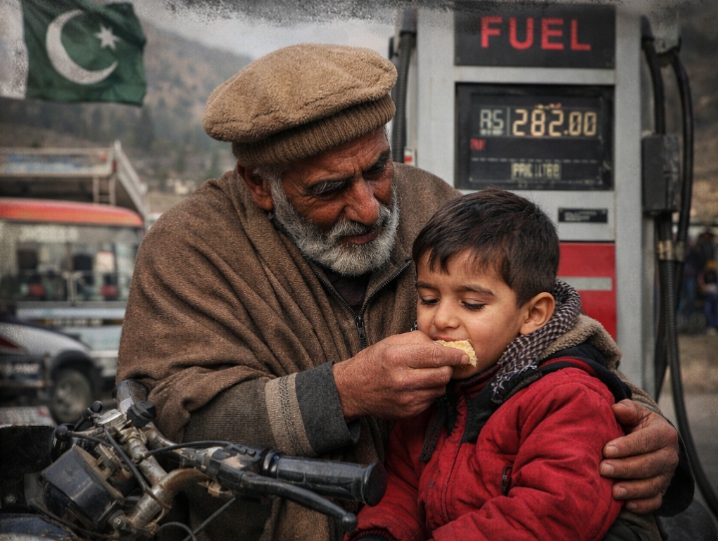
Pakistan-Administered Kashmir Hikes Transport Fares by 40% as Fuel Costs Surge

District administration in Muzaffarabad approves emergency fare revision following recent petroleum price hikes, citing unavoidable pressure on transporters and commuters alike.

Muzaffarabad, Pakistan-administered Kashmir – In a decisive move to counter the cascading effects of rising global energy prices, authorities in Muzaffarabad have approved a steep 40% increase in public transport fares. The decision was formalized during an emergency meeting chaired by the Deputy Commissioner and the SSP of Muzaffarabad, alongside representatives of the local Transport Association.

The meeting, described by officials as a high-priority consultation, was convened immediately after the latest surge in petroleum product prices. After reviewing the financial strain on operators, both parties agreed that a revision was no longer avoidable.

“A Matter of Survival for Transporters”

Addressing the media post-meeting, district officials stated that the hike, while burdensome for the public, had become “inevitable” to keep transport services operational.

“The recent increase in fuel prices has disrupted the entire economic equilibrium of the transport sector,” an official spokesperson for the deputy commissioner’s office explained. “Without this 40% adjustment, transporters would have been forced to reduce routes or halt services entirely, which would have paralyzed daily life in the district.”

The district administration has issued a formal directive to all transport unions to implement the new fares immediately. Authorities have warned that any overcharging beyond the agreed 40% limit will result in strict legal action.

Monitoring Mechanism to Protect Commuters

While acknowledging the financial strain on passengers, the Muzaffarabad administration assured the public that a more effective monitoring system would be deployed across major bus stands and transit points.

“We have instructed the traffic police and district monitoring teams to ensure that the new fare structure is displayed prominently inside every vehicle,” said the SSP Muzaffarabad. “Citizens can report violations to our dedicated helpline. Public convenience remains our top priority, even under these economic pressures.”

Economic Backdrop

The decision comes amid a broader economic tightening in the region, where fuel prices have reached record highs due to global market volatility and adjustments in state-imposed petroleum levies. For daily wage earners and middle-class families in Pakistan-administered Kashmir, the fare hike adds to an existing trend of rising inflation on essential goods.

Transporters, however, have welcomed the decision. A representative of the Muzaffarabad Transport Association noted that without immediate relief, many small operators faced bankruptcy.

Looking Ahead

The district administration has promised a bi-weekly review of the fare structure, conditional on future fluctuations in fuel prices. If global oil prices stabilize or decline, officials have committed to rolling back the fare increase proportionally.

For now, commuters in the scenic Himalayan foothills city must brace for a sharper rise in travel costs—a stark reminder of how global economic shocks continue to reshape daily life in even the most remote regions.

How Do Cats Purr? Scientists Finally Unravel the Feline Mystery

The low, gentle rumble of a cat’s purr is one of the most comforting sounds in the animal kingdom. It begins without warning — sometimes during petting, often at bedtime, occasionally inside a veterinary clinic when the cat seems least content. For centuries, humans have wondered: how do cats purr? Is it voluntary or automatic? And why do cats purr when they are injured or afraid, not only when they are happy?

Recent breakthroughs in biomechanics and laryngeal anatomy have finally provided clear answers. The mystery, it turns out, lies deep inside the cat’s voice box — and it challenges decades of earlier scientific assumptions.

The Old Theory

For much of the 20th century, many biologists believed that purring resulted from rapid contractions of the diaphragm and laryngeal muscles — approximately 25 to 150 times per second. This “active muscle contraction” theory suggested that cats consciously controlled each purr cycle, much like a human humming while exhaling.

But the theory had a flaw. It could not fully explain how do cats purr without fatiguing their muscles, since purring can continue uninterrupted for hours. Furthermore, cats with paralyzed larynges were still observed purring in some studies, confusing researchers for decades.

A ‘Purring Pad’ in the Vocal Folds

In 2023, a team of bioacousticians at the University of Vienna published a landmark study in Current Biology. Using excised larynges from domestic cats — donated after natural death — they pushed air through the vocal folds without any active neural input. Remarkably, the larynges produced self-sustaining purring sounds at the exact frequency (20–30 Hz) found in living cats.

Lead researcher Dr. Christian Herbst explained:

“We discovered that purring does not require constant muscle twitching. Instead, the vocal folds contain specialized connective tissue — a ‘purring pad’ — that oscillates passively when air flows. The cat simply needs to relax its larynx and breathe steadily.”

This means how do cats purr is closer to snoring in humans than to humming. The brain sends a low-level signal to keep the laryngeal muscles loose, and the physics of airflow does the rest.

But what tells the cat to begin purring in the first place? Neuroscience points to a small, poorly understood region in the brainstem called the central pattern generator — a neural oscillator that fires at the exact frequency of the purr. Similar generators control breathing and walking.

When a kitten nurses from its mother, the mother purrs to guide the kitten to her body. The kitten learns to activate its own oscillator within days of birth. This explains how do cats purr from such a young age — it is an instinctive, hardwired behavior, not a learned one.

Why Do Cats Purr When Stressed or Injured?

One of the most puzzling aspects of purring is its appearance during pain, labor, or severe illness. Veterinarians regularly report cats purring while recovering from surgery or even during euthanasia.

The leading theory is biomechanical self-repair. The 20–30 Hz frequency range of a cat’s purr corresponds precisely to the frequency known to promote bone healing, reduce swelling, and relieve pain in mammalian tissues. Some researchers have proposed that how do cats purr evolved not only for communication but also as a low-energy healing mechanism — a built-in physical therapy.

Dr. Elizabeth Von Muggenthaler, a bioacoustics researcher, stated:

“The purr frequency stimulates bone density and tissue regeneration. It is possible that cats purr to heal themselves after falls or fights. We have measured similar frequencies in therapeutic vibrating plates used for human astronauts to prevent bone loss in zero gravity.”

Not all purrs are equal. How do cats purr differs across the Felidae family. Domestic cats (Felis catus), bobcats, and lynxes purr continuously on both inhale and exhale. However, lions, tigers, leopards, and jaguars — the “roaring cats” — cannot purr. Their laryngeal anatomy favors a different set of vibrations that enable roaring but disable true purring.

Cheetahs, interestingly, are an exception. They purr like domestic cats despite being large felids, further complicating evolutionary models.

Science has now answered the mechanical question: how do cats purr through passive vibration of specialized vocal folds driven by steady airflow and a primitive brainstem oscillator. But the emotional question — why a cat purrs for you, at that exact moment — remains wonderfully mysterious.

Perhaps that is why the purr endures. It is a biological marvel and a quiet companion, unchanged for millions of years. And for those who listen closely, it is still the best sound in the world.

Why Is Good Friday Called Good Friday? Unpacking the Paradox of the Darkest Day in Christianity

For nearly two billion Christians worldwide, Good Friday stands as the most solemn day of the liturgical calendar. Churches dim their lights, bells fall silent, and congregations meditate on the crucifixion of Jesus Christ in Jerusalem nearly two millennia ago. Yet, for many observers — and even some believers — a quiet question persists: Why is Good Friday called Good Friday when it commemorates torture, humiliation, and death?

The answer lies not in contradiction, but in a profound theological and linguistic evolution. What appears as a grim anniversary is, in Christian doctrine, the hinge of salvation history. To understand the name is to understand the heart of Christian faith.

The Theological Core: A ‘Good’ That Emerges From Sacrifice

In mainstream Christian theology, the death of Jesus is not a tragedy but a voluntary sacrifice. According to the New Testament accounts, particularly the Gospels of Matthew, Mark, Luke, and John, Jesus was arrested, tried, scourged, and crucified under the Roman governor Pontius Pilate. His death, believers hold, atoned for the sins of humanity — reconciling a broken world with God.

The fourth-century theologian Augustine of Hippo wrote that “the cross was a victory, not a defeat.” This perspective transformed an instrument of Roman execution into a symbol of hope. Therefore, Why is Good Friday called Good Friday? The answer, for Christians, is that the worst moment in history produced the greatest gift: redemption.

“Without Good Friday,” says Reverend Stephen Langton, a biblical scholar quoted in ecclesiastical histories, “there is no Easter. The good is not in the suffering itself, but in its outcome — the defeat of death.”

Linguistic Origins: From ‘God’s Friday’ to ‘Good Friday’

Linguists offer a second, complementary explanation. In Old English, the day was called “God’s Friday” (from Godes Friȝedæġ). Over centuries of linguistic drift, “God’s” may have been misheard or transformed into “Good” — a shift not unique to English. In German, the day is Karfreitag (Sorrowful Friday), but in Dutch it is Goede Vrijdag, mirroring the English usage.

Thus, Why is Good Friday called Good Friday may also be answered by philology: the word “good” once carried an older meaning of “holy” or “pious,” similar to “the good book” for the Bible. Even today, some traditional Christian communities refer to the day as “Holy Friday” or “Great Friday.”

Across the Middle East, where the events of the crucifixion unfolded, Christian communities in Palestine, Egypt, Lebanon, and Syria observe the day with processions and mourning hymns. In Jerusalem’s Old City, worshippers walk the Via Dolorosa — the “Way of Suffering” — retracing the path believed to have been taken by Jesus to Golgotha.

In the Gaza Strip, a small Christian minority holds quiet prayers amid the region’s wider conflicts, a reminder that this ancient story continues to be lived out in lands of contemporary crisis. Across Pakistan-administered Kashmir and the rest of South Asia, Christian communities gather for three-hour vigils from noon to 3 PM, the biblical hours of darkness during the crucifixion.

Yet the central question remains universal: Why is Good Friday called Good Friday? Whether answered theologically or linguistically, the name has endured for over a thousand years — a testament to the power of paradox.

Beyond theology, Good Friday has shaped Western law, art, and literature. In many countries, it remains a public holiday. Crucifixion imagery appears in works from Grünewald to Salvador Dalí. The day also underscores broader themes of suffering, justice, and redemption — themes that resonate in conflict zones from Ukraine to the Palestinian territories, where communities endure their own Good Fridays.

So, Why is Good Friday called Good Friday? For the believer, it is because evil and death do not have the final word. For the linguist, it is a quirk of Old English evolution. For the cultural observer, it is a centuries-old tradition that continues to shape global rituals of mourning and hope.

Whatever one’s faith, the name invites reflection on how language transforms horror into meaning — and how, in many of the world’s traditions, the darkest nights often precede the brightest dawns.

Beyond the Headlines: How the US-Israel War on Iran Is Reshaping the Middle East – Day 34

0

On the 34th day of the US-Israel war on Iran, the conflict has moved beyond military exchanges into a complex web of diplomacy, economic warfare, and regional realignments. While US President Donald Trump declared from Washington that American forces had “destroyed the Iranian military” and were close to achieving their strategic goals, the ground reality across the Middle East tells a story of spiraling violence, stalled negotiations, and mounting civilian tolls.

Iran has launched a fresh wave of missiles at Israel, its military confirmed early Thursday, challenging Trump’s assertion that Washington had neutralized Tehran’s offensive capabilities. Israeli air defense systems were activated across the country, with emergency services reporting 14 wounded near Tel Aviv, including an 11-year-old girl.

Yet the battlefield extends far beyond Israeli and Iranian skies.

In Tehran, US-Israeli strikes have hit a century-old medical research centre, a key bridge near the capital, and multiple steel plants. Iranian President Masoud Pezeshkian, in an open letter shared by state broadcaster PressTV, appealed directly to the American public: “Is Trump’s ‘America First’ policy truly among the priorities of the US government today?” He insisted Iran holds no hostility toward the people of the United States, Europe, or neighboring countries.

Diplomacy, however, appears frozen. Iranian Foreign Minister Abbas Araghchi stated that while Iran has received messages from the US, trust remains “at zero” for any potential negotiations. Tehran described Washington’s demands as “maximalist and irrational” and denied any ceasefire talks were underway.

The Gulf Walk a Tightrope

For Gulf Arab states, the war presents an impossible balancing act. The United Arab Emirates confirmed it has been intercepting incoming missiles and drones launched by Iran—a direct acknowledgment that the conflict has already spilled beyond Iranian and Israeli borders.

Trump, in his primetime address, specifically thanked Gulf allies, pledging that the US “will not let them get hurt or fail in any way, shape or form.” But on the water, the danger is real. A tanker was struck by a projectile off the coast of Doha, Qatar’s capital, according to a British maritime security agency. No casualties were reported, but the attack underscores the vulnerability of the world’s most critical energy shipping lanes.

The Gulf Cooperation Council (GCC) has urged the UN Security Council to “take all necessary measures” to protect the Strait of Hormuz from Iranian attacks. Meanwhile, a UK-led meeting of some 40 countries called for the immediate reopening of the strategic waterway.

Strikes Beyond Iran: Lebanon, Iraq, and the Shadow War

The war is no longer contained to Iranian soil. In Lebanon, an Israeli strike killed a senior Hezbollah commander in Beirut, with Lebanon’s Ministry of Public Health reporting at least seven dead. In Iraq, an aerial attack on a military base in western Anbar province killed seven fighters and wounded 13 others, according to the country’s Ministry of Defence. The strikes hit a military healthcare clinic at the Habbaniyah base.

Iraq’s foreign ministry said it is exerting “maximum effort” to prevent any escalation on its territory, following a warning from the US embassy in Baghdad about possible attacks by pro-Iran armed groups.

China, the UN, and a Warning of ‘Wider War’

International reaction has been swift and divided. China’s Foreign Minister Wang Yi, as reported by state media, condemned US and Israeli attacks on Iran as a violation of international law. He held calls with his EU, German, and Saudi counterparts, signaling Beijing’s intent to play a mediating role.

UN chief Antonio Guterres warned that the Middle East conflict risks spiraling into a wider war, calling for an immediate halt to US-Israeli strikes on Iran and Iranian attacks on its neighbours.

World Bank Raises Alarm Over Food and Inflation

Perhaps most concerning for the Global South—including Kashmir—is the economic fallout. The World Bank told AFP it is “extremely concerned” about the impact the conflict will have on inflation, jobs, and food security. Talks are underway with member states on how to address immediate needs.

Italy’s foreign minister went further, calling for the establishment of a “humanitarian corridor” for fertilizer and other essentials through the Strait of Hormuz to avoid a food disaster, particularly among vulnerable nations in Africa.

Analysis: Trump’s ‘No Clear Plan’

Despite the president’s confident tone, analysts remain skeptical. Trita Parsi of the Quincy Institute for Responsible Statecraft told Al Jazeera that Trump’s primetime address offered little new and largely repeated his recent statements. “It was essentially a summary of all the tweets he has issued over the last 30 days,” Parsi said, adding that the lack of new details suggests the president does not have a clear plan.

According to Al Jazeera’s Rob McBride in Amman, Trump’s timeline for the war appears to align closely with Israeli Prime Minister Benjamin Netanyahu’s own assessment of the campaign. Trump has pledged to “finish the job” within weeks.

Mikki Mase Story: Inside the Rise of a High-Stakes Gambling Personality

In the dim glow of Las Vegas casino floors—where time blurs between neon lights and the constant shuffle of cards—a name has increasingly echoed through high-stakes tables and online gambling circles: Mikki Mase.

To some, he is a disciplined advantage player who claims to have cracked the rhythm of baccarat. To others, he is a carefully constructed persona thriving in the gray space between entertainment and gambling mythology. But regardless of interpretation, Mikki Mase has become one of the most talked-about figures in the modern gambling landscape.

Born as Michael David Meiterman, Mikki Mase did not enter the gambling world through traditional professional poker circuits or formal casino training. Instead, his rise appears more fragmented—built through business ventures, personal reinvention, and eventually, a transition into high-risk gambling culture.

Before his name became associated with casino tables and livestream broadcasts, reports suggest he was involved in entrepreneurial work, including pharmacy-related business activities in the United States. But that chapter, according to his own narrative, gradually gave way to a very different world—one defined by risk, probability, and massive financial swings.

The Baccarat Tables That Built a Reputation

Mikki Mase’s public identity truly began to take shape at baccarat tables—one of the most unpredictable yet popular casino games among high-stakes players.

Unlike traditional professional poker players who rely heavily on mathematical modeling and competitive circuits, Mase positioned himself differently. He described his approach as “advantage play,” suggesting that his understanding of patterns and casino systems allowed him to consistently outperform house expectations.

It was this claim—of repeated success against casinos—that turned him into a viral figure.

In livestream appearances and casino footage circulating across social platforms, Mase is often seen placing large wagers, sometimes in rapid succession, in games where fortunes can change within seconds. These moments, clipped and reshared, became the foundation of his growing online presence.

Claims of Millions and Casino Pushback

As his profile grew, so did the stories surrounding him.

Mikki Mase has publicly claimed that he has won tens of millions of dollars from casino gambling, particularly through baccarat sessions. He has also stated that certain casinos restricted or banned him due to his consistent winnings.

However, these claims sit in a complicated space. Casino winnings of this scale are rarely publicly verified, and the gambling industry is known for strict internal risk controls that are not always transparent to outsiders.

Industry observers remain divided—some suggesting he represents an unusually skilled player exploiting weak systems, while others argue that his narrative is amplified by social media storytelling and selective exposure of wins.

The truth, as often happens in gambling culture, is harder to verify than the story itself.

The Making of a Gambling Personality

What sets Mikki Mase apart from traditional gamblers is not just the tables he plays—but the audience watching him.

In the era of livestream casinos and viral clips, gambling has become performance as much as strategy. Mase has leaned into that transformation, presenting himself not only as a player but as a personality—someone whose life inside casinos is part strategy, part spectacle.

His presence on platforms like live poker broadcasts and social media channels has helped shape a new category of gambling identity: the influencer-gambler, where reputation is built as much through narrative as through recorded results.

With visibility comes contradiction.

Supporters view Mikki Mase as a rare figure who understands casino systems in ways most players do not. Critics, however, question the sustainability of his claims and point out the lack of independently verified long-term data supporting his reported winnings.

Between these two perspectives, a larger phenomenon emerges: the way modern audiences consume gambling personalities.

In an attention-driven digital environment, certainty is often less powerful than storytelling. And Mase’s story—of high-stakes wins, casino bans, and defiance of probability—fits neatly into that ecosystem.

Whether seen as a skilled player or a self-fashioned media persona, Mikki Mase has become part of a broader shift in gambling culture.

Casinos are no longer just physical spaces of risk—they are now content sources. Players are no longer anonymous—they are brands. And stories of winning and losing travel faster than ever before, shaped by clips, reposts, and algorithmic visibility.

In that landscape, Mikki Mase is less an isolated figure and more a reflection of the system itself.

The story of Mikki Mase is still unfolding. What is fact, what is performance, and what is interpretation often overlaps in the world he occupies.

But one thing is clear: his name has already moved beyond casino floors. It now exists in a digital space where gambling, identity, and storytelling merge—creating figures who are as much narratives as they are individuals.

And in that space, the line between player and legend remains deliberately, and profitably, blurred.

Kashmiri TikToker “Yar Ji” Deported from Qatar After Social Media Post, Returns Home

0

A well-known Kashmiri TikToker, Waseem Abbasi popularly known as Yaar G, has reportedly been deported from Qatar after being held in custody for five days over a social media video related to the recent tensions between Iran and Israel. According to available information, he shared a poetic message expressing condolences over the reported martyrdom of the Iranian president, which was considered a violation of local laws.

Sources say Yaar G returned to Kashmir last night, where he was received by friends and acquaintances. His return has sparked debate on social media, with mixed reactions from users.

Yaar G is known for his distinctive style of raising his voice on social and political issues, particularly matters concerning Kashmir. He enjoys significant popularity among young audiences, with thousands of followers regularly engaging with his video content.

Analysts note that freedom of expression laws in Gulf countries are generally stricter, especially regarding commentary on political or international conflicts. In contrast, countries that identify as democratic systems, such as Pakistan, India, or the United States, allow comparatively more space for public opinion, although complete freedom of expression is not absolute in these societies either.

Some observers argue that online harassment or personal attacks against individuals can contribute to social polarization. They stress that disagreement is a natural part of democratic discourse, but criticism should remain responsible and respectful.

It is worth noting that Yaar G has previously created videos highlighting social issues and, according to some sources, supported public awareness campaigns related to civic concerns.

Experts suggest the incident highlights the importance of understanding local laws when living abroad, particularly regarding social media activity, as legal boundaries can vary significantly between countries.

World’s Best Airports 2026: Asian Hubs Dominate Global Rankings with Innovation and Passenger Experience

0

The World’s Best Airports 2026 rankings, based on global passenger experiences and voting, have once again highlighted the growing dominance of Asian aviation hubs. The latest global survey, conducted by Skytrax World Airport Awards, evaluated airports on key criteria including cleanliness, facilities, security procedures, immigration efficiency, and overall passenger satisfaction.

The results reveal a continued trend: Asia’s major international airports are not only maintaining high standards but also redefining the modern travel experience through technological innovation, passenger comfort, and efficient services.

For travellers from regions such as Pakistan-administered Kashmir, India-administered Kashmir, and the broader South Asian region, these global rankings offer insight into the evolving standards of international air travel and the increasing competitiveness among major aviation hubs.

Singapore Changi Airport Retains Global Leadership

Singapore’s Changi Airport has once again secured the top position, continuing its long-standing reputation as one of the most advanced and passenger-friendly airports in the world. Known for its seamless immigration processes, extensive entertainment options, and modern infrastructure, Changi has consistently remained a benchmark for global aviation standards.

Its integrated leisure facilities, including gardens, shopping centres, and rest zones, provide travellers with a unique airport experience that extends beyond transit convenience.

Industry observers say Changi’s success is closely linked to long-term investment in infrastructure and passenger-centric innovation, positioning it as a model for emerging aviation hubs worldwide.

Qatar and Japan Maintain Strong Positions

Hamad International Airport in Doha ranked second globally, recognised for its luxury environment, spacious terminals, and efficient passenger processing systems. The airport has become a major transit hub connecting Asia, Europe, and the Middle East.

Tokyo Haneda Airport secured third place, praised for punctuality, operational efficiency, and well-organised passenger services. Japan’s consistent performance in global aviation rankings reflects a strong focus on precision, cleanliness, and customer satisfaction.

Several other Asian airports featured prominently in the global top 10 list, including:

  • Incheon International Airport, South Korea
  • Narita International Airport, Japan
  • Hong Kong International Airport

These airports are recognised for integrating smart technologies, automated systems, and improved passenger navigation tools that simplify travel processes.

Experts note that Asian airports have invested heavily in digital infrastructure, biometric systems, and environmentally sustainable facilities, contributing to improved efficiency and passenger satisfaction.

Despite Asia’s strong showing, major European aviation hubs also retained positions among the world’s best. Paris Charles de Gaulle Airport and Munich Airport were included in the top 10 list, reflecting continued investment in infrastructure modernisation and improved passenger services.

European airports are increasingly focusing on sustainability initiatives, including carbon reduction strategies and green terminal designs, aligning with broader environmental goals in the aviation sector.

Airports across the Middle East have also demonstrated strong performance in the latest rankings. Major aviation hubs in Saudi Arabia, Qatar, and the United Arab Emirates have expanded facilities and enhanced services to accommodate growing international passenger demand.

These airports have positioned themselves as key transit points connecting Asia, Europe, and Africa, benefiting from strategic geographic locations and significant government investment in aviation infrastructure.

What the Rankings Reveal About the Future of Air Travel

According to aviation analysts, increasing competition among international airports is driving improvements in passenger experience, operational efficiency, and technological innovation.

The emphasis on smart technologies, automation, and sustainability is expected to shape the next phase of airport development globally. Many airports are exploring artificial intelligence-based passenger management systems, biometric identification, and eco-friendly terminal designs.

For travellers from South Asia, including those from Kashmir travelling internationally for education, tourism, or employment, improvements in airport standards can significantly enhance transit experiences and reduce travel stress.

The 2026 rankings demonstrate that the global aviation sector continues to evolve rapidly, with airports competing not only on efficiency but also on comfort, convenience, and innovation.

As international travel continues to recover and expand, future rankings are expected to reflect even greater integration of digital services and environmentally responsible infrastructure.

China Opens World’s Longest Outdoor Escalator in Chongqing, Engineering Marvel Transforms Mountain Transport

0

China has unveiled what is believed to be the world’s longest outdoor escalator, a major infrastructure development that is drawing global attention for its scale and engineering innovation. The new escalator, located in the mountainous municipality of Chongqing, represents a significant advancement in urban transport solutions designed for challenging terrain.

Known as the “Goddess Escalator,” the structure runs through Wushan district, extending more than half a mile along a steep hillside. The escalator appears to rise continuously toward the skyline, creating a striking visual impression while offering a practical mobility solution in a city known for its complex topography.

According to reports, the journey from one end of the escalator to the other takes approximately 21 minutes, making it one of the longest continuous escalator systems ever constructed. The project is not a single escalator but a coordinated network of nearly two dozen escalators and elevators operating as one integrated transport system.

Engineers involved in the project say the development demonstrates China’s ongoing investment in large-scale infrastructure designed to improve accessibility in mountainous urban areas. Huang Wei, lead engineer from China Railway Eryuan Engineering Group, stated that the project is unique in its scope and design, noting that no comparable system currently exists in the country.

Key mechanical components for the escalator were produced by Swiss manufacturer Schindler, with assembly completed in facilities located north of Shanghai. The company has previously supplied more than a thousand escalators for Chongqing’s expanding metro network, reflecting the city’s continued infrastructure growth.

The new system has quickly gained popularity among residents and tourists. Chongqing, often described as one of the world’s most vertically built cities, has long relied on escalators, bridges, and cable transport systems to navigate its steep hills and layered urban structure.

Local reports indicate that approximately 9,000 passengers use the escalator daily, while usage surged during the Spring Festival holiday period, when nearly 450,000 people reportedly travelled on the system.

Residents say the escalator has made daily travel easier, particularly for workers responsible for transporting goods across steep slopes. The system has also attracted interest as a potential tourist attraction, further enhancing the city’s reputation for innovative infrastructure.

Urban planning experts note that projects like the Goddess Escalator highlight the growing importance of smart mobility solutions in densely populated cities facing geographic constraints. As cities continue to expand into mountainous and uneven landscapes, integrated vertical transport systems are expected to play an increasingly important role in improving accessibility and sustainability.

The project reflects China’s broader push to modernize transport infrastructure and develop solutions tailored to complex urban environments, combining functionality with visual impact.