Srinagar, Indian administered Kashmir:Kashmir’s largest freshwater lake, Wular, has once again come alive, offering a glimpse of resilience and renewal after decades of ecological decline. The lotus flowers and edible stems (locally known as nadru), which vanished following the devastating floods of 1992, have re-emerged, sparking hope and joy among local farmers who have long depended on this seasonal harvest.
Spanning nearly 200 square kilometers between Bandipora and Sopore, Wular Lake was once a lifeline for hundreds of Kashmiri families. For generations, the seasonal collection of nadru, a prized ingredient in Kashmiri cuisine, sustained livelihoods in the surrounding villages. But the 1992 floods left a heavy layer of silt across the lake bed, suffocating the ecosystem and cutting off a critical source of income.
A Recovery in Motion
This revival is the result of an ongoing restoration effort led by the Wular Lake Management Authority, which began a massive clean-up initiative in 2020. Officials say more than 7.9 million cubic meters of silt have been dredged so far, uncovering the dormant roots of the lotus plants buried beneath decades of sediment.
“For years the lotus stems were invisible, but the root systems remained alive under the silt. Once dredging began in specific zones, the plants started to reappear. This year we even introduced seeds in the dredged areas, and the results are visible now,” an official associated with the project told The Azadi Times.
The department also plans to install retention basins along key tributaries of the Jhelum River to prevent further siltation in the future, he added.
A Source of Livelihood Restored
For many villagers, this development is more than just an environmental success — it represents a long-awaited return of dignity and economic opportunity. One farmer from Watlab recalled helping his father harvest lotus stems before the floods.
“We thought it was gone forever. Now we see it again,” he said, his voice tinged with both nostalgia and relief.
In the years after the floods, locals tried planting lotus seeds themselves, but without proper restoration efforts, those attempts failed. Only after the lake was cleaned did the ecosystem respond.
While lotus harvesting continued in other lakes like Dal and Manasbal, Wular had remained barren since 1992. The work is far from over, but the sight of the pink flowers and tender stems in Wular again signals what many here hope is the beginning of a larger recovery — for the lake and the people who depend on it.
“Mangru kon hai?” — this phrase (translated: “Who is Mangru?”) has echoed across social media platforms in recent months, especially in India and Pakistan. But unlike celebrities manufactured by media agencies or actors promoted by major production houses, Mangru emerged straight from the streets—or more precisely, from a railway station, with a disarming smile, witty one-liners, and raw authenticity.
He didn’t need a scripted set or studio lights. All it took was a mic, a street-side reporter, and his unshakable “sigma male” attitude to captivate the internet.
Who Exactly Is Mangru?
Mangru is a viral street comedian from India, whose real name, background, or hometown is still largely unknown. What is clear, however, is that he has become a digital folk icon. He is frequently spotted in short-form interviews conducted by content creators and YouTube journalists, where his stoic replies, subtle sarcasm, and unexpected humour deliver a powerful punch—without him ever raising his voice.
The Interview That Changed Everything
Mangru first gained viral fame after a street interview clip was uploaded on YouTube titled “Sigma Male 🗿 Mangru vs Reporter”. The video, in which a female reporter asks Mangru casual lifestyle questions, shows him responding with deadpan expressions, unexpected metaphors, and an almost Zen-like disregard for modern social expectations.
The public response? Massive.
Over 5 million views in less than two weeks.
#Mangru and #SigmaMale began trending on TikTok and Instagram reels.
Memes exploded across social media with captions like “Be like Mangru”, and “Mangru Mindset > Billionaire Mindset.”
Why Is He Called a “Sigma Male”?
In internet subculture, a “sigma male” is a term used to describe someone who lives outside the traditional dominance hierarchy. Not a follower, not a leader—just someone who does things his own way, unbothered by the world’s opinions.
Mangru’s unfiltered responses, refusal to impress, and effortless calm in front of the camera matched this archetype. In a time when everyone is trying to go viral by doing something outrageous, Mangru went viral by doing nothing out of the ordinary—yet everything was extraordinary.
Humour Without a Script: Mangru’s Secret Sauce
What sets Mangru apart from mainstream comedians is his lack of performance. There’s no punchline delivery. No background music. No rehearsed flow.
Instead, Mangru embodies a kind of accidental comedy—his humour stems from being completely himself. His blank stares, unusual analogies, and dismissive wisdom deliver a kind of comedy that’s deeply human, and unintentionally brilliant.
The Working-Class Star: Why It Matters
Mangru doesn’t look like a celebrity. He doesn’t dress like one either. Standing near a railway station in humble clothes, Mangru represents India’s invisible backbone: the working class. His rise to fame is a reminder that internet virality is no longer controlled by polished influencers or brand collaborations.
His growing popularity reflects:
The audience’s fatigue with overproduced content.
A hunger for authenticity.
A cultural shift toward valuing grounded, everyday voices.
Mystery Adds to His Magic
So far, no one has found Mangru’s full name, hometown, or personal history. This mystery fuels his myth. He might just be another man waiting at a station—or he could be the philosopher-clown our overstimulated generation never knew it needed.
From Meme to Movement?
Mangru’s influence is already expanding:
His face is being printed on T-shirts.
Fan pages have popped up on Instagram and TikTok.
Other content creators are now mimicking his interview style—deadpan, casual, and clever.
Could this be the beginning of a new genre of Indian street comedy? One where the humour isn’t forced, the setting isn’t fancy, and the stars are the people we pass by every day?
In a digital world saturated with superficiality, Mangru is a rare symbol of unintentional brilliance and cultural truth. He reminds us that humour, charisma, and meaning can come from anyone—especially the kind of people we usually overlook.
He doesn’t care about fame. That’s exactly why he became famous.
Nine ethnic Punjabi bus passengers abducted and shot dead in Balochistan on N‑70 highway. President blames BLA. Similar attacks in 2024‑25 targeting migrants from Punjab. Government vows action.
Balochistan, Pakistan: At least nine passengers—all reportedly from Pakistan’s Punjab province—were abducted and shot dead after two buses travelling from Quetta to Punjab were stopped late Thursday night on the N‑70 highway in Balochistan’s Loralai and Zhob districts, officials confirmed.
According to Balochistan government spokesperson Shahid Rind, the attackers targeted individuals whose identity documents indicated they were from eastern Punjab. After being removed from the buses, the victims were taken a short distance away and executed—nine bodies were later recovered along the roadside with gunshot wounds .
Punjab’s district administrator in Dera Ghazi Khan, Ashfaq Chaudhry, said the assailants appeared to specifically target Punjabis. Law enforcement is conducting a manhunt for the perpetrators.
Who carried out the attack?
No group has officially claimed responsibility. However, President Asif Ali Zardari condemned the “brutal killing of passengers” and accused the banned Baloch Liberation Army (BLA) of orchestrating the attack to destabilise Pakistan.
The BLA, named in previous violent incidents across Balochistan—including mass shootings and a high-profile train hijacking in March that killed dozens—denied involvement. Instead, it claimed it was simultaneously engaged in an assault on a military camp far from the site of this attack.
Background and broader conflict
This incident bears disturbing resemblance to earlier ethnically targeted attacks, such as in August 2024 when BLA gunmen pulled passengers from vehicles on the same N‑70 highway, checked their identity cards, and executed at least 22 individuals—most of them from Punjab—before setting vehicles ablaze (BBC). In February 2025, the group claimed responsibility for killing seven more Punjabis in a similar roadside shooting in Barkhan district.
The N‑70 National Highway stretches over roughly 440 km between Multan and Qilla Saifullah, cutting across Punjab and Balochistan provinces. It is a frequent corridor for violence, especially targeting migrant labourers from Punjab travelling for seasonal or low-paid work in Balochistan’s resource-rich but unstable regions.
Efforts by the Pakistani state to suppress the insurgency—among other groups such as BLA and BLF—have failed to halt repeated attacks on civilians, security personnel, and foreign projects. The province remains an ongoing hotspot of ethnic and sectarian violence, state accusations of foreign support for insurgents notwithstanding.
Local reactions and government response
Commissioner Saadat Husain of the Loralai Division confirmed recovery of nine victims’ bodies. He stated that among them were two brothers, identified as Osman and Jaber, who were travelling with their father to attend the funeral rites of their deceased parent in Dunya Pur. They were shot along with other mourners in a targeted ethnic attack .
Prime Minister Shehbaz Sharif also issued a forceful condemnation, pledging a swift crackdown: “We will deal with the terrorists with full force, and the blood of innocent people will be avenged,” he stated .
Impact and outlook
Human rights groups have previously cautioned that ethnic targeting, extrajudicial killings, and unchecked militancy in Balochistan threaten to spiral into deeper civil conflict. Analysts warn that without political reconciliation and improved security measures, such cycles of violence may continue and radicalise further parts of Pakistan’s population.
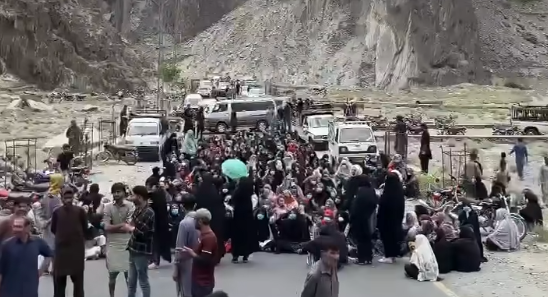
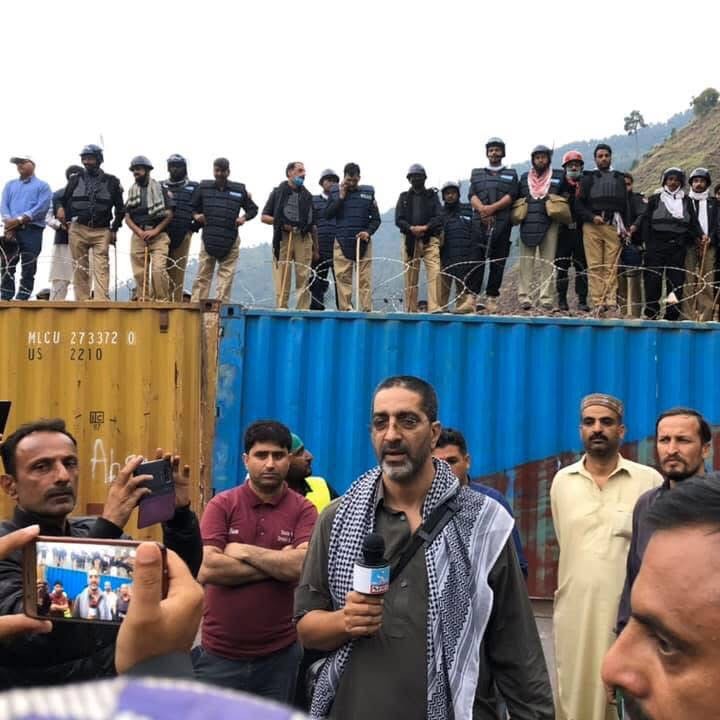
Special Correspondent | Gilgit-Baltistan: Nagar — In a rare and powerful display of civil resistance, thousands of residents — men, women, children, and the elderly — from Budhlas and Chalt villages of Nagar district have begun a long march toward Gilgit, blocking the Karakoram Highway (KKH) at Harispo to demand the release of political prisoners associated with the Awami Action Committee Gilgit-Baltistan.
Carrying banners and chanting slogans, the protesters called for the immediate release of prominent activist Ehsan Advocate and dozens of others who have been detained over recent months for their involvement in protests demanding fundamental rights and self-determination for the region.
“We don’t accept the imposed narratives of India or Pakistan — our struggle is for dignity, justice, and the right to self-determination,” said one of the protesters, speaking to Azadi Times.
The march, which began early in the morning, drew significant participation from women — a striking feature in the deeply conservative region — with mothers, sisters, and daughters walking alongside men. Witnesses reported that traffic on parts of the KKH came to a standstill as the crowds moved forward.
The Awami Action Committee has emerged as a grassroots movement in Gilgit-Baltistan, much like its counterparts in Azad Jammu & Kashmir, advocating for local autonomy, protection of natural resources, and an end to what it describes as “systematic political suppression.”
Critics accuse the authorities of cracking down on activists to silence dissenting voices. Human rights groups have repeatedly raised concerns over the arrests, warning that suppressing peaceful protests risks further alienating the local population.
A statement from the Awami Action Committee released late last night called the detentions “illegal and politically motivated,” and vowed to continue the peaceful struggle.
A Region in Flux
Gilgit-Baltistan, which lies at the heart of the disputed Kashmir region, has long lived in a constitutional limbo — claimed by Pakistan but without the full rights accorded to its citizens. The people here say their voices remain marginalized despite being on the frontline of geopolitics.
Protesters insist their movement is not about aligning with either India or Pakistan but about asserting their own agency.
“We want the world to know: our struggle is indigenous and peaceful. We are Hussaini — we stand for truth and against oppression,” one young activist declared, referencing a popular slogan from the demonstration.
As night fell, the marchers vowed to camp along the highway until their demands are met. Authorities have so far refrained from using force, though tensions remain high.
For many here, today’s events are not just about the release of prisoners but about reclaiming dignity and asserting their right to determine their own future.
Reporting by The Azadi Times Bureau — Gilgit-Baltistan For more independent and ground-level coverage of Kashmir and Gilgit-Baltistan, join The Azadi Times.
Mirpur, AJK (Pakistan administered Kashmir): In an era where diaspora wealth often fuels luxury back home or political clout, one British-Kashmiri man is rewriting the script. Chaudhary Muhammad Aslam, a 65-year-old retired property investor based in the United Kingdom, has sold his entire real estate portfolio to fund the construction of schools in remote parts of Azad Jammu and Kashmir (AJK).
His story is a quiet but powerful reminder that transformative change can come from those who walk away from comfort—and choose to invest in people, not politics.
A Legacy Reimagined
Aslam, originally from Mirpur district of Pakistan administrated Kashmir, migrated to the UK in the 1970s. Over five decades, he built a modest but valuable portfolio of five properties across England. But in 2023, a visit to his hometown profoundly shifted his priorities.
“I saw children sitting on bare ground, under plastic sheets and broken roofs. Almost 20 years after the 2005 earthquake, many of the schools were still ruins,” Aslam told local media. “I returned to Britain and couldn’t sleep. I had to do something.”
That “something” turned out to be everything. He sold all five properties, liquidated his savings, and donated the entirety to a UK-registered humanitarian organization, Muslim Charity, to spearhead school construction across the region.
Schools Rebuilt, Futures Reclaimed
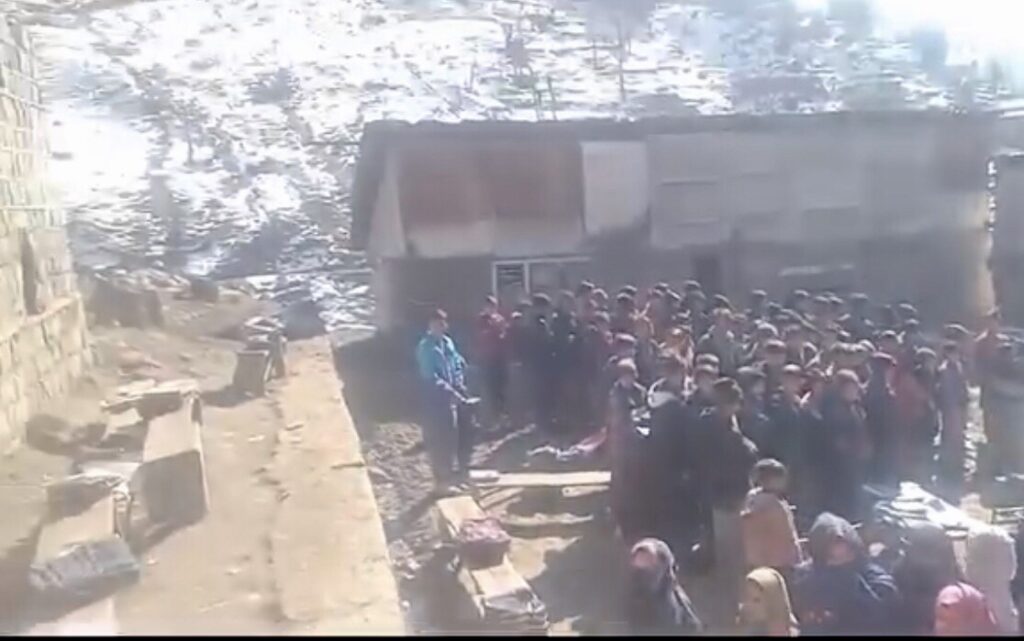
Children study under open skies in Neelum Valley, Azad Kashmir. According to The Azadi Times, over 200,000 children in Pakistan-administered Kashmir still attend school without proper classrooms, highlighting the urgent need for educational infrastructure.
The result: 35 newly constructed schools now dot the mountainous terrain of Azad Kashmir, particularly in the districts of Bagh, Haveli, Pallandri, Rawalakot, and Muzaffarabad. These are not just cosmetic upgrades—they are purpose-built, earthquake-resistant structures with classrooms, sanitation facilities, desks, blackboards, and secure roofs.
The initiative has already impacted over 5,000 students, many of whom had been learning under trees or in unsafe, makeshift classrooms.
“These schools are a lifeline,” says Fatima Gul, a primary teacher in Rawalakot. “Before, we would cancel classes whenever it rained. Now, students come even in the snow.”
Filling the Gaps Left Behind
Despite numerous reconstruction pledges after the 2005 earthquake—which killed over 80,000 people and destroyed more than 3000 schools—many communities in Azad Kashmir have yet to see meaningful rebuilding. Large-scale government programmes and international donor commitments often faltered due to red tape, poor oversight, or shifting priorities.
Aslam’s story illustrates how individual intervention can fill institutional voids. But it also raises uncomfortable questions: Why were these schools not rebuilt by the state? And why did it take a retiree living 6,000 kilometres away to bring change?
Local voices echo this sentiment. “We are grateful to Chaudhary Sahib, but it shouldn’t have been his responsibility,” says Munir Hussain, a community elder in Bagh. “This is what governments are supposed to do.”
Beyond Nationalism: A Human-Centric Approach
Aslam’s work exists in a politically charged space—Azad Jammu and Kashmir, a region claimed by both India and Pakistan, but often neglected by both in terms of grassroots development. Yet, his project deliberately avoids nationalist rhetoric.
There are no flags on the buildings, no slogans painted on the walls. Just education.
In an interview, Aslam explained, “I didn’t do this for politics. I did it for the children of Kashmir. They don’t care about borders. They care about books, warmth, safety.”
This resonates with a broader shift among diaspora Kashmiris who are increasingly disillusioned with state-led narratives from both India and Pakistan—and instead focus on bottom-up development rooted in community needs.
A Model for the Diaspora?
Aslam’s decision has sparked conversation in diaspora circles, especially in the UK, which is home to one of the largest Kashmiri-origin communities outside South Asia.
“This could become a model,” says Dr. Nida Sadiq, a development economist at SOAS University of London. “We’ve seen enough political posturing. What Kashmir needs now is a diaspora that empowers—not dictates.”
Others have pointed to the transparency of Aslam’s approach, particularly his partnership with Muslim Charity, which has published updates, financial audits, and construction timelines to ensure donor accountability.
Challenges Ahead
While the initial construction phase has been lauded, long-term sustainability remains a concern. Who will fund teacher salaries? Who will maintain the buildings?
Muslim Charity says they are working with local school boards and village committees to create community-led oversight systems. There are also discussions about hybrid models where alumni donations and local fundraising can support operational costs.
Final Thought
In a region too often spoken for—but rarely spoken with—Chaudhary Muhammad Aslam’s initiative cuts through the noise. It is not a grand political statement, but a humble, concrete investment in the future of a people long caught between two states.
It is a story not just of generosity—but of reimagining what solidarity can look like in Kashmir: not flags or tweets, but bricks, mortar, and a child walking to school with a backpack instead of a burden.
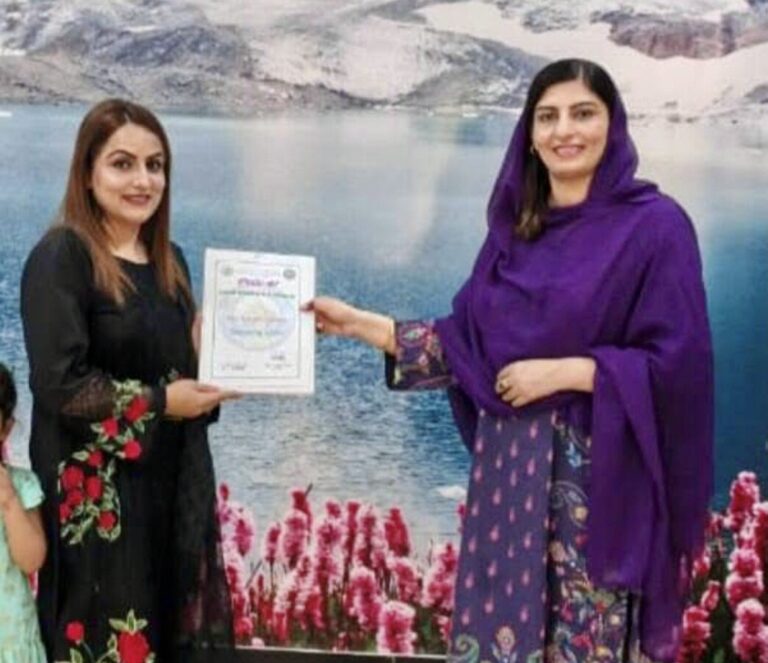
In a momentous ceremony on July 7, 2025, Tehzeeb-un-Nisa, the Secretary of Sports, Youth, and Culture, Azad Jammu & Kashmir (AJK), presented the “Pride of Azad Jammu & Kashmir” certificate to Afia Ejaz Abbasi, a trailblazing female swimming instructor. The award recognizes Abbasi’s extraordinary contribution to empowering women through sports and breaking traditional barriers in Azad Jammu & Kashmir’s swimming community.
Afia Ejaz Abbasi has emerged as a role model for women across AJK, having devoted her career to training and mentoring young female swimmers. Her efforts have not only introduced a new era of female athletes in AJK but have also sparked a wider conversation about women in sports in the region, which has traditionally been dominated by men.
The award ceremony, held at the AJK Sports Complex, was attended by key figures in the region’s sports sector. Tehzeeb-un-Nisa praised Abbasi for her dedication to fostering women’s participation in swimming and other sports, noting her positive impact on the local community. “Afia has shown what determination can achieve. Her work is not just about teaching swimming; it’s about creating a path for young girls to follow their dreams without fear of societal restrictions,” said Tehzeeb-un-Nisa.
Abbasi’s journey into the world of swimming began at an early age. She initially faced cultural and social barriers but never let them deter her. Over time, her passion for swimming led her to become one of the most respected instructors in the region. Today, she runs several training programs aimed at empowering young girls, teaching them the values of discipline, teamwork, and self-confidence.
“This honor is not just mine. It belongs to every girl in AJK who has dared to pursue her dreams in the face of adversity,” Abbasi said in her acceptance speech. “I am proud to see how far we have come, and I hope more women in AJK will embrace sports as a way to empower themselves.”
As the first female swimming instructor in Azad Jammu & Kashmir, Abbasi’s role extends beyond simply coaching. She works tirelessly to provide opportunities for girls to engage in swimming, a sport once largely inaccessible due to cultural and social norms. Her recognition with the “Pride of Azad Jammu & Kashmir” certificate signifies not just personal achievement but the broader cultural shift towards gender equality in sports.
The event also underscored the growing recognition of women’s empowerment in AJKand its potential to challenge traditional societal structures. With her unwavering dedication, Afia Ejaz Abbasi continues to inspire young women to break boundaries and pursue excellence in sports.
The “Pride of Azad Jammu & Kashmir”certificate is one of the region’s highest honors, presented to individuals who have made exceptional contributions to the community. In awarding Abbasi, AJK’s government affirmed its commitment to supporting women in sports and promoting a culture of inclusion and equality.
As the ceremony concluded, Secretary Tehzeeb-un-Nisa emphasized the importance of continuing to support the next generation of women leaders. “Afia’s achievement reflects the changing landscape of women’s sports in AJK. This award is a symbol of what we can achieve when we uplift and empower women,” she said.
Afia Ejaz Abbasi’s story is an inspiration for many women not only in Azad Jammu & Kashmir but across Pakistan and beyond, as she continues to prove that with passion, dedication, and support, nothing is impossible for a woman.
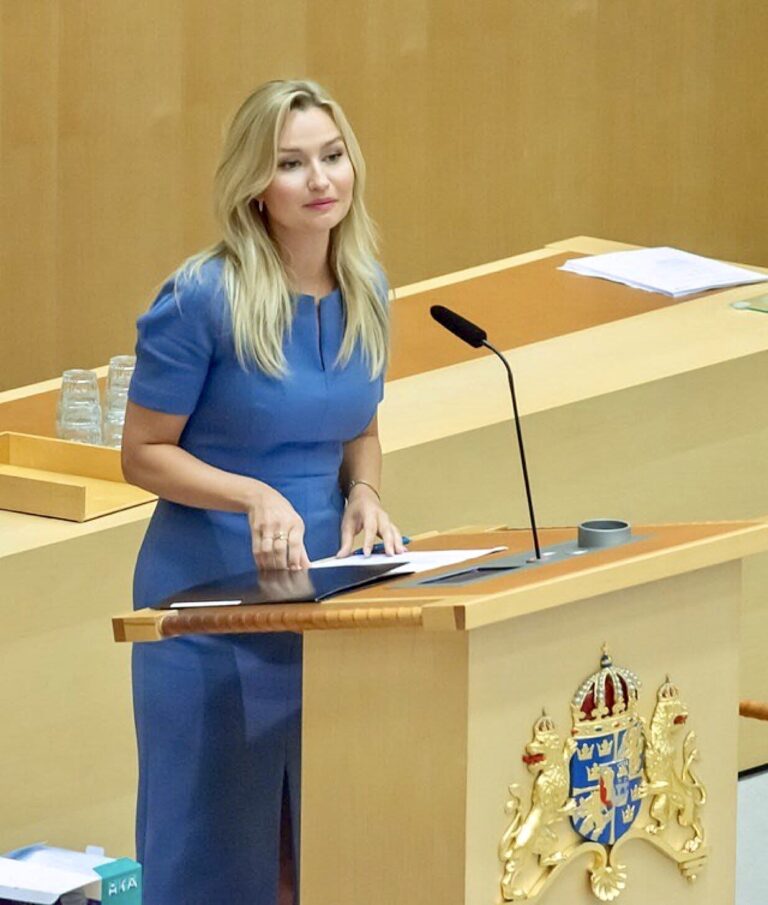
Stockholm | Srinagar – Ebba Busch, the leader of Sweden’s Christian Democrats and Deputy Prime Minister, has become one of the most prominent and controversial political figures in Europe. Known for her blend of conservative Christian values and modern populist rhetoric, Busch’s rise to power in Sweden marks a significant moment in the shifting dynamics of European right-wing politics. As Europe faces increasing political polarization and social unrest, her influence continues to grow, both in Sweden and abroad.
Born Ebba Elisabeth Busch-Christensen on February 11, 1987, in Uppsala, Sweden, she was raised in a family that deeply valued Christian ethics. Her early life was shaped by a strong sense of community and faith, values that would later define her political career. From a young age, she demonstrated a keen interest in politics, joining the Christian Democrats (KD) in her twenties. She later pursued political science and peace and conflict studies at Uppsala University, laying the groundwork for her future leadership. It was clear early on that Busch possessed both the charisma and intellect to make a significant mark on Swedish politics.
Busch’s breakthrough came in 2015 when, at just 28 years old, she was elected leader of the Christian Democrats, one of Sweden’s traditionally center-right parties. Under her leadership, the party began to rebrand itself, shifting its focus from primarily Christian values to a broader conservative platform. She emphasized issues such as law and order, lower taxes, and a more restrictive immigration policy, attracting a significant portion of voters dissatisfied with Sweden’s mainstream political parties. Busch’s energetic communication style, both in the media and on social platforms, played a crucial role in revitalizing the party and bringing it back into national prominence.
Her leadership was further solidified in the 2022 Swedish elections, when the Christian Democrats managed to retain their position in a fragile right-wing coalition government led by Ulf Kristersson of the Moderate Party. Busch was appointed as Deputy Prime Minister and Minister for Energy, Business, and Industry. In this new role, she faced some of Sweden’s most pressing issues, including the transition to renewable energy and the global energy crisis exacerbated by the war in Ukraine. While Busch’s advocacy for nuclear energy and industrial growth has earned her praise for strengthening Sweden’s energy security, it has also drawn criticism from environmental groups who believe her focus on nuclear power undermines Sweden’s climate goals.
One of the defining aspects of Busch’s political identity is her stance on immigration. Over the years, she has shifted the Christian Democrats’ position from a more compassionate, Christian-inspired policy to a tougher, more nationalist approach. Her rhetoric on immigration focuses heavily on issues of assimilation and integration, with an emphasis on law and order. She often links the rise in gang violence and crime to Sweden’s immigration policies, framing the narrative as one of failed integration and cultural dislocation. While her views have resonated with a significant portion of the Swedish electorate, they have also sparked intense debate within the country and beyond, particularly as Europe grapples with its own immigration challenges.
Busch’s communication style is undeniably one of her greatest strengths. She has mastered the art of using social media to convey her messages directly to voters, bypassing traditional media channels. Her viral social media posts, often accompanied by confident speeches and polished videos, have made her a familiar face across Europe. However, her populist rhetoric and occasional controversial statements have sparked criticism, particularly from those who accuse her of simplifying complex issues and deepening societal divisions. Despite this, her ability to connect with a broad swath of voters, especially those disillusioned with the establishment, has made her an influential figure in European politics.
Her career has not been without its share of controversies. One of the most notable incidents occurred in 2020 when Busch was involved in a legal dispute over the purchase of a house from an elderly man, a case that led to allegations of deceptive practices. While the controversy briefly affected her reputation, Busch’s resilience in the face of adversity only seemed to strengthen her political standing. Critics argue that such incidents reveal a more complex and less transparent side to her political persona, while her supporters maintain that the media has unfairly targeted her.
As of mid-2025, Ebba Busch remains a key player in Swedish and European politics. As Deputy Prime Minister, she continues to advocate for her vision of a stronger, more secure Sweden, one that prioritizes national interests over European integration. Her emphasis on nuclear energy, tougher immigration policies, and a growing focus on economic growth make her a polarizing figure, but also one who is shaping the future of Swedish conservatism. The challenges ahead for her include addressing Sweden’s economic pressures, dealing with climate activists’ demands for faster action on climate change, and navigating her political alliances, particularly with the far-right Sweden Democrats.
Globally, Ebba Busch is increasingly being viewed as a symbol of the new wave of European conservatism, one that seeks to blend traditional values with populist rhetoric. From Italy’s Giorgia Meloni to France’s Marine Le Pen, Busch is part of a growing network of right-wing leaders who are reshaping the political landscape across the continent. Her influence extends beyond Sweden, and she is now seen as a potential leader on the European stage, capable of uniting conservative forces across the continent.
As Europe prepares for the next round of elections and political realignments, Ebba Busch’s future remains uncertain, but her impact is undeniable. For Sweden, she represents a new chapter in the evolution of its conservative politics, one that is more assertive, populist, and in tune with the changing tides of European nationalism. For Europe, she is part of a broader trend that is shifting the continent’s political identity, as traditional parties adopt more nationalist and populist stances to appeal to an increasingly disenchanted electorate. As the world watches, it is clear that Ebba Busch will continue to play a central role in shaping the political future of Sweden and Europe.
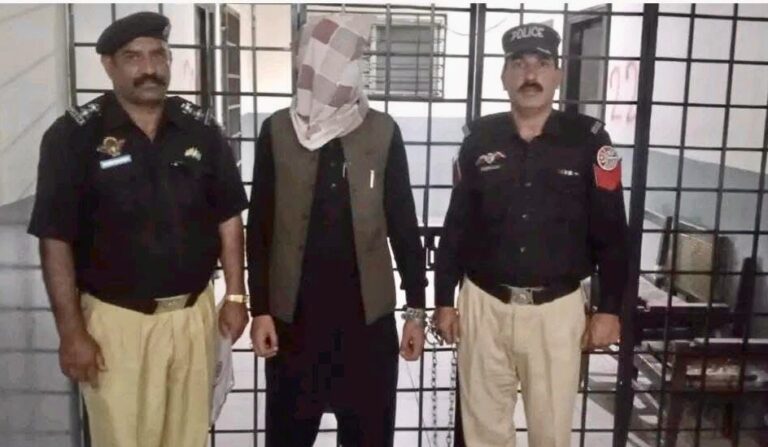
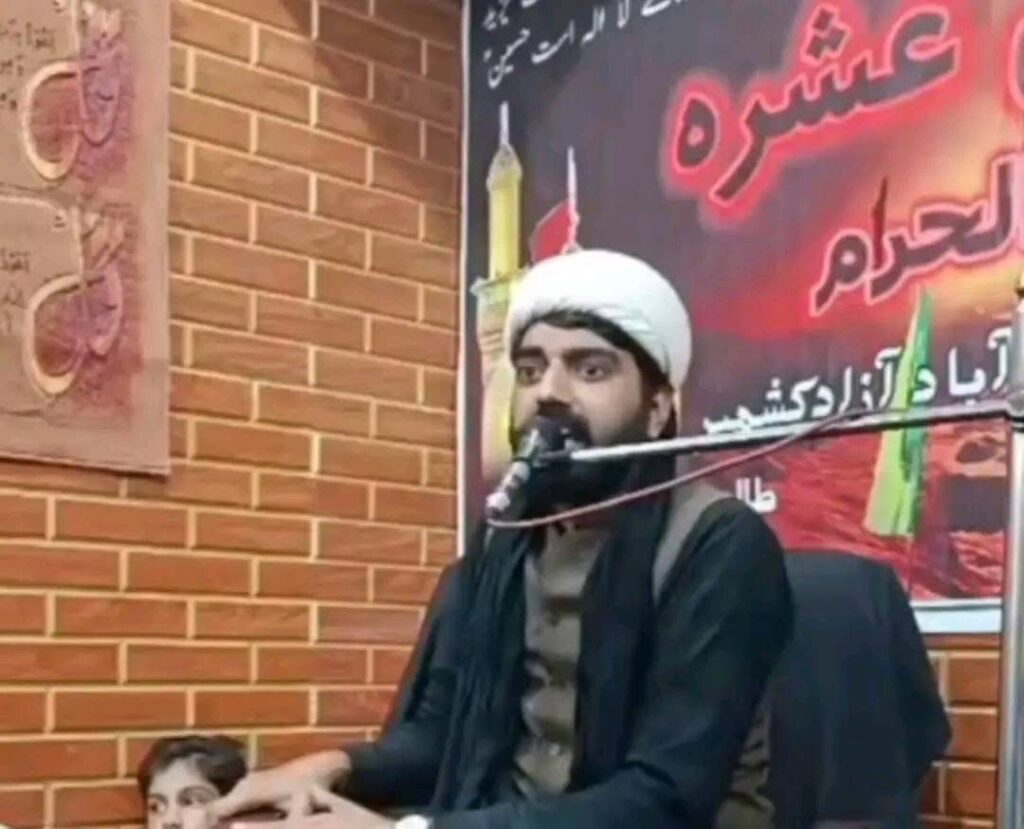
Muzaffarabad, Pakistan administered Kashmir – Azad Jammu Kashmir (AJK) police have arrested a Shia cleric, identified as Shia Zakir, from the Kanor Union Council in Muzaffarabad district, over allegations of blasphemy. The cleric, a native of Chakwal, Pakistan, was taken into custody following a video clip of his sermon on the 8th of Muharram being widely shared on social media.
The video clip reportedly sparked controversy, prompting authorities to take action. While the police have confirmed the arrest, they have not yet registered a First Information Report (FIR).
According to local sources, the District Police Officer is coordinating with local Muftis to determine the next course of action. The incident has generated significant debate on social media platforms, with many calling for strict action against the cleric.
The arrest has raised concerns about freedom of speech and the growing tensions between different sects in the region. The authorities are expected to provide more clarity on the matter soon.
This developing story will be updated as more information becomes available.
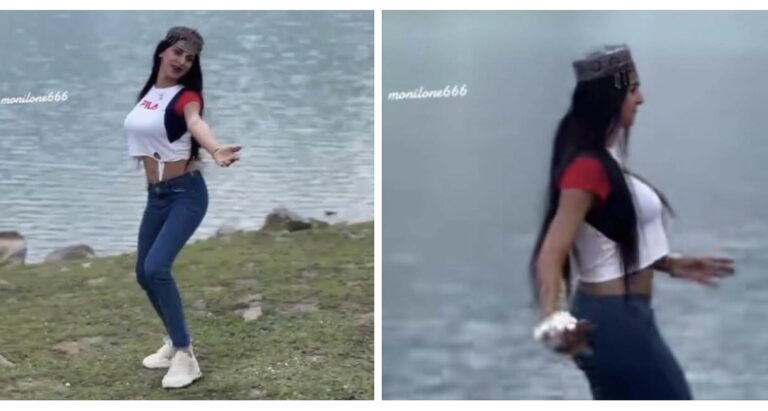
Neelum Vallley, Pakistan administered Kashmir — A recently circulated video showing a young tourist woman from Punjab province of Pakistan dancing in revealing attire in a secluded area of Rati Gali Lake has gone viral across platforms like Facebook, TikTok, and Twitter, reigniting intense debates over social values, tourism, and freedoms in Pakistan‑administered Kashmir.
The video clip, filmed at a Ratti Gali Lake in Neelum Vallley has divided public opinion. Critics argue it undermines the region’s moral fabric. One user posted on Facebook:
“This is contaminating Kashmir’s peaceful culture.”
Supporters counter that it represents a new form of tourism and personal expression:
“She’s only dancing – why not celebrate it as part of local vibrancy?”
Voices from the Ground
In a phone interview, Ayesha Mir, a 25‑year‑old tour guide from Rawalakot, told us:
“Rati Gali Lake is emerging as a tourist hotspot. People come for scenic beauty and photo‑ops. If someone feels free to dance, that’s a sign people enjoy visiting. But we must respect local sensibilities too.”
Local leader Imran Shah expressed concerns:
“This is not typical tourism. She was clothed in a way not aligned with our values. You can’t compare this to harmless promotion.”
Social and Cultural Context
Pakistan‑administered Kashmir — particularly its rural pockets tends to be socially conservative. Prior controversies, including dancing videos and public performances, have previously led to police action or strong online backlash. The Lahore High Court recently rebuked authorities for sharing videos of people detained at a dance event, saying such exposures “are unacceptable in any society”.
Tourism vs. Tradition
Industry insiders note the precarious balance between growth and cultural norms. Tourism expert Zubair Ali commented:
“Kashmir’s mountainous tourism sector is growing rapidly. But bringing influencers or public provocations into these spaces invites friction. Clear local guidelines are needed.”
What Comes Next?
Local authorities are reportedly assessing the situation and may impose rules around public recordings or dress codes.
Platform moderation: Social media sites are struggling to align cultural standards across regions.
Community dialogues are underway—some locals want stricter public decorum, others advocate for relaxed attitudes and the economic uplift of tourism.
Takeaway
The Gali Lekh incident highlights a wider challenge: reconciling emerging travel‑driven expression with deep‑rooted community expectations. As Pakistan‑administered Kashmir steps onto the tourism map, these tensions will likely shape future policy and social norms.
Muzaffarabad | The Azadi Times | July 7, 2025] — An unprecedented political transformation is quietly reshaping Pakistan-administered Jammu & Kashmir (PAJK), where a grassroots-driven initiative aims to establish a truly representative, accountable, and transparent local government — free from decades of external interference and elite control.
This reformative movement, led by independent public policy researcher Tanveer Ahmed, seeks to fill the democratic vacuum left since 1947, when the former princely state of Jammu and Kashmir was divided between India and Pakistan — and has remained unsettled ever since.
A Four-Stage Path to Self-Governance
Ahmed and his team at the JKA Public Agency have proposed a comprehensive, citizen-centric governance framework built on four interlinked stages:
AJK Referendum 2023 Citizens aged 16 and above participated in a public consultation process to determine what form a truly independent, people’s government should take — one that is answerable only to the region’s residents.
Public Assembly AJK Electoral constituencies are being reorganized based on equal-population zones to ensure fair political representation — a step to dismantle decades of skewed influence by select elites.
Awaami Adaalat AJK Legal and administrative reform is underway to create institutions grounded in 21st-century values: transparency, accountability, civic participation, and meritocracy — with equal emphasis on rights and responsibilities.
Formation of a Genuine People’s Government (2025) Upon completion of the first three phases, a functioning, service-oriented government will be formally launched. This will not be a symbolic body — but one rooted in citizen mandates and equipped to deliver on governance.
“This is not merely about autonomy,” says Ahmed. “It’s about completing the journey from Dogra Raj to Awami Raj — from colonial structures to genuine people’s power.”
For over seven decades, the region has remained in constitutional limbo. Despite being administered by Pakistan, Pakistan-administered Jammu & Kashmir (PAJK) does not enjoy full political rights or a transparent, accountable government. Three previous declarations promising reform failed, largely due to the absence of an inclusive internal political process.
Ahmed’s roadmap, however, is backed by grassroots consultation and seeks to build internal legitimacy — rather than wait for regional or international validation.
Challenging Military and Bureaucratic Control
Ahmed has also directly challenged the continued presence of Pakistan’s military and intelligence institutions in the region, calling for full civilian control and the demilitarisation of civic life.
“Pakistan’s military must quietly withdraw from our civic space,” he said in May 2025, during an event marking the anniversary of the 2021 Rawalakot protests. “We want dignity, not dependency. We want justice, not orders from elsewhere.”
This statement followed months of civil unrest sparked by a controversial “Peaceful Assembly Ordinance” — later suspended by the region’s High Court after widespread protests led by lawyers, student unions, and the Joint Awami Action Committee (JAAC).
PeaceBondAJK2025: A Local Financial Revolution
Ahmed’s team has also proposed #PeaceBondAJK2025, an innovative economic model designed to fund governance and development through local investment and public ownership, instead of relying on foreign aid or federal subsidies.
Every citizen, rich or poor, would be a financial stakeholder in the new system.
Projected economic growth over the next 10 years: up to 10,000%.
Government budget could grow from under \$1 billion today to \$100 billion by 2035.
This vision, if implemented, would make the region one of the most economically empowered self-governing territories in South Asia.
International and Regional Repercussions
The initiative directly questions the legitimacy of decades-old, often secretive, India–Pakistan power arrangements over Jammu & Kashmir — and it challenges both sides’ longstanding narratives.
Instead of aligning with either capital, Ahmed’s approach is based on international norms of democratic self-determination, and has even received attention in academic and policy circles:
Rising Kashmir (2011): Ahmed introduced the idea of “Ownership-Building Measures” (OBMs), a step beyond standard confidence-building efforts.
British Parliament (May 2011): The late Professor Richard Bonney acknowledged these proposals during a Kashmir-focused debate.
Al Jazeera (2019): Asked Tanveer Ahmed to assess Kashmir’s post-Article 370 trajectory; his analysis aired in an extended segment (watch from 19:00 mark): YouTube Link
Growing Public and Expert Support
Since July 2024, over 56 independent advisors — ranging from lawyers to academics — have joined a consultative group overseeing the proposed reforms. And from March 2025 onwards, all political groups, trade unions, and action committees (including the JAAC) have been formally invited to submit their position statements in line with the people’s referendum.
“This is not the agenda of a single leader or party. This is a public process. Whoever claims to represent the people must answer to the people,” said one advisor involved in the consultative process.