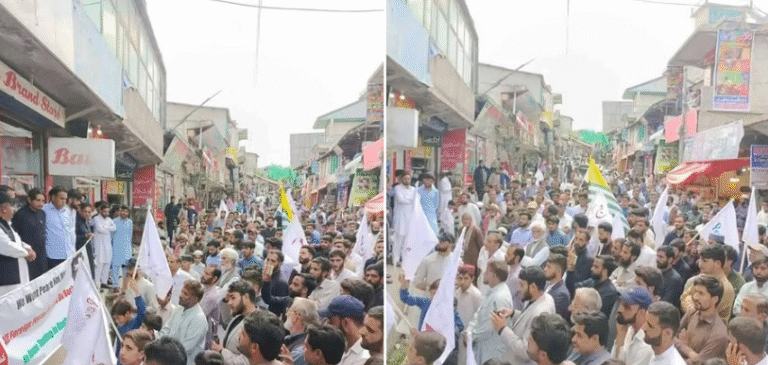
Trarkhel, Pakistan-administered Jammu & Kashmir —A peace rally and public gathering were organized today in Trarkhel city by the pro-independence alliance in Jammu & Kashmir to protest against ongoing shelling along the Line of Control (LoC), internal unrest, and rising violence across the region.
Hundreds of participants marched through the main city, carrying white flags as a symbol of peace. The demonstrators called for an end to hostilities along the LoC and demanded the withdrawal of military forces from the region.
During the rally, participants also raised concerns over the recent deaths of Zarnosh Naseem and Jabran Naseem in an alleged police encounter, demanding an independent judicial inquiry into the incident.
Organizers emphasized the urgent need for lasting peace and the protection of civil rights in the disputed region, stating that the voices of local Kashmiris must not be silenced in the face of ongoing militarization and conflict.
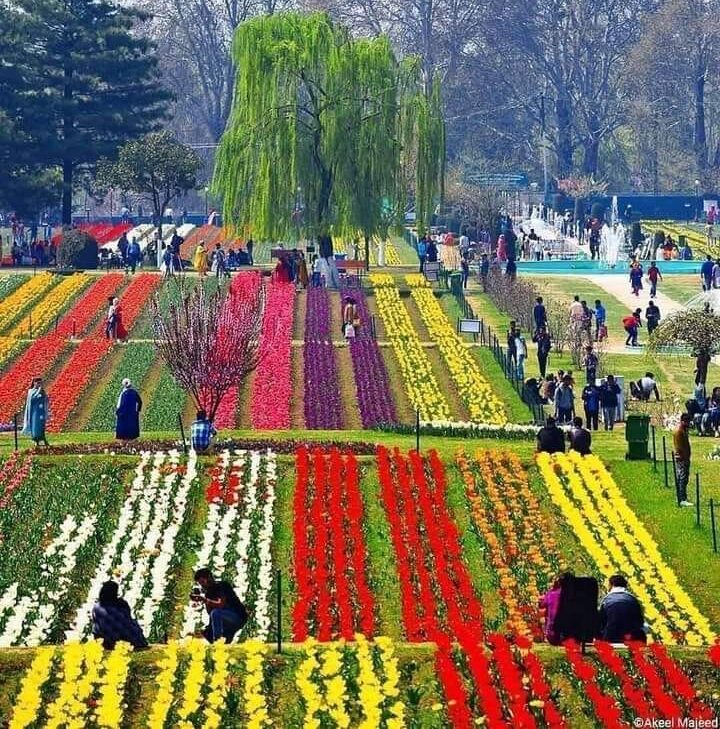
Sonamarg, Indian-administered Kashmir— In an encouraging move to restore the region’s tourism prominence, the Jammu and Kashmir Hoteliers Club (JKHC) convened a significant meeting under the banner ‘Kashmir Chalo’ aimed at reviving Sonamarg and the wider Kashmir Valley as a premier tourist destination. The gathering emphasized improving infrastructure and adopting a collective stance against extremism to foster peace and development in the region.
The session drew participation from key stakeholders in the tourism industry, including tour operators, hotel owners, and community representatives. Attendees united in their commitment to reinforcing the valley’s image as a safe, welcoming, and prosperous destination for visitors.
Member of Parliament Mian Altaf Ahmed highlighted the government’s renewed focus on tourism policies and ongoing efforts to revitalize the sector. He underlined the government’s dedication to showcasing Kashmir’s natural beauty and peaceful environment on a global platform.
The meeting also strongly condemned the recent attack in Pahalgam, with participants expressing solidarity with the victims and reaffirming that such acts of violence are unequivocally rejected by the Kashmiri people. They stressed that these isolated incidents will not deter the valley’s peaceful future.
Mian Altaf described the ‘Kashmir Chalo’ campaign as a positive initiative receiving widespread support from tourism stakeholders nationwide. Speaking to journalists during the discussion organized by JKHC in Sonamarg, he said, “Every possible effort is underway to restore tourists’ confidence in Kashmir and to highlight the valley as a safe and hospitable place.”
This initiative is seen as a vital step toward rebuilding confidence in Kashmir’s tourism industry while promoting peace and prosperity in the region.
Rawalakot, Pakistan-administered Kashmir:In the wake of a series of tragic incidents in Bagh and Rawalakot, the Jammu Kashmir Joint Awami Public Action Committee has urgently demanded the formation of a full bench judicial commission by the respected High Court to investigate these events thoroughly. The committee raised serious questions regarding the accountability of authorities and the perpetrators behind the deaths of eight Kashmiris, including civilians and police personnel, from the Sajjad Resham to the tragic incident in Hussain Kot.
The statement issued by the committee challenges the official narrative, questioning who truly bears responsibility for the killings, labeling them as acts of terrorism. They asked, “Were Zarnoush Naseem and her associates terrorists? Who destroyed the peace of this otherwise peaceful region? Who snatched away beloved fathers from mothers, heirs from sisters, and caring protectors from children?”
The committee’s powerful message also expresses grave concerns over the judicial system in Azad Kashmir, questioning if the rule of law has been abandoned. They ask, “Has the entire legal framework been burned? Who is overseeing the justice and punishment system, while the public remains uninformed? Will Kashmiris continue to be massacred under mere allegations?”
Highlighting the emotional toll, the committee condemned the silence on these sorrowful and painful tragedies and warned of divine accountability. “To those who guard silence on truth and justice, what will you answer before the Almighty?” they asked.
Addressing the resilient people of Jammu and Kashmir, the committee called for an end to silence and urged them to bring these issues into the public eye with urgency and determination.
This demand comes amid rising tensions in the region, with human rights organizations worldwide calling for transparency, justice, and peace in Kashmir. The formation of a judicial commission is seen as a critical step toward addressing the grievances of victims’ families and restoring public trust in governance and law enforcement.
About Jammu Kashmir Joint Public Action Committee: The Jammu Kashmir Joint Public Action Committee is a coalition advocating for the rights, justice, and peace of the Kashmiri people. It actively campaigns against violence and calls for transparency and accountability in the region.
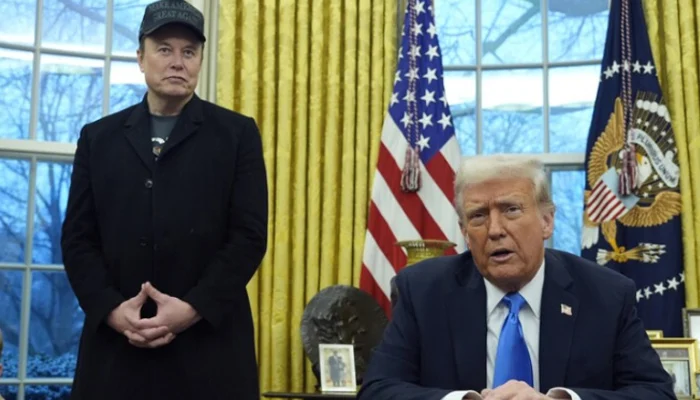
Elon Musk, the CEO of Tesla and owner of social media platform X, has officially stepped down from his advisory role in the Trump administration, marking a significant departure from the government. The world’s richest person quietly resigned from his position as head of the U.S. Department of Government Efficiency (DOGE) without informing President Trump, sources within the White House have confirmed.
Musk had agreed to serve as a special government employee for a fixed term of 130 days, a period that was set to conclude on May 30. However, frustrated with the Trump administration’s direction, Musk ended his involvement two days early, delivering a major blow to the administration.
Earlier, Musk expressed dissatisfaction with a large government bill recently passed under President Trump’s leadership. He commented that while a bill can be either large or well-crafted, it rarely possesses both qualities simultaneously. Musk was particularly concerned about certain provisions within the legislation, which he believed would increase federal deficits and undermine his department’s efforts to reduce wasteful spending.
In a statement posted on X, Musk said, “My time as a special government employee has come to an end. I am grateful to President Trump for the opportunity to help reduce unnecessary expenditures. The mission to improve government efficiency will only grow stronger with time.”
The Trump administration’s recent legislative efforts include tax cuts and stricter immigration laws. Musk criticized the bill for its excessive spending, arguing that it contradicted the objectives of the Department of Government Efficiency.
According to media reports, the Trump administration has cut approximately 260,000 federal employees, around 12% of the total 2.3 million federal workforce. Musk’s political involvement faced criticism from some investors who urged him to focus more on Tesla. Despite this, Musk has consistently defended his actions at DOGE, acknowledging that he also needs to reduce his political expenditures.
Upon taking charge of the department, Musk admitted that the federal bureaucracy’s condition was far worse than he had initially anticipated. He likened efforts to improve Washington, D.C. operations to waging a difficult battle.
It is important to note that Musk served as a special government employee without receiving a salary. White House officials stated that while Musk oversaw DOGE affairs, he was not a formal government employee.
Despite stepping down, Musk has long been an outspoken supporter of President Trump. At one point, he publicly stated that his admiration for Trump had grown over time, even going as far as to say he loved the president.
Unlike typical government officials, Musk’s approach has always been unconventional. He was known to bring his young son to the Oval Office on occasion. Once, his son humorously wiped his nose on the Oval Office’s historic Resolute Desk—an act that led to the desk’s immediate replacement by President Trump.
The Resolute Desk, crafted from English oak salvaged from the HMS Resolute, was gifted to President Rutherford B. Hayes by Queen Victoria in 1880 as a symbol of goodwill and friendship. The desk has been used by many U.S. presidents, including Lyndon B. Johnson, Richard Nixon, and Gerald Ford, and was moved to the Oval Office under President John F. Kennedy in 1961.
Elon Musk’s resignation marks a key turning point for the Trump administration as it faces ongoing challenges in implementing its agenda and managing internal reforms.
Sargodha, Pakistan – A passenger train traveling to Lahore derailed near Sargodha on [date], leaving more than 20 people injured, with at least three to four in critical condition, according to local authorities.
Details of the Accident
The train, en route to Lahore, veered off the tracks and overturned in what witnesses described as a chaotic scene. Rescue teams, including railway officials and emergency responders, rushed to the site to evacuate passengers and provide medical assistance. The injured were transported to nearby hospitals, where some remain in serious condition.
Possible Causes Under Investigation
Initial reports suggest the derailment may have been caused by either track defects or a technical fault in the train. However, an official investigation is underway to determine the exact cause.
Growing Concerns Over Railway Safety
This marks the second major train accident in Pakistan this year, raising renewed concerns over the country’s railway infrastructure and maintenance standards. Public outcry has intensified, with citizens demanding immediate safety upgrades to prevent future tragedies.
Pakistan’s railway system has long faced criticism for aging tracks, outdated equipment, and insufficient safety measures. Critics argue that without significant investment and reforms, such incidents will continue to endanger passengers.
Authorities Respond
Railway officials have assured a thorough probe into the incident, while local leaders have called for accountability and urgent infrastructure improvements.
This is a developing story. Further updates will follow as more information becomes available.
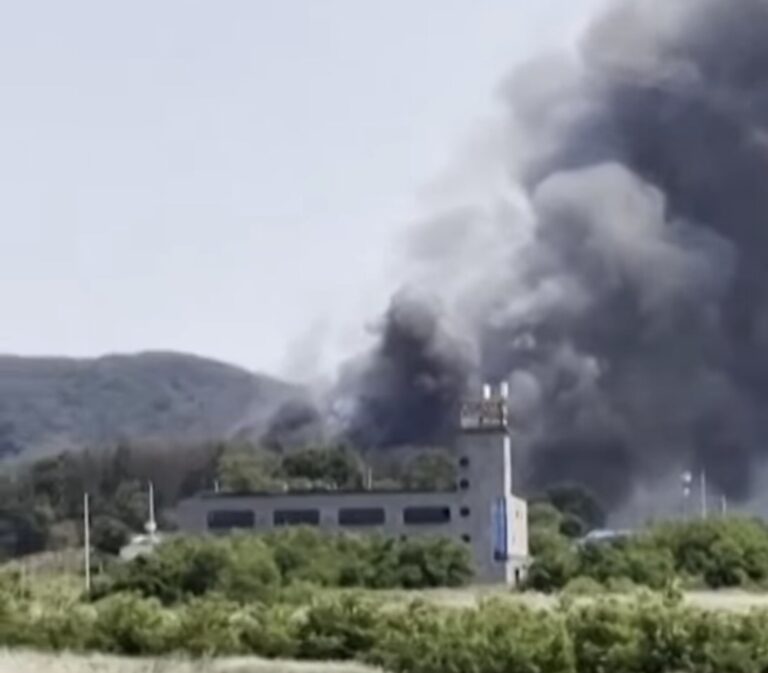
A South Korean navy patrol aircraft crashed into a mountain near Pohang on Thursday, minutes after takeoff, killing all four officers aboard. Witnesses reported seeing smoke and hearing explosions shortly after the impact.
The cause of the crash remains under investigation, according to military authorities. The aircraft, which had departed from a nearby base, was on a routine patrol mission when it went down. Emergency responders rushed to the scene, but no survivors were found.
The incident has raised concerns over military aviation safety in South Korea, with officials pledging a thorough probe. Further updates are expected as the investigation progresses.
This is a developing story. More details to follow.
Bagh, Azad Jammu Kashmir (Pakistan administered Kashmir) May 29 — A high-intensity police operation in Hussain Kot Mehra in Poonch district of AJK turned deadly this week, resulting in the deaths of four individuals suspected of being involved in armed activities. While official confirmation is awaited, sources allege that Zarnosh Naseem—a young man from Bagh who has previously been at the center of several controversies—was among those present during the incident.
The raid, according to preliminary information, was aimed at apprehending Zarnosh Naseem and his associates. During the operation, explosive devices were reportedly detonated inside the targeted premises, killing four individuals on the spot. One police officer, Gulfraz from Bhimber, lost his life in the line of duty. Six other officers—Rehman, Hafeez, Nouman, Zeeshan, Asghar Ali, and Naeem—sustained injuries, some of them serious. Some unofficial reports, however, claim that two police personnel were killed. Authorities have yet to issue a formal statement, pending the conclusion of ongoing investigations.
Who is Zarnosh Naseem?
Zarnosh Naseem
Zarnosh Naseem is a resident of Bagh and a figure who has sparked debate and concern over the past two years. His name first entered the public discourse in August last year when he went missing under unclear circumstances. Local residents staged protests demanding his recovery, alleging that he had been detained without due process. Eventually, Zarnosh was released or resurfaced, though the details of his disappearance and return remained murky.
His name returned to the spotlight following an armed attack on the Shujaabad police post, during which Constable Sajjad Resham was killed. Authorities later accused Zarnosh of involvement in the attack, a claim that sparked further controversy due to the absence of publicly presented evidence at the time.
The case against him appeared to strengthen in March this year when Saqib Ghani, a man arrested from Azad Pattan, gave a custodial statement alleging that Zarnosh and his group were responsible for the murder of Constable Resham and were planning further attacks. Saqib’s claims were supported by a second young man who had traveled with him and voluntarily surrendered to the police. In a recorded video statement, he echoed the allegations.
Soon after, another individual was arrested from Dhamni. His video confession claimed that he had transported weapons and dry fruits to Zarnosh and his companions. These developments led law enforcement to intensify their pursuit of Zarnosh, culminating in a raid in Bagh. That operation ended in a tragic exchange of gunfire, during which a civilian was killed and two police officers were injured.
Claims of Alleged Affiliations
Police officials claim that Zarnosh Naseem had ties to the proscribed Tehrik-i-Taliban Pakistan (TTP), though these claims remain unverified in the absence of court proceedings or transparent investigations. Adding a further layer of complexity, Dr. Abdul Rauf, a man originally from Bagh but now reportedly residing in Afghanistan, has been vocal in his support for Zarnosh. Dr. Rauf has used social media to challenge the state narrative and to advocate for Zarnosh, both during his disappearance and in the current aftermath.
Lack of Official Clarity
Despite the gravity of the incident, government officials and police authorities have yet to issue a formal statement detailing the operation or confirming the identities of those killed. The vacuum of official information has left space for speculation, media interpretations, and unverified reports to dominate public discourse.
Zarnosh Naseem’s case touches on broader issues of law enforcement transparency, judicial due process, and the ongoing tensions between state institutions and local communities in regions like Bagh. As investigations continue, many questions remain unanswered: Was Zarnosh Naseem a legitimate security threat? Or has he become a symbol of a deeper crisis of justice and accountability?
Until official reports are made public, these questions will continue to stir public curiosity and concern.
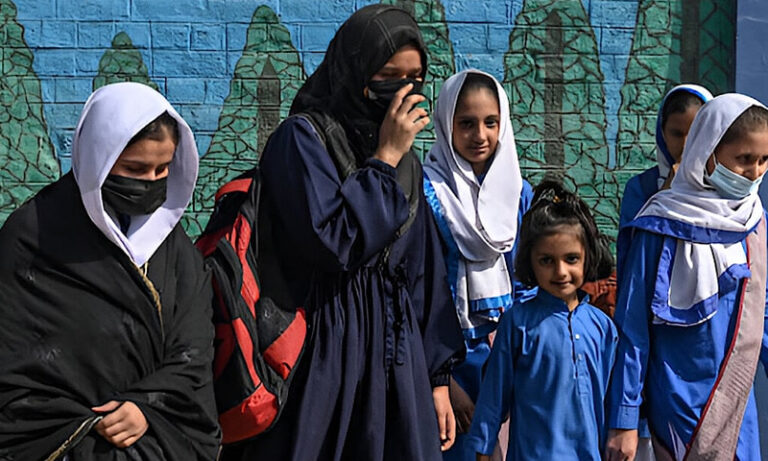
Gilgit (Staff Reporter) — Teaching activities remained suspended for a second consecutive day across all districts of Gilgit-Baltistan as elementary school teachers staged protests outside the district education offices, demanding long-overdue service upgrades.
Hundreds of teachers from various districts, including Gilgit, Diamer, Astore, Ghizer, Skardu, and Hunza, converged at the Directorate of Education in Gilgit to participate in an ongoing sit-in demonstration. The protesting educators are calling for the immediate promotion of B.Ed-qualified teachers to Basic Pay Scale (BPS) Grade 16, a demand they say has been repeatedly ignored by the regional government.
The strike, organized under the banner of the Teachers’ Coordination Committee, led to a complete boycott of classes in public schools throughout the region. Teachers expressed frustration over what they described as the government’s “delaying tactics,” accusing authorities of deliberately stalling implementation of court orders.
According to the protesters, the Chief Court of Gilgit-Baltistan has already issued clear instructions directing the government to grant eligible teachers their rightful pay scales. However, the teachers claim that preferential treatment continues to be given to select individuals, while thousands of qualified educators remain deprived of their lawful entitlements.
The Coordination Committee revealed that the government was given a seven-day ultimatum on September 13, 2024, to comply with the court’s orders. Despite the deadline passing, no concrete action has been taken, they said.
In a parallel development, the Gilgit-Baltistan Teachers Association (GBTA) held an emergency meeting chaired by its General Secretary, Sartaj Ali, at the Directorate of Education. The meeting, attended by district-level presidents and representatives, reviewed various protest strategies and reiterated the demand for immediate resolution of the issue.
The GBTA leadership criticized the persistent delays in addressing what they described as a legitimate demand, calling it a serious governance failure. They urged the Chief Minister, Chief Secretary, Secretary of Education, and other senior officials to urgently address the growing unrest within the teaching community.
The meeting also emphasized the need to hold accountable those responsible for prolonging the crisis, suggesting legal proceedings against the officials allegedly involved in obstructing justice.
The protesting teachers have warned that if their demands are not met promptly, the movement will escalate from district-level protests to a region-wide campaign across Gilgit-Baltistan.
Gilgit-Baltistan, administered by Pakistan, remains a region of strategic and political complexity, and the mounting grievances of its educators reflect deeper systemic challenges in governance and public sector management.
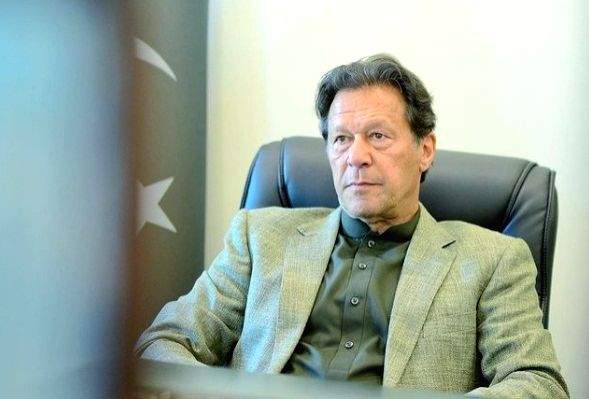
Islamabad, Pakistan – Former Prime Minister and founder of Pakistan Tehreek-e-Insaf (PTI), Imran Khan, has once again refused to undergo a court-ordered polygraph (lie detector) and photogrammetric test in connection with the violent protests that erupted across the country on May 9, 2023.
The Anti-Terrorism Court (ATC) in Lahore on Monday reiterated its directive to conduct both tests and submit a report by June 9, 2025. The decision follows the prosecution’s argument that such scientific tests are crucial for concluding the ongoing investigation.
May 9 Violence and Legal Context
The unrest began after Khan’s arrest from the Islamabad High Court premises, triggering widespread protests allegedly led by PTI supporters. Several military installations were attacked, including the Lahore Corps Commander’s residence (Jinnah House), Mianwali Airbase, and Rawalpindi’s Army General Headquarters. Khan now faces 12 terrorism cases, accused of inciting the violence.
Since August 2023, Imran Khan has been detained at Adiala Jail in Rawalpindi. He has dismissed all charges as politically motivated, while his legal team argues that the polygraph order — issued 727 days after the events — is unlawful and driven by malice.
Court Orders and Khan’s Refusal
The ATC had initially permitted the tests on May 14, 2025, but Khan refused three times, on May 20, 21, and 22, stating he would not participate without his lawyers present. In one instance, he said: “This test is a trap — it’s baseless.”
Despite his objections, ATC Judge Manzar Ali Gul directed police to arrange the tests inside Adiala Jail and submit findings by June 9.
Prosecutor Rana Azhar stated that Pakistan’s Supreme Court allows such tests as part of investigative processes, especially when verifying the statements of the accused.
Political and Legal Reactions
PTI lawyer Barrister Salman Safdar challenged the court’s decision, arguing that Khan has already secured bail in 21 terrorism cases and that ordering such a test after nearly two years undermines legal integrity.
Punjab Information Minister Azma Bokhari criticized Khan’s repeated refusals, saying, “He’s violating court orders and avoiding the truth. He must understand he’s in Adiala Jail, not in Bani Gala.”
PTI senior leader Sheikh Waqas Akram condemned the decision as “one of the most politically motivated legal rulings in Pakistan’s judicial history,” asserting that the party would not permit the tests.
Understanding the Polygraph Test
A polygraph test, often referred to as a lie detector, measures a subject’s physiological responses — heart rate, breathing, perspiration, and blood pressure — while they answer specific questions. Variations in these responses can suggest deception.
According to former investigative officer Mohammad Irfan, trained examiners administer both control (non-crime-related) and relevant (crime-related) questions to detect inconsistencies. The results are plotted on graphs for analysis.
Effectiveness and Legal Standing
Globally, the reliability of polygraph tests remains highly disputed. A 2003 review by the U.S. National Academy of Sciences placed the accuracy of these tests between 80% to 90%, but stressed they are not entirely dependable due to several influencing factors:
Mental State: Anxiety or anger may trigger reactions even when the subject is truthful.
Examiner Skill: Interpretation heavily relies on the examiner’s expertise.
Countermeasures: Some individuals can consciously suppress physiological reactions.
In Pakistan, polygraph results are not admissible as primary evidence in court under the Qanun-e-Shahadat Order (Law of Evidence). However, the Supreme Court of Pakistan ruled in 2016 that such tests may assist investigations if the accused consents.
Prosecution vs. Defense: Legal Tug-of-War
Punjab Prosecutor General Farhad Ali Shah explained to Urdu News that polygraph tests can help confirm statements or lead to new evidence. However, such results are typically treated as supporting material, to be used alongside other evidence like video footage or eyewitness accounts.
Imran Khan’s legal team maintains that his refusal is within his legal rights, but prosecutors argue that continued non-cooperation may be seen as obstruction.
Global Perspective
Courts in India, the United States, and Europe have often rejected the admissibility of polygraph tests, citing scientific uncertainty. The U.S. Supreme Court ruled in 1998 that lie detector results are not reliable enough to be admitted in trials.
Legal analysts in Pakistan, such as Barrister Muhammad Ahmad Pansota, caution that using such tests for political purposes can severely undermine public trust in the justice system.
What’s Next?
As the deadline for the test report approaches, political tensions continue to rise. The prosecution argues that Khan’s refusal is delaying critical investigations, while PTI insists the process is a tool of political persecution.
The court’s June 9 deadline may become a key moment in this high-stakes legal and political drama, testing not just Imran Khan’s legal strategy — but also Pakistan’s justice system.
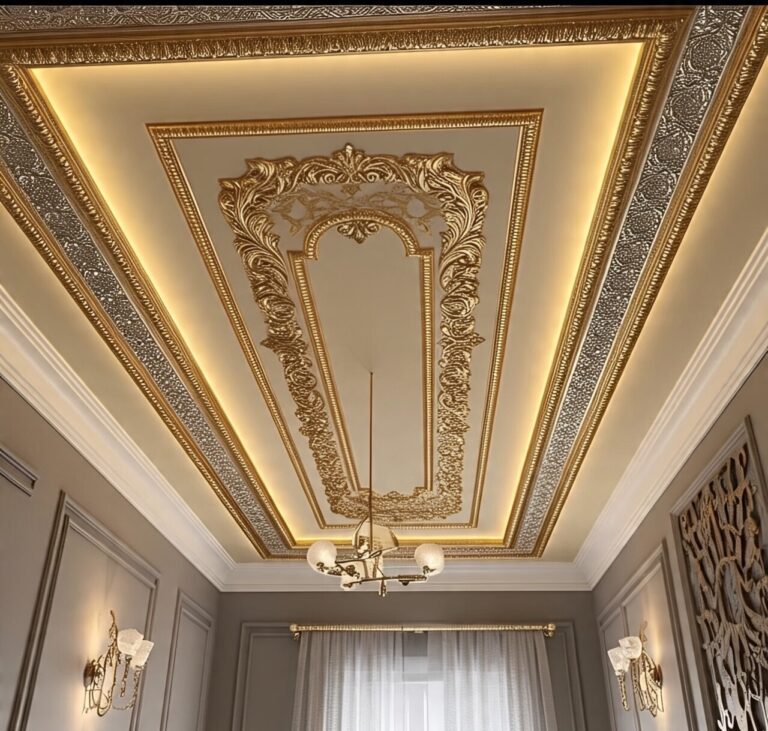
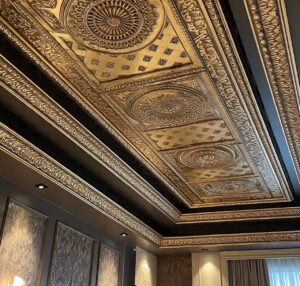
For generations, ceilings were treated as mere functional necessities – whitewashed planes where dust collected and light fixtures hung. Yet in contemporary design circles, a quiet revolution has unfolded. Architects and interior designers now regard ceilings as what some call “the fifth wall,” a critical design element that can transform spatial perception and emotional resonance.
The shift reflects broader changes in how we inhabit spaces. With urban dwellers increasingly living in smaller apartments, every surface demands intentional design. Meanwhile, social media platforms like Instagram and Pinterest have turned striking ceiling designs into viral phenomena. “We’ve moved from ignoring ceilings to celebrating them as architectural centerpieces,” observes London-based designer Eleanor Hartwell. “They’re no longer just the top of a room – they’ve become the crown.”
This transformation spans continents and cultures. In Doha’s Museum of Islamic Art, intricate geometric muqarnas ceilings demonstrate traditional Islamic design principles adapted for contemporary spaces. Across the Atlantic, New York’s Hudson Yards features a soaring, undulating ceiling that functions as both art installation and architectural marvel. The variation speaks to how ceiling design has become a global design language with distinct regional dialects.
Historical Context: From Status Symbols to Blank Slates
The current ceiling renaissance actually marks a return to historical norms. For centuries, ceilings served as potent status symbols across civilizations. The Gothic vaulted ceilings of European cathedrals inspired awe through their celestial heights. Mughal palaces featured gilded ceilings embedded with mirrors to reflect candlelight. Even Victorian homes used elaborate plasterwork to denote prosperity.
Modernism’s rise in the early 20th century changed this dramatically. The Bauhaus movement and International Style championed clean lines and unadorned surfaces, relegating ceilings to blank, white planes. “For decades, the design mantra was ‘out of sight, out of mind,’” notes architectural historian David Zhang. “Ceilings became the forgotten surface.”
The pendulum began swinging back in the 1990s with architects like Tadao Ando using concrete ceilings to create dramatic spatial experiences. Today, the ceiling’s revival reflects both technological advances and changing cultural priorities. LED lighting allows for previously impossible illumination effects. New materials enable lighter, more daring structures. Perhaps most importantly, people now view their homes as holistic environments where every element contributes to wellbeing.
Regional Variations: A Global Design Language
Contemporary ceiling design manifests differently across cultural contexts. In the Gulf region, traditional Islamic patterns find new expression through cutting-edge materials. The Abu Dhabi Louvre’s “rain of light” ceiling filters sunlight through thousands of geometric openings, creating ever-changing patterns. “We’re seeing a fusion of heritage and innovation,” says Emirati designer Alia Al-Mansoori. “Laser-cut metal replaces traditional wood carving, but the design philosophy remains rooted in our history.”
European designers take divergent approaches. Scandinavian interiors favor light wood ceilings that enhance the region’s prized natural light. In Italy, restoration projects breathe new life into historic frescoed ceilings, while contemporary spaces experiment with minimalist concrete. “The contrast tells Italy’s design story,” says Milan architect Sofia Ricci. “We respect our past while constantly reinventing.”
Asia presents perhaps the most dramatic innovations. Tokyo micro-apartments use low, warm-toned ceilings to create intimacy in tiny spaces. Singapore’s Oasia Hotel features a vibrant red ceiling that serves as an urban landmark. Chinese designers increasingly incorporate feng shui principles into ceiling layouts. “In Asia, ceilings aren’t just aesthetic – they’re philosophical,” explains Hong Kong-based designer Ming Zhao.
2024 Trends: Where Design Meets Technology
Several key trends dominate current ceiling design. The most transformative may be the rise of “smart ceilings.” These integrated systems combine lighting, climate control, and even projection capabilities. “Imagine a ceiling that adjusts lighting color temperature based on your circadian rhythm,” suggests tech designer Amir Gupta. “Or one that displays a starry night sky on command.”
Sustainability drives another major trend. Reclaimed wood ceilings bring warmth and eco-credentials to spaces from Sydney to San Francisco. New plant-based acoustic panels merge environmental responsibility with noise reduction – crucial for open-plan offices. “Sustainability isn’t just about materials anymore,” notes Berlin designer Lena Weber. “It’s about creating ceilings that actively contribute to a building’s energy efficiency.”
Visually, designers embrace both extremes. Some opt for bold, dark ceilings that create intimate, cocoon-like spaces. Others champion ultra-minimalist white planes that emphasize airiness. The common thread is intentionality. “Whether you choose ornate or plain, the key is making an active design decision,” advises New York interior designer Marcus Chen.
Practical Considerations: Designing for Real Spaces
For homeowners contemplating ceiling changes, experts offer nuanced advice. Low ceilings benefit from glossy finishes that reflect light, creating an illusion of height. Recessed lighting avoids visual clutter. High ceilings, conversely, can handle dramatic elements like chandeliers or exposed beams.
Material choice proves equally important. In humid climates, moisture-resistant materials prevent mold growth. Earthquake-prone regions require lightweight options. “There’s no one-size-fits-all solution,” stresses structural engineer Yasmine Farsi. “Your ceiling must work with your architecture and environment.”
For renters or budget-conscious homeowners, temporary solutions exist. Peel-and-stick tiles can mimic tin ceilings. Fabric draping creates softness without permanent changes. Even paint alone can transform a space when applied strategically. “A contrasting ceiling color instantly creates dimension,” suggests DIY expert Jamal Williams.
The Future: Ceilings as Interactive Canvases
Emerging technologies promise to further revolutionize ceiling design. Electrochromic glass allows transparency adjustments at the touch of a button. Some prototypes feature ceilings that display weather patterns or constellations. Researchers even explore ceilings with embedded air purification systems.
Yet for all the innovation, designers stress that successful ceilings serve emotional needs as much as functional ones. “The best ceilings make you feel something,” reflects architect Lina Ghotmeh. “Awe, comfort, inspiration – that’s the true measure of great design.” As our relationship with interior spaces continues evolving, the ceiling’s journey from afterthought to centerpiece seems complete. In homes and buildings worldwide, people are discovering what ancient architects always knew – that looking up can be its own reward.