Tuesday, March 31, 2026
9.9 C
Srinagar
Home Blog Page 79

World Bank Resumes Syria Operations After $15.5M Debt Clearance

0

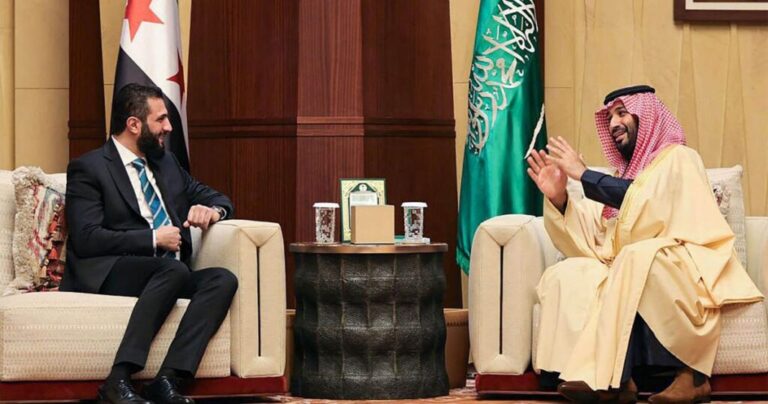
After a 14‑year hiatus, the World Bank has formally resumed operations in Syria following the clearance of a $15.5 million debt by Saudi Arabia and Qatar, restoring the country’s eligibility for International Development Association (IDA) financing. The Bank’s initial initiative will target the restoration of electricity services, a critical enabler for healthcare, education, and water systems. Simultaneously, the United States has lifted sanctions under the Caesar Act, and the International Monetary Fund (IMF) has appointed its first mission chief to Syria in over a decade. Coordination with Gulf states is also underway to fund broader reconstruction efforts, as Syria’s leadership seeks to rebuild infrastructure and re‑establish diplomatic ties.

World Bank Reengagement

Debt Clearance

Saudi Arabia and Qatar jointly paid off Syria’s outstanding arrears of approximately $15.5 million to the World Bank’s IDA fund, resulting in the complete removal of outstanding balances as of 12 May 2025 .

Eligibility Restored

With arrears cleared, Syria now meets the World Bank’s operational policies and qualifies once again for IDA grants and concessional loans aimed at poverty reduction and infrastructure development .

First Project: Electricity Access

The Bank’s inaugural project will focus on restoring reliable electricity supply across key regions, addressing severe power shortages that have left many areas with only a few hours of electricity per day . Improved electricity access is expected to bolster hospitals, schools, and water treatment facilities.

U.S. Policy Shift and Sanctions Relief

Following a high‑level meeting between the U.S. President and Syria’s interim leader, the United States announced the lifting of sanctions imposed under the Caesar Act, opening the door for international investments and aid flows to support Syria’s recovery .

IMF Reengagement

The IMF has named Ron van Rooden as its first country mission chief to Syria since the civil war began, marking a significant step in technical support for fiscal reform and the rebuilding of financial institutions .

Coordination with Gulf Nations

A joint meeting in April involving Syrian officials, the IMF, the World Bank, Saudi Arabia, and Qatar set the groundwork for coordinated financing mechanisms to underpin reconstruction and economic stabilization (Reuters, Al Jazeera).

Syria’s Reconstruction Ambitions

Syria’s new leadership has signaled a departure from entrenched systems by prioritizing infrastructure rehabilitation, transparent governance, and inclusive economic policies. Restoring critical services and re‑building diplomatic ties are central to their strategy for long‑term stability.

Cristiano Ronaldo Tops Forbes’ Highest‑Paid Athletes List Again with $275M

0

Cristiano Ronaldo has been named the world’s highest‑paid athlete for the third consecutive year, earning an estimated $275 million, driven by his Al-Nassr contract, off‑field endorsements, and a huge social media presence (Reuters, BBC). NBA superstar Stephen Curry ranks second with $156 million, buoyed by his record‑breaking three‑point shooting and lucrative partnerships . Heavyweight boxing champion Tyson Fury takes third place on $146 million, thanks in part to his Netflix documentary deal and tourism endorsements (Reuters, Forbes). NFL quarterback Dak Prescott sits fourth with $137 million, following a massive signing bonus and contract restructuring. Lionel Messi drops to fifth at $135 million, reflecting his combined MLS salary and global brand deals.

Overall Rankings

  1. Cristiano Ronaldo: $275 million
  2. Stephen Curry: $156 million
  3. Tyson Fury: $146 million
  4. Dak Prescott: $137 million
  5. Lionel Messi: $135 million
  6. LeBron James: $133.8 million
  7. Juan Soto: $114 million
  8. Karim Benzema: $104 million
  9. Shohei Ohtani: $102.5 million
  10. Kevin Durant: $101.4 million

Top Earners Breakdown

Cristiano Ronaldo

Ronaldo’s record haul stems from a landmark deal with Saudi club Al Nassr, estimated at over $200 million, plus $75 million in endorsements across brands like Nike and Herbalife . He also benefits from a colossal 939 million‑strong social media following, making him one of the most valuable digital influencers in sport .

Stephen Curry

Curry’s $156 million comprises roughly $56 million in salary from the Golden State Warriors and $100 million in endorsements with Under Armour, Rakuten, and Kia Motors . His rise to second place reflects both his on‑court achievements—surpassing 4,000 career three‑pointers—and his growing off‑court brand power .

Tyson Fury

Fury’s earnings include fight purses, sponsorship deals, and a Netflix-exclusive documentary series, earning him a total of $146 million despite a comparatively lighter fight schedule .

Income Streams and Influence

Modern athletes increasingly rely on diverse revenue sources:

  • Club/Contract Salaries: Account for 40–70% of total earnings among the top ten.
  • Endorsements & Sponsorships: Major brands invest heavily in global icons—Ronaldo’s and Curry’s off‑field incomes both exceed $75 million.
  • Media & Content Deals: Fury’s Netflix series and social media monetisation underscore the shift towards content creation as a revenue pillar.
  • Social Media Platforms: Direct fan engagement and sponsored posts contribute tens of millions annually, particularly for athletes with 100+ million followers.

Industry Implications

The concentration of earnings among a handful of superstars highlights the widening gap between elite talents and the rest of the professional sports world. As leagues and brands vie for marquee names, athletes are leveraging personal brands to negotiate more lucrative contracts and partnerships. This trend is likely to intensify, especially in burgeoning markets like the Middle East and Asia, where clubs and sponsors are willing to pay premiums for global recognition.

Vivian Jenna Wilson Debuts as Model in Wildfang’s Pride Month Campaign

Elon Musk’s daughter champions trans visibility and co-designs T‑shirt benefiting The Trevor Project

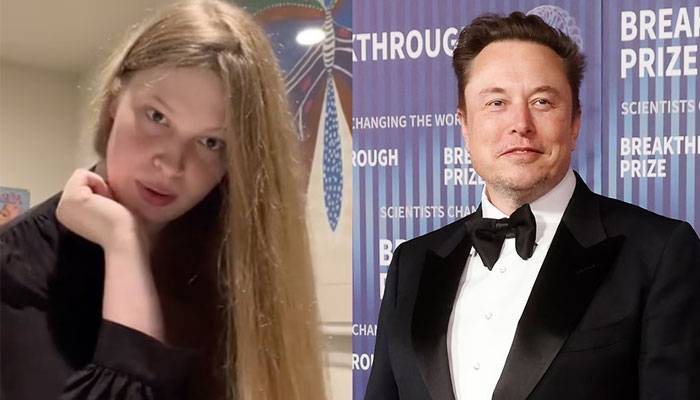
Vivian Jenna Wilson has made her professional modeling debut as the face of Wildfang’s 2025 Pride Month campaign, “Say My Name.” The 21‑year‑old transgender activist and social media personality appears in a series of striking editorials, marking a high‑profile moment for trans representation in mainstream fashion.

Wilson features in three distinct looks: a deep purple coordinated set paired with a graphic T‑shirt emblazoned “Existing Shouldn’t Be Revolutionary,” a floral suit with a tie, and a dramatic 40‑foot braided hairstyle spelling out her name. She co‑designed the signature T‑shirt, pledging all profits to The Trevor Project, the leading LGBTQ+ youth crisis intervention and suicide prevention charity.

Born in 2004 and publicly embracing her identity in 2020, Wilson legally changed her name in 2022 to affirm her autonomy. Her collaboration with Wildfang follows her Teen Vogue cover and numerous advocacy events, underscoring her commitment to advancing transgender rights and visibility.

Wildfang CEO Emma McIlroy described the partnership as “a celebration of bravery, creativity, and community.” Early social media reaction highlights widespread praise for Wilson’s authenticity and the campaign’s empowering message.

Wilson has expressed aspirations to continue modeling, walk international runways, and expand her activism through future fashion collaborations. Industry insiders predict her debut will pave the way for more transgender talent in global campaigns.

Kashmiri Waiter in Doha Credits Trump for India-Pakistan Ceasefire: A Personal Perspective Amid Diplomatic Disputes

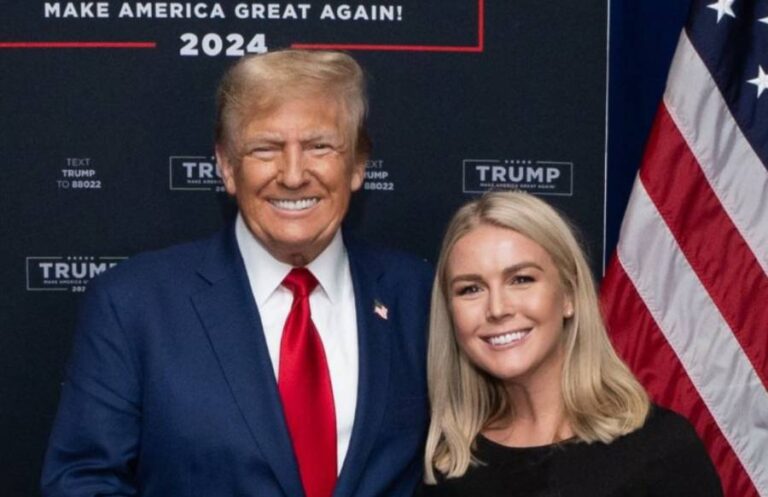
Muzaffarabad: In a recent statement that has garnered international attention, White House Press Secretary Karoline Leavitt shared an encounter with a Kashmiri waiter in Doha, Qatar. According to Leavitt, the waiter expressed gratitude towards former U.S. President Donald Trump for his role in facilitating a ceasefire between India and Pakistan.

Leavitt recounted on social media that during a breakfast in Doha, the waiter, identifying himself as being from Kashmir, thanked her for President Trump’s efforts in de-escalating tensions between the two South Asian nations. The waiter reportedly mentioned that he had been unable to return home due to the conflict but was hopeful following the announcement of the ceasefire.

This anecdote has sparked discussions about the impact of international diplomacy on individuals affected by geopolitical conflicts. While the U.S. administration has claimed a mediating role in achieving the recent ceasefire, the Indian government has officially denied any third-party involvement, emphasizing that the agreement was reached bilaterally.

The incident underscores the complexities of international relations and the varying narratives that emerge from diplomatic engagements. For individuals like the Kashmiri waiter in Doha, such developments carry profound personal significance, highlighting the human dimension of geopolitical decisions.

As the region continues to navigate the aftermath of the ceasefire, stories like these serve as poignant reminders of the real-life implications of international diplomacy.

China’s Inverex Launches Pakistan’s Most Affordable Electric Car, XiO EV

In a significant move towards sustainable transportation, Chinese company Inverex has introduced the XiO EV, touted as Pakistan’s most affordable electric vehicle. This launch marks a pivotal step in the country’s shift towards eco-friendly mobility solutions.

XiO EV: A Game Changer in Pakistan’s Automotive Landscape

The XiO EV is a compact, four-door electric hatchback designed to cater to urban commuters. Manufactured in China, it comes in three variants, each offering different driving ranges to suit diverse needs:

  • XiO 140: Offers a range of 140 km per charge, priced at PKR 3,499,000 with a booking amount of PKR 500,000.

  • XiO 220: Provides a 220 km range, priced at PKR 4,199,000, currently available at a promotional price of PKR 3,999,000. Booking requires PKR 600,000.

  • XiO 320: Delivers a 320 km range, priced at PKR 5,199,000, with a promotional offer of PKR 4,999,000. The booking amount is PKR 700,000.

Advanced Features and Fast Charging Capability

One of the standout features of the XiO EV is its support for DC fast charging technology. This allows the battery to charge from 30% to 80% in just 30 minutes, making it highly practical for daily urban use. Additional features include:

  • Built-in radar system for enhanced safety.

  • Smart safety features to ensure driver and passenger protection.

  • Complimentary one-year insurance coverage.

Implications for Pakistan’s Electric Vehicle Market

The introduction of the XiO EV by Inverex signifies a growing interest in electric vehicles within Pakistan. As the country grapples with environmental challenges and seeks to reduce its carbon footprint, affordable electric cars like the XiO EV could play a crucial role in transforming the transportation sector.

For more information on the XiO EV and its specifications, visit Inverex’s official website.

India’s Move to Reconsider Indus Water Projects Raises Alarms in Pakistan

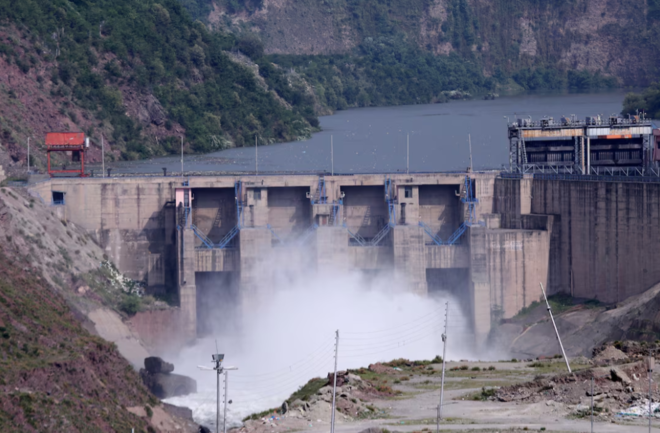
Muzaffarabad: In a potentially destabilizing move, the Indian government is reportedly considering the initiation of new water infrastructure projects on the rivers allocated to Pakistan under the historic Indus Waters Treaty (IWT). The development has raised deep concerns in Pakistan, where a majority of the country’s agricultural economy relies heavily on uninterrupted access to these transboundary rivers.

According to a report by Reuters, Indian Prime Minister Narendra Modi has directed relevant authorities to explore new construction on the Chenab, Jhelum, and Indus rivers—rivers that are designated for Pakistan’s use under the 1960 Indus Waters Treaty, brokered by the World Bank.

Among the proposed projects is a significant extension—approximately 120 kilometers—of the Ranbir Canal in Indian-administered Jammu & Kashmir, which draws water from the Chenab River. If materialized, such actions could alter water flow into Pakistan, potentially impacting millions of livelihoods in the already climate-stressed region.

Pakistan’s foreign minister, Ishaq Dar, has formally raised objections, labeling any disruption or unilateral interference with the treaty a breach of international law. He cautioned that any attempt to divert or reduce Pakistan’s share of water could be interpreted as an “act of war.”

This geopolitical shift comes amid heightened tensions following the recent tragic incident in Pahalgam, where over two dozen individuals lost their lives. Critics argue that the Indian government may be leveraging internal unrest to advance aggressive infrastructural and territorial strategies in the disputed region of Jammu & Kashmir.

Water remains a critical and sensitive issue in South Asia, particularly between nuclear-armed neighbors India and Pakistan. For Kashmir, a region caught at the crossroads of both nations’ strategic ambitions, the implications of any alteration to natural water flows could be profound—economically, ecologically, and politically.

Mexican Beauty Influencer Shot Dead During TikTok Livestream in Suspected Femicide

Zapopan, Mexico — A prominent 23-year-old beauty influencer, Valeria Márquez, was fatally shot during a TikTok livestream at her beauty salon in Zapopan, Mexico, in what authorities are investigating as a suspected case of femicide.

According to international news agencies, Márquez—who had over 200,000 followers across TikTok and Instagram—was interacting with her audience live when she briefly left the frame to receive a package. Moments later, she returned to her chair and was suddenly shot, collapsing on-screen as the livestream continued broadcasting.

Police reports confirm that an armed assailant entered the salon and opened fire at close range, targeting Márquez. Emergency services arrived shortly after, but the influencer was pronounced dead at the scene.

Authorities are treating the incident as a possible femicide—a gender-based killing of a woman—amid growing concern over violence against women in the country.

Read Also: Popular Kashmiri TikToker YAR G’s Account Banned, Igniting Free Speech Concerns in Kashmir

The brutal killing has reignited debate over Mexico’s struggle with gender-based violence and the effectiveness of its justice system. According to human rights organisations, femicide remains a deeply rooted issue in the country, with hundreds of cases reported annually—many of which go unpunished.

Online, followers expressed shock and grief, with tributes pouring in for Márquez, who had built a dedicated following through beauty tutorials, fashion content, and candid personal updates.

As the investigation continues, no arrests have been made, and the identity or motive of the attacker remains unknown. Authorities have appealed for witnesses and relevant information from the public to assist in the case.

UN Doors Shut for Kashmiris? Pro-Independence Parties in AJK March for Peace Amid Rising Tensions

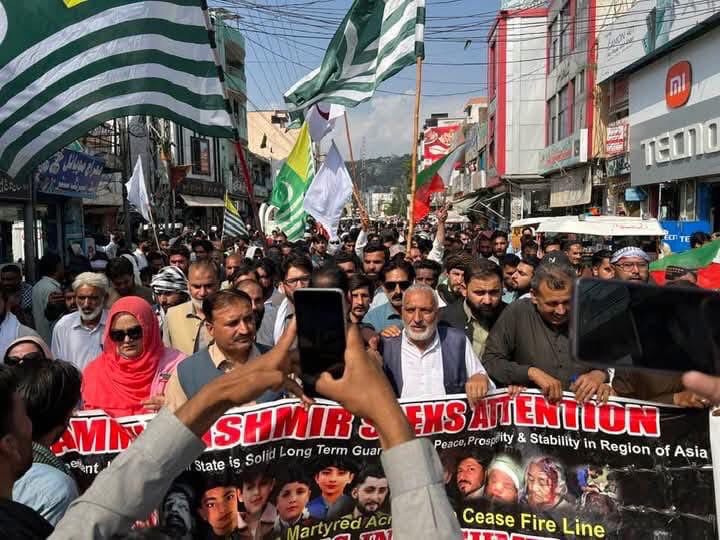
Kotli, Pakistan-administered Jammu and Kashmir — In the aftermath of recent cross-border hostilities between India and Pakistan, which left several civilians dead or injured across the Line of Control (LoC), pro-independence political parties in Pakistan-administered Kashmir launched a peaceful march towards the United Nations Military Observer Group (UNMOGIP) office in Kotli, demanding attention to the plight of Kashmiris trapped in the decades-long conflict.

The march, which was organized jointly by leading pro-independence groups including the Jammu Kashmir Liberation Front (JKLF), aimed to appeal for international intervention and the demilitarization of the region. Heavy police deployment under Section 144 was observed in Kotli to prevent the rally, yet the protestors proceeded peacefully and reached the gates of the UN office without incident.

However, upon arrival, protestors were informed that the UN officials were not present, allegedly having relocated to Islamabad due to the security situation.

“Even the UN Doors Are Now Closed for Kashmiris” – Aman Kashmiri

In a strongly worded video message, Aman Kashmiri, Chief Organizer of JKLF in Pakistan-administered Kashmir, condemned the absence of UN officials at a time when tensions along the LoC are at a peak.

“The UN officials, whose responsibility is to monitor military movements along the LoC, are missing during a crisis that has left both lives and infrastructure in ruins. This negligence raises serious concerns about their commitment to peacekeeping in Kashmir,” he stated.

Kashmiri also emphasized that the people of Jammu & Kashmir must be recognized as the first party in any dialogue or resolution process related to the region’s future. He reiterated the long-standing demand for the withdrawal of all foreign military forces and the restoration of Kashmiri self-determination under international law.

Growing Distrust in International Institutions

The symbolic march comes at a time when local communities across Azad Jammu & Kashmir (AJK) and Indian-administered Kashmir feel increasingly alienated from both the regional powers and international institutions. Despite multiple resolutions and observer mandates, the UN has failed to offer substantial protection or mediation on the ground, according to many rights advocates.

This protest marks yet another chapter in the continued struggle of stateless Kashmiris who remain caught between geopolitical rivalries and broken promises of self-rule.

Kashmir’s Civil Response to Border Violence: Emergency Shelters and Aid for Affected Families

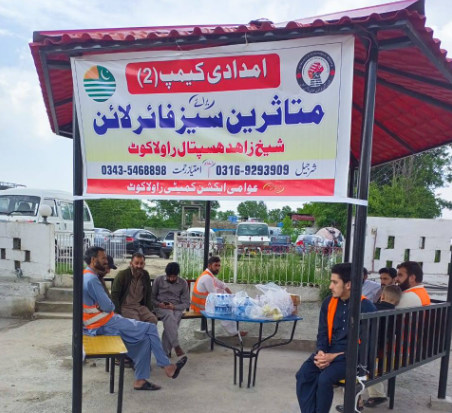
Muzaffarabad, Pakistan-administered Kashmir — In response to recent cross-border shelling along the Line of Control (LoC), local community action groups across several towns in Pakistan-administered Jammu and Kashmir rapidly mobilized emergency support networks to shelter and feed families displaced by the violence.

Though a ceasefire has now taken hold, the days of bombardment left dozens of families without homes or basic necessities. Grassroots emergency committees, particularly in towns like Sehnsa, Holar, and Sudhnoti, established temporary shelters, food distribution points, and blood donation networks in what residents are calling an unprecedented example of “people-powered relief.”

250+ Families Provided Shelter

In Sehnsa and Holar alone, over 150 families have been provided with immediate housing. Keys to 100 ready homes in Holar were handed over to an “Emergency Contact Committee,” which is also managing resource distribution. Sehnsa’s local committees arranged shelter for another 50 families, while simultaneously addressing urgent food shortages.

In neighboring Sudhnoti district, public action committees created similar emergency response structures. Other regions including Ali Sojal, Khai Gala, Tararkhal, Garala, and Pallandri have reported preparation of over 100 family shelters each.

These volunteer-run committees are also forming specialized units for managing food, essential supplies, and blood donations—a critical need in any future escalation.

Humanitarian Hotline Network

To streamline coordination, contact points were set up across affected regions. Citizens were urged to reach out for housing or food aid via dozens of volunteer coordinators. These include Rashid Naeem (03425438068), Tabrez (03435824098), Akmal (03464768308), and others across various zones. In Balouch, 100 additional shelters were arranged under the supervision of advocates and local leaders like Sardar Shamsheer (03465094760) and Faizan Fayaz (03439530180).

In high-altitude areas like Toli Peer and Srinagar Guest House, emergency hospitality has also been extended, particularly by guesthouse managers Sohail Ismail (03334620776) and Osama (03170891581), among others.

Civil Society’s Role in Wartime Response

These efforts highlight the critical role of community self-help in times of conflict, especially in regions like Kashmir where infrastructure is often limited and state response may be delayed. While the latest round of hostilities has calmed under the recent ceasefire, the preparedness and solidarity shown by local residents could serve as a model for future humanitarian response in conflict zones.

The committees remain active, and organizers say they are keeping shelters and aid on standby in case of any future flare-ups.

“This is not just about reacting to war—it’s about taking care of each other when no one else will,” said one local volunteer from Sehnsa.

High Court Approves Housing Scheme on Forest Land in Pakistan-Administered Kashmir, Dismissing Petition

Rawalakot, Pakistan-administered Jammu & Kashmir – May 14, 2025: In a controversial verdict, the High Court of Pakistan-administered Jammu and Kashmir has allowed the construction of a private housing scheme on forest land, dismissing a public petition that challenged the legality and environmental impact of the allotment.

The land in question, located in the Paddat area of Rawalakot’s town limits, comprises 100 kanals (approximately 12.5 acres) of valuable forest land. It was allotted to a private developer under the “Naya Pakistan Housing Scheme” at a nominal rate of just PKR 2,000 per kanal—amounting to a total of PKR 200,000 (around $700).

Local residents became aware of the land transfer only after construction work began. They subsequently filed a writ petition in January 2023, arguing that the land was designated as reserved forest and must be used solely for ecological and conservation purposes. The petitioners offered to pay five times the allotment price to preserve the forest.

However, on April 25, 2025, the High Court dismissed the petition. In its ruling, the court stated that the challenge came too late and was based on selective interpretation of previous Supreme Court rulings. The High Court noted that decisions regarding land use in the public interest fall under the jurisdiction of the state government.

Citing another Supreme Court precedent, the judgment emphasized the importance of transparent procedures in executing public-interest projects, particularly those aimed at providing affordable housing. The court also noted that the petitioners failed to establish themselves as “aggrieved parties” since they had no legal claim to the land.

The court did not address whether the land’s status as forest property was legally changed, or whether environmental regulations and no-objection certificates (NOCs) from the Forest Department were obtained before the allotment.

The judgment stated:

“The land belongs to the government, which has decided to use it for public welfare. Hence, any project initiated in the public interest cannot be halted.”

The ruling also stated that the petitioners failed to demonstrate any legal violation or procedural irregularity in the allotment process.

Contradictions with Previous Rulings

This ruling appears to contradict several previous decisions by higher courts in Pakistan. In August 2023, the Supreme Court barred the Mangla Dam Housing Authority in Mirpur from allotting public-use spaces for private development. Similarly, the Supreme Court revoked the notification for a housing scheme in forest land managed by the Pearl Development Authority (PDA) in Banjosa, Rawalakot—ordering the land to be returned to the Forest Department.

In other cases across Pakistan, the courts have consistently ruled against the conversion of forest and agricultural land for private housing. Notably, in February 2020, the Supreme Court ordered the Sindh government to cancel all illegal forest land allotments and reclaim the properties. In 2018, it criticized the provincial administration for allegedly enabling land grabs, including allotments to Bahria Town and other developers.

Most recently, in November 2024, the Lahore High Court ordered the Punjab government to ban housing societies on agricultural land as part of a broader anti-smog policy.

Environmental Concerns Unaddressed

The latest ruling in Rawalakot has raised concerns among environmentalists and civil society groups, who argue that forest land should be strictly protected amid rising deforestation and ecological degradation in the region. The lack of transparency in the allotment and absence of environmental safeguards have further intensified criticism.

Despite multiple court precedents upholding environmental protections, the High Court’s latest decision appears to open the door to private development on ecologically sensitive land, setting a worrying precedent for similar cases in the future.