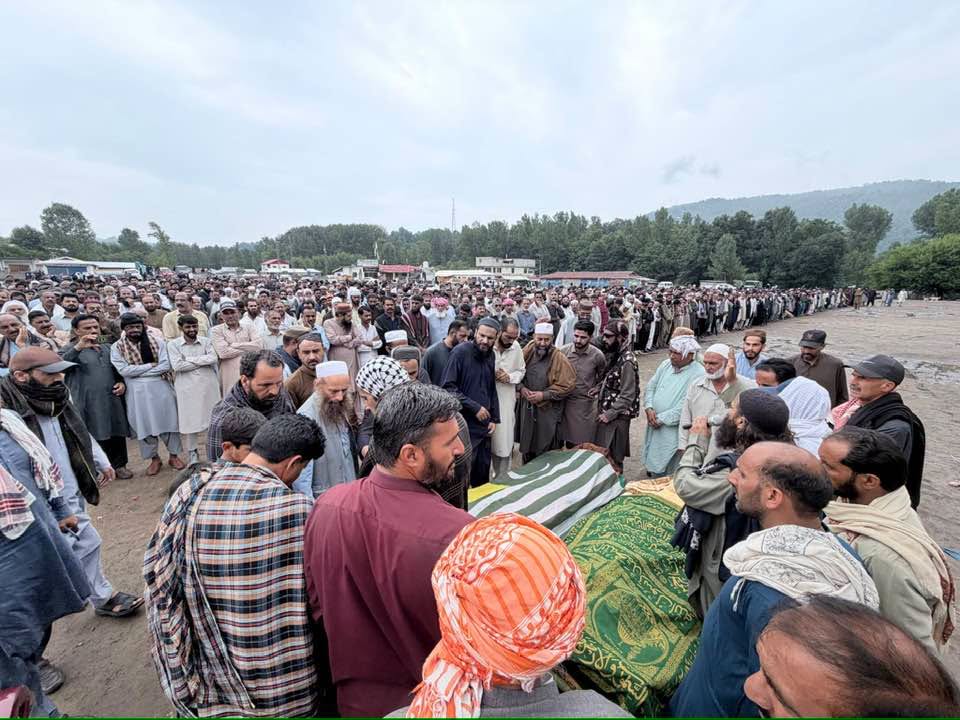
Millions gather at city entry points in Pakistan-administered Kashmir, pressing for systemic reforms, the release of detainees, and justice for victims.
RAWALAKOT — The ongoing public sit-in in Rawalakot, located in Pakistan-administered Kashmir, has entered its 80th consecutive day, with demonstrators occupying major entry points around the city to demand far-reaching administrative and judicial reforms.
The protest, which draws participants from diverse age groups including elders, women, and youth, stems from longstanding local grievances over governance, infrastructure decay, and allegations of institutional corruption spanning decades. Organizers and participants have voiced strong discontent regarding the distribution of development funds, the state of public health and educational facilities, and the rule of law.
Demonstrators have also called for the immediate release of individuals detained during earlier unrest, accountability for security-related casualties, and an end to what they describe as systemic harassment of peaceful protesters. The protesters maintain that their campaign remains entirely peaceful, relying on public mobilization rather than confrontation.
Local community representatives have appealed to international human rights organizations and independent observers to take note of the situation on the ground, pointing to alleged information gaps and restricted public communication channels surrounding the prolonged demonstrations.
The sit-in highlights deep-seated economic and political frustrations within the region, where public movements have increasingly challenged prevailing governance structures and demanded greater transparency from authorities.