
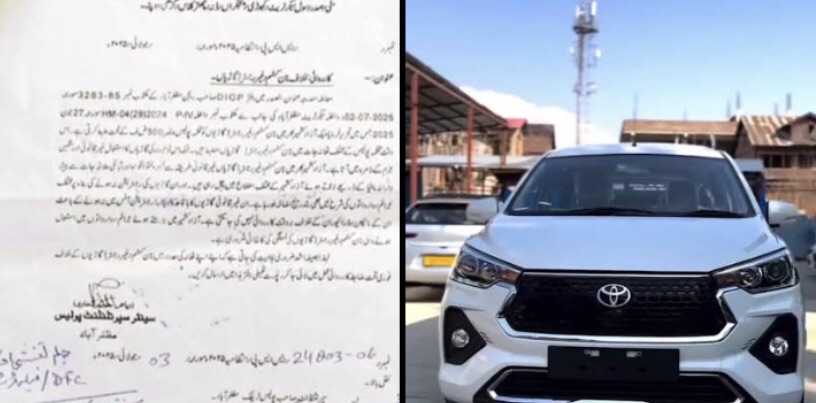

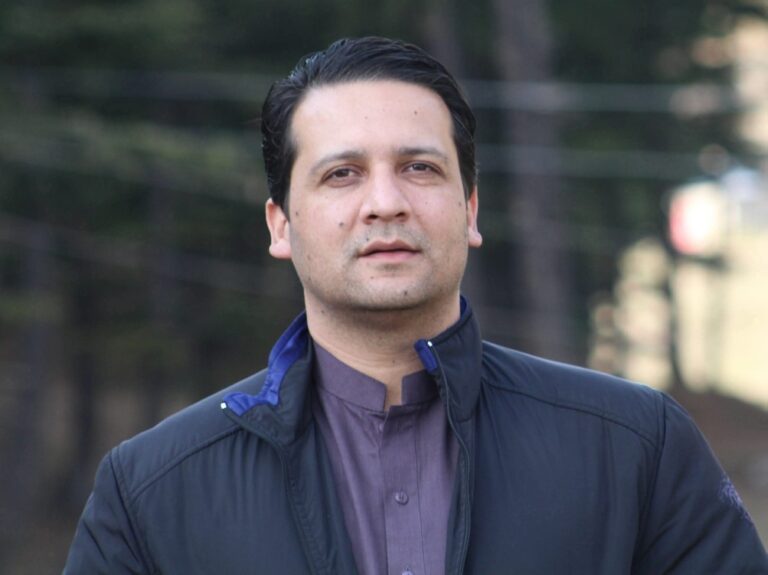
MUZAFFARABAD,Pakistan administered Kashmir – The recent order by the Senior Superintendent of Police (SSP) in Muzaffarabad to seize all non-custom-paid vehicles has ignited fierce resistance from the local traders’ association. Central President of the Traders Association, Sardar Iftikhar Firoz, has condemned the directive as both humiliating and exploitative. He warned that any attempt to confiscate such vehicles would trigger a “strong backlash.” He firmly declared: “No vehicle will be impounded.”
Firoz emphasised that these vehicles, legally imported from Pakistan into this landlocked, disputed region, have been operating openly for nearly 78 years—without regulation or enforcement—across regions such as Swat, former FATA, Balochistan, Chitral, and here in Kashmir. “Where have the laws been all these decades?” he asked, noting that the levied customs duties—paid upon import—do not benefit local public services but instead flow straight into Pakistan’s federal coffers.
“These heavy taxes,” he added, “are compulsory and imperialist; they must end.” He urged the Muzaffarabad administration to withdraw the crackdown and instead formalise policy: vehicles should be registered under the Excise Department, issued license plates, and taxed locally (e.g., via token tax), rather than seized through law enforcement “drama.” He argued this would generate revenue for region-specific welfare and dissuade “manufactured unrest.”

Firoz’s statement reflects broader frustration: “This disputed region has no share in the NFC Award,” he said, “so why should the federal government extract taxes?” He accused the authorities of intentionally instigating unrest, sabotaging local stability, and provoking anger among residents, even though everyone claims to support peace.
Legal, Political & Historical Context
Conflicted Territory and Customs Policy
Muzaffarabad’s label as a disputed territory under Pakistani administration complicates the legality of standard customs enforcement. For decades, vehicles that arrived informally via Pakistan-administered passes were permitted local use under tacit acceptance—particularly in rural and mountainous regions.
International Law & Self‑Determination
The dispute over Jammu & Kashmir is rooted in UN Security Council Resolutions, especially UNSC Resolution 47 (1948), which called for a free and impartial plebiscite to determine Kashmir’s future. The UN reaffirmed Kashmiris’ right to self-determination in subsequent resolutions and through international treaties—including the UN Charter and ICCPR. The ongoing discord over taxation and federal jurisdiction is tightly interwoven with these unresolved sovereignty issues.

Voices from the Ground
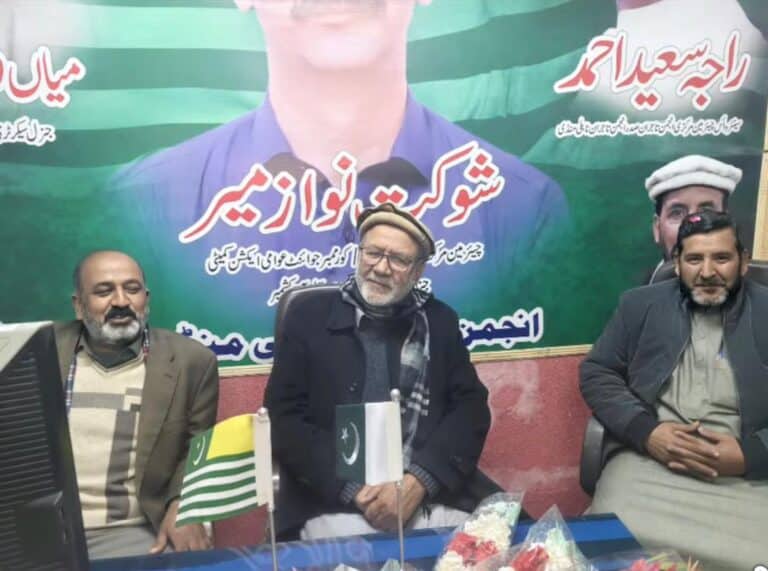
Traders argue the vehicle seizures are symptomatic of a larger pattern—where federal authorities impose policies without local input, earnings flow to Islamabad, and local administrations are bypassed. Public voices reflect resentment:
“They pay lakhs in customs duty—but where is the benefit? Not a single penny returns to people here.”
“Why seize poor farmers’ pick-up trucks every few years? It’s a yearly ‘raid’.”
What Comes Next?
- Local government response: Will Excise officials propose a registration/taxation scheme to replace enforcement crackdowns?
- Regional economic impact: Will driver confidence recover, or further damage trade and mobility?
- Legal-political pressure: Will traders take their plea to the Azad Kashmir Assembly or courts, raising questions about federal overreach in a disputed territory?
The UN Charter, Security Council resolutions, and general international law affirm Kashmiris’ right to self‑determination. Any governance measures—including trade and tax arrangements—should align with these principles, particularly in disputed areas.


Conclusion
The non-custom-paid vehicle issue is more than a tax dispute—it exemplifies the unresolved status of Azad Kashmir and underscores why local voices reject external dictates. A sustainable resolution must centre on clear domestic regulations, revenue for local welfare, and respect for democratic rights and international mandates.
The Azadi Times continues to monitor developments in Muzaffarabad. In the meantime, we call for inclusive policymaking, local-first governance, and a pathway toward Kashmiri self-determination.