
GENEVA: Six United Nations human rights experts have expressed serious concern over the designation of the Joint Awami Action Committee (JKJAAC) in Azad Jammu and Kashmir (AJK) as a terrorist organisation, alleged use of excessive force against protesters, deaths during demonstrations, arrests and reported human rights violations. The experts have formally sent a communication to the Government of Pakistan seeking clarification on these developments.
The communication, dated September 4, 2026, carries reference number AL PAK 4/2026 and raises eight key questions concerning the situation in AJK, the ban imposed on the Jammu Kashmir Joint Awami Action Committee and incidents reported during protest demonstrations.
The communication was signed by six UN Special Mandate Holders working on issues including human rights in counter-terrorism operations, arbitrary detention, extrajudicial killings, freedom of expression, freedom of peaceful assembly and the protection of human rights defenders.
According to information cited in the communication, the decision to designate the Jammu Kashmir Joint Awami Action Committee under the Anti-Terrorism Act, 2014, raises concerns about its compatibility with international human rights standards. The experts also expressed concern that the committee may have been targeted in response to its political, labour-related and human rights activities.
Questions Raised Over the Ban on the Joint Awami Action Committee
According to the communication, on June 5, 2026, the AJK Home Department included the Joint Awami Action Committee in the First Schedule of the Anti-Terrorism Act, 2014, effectively declaring it a proscribed organisation.
Authorities reportedly accused the committee of involvement in terrorism, creating disorder, spreading fear among the public and undermining public security.

However, the UN experts questioned the legal and factual basis of the decision, pointing out that representatives of the AJK and federal governments had previously held formal negotiations with the committee. These engagements included the Muzaffarabad Agreement reached in October 2025.
The communication also notes that on May 28, 2026, the Office of the Chief Secretary of AJK formally invited representatives of the committee to attend a meeting scheduled for May 30. The meeting was reportedly intended to discuss the issue of seats reserved for non-state refugees in the Legislative Assembly.
The experts further questioned the timing of the decision to proscribe the committee, particularly in the context of the electoral process and the elections scheduled for July 27, 2026.

Communication Refers to 96 Civilian Deaths During Protests
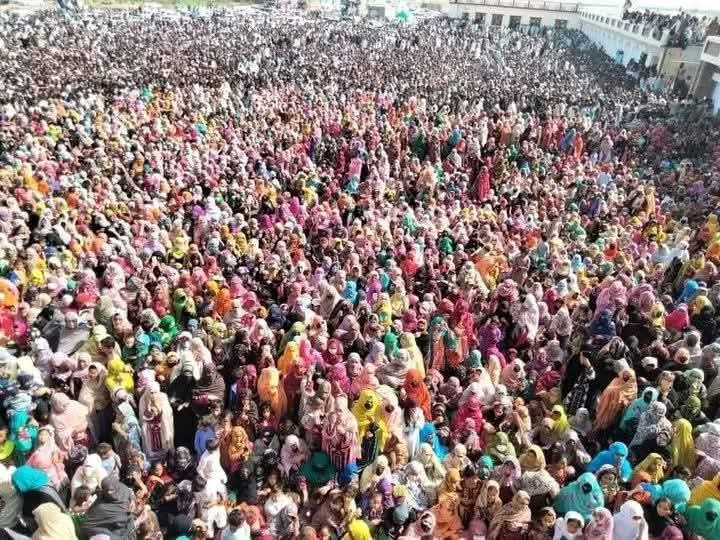
Citing information received by the experts, the communication states that since the protests began in June 2026, at least 96 protesters and six police and paramilitary personnel have reportedly been killed.
According to the allegations outlined in the communication, approximately 4,000 police and paramilitary personnel were deployed to prevent a proposed long march from Rawalakot towards Muzaffarabad.
Security forces reportedly used tear gas, batons and, in some instances, live ammunition to disperse protesters, resulting in multiple deaths and injuries.
The communication also includes a particularly serious allegation that some bereaved families were required to sign documents describing their deceased relatives as terrorists before being allowed to receive their bodies.
The UN experts emphasised that firearms should not be used to disperse peaceful assemblies. They stated that potentially lethal force may only be used when strictly necessary to protect life against an imminent threat.
More Than 70 Arrested, Including Journalists
The communication states that at least 70 people, including members and supporters of the Joint Awami Action Committee as well as journalists, were arrested during security operations.
Some individuals were reportedly charged under anti-terrorism provisions.
The experts also expressed concern over reports of internet and mobile network shutdowns, curfews, hospital closures and the alleged denial of medical assistance to injured protesters.
205 Individuals Reportedly Placed on Fourth Schedule
Another major concern highlighted in the communication relates to reports that 205 individuals, including women, have been placed on the Fourth Schedule of the Anti-Terrorism Act.
According to the communication, these individuals have reportedly faced restrictions including the suspension or cancellation of official identity documents, freezing of bank accounts and passports, and requirements to inform police authorities about their movements.
The experts warned that such measures could adversely affect access to essential services, medical treatment, economic activities and freedom of movement.
Concerns Over Linking Freedom of Expression and Peaceful Protest to Terrorism
The UN experts reminded Pakistan that it is a party to the International Covenant on Civil and Political Rights (ICCPR), which guarantees fundamental rights including freedom of expression, peaceful assembly, freedom of association, the right to life, liberty and participation in public affairs.
The communication emphasises that restrictions imposed by governments must be lawful, necessary and proportionate.
It further states that advocating for political, economic and social rights, as well as engaging in peaceful protests, cannot be classified as terrorism without a sound legal basis.
The experts also raised concerns over certain provisions of Pakistan’s Anti-Terrorism Act, stressing that the definition of terrorism must be clear and consistent with international legal standards.
They emphasised that before an organisation is proscribed, credible evidence, transparent legal procedures and access to effective judicial review must be ensured.
Pakistan Asked to Respond to Eight Key Questions
The six UN experts have requested detailed explanations from the Government of Pakistan on eight key issues.
These include:
- The legal and factual grounds for proscribing the Joint Awami Action Committee.
- The evidence used to justify the decision.
- The procedures available for appeals and judicial review.
- Measures taken to protect freedom of expression and peaceful assembly.
- Investigations into deaths and injuries during the demonstrations.
- Alleged unlawful arrests and detentions.
- Restrictions on internet, mobile networks and other communications.
- The legal justification for imposing restrictions on 205 individuals reportedly placed on the Fourth Schedule.
The communication also asks what steps the government has taken to ensure that the Joint Awami Action Committee can continue its work in defence of human rights and the promotion of economic, social and political rights without fear of reprisals.
Government Given 60 Days to Respond
The UN experts stated that the Government of Pakistan’s response may be published on the United Nations website once received.
If no response is received, the communication will be made public after 60 days and may subsequently be included in a report submitted to the UN Human Rights Council.
At the conclusion of the communication, the experts urged the Pakistani authorities to take immediate interim measures to prevent further alleged human rights violations, ensure that such incidents do not recur and protect the rights of those affected.
They also called for accountability, stating that if investigations establish the allegations to be true, those responsible must be held accountable.
According to the CNI News reporting team, the joint communication issued by six UN human rights experts represents a significant international development concerning the situation in Azad Jammu and Kashmir.
The communication does not merely question the decision to proscribe the Joint Awami Action Committee. It also raises serious concerns over the reported loss of civilian lives during protests, arrests, restrictions on civil liberties and alleged measures imposed on 205 individuals.
The key question now is how the Government of Pakistan will respond to the concerns and eight questions raised by the UN experts, and what concrete steps will be taken to ensure justice for affected individuals and families.
Download the Original UN Communication (PDF)
Read the original communication sent by six UN human rights experts to the Government of Pakistan regarding the human rights situation in Azad Jammu and Kashmir.