
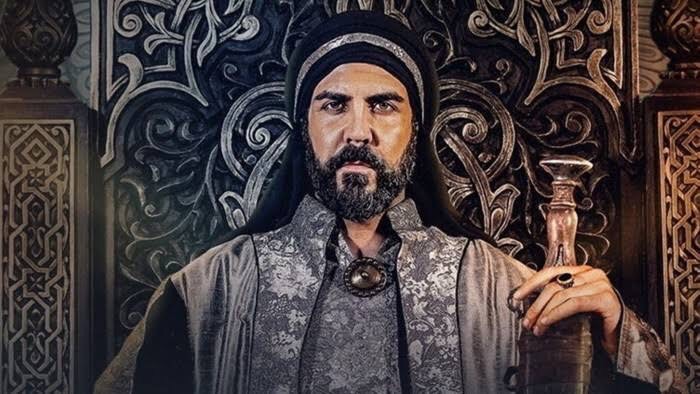

Riyadh: The 2025 release of the historical TV series Muawiya, an ambitious project by Saudi Arabia with a reported budget exceeding $100 million, has ignited fierce debates across the Muslim world. Advertised as an epic retelling of the life of Muawiya ibn Abi Sufyan (RA), one of Islam’s most pivotal and debated historical figures, the series has found itself in the eye of a political, religious, and cultural storm.
Though produced with high cinematic standards, lavish sets, and detailed portrayals of early Islamic events, Muawiya has stirred a wave of condemnation from several Islamic nations. Countries including Qatar, Iran, Iraq, and Egypt have either banned or strongly criticized the series, accusing it of misrepresenting historical events and deepening already fragile sectarian lines between Sunni and Shia Muslims.
The Central Figure: A Hero or a King?
Muawiya ibn Abi Sufyan (RA) is a polarizing figure in Islamic history. Revered by many Sunnis as a companion of the Prophet Muhammad (PBUH) and considered by some as the fifth rightly guided Caliph after the brief caliphate of Hasan ibn Ali (RA), others view him as the founder of a dynastic monarchy that transformed the Rashidun Caliphate into an Umayyad kingship.

For Shia Muslims and even a segment of Sunnis, Muawiya’s (RA) refusal to pledge allegiance to Caliph Ali ibn Abi Talib (RA) — the cousin and son-in-law of the Prophet — marked a significant fracture in the early Islamic leadership. His later decision to appoint his son Yazid as successor, a move that culminated in the tragedy of Karbala, is a historic turning point that continues to evoke sorrow and outrage among Shia communities worldwide.
The series, critics argue, paints Muawiya not only as a political genius and a stabilizing force, but positions the Banu Umayyah clan as noble protagonists in contrast to the Banu Hashim, which included Imam Ali (RA), Hasan (RA), and Husayn (RA). These portrayals, especially when dramatized with fictional dialogue and cinematic liberties, tread on sensitive theological and historical terrain.
Drama or Distortion?
One of the most contentious aspects of Muawiya is its depiction of pre-Islamic Arabia— particularly the opening scenes involving Muawiya’s mother, Hind bint Utbah, in a semi-exposed state during childbirth, surrounded by the rituals of Jahiliyyah (the Age of Ignorance). Critics argue that such visuals are not only unnecessary but dishonor the revered status of the Sahabah (companions of the Prophet).



The series also features musical interludes, dancing women, and dramatizations of battle scenes such as the Battle of Siffin, where Muawiya and Ali (RA) clashed. Many historians and religious scholars have called the depictions highly inaccurate, with concerns that they misrepresent key Islamic events and personalities.
Moreover, the entire narrative seems to lean toward the glorification of Banu Umayyah, while implicitly criticizing Banu Hashim. To some, this amounts to historical revisionism.
Geopolitical and Sectarian Fallout
The release has not occurred in a vacuum. In an era where Sunni-Shia tensions remain volatile in several regions — from Lebanon and Iraq to Yemen and Bahrain — the series risks further aggravating divides. The timing of the release during Ramadan 2025, traditionally a month of spiritual reflection and unity, has raised even more eyebrows.

While the series remains unavailable in English or Urdu translations, its Arabic version alone has set off social media storms. Online forums and Islamic networks have exploded with debates, condemnations, and threats of retaliatory productions. Most notably, Iraq’s Ashaair Network, associated with Shia clerical circles, announced a counter-series focused on Abu Lu’lu’a Firoz, the Persian slave who assassinated Caliph Umar ibn Khattab (RA).
The decision to glorify Umar’s assassin as a hero in response to Muawiya underscores the severity of the cultural rupture. Many see it as a dangerous precedent — turning religious and historical figures into media weapons in ideological warfare.
The West Watches, the East Divides
Interestingly, Israeli and some Western media outlets have applauded the series, seeing it as a bold move toward re-examining Islamic history. But critics in the Muslim world suspect ulterior motives — pointing to the age-old strategy of “divide and rule.”
For many, the celebration by non-Muslim media of such a divisive project raises red flags. After all, an internal Muslim narrative so contentious that it can trigger sectarian violence is bound to benefit external geopolitical agendas.
A Call for Balance and Accountability
What Muawiya reflects is not just a controversial TV series, but a deeper issue: the weaponization of Islamic history. On one side, certain Sunni factions have long glorified Muawiya while downplaying his conflict with Ali (RA). On the other, some Shia and extreme voices have gone so far as to label Muawiya (RA) a hypocrite or even a disbeliever — a stance not shared by most mainstream scholars on either side.
Both these extremes — known as Nasibiyyah and Rāfidhiyyah — distort the legacy of Islam’s earliest generations. While one demonizes the Prophet’s family, the other dismisses the Sahabah in totality.
The majority of Sunni and Shia scholars urge Muslims to leave historical judgments to Allahand refrain from making takfir (declaring someone a non-Muslim) based on disputed political events over a thousand years old.
Conclusion: What Should Unity Look Like?
In an age where media is the new battleground for narratives, Muawiya risks deepening divisions rather than educating viewers. While cinematic depictions of Islamic history are not inherently wrong, they require a sense of responsibility, scholarly integrity, and above all, an aim to unite, not divide.
The Muslim world, fractured along too many lines already, cannot afford a cultural war over long-settled debates. Perhaps it’s time to ask: not just what we remember from our past, but why we choose to revisit it — and at what cost.