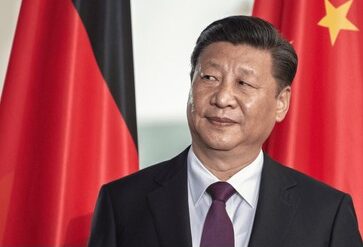

A look at how China’s current president transitioned from an elite Beijing childhood to years of rural labor during the Cultural Revolution.
Chinese President Xi Jinping’s early life began in an apparently privileged environment, but severe political upheavals within his family drastically altered the course of his journey.
Born in Beijing in 1953, Xi was the sixth child of Xi Zhongxun, an early leader of the Chinese communist revolution who later rose to senior party ranks and served as a vice premier. Growing up, Xi had access to elite educational institutions and advantages unavailable to most ordinary Chinese families at the time.
However, following the launch of China’s Cultural Revolution, his family’s fortunes shifted dramatically.
In the 1960s, Xi Zhongxun faced accusations of affiliation with an anti-party group. He was stripped of his high-ranking political posts, expelled from the party, and sent to work in a remote factory. Because he was the son of a man labeled a counter-revolutionary at the time, young Xi also faced immediate social and political isolation.
At the age of 15, Xi was sent away from Beijing to the remote village of Liangjiahe, where he spent years adapting to starkly different living conditions. According to reports, he lived in cave-like dwellings alongside rural residents and endured severe manual labor.
This period coincided with Mao Zedong’s campaign encouraging urban youth to move to the countryside to learn from peasants. Xi was among millions of young people dispatched from cities to rural communes.
Xi’s early life reflects a stark contrast: an upbringing defined by elite educational access due to his high-level political lineage, followed by years of harsh rural hardship following his family’s political fall. In later years, these formative experiences frequently surfaced in political biographies detailing his rise.
Xi subsequently took on various responsibilities within the Chinese Communist Party, gradually ascending through the ranks before becoming General Secretary in 2012 and President of China in 2013. His trajectory mirrors a turbulent era of modern Chinese history defined by the Cultural Revolution, political realignments, and the forced rustication of youth.