
Azad Kashmir Prime Minister Iftikhar Gilani has announced projects worth Rs14.75 billion under a 100-day plan covering nine areas, including healthcare, sanitation, tourism, urban beautification, a green bus service, higher-education scholarships, vocational training and business loans for young people.
A review of the nine points suggests that seven of the sectors have featured in the priorities, announcements or projects of previous governments, according to this analysis by journalist Nasir Chaudhry. Some initiatives were also taken forward during former prime minister Chaudhry Anwar-ul-Haq’s tenure, with work reportedly beginning on several projects and funds allocated for some of them before a change of government left parts of the agenda unfinished.
The Apni Chhat, Apna Ghar housing scheme and the proposed expansion of the green bus service appear to be the two initiatives the current government is presenting as new measures. The central question is what is genuinely new in the 100-day plan — and whether this time the announcements will translate into implementation and completion.

Healthcare: new projects or a renewal of old promises?
The plan includes the establishment of three catheterisation laboratories, two stroke centres, the upgrading of basic health units (BHUs) and the launch of a Clinic on Wheels service modelled on Punjab’s programme.
Previous governments in Azad Jammu and Kashmir have also announced health packages aimed at improving public healthcare. The previous administration announced a health package around six months ago, which included the upgrading of basic health units and other measures.
Healthcare has again been included in the current government’s 100-day agenda. The key questions are how much progress was made on earlier commitments, how allocated resources were used and when the newly announced facilities will become operational.

Suthra Kashmir: repeated cleanliness drives, but waste remains
Launching the Suthra Kashmir sanitation initiative in eight district headquarters is the second major point in the plan. The government has set a target of starting work in less than a month.
Sanitation campaigns have featured in successive administrations’ priorities, often launched under a new name after a change of government. Municipal staff are mobilised for cleanliness drives in district headquarters, but questions remain about whether these campaigns lead to lasting improvements.
Several administrations have launched cleanliness initiatives over the past five years, with public spending on the campaigns. Yet waste can still be seen in parts of towns, markets and along roads. The challenge is not simply to launch another campaign, but to establish a permanent, accountable waste-management system with measurable results.

Apni Chhat, Apna Ghar: implementation promised within 100 days
The government has included the Apni Chhat, Apna Ghar housing scheme in its plan and says practical work will begin within the first 100 days. It is being presented as one of the administration’s new initiatives.
Its effectiveness will depend on transparent eligibility criteria, the form of financial assistance, the application process, the budget and a clear implementation timetable. Publishing these details will be essential to assessing whether the scheme moves beyond an announcement.
Tourism: promises of an industry, but where are the basic facilities?
The plan proposes upgrading government guest houses managed by the Tourism Department, with a six-month completion target.
Successive governments have announced tourism initiatives, including renovations of state-run rest houses and changes to their management arrangements. But turning tourism into a sustainable industry requires more than refurbishing government accommodation.
Complaints about the lack of public toilets, poor sanitation, inadequate roads and limited facilities at tourist destinations have persisted. Visitors have also reported concerns about arbitrary charges and weak local arrangements at some locations. The question is whether upgrading guest houses will be enough, or whether the government will also address visitor safety, transport, sanitation, infrastructure and local management.
Urban beautification: when will promises for Muzaffarabad and divisional headquarters be fulfilled?
The 100-day plan includes urban beautification projects in Muzaffarabad and other divisional headquarters, with a three-month target.
Successive governments have described Muzaffarabad and Mirpur as the face of the region and announced plans to improve their appearance. Residents, however, continue to raise concerns about traffic congestion, waste, drainage, construction over nullahs and enforcement of building regulations.
Urban beautification involves more than repainting walls or improving roundabouts. It requires traffic management, effective waste collection, drainage, enforcement of building codes and better urban planning. Clear plans and measurable outcomes will be needed to assess the three-month target.
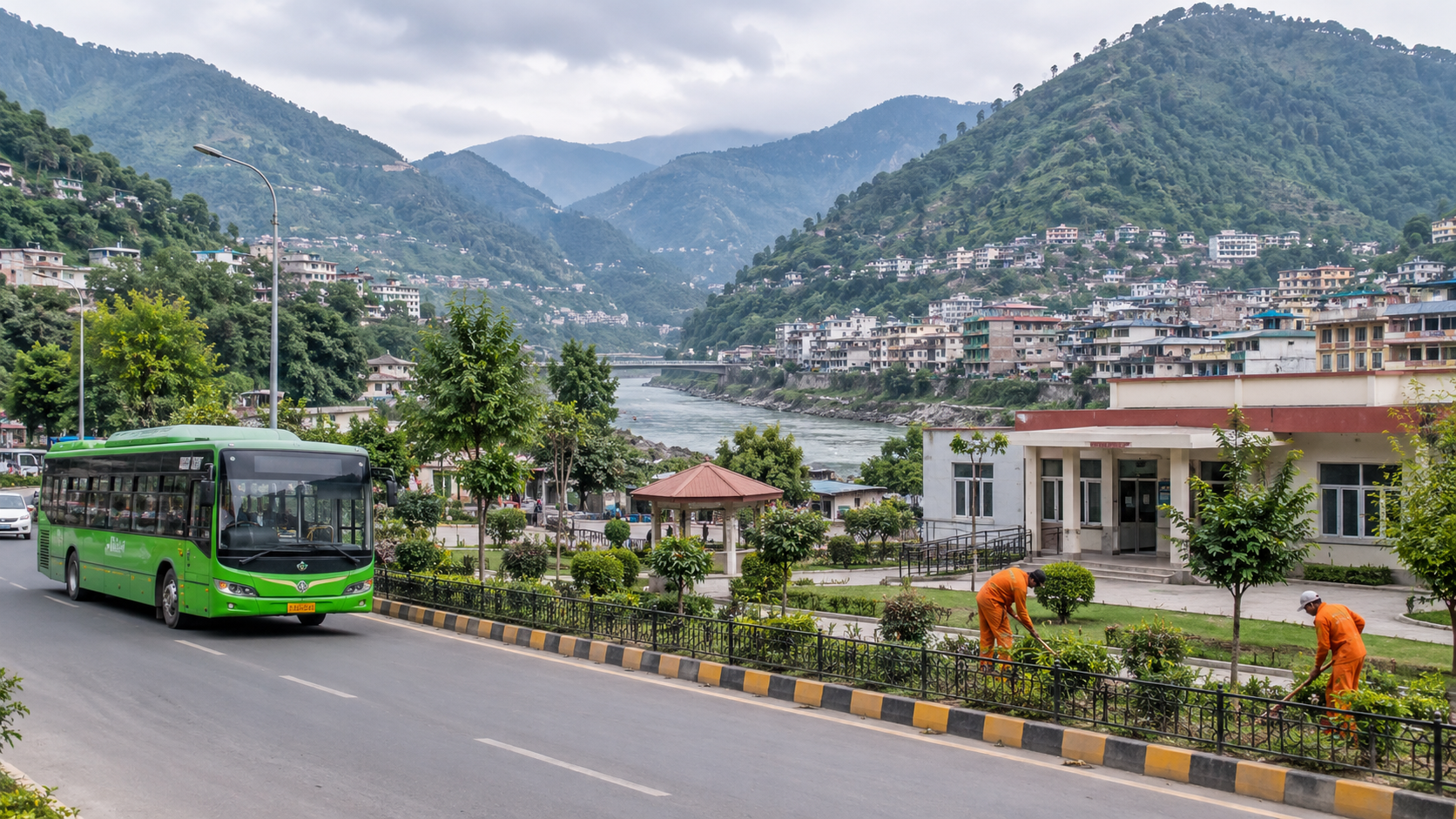
Green bus service: expansion from Mirpur and Muzaffarabad to six more cities
The government has announced plans to introduce a green bus service in Mirpur and Muzaffarabad and extend it to six additional cities within the next 100 days. The initiative is being presented as a new development in the current plan.
Its success will depend on when services begin, the routes covered, fares, fleet availability and operating schedules. A launch ceremony alone will not demonstrate success unless residents receive a reliable and sustained transport service.
Higher-education scholarships: an earlier initiative remained incomplete
Two separate scholarship schemes for deserving students seeking higher education have also been included in the 100-day plan.
The previous government led by Chaudhry Anwar-ul-Haq had also taken steps towards higher-education scholarships, but the schemes did not become fully operational before the change in government. The current administration will need to set out eligibility rules, funding, application procedures and a transparent payment system.
Skills programmes for young people: previous governments also took steps
A programme to equip young people with vocational skills and improve their employment prospects is another element of the plan. Previous administrations have also announced and undertaken initiatives in this area.
During Chaudhry Anwar-ul-Haq’s tenure, reforms and vocational training initiatives were introduced at the Technical Education and Vocational Training Authority (TEVTA), according to the analysis. The success of the new programme should be measured not only by enrolment figures, but by whether trainees secure jobs, apprenticeships or viable opportunities to start businesses.
Youth business loans: Rs5 billion allocated, applications invited, but loans not disbursed
A scheme to provide loans to young people seeking to start businesses was also initiated during Chaudhry Anwar-ul-Haq’s tenure. According to the information provided by journalist Nasir Chaudhry, Rs5 billion was allocated for the programme and, after approval, it was assigned to the Small Industries Department and Kashmir Bank for implementation.
Further work was carried out during the government led by Faisal Rathore. The Small Industries Department invited applications and accounts were opened at Kashmir Bank, but the actual disbursement of loans to young applicants did not begin before elections were announced.
The current government has again included youth business loans in its 100-day plan. The test will be whether it publishes a clear timetable for verifying applications, approving financing and disbursing the allocated funds.
What will be the real test of the 100-day plan?
The prime minister’s plan covers nine areas, including healthcare, sanitation, tourism, urban beautification, education, vocational training and business loans. This analysis argues that seven of the sectors have appeared in previous governments’ announcements, projects or initial measures. The Apni Chhat, Apna Ghar scheme and the proposed expansion of the green bus service are being presented as new initiatives.
Governments in Azad Kashmir have changed, project names have been revised and fresh announcements have followed, but public complaints about basic services remain in several sectors.
The real test of the 100-day plan will not be the number of announcements. It will be the budget allocated, the institutions made responsible, transparent targets, delivery deadlines and tangible results for the public. The administration will need to show that it can complete unfinished projects inherited from previous governments, deliver new initiatives and ensure that their benefits reach residents and young people.
— Nasir Chaudhry, Journalist, Muzaffarabad