
Opinion | By Dr Javaid Hayat Khan | 3 November 2026
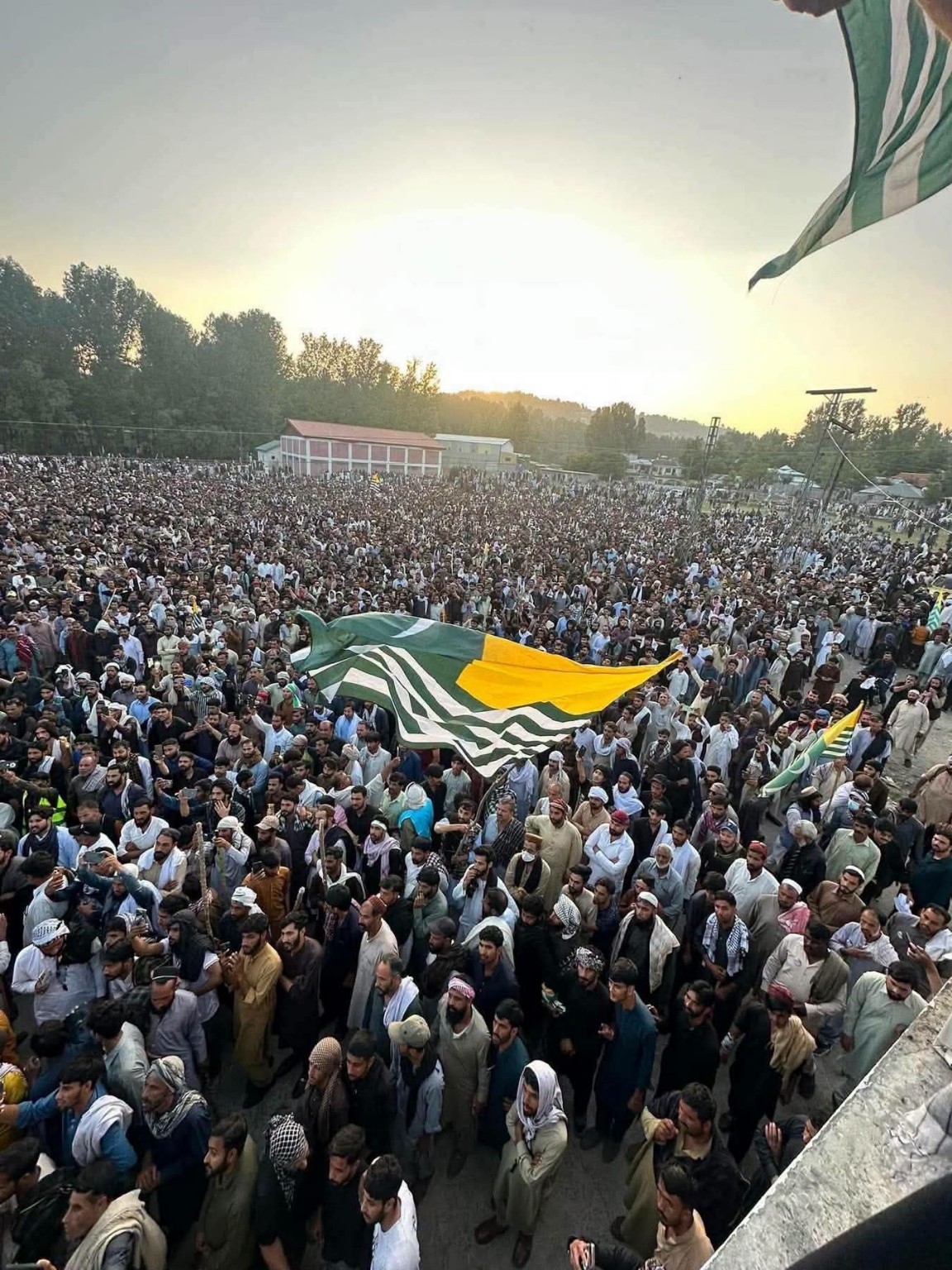
There is much talk these days about the writ of the state in Pakistan and Pakistan-administered Azad Jammu and Kashmir (PaJK). At times, the phrase is invoked as though repeating it were enough to strengthen the state. Some appear more concerned about defending state authority than addressing public demands, civil liberties and fundamental rights.
But what does the writ of the state actually mean?

Does it mean that people must not protest, ask questions or demand their rights, and must accept every government decision without question? If so, what purpose do the Constitution, law, assemblies, courts and democracy serve?
Those who invoke state authority so frequently should answer a basic question: where is the writ of the state when Shaukat Nawaz Mir, after reportedly being taken into custody, is not brought before a competent court? Is he also in some form of protective custody? Or does the law allow the state to take a citizen away whenever it wishes and leave production before a court to its discretion?
There are also claims about the presence of around 200 armed men. Their history deserves scrutiny. Who brought them to Rawalakot three years ago, on whose instructions and for what purpose? Who permitted an armed march on horseback in a peaceful city such as Rawalakot? Was that also an exercise in restoring the writ of the state, or was state authority being used for another purpose?



Another question is how these individuals are now being associated with the Action Committee. If they were previously operating under state patronage or administrative authority, how has their identity or affiliation changed? If they were indeed under state patronage or within its administrative control, how can the state distance itself from accountability for their actions?
Only days before the ban was imposed, the state was negotiating with the same Action Committee it now describes as an adversary. A written agreement was also reached with the committee in October 2025. The government subsequently proscribed the organisation under anti-terrorism legislation. The reasons and evidence cited by the authorities should be subject to transparent legal scrutiny, just as the committee’s actions should be assessed under the law.
The ban has been challenged under the relevant law, but, the author argues, the procedure provided by that law has not been taken forward. Does this not raise questions about whether the state itself is complying with the legislation it has enacted? If enforcing the law is the state’s responsibility, where is the writ of the state in this matter?

If United Nations human rights mechanisms are now seeking information about the human rights situation, this should not simply be dismissed as an external conspiracy or an unexpected development. States must answer questions about the consequences of their policies. Ignoring human rights concerns does not make them disappear; it can make them more serious.
The writ of the state is not a magic wand that can make public rights, constitutional guarantees and legal requirements disappear. The rule of the state must mean the rule of the Constitution and the law, applied equally to the government, the state and the people.
Yet the meaning of state authority appears to be applied selectively: if a citizen breaks the law, there is an arrest; if a citizen speaks, there may be action under the Fourth Schedule. If the state departs from the law, it is described as being in the national interest. When people take to the streets, it becomes a law-and-order problem. When they ask questions, they may be suspected of rebellion. When the state does not answer, its silence is presented as strategy.
In Pakistan-administered Azad Jammu and Kashmir, restoring the writ of the state should not mean establishing control through coercion. It should mean rebuilding public confidence in institutions, protecting civil liberties, making accountability effective and addressing public grievances and concerns.
The authority of the state comes from law, not fear. A state is strengthened by the trust of its citizens, not by their silence. The rule of law is established through its equal application, not through coercion and guns.
Some people may mistakenly believe that respect for the state and criticism of government actions are contradictory. In fact, questioning the state is a citizen’s right, while answering those questions is the state’s responsibility. Yet those who ask questions are often treated as suspect, made to prove their patriotism and then lectured about the writ of the state.
Here is a suggestion: instead of being so preoccupied with the writ of the state, raise your voice for the writ of the Constitution and the law as well. That would benefit both the state and the people. Otherwise, there is a risk that one day the writ of the state will be proclaimed loudly while law, justice and civil rights lie buried beneath it.
Citizens have the right to peaceful protest, but that right does not include blocking roads or taking the law into their own hands. Every citizen must submit to the Constitution and the law. But is the state and its government doing the same?
The state is entitled to uphold its authority under the Constitution and the law, but it must first demonstrate that it is itself subject to both.
The real test of state power is not how it makes citizens obey the law, but how it obeys the law itself. Where citizens are subject to the law while the state, government and rulers are exempt, there is no rule of law: there is rule by power.
About the author: Dr Javaid Hayat Khan is a political science researcher and author. His book, Azad Jammu and Kashmir: Polity, Politics, and Power-Sharing, was published by Oxford University Press.
Editorial note: This is an opinion article. References to Shaukat Nawaz Mir reflect the author’s argument and should be read alongside the reported facts: the UN Working Group on Enforced or Involuntary Disappearances took urgent action on his case, while government and police accounts reported in the media have disputed that he is in their custody. The UN action is not a judicial finding of responsibility. The author’s references to armed men and their alleged links are also presented as questions and claims, not independently established findings.