
Opinion
Political differences should remain political.
Elections were held in June 2026 for the 24 general seats of the Gilgit-Baltistan Assembly. As usual, every party and candidate campaigned against their rivals. After the elections, losing candidates in around a dozen constituencies across Gilgit-Baltistan, including three constituencies in Diamer, refused to accept the victories of their opponents. After initial protests, they approached the Election Commission, election tribunals and the courts.
In the constituency associated with Dilpazir Sahib in Diamer, re-polling was ordered at one polling station. Re-polling was also ordered at a few stations in the constituencies of Works Minister Muhammad Naseem and Haji Rehmat Khaliq. In Baltistan, a fresh poll was ordered in the constituency of Haji Fida Muhammad Nashad. Following re-polling, AIG Dilpazir was declared successful in Diamer-I, while Works Minister Muhammad Naseem was declared successful after re-polling at selected stations in Darel. After fresh voting in Haji Fida Muhammad Nashad’s constituency, his son was declared the winner. Once these three candidates were declared successful, their rival candidates accepted the outcomes.

A petition filed by Aftab Haider from Gilgit Constituency-III was dismissed as inadmissible. Hearings are still under way before the election tribunal on petitions concerning two constituencies in Ghizer and a number of other constituencies in Gilgit-Baltistan. In these cases, opponents are pursuing their legal arguments in court rather than resorting to abuse or threats.
The constituency whose results have remained the subject of prolonged controversy after the 2026 elections is GB-16 Diamer-II. In the general election, the candidates were Attaullah of the Pakistan Peoples Party (PPP), former minister Engineer Anwar of the Pakistan Muslim League (PML), and independent candidate Imam Malik.
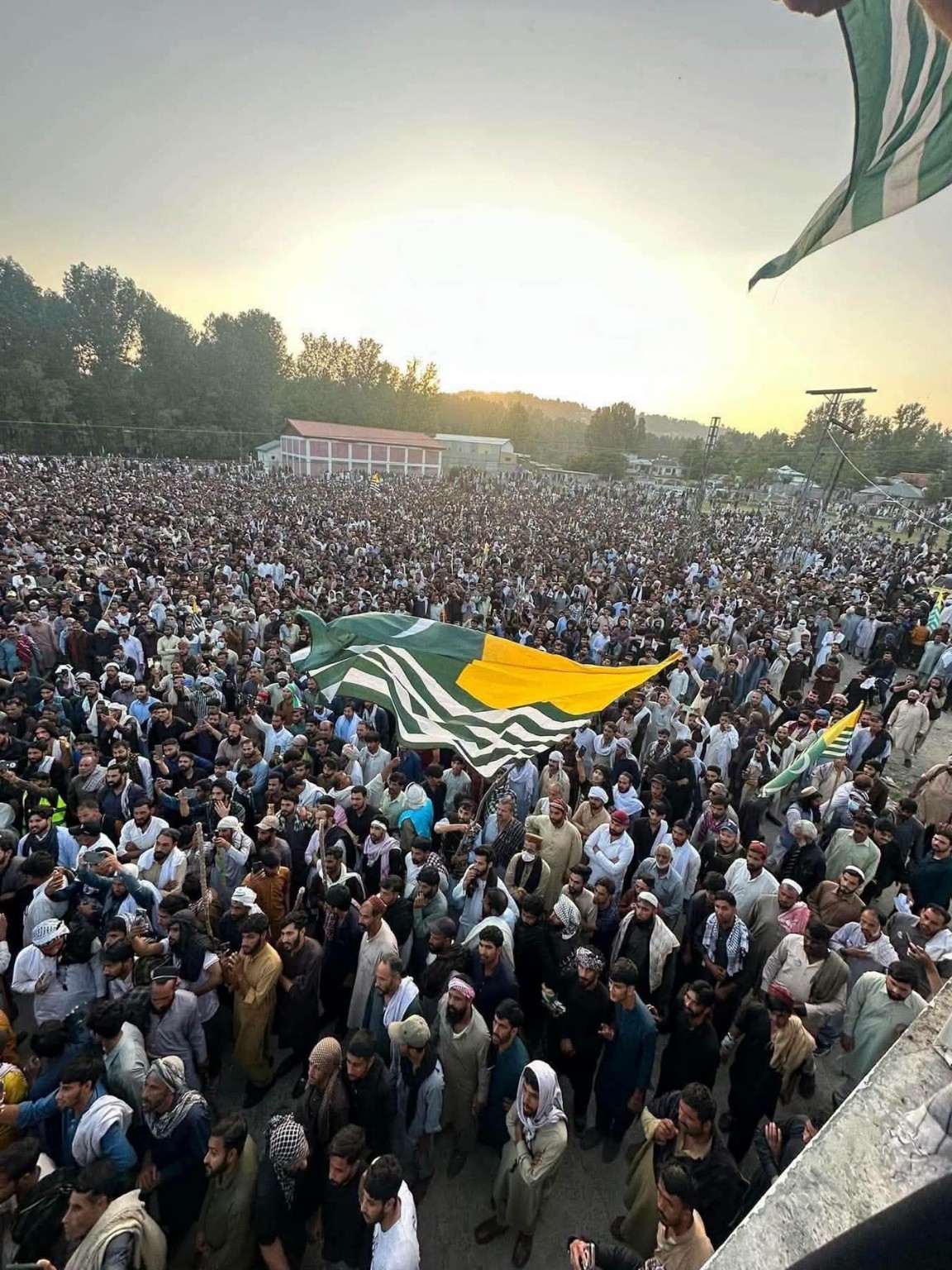
From the night of 7 June, supporters of PPP candidate Attaullah and independent candidate Imam Malik took to the streets over the results in this constituency. The result remained unresolved until the Assembly members took their oaths. Later, before postal ballots were counted, the Election Commission ordered re-polling at three polling stations in the constituency. Before that order was implemented, however, Imam Malik was issued Form 49 after the general votes were counted without the postal ballots. He took oath as a member of the Assembly and joined the IPP.



Supporters of PPP candidate Attaullah staged strong protests against Imam Malik’s victory and approached the Service Tribunal. Two months later, an order was issued to count the postal ballots. After the postal votes were counted, Attaullah secured a lead of 13 votes. Imam Malik’s membership was cancelled and Attaullah was declared successful. Attaullah was also appointed an adviser to the Chief Minister.
The decision prompted another round of protests by supporters of IPP’s Imam Malik in Chilas and Gilgit. They approached the tribunal seeking implementation of the Election Commission’s earlier decision to hold re-polling. On every hearing date, emotionally charged groups from both sides were seen holding rallies in Gilgit city.
Recently, the tribunal ordered re-polling at three polling stations and fixed 15 November as the date. PPP candidate Attaullah challenged the decision in the Chief Court, which upheld it. With the Chief of the Supreme Appellate Court unavailable, the legal route was effectively closed, and re-polling took place at the three stations on 15 November.

Since 7 June, both rival groups have kept up a heated campaign against each other on the ground and on social media. The region’s respected traditions have been undermined, and the atmosphere has also been inflamed by ethnic rhetoric. During the re-polling, former PML minister Engineer Anwar announced his support for Imam Malik. Tensions had already risen before polling day.
Diamer’s traditions were once treated with particular respect. This time, hatred has been given greater space in politics in the constituency. When former chief minister Haji Gulbar campaigned in his capacity as party president, the opposing camp described it as a conspiracy by the Shin and Syed communities. When PPP Gilgit-Baltistan president Amjad Advocate and his team campaigned for their party’s candidate, Attaullah, the opposing camp portrayed it as propaganda for a Yashkun alliance.
Unfortunately, despite minor complaints at two of the three polling stations, voting proceeded peacefully at those locations. Disorder broke out at the third station in the evening, where a ballot-box theft was alleged. Both sides accused each other of disruption and theft. After the votes from two stations were counted, Forms 45 and 47 were issued. On the basis of those two stations’ votes, and before the result of the third station was included, PPP candidate Attaullah had a lead of 83 votes.
Before re-polling, commentary and assessments coming from Diamer described the third station as Imam Malik’s home polling station. The tribunal has now ordered the result to be withheld temporarily and summoned the Returning Officer, District Returning Officer and Election Commissioner to appear at the next hearing. The final decision rests with the tribunal.
After hearing the positions of the two direct parties, the Returning Officer, the District Returning Officer and the Election Commission, the tribunal will decide whether to include the votes from the third station, declare those votes invalid, or order re-polling there once again.
The regrettable reality is that the conduct of both groups has damaged not only Diamer’s proud traditions but also the traditions of Gilgit-Baltistan. Turning an electoral contest into a battlefield, making ethnic allegations and threatening one another are signs of an unhealthy political culture.
Elections have been held in Diamer and elsewhere in Gilgit-Baltistan since the 1970s. Candidates have always criticised one another during campaigns. The present constituency, GB-16 Diamer-II, was created along with the other 24 constituencies under the LFO 1994.
In the past, the contest here was usually between the late Janbaz Khan group and the late Haji Quddoos group. The Janbaz Khan group won more often, although Haji Quddoos also won once or twice. Apart from these two groups, the late Haji Aziz, Inayatullah Shumali, Attaullah, Haji Quddoos’s son and other candidates also mounted strong challenges to the winners up to 2020. They had political differences, but those differences generally remained confined to the electoral contest.
In 2020, Engineer Anwar, the successor to the late Haji Janbaz, won the seat, while Attaullah was again his main rival. Even then, the kind of scenes now being reported and witnessed were not seen. Respect for prominent figures in the opposing camp and for political rivals was an important part of the political traditions of Diamer, particularly Chilas.
Sadly, the language used on the streets and social media over the past six months has been dangerous. In sport, two teams compete fiercely, but only one wins. Similarly, dozens of candidates may contest an election, but the real contest is often between two leading candidates. One becomes the winner and the other the runner-up. Under political tradition, the runner-up may fight until the last moment, but after the result is settled, accepts the winner’s victory.
If any candidate believes that an injustice has been done, or is being done, to them, several forums are available. The Election Commission, election tribunal, Chief Court and Supreme Appellate Court provide avenues for a full legal contest. Pursuing those avenues is their right. But rhetoric based on ethnicity or caste, and threats against opponents, are signs of political decline.
If one group sees Haji Gulbar’s campaign for an opposing candidate as a conspiracy by the Shin community, how should it view a press conference in its own favour by former minister Bashir Khan, who belongs to the same community? And what meaning should be attached to public comments made on social media in support of that group by former minister Aftab Haider, who is also from the Shin community? On the other side, why should Amjad Advocate’s or another Yashkun’s support for Attaullah on party grounds be portrayed as ethnic politics? Political figures support candidates on the basis of party affiliation and alliances, not tribe or community.
Attaullah is a supporter of Bilawal Bhutto Zardari. Remember that Bilawal is not Yashkun but belongs to the Baloch community. Imam Malik has the support of Aleem Khan, who is neither Shin, Syed nor Yashkun. The IPP includes people from Shin, Yashkun, Syed and other communities, just as the PPP includes people from different communities. Amjad’s candidate Naseem in Darel was Shin, as was his candidate Aftab in Constituency-III. Meanwhile, Gulbar’s candidate, Captain Shafi, in Gilgit Constituency-III was Yashkun.
Remember that in the 1988 elections, the sectarian divide between supporters of the late Colonel Wajahat and the late Sunbal Shah later became one of the first steps towards the destruction of Gilgit.
Keep the elections in Chilas political; do not turn them into an ethnic contest.
As Muslims and as human beings, we are all equal. Ethnic identity is a means of recognition and belonging, not a measure of superiority. Compete positively with one another; no community or individual is inherently superior to another.
Attaullah has been a trained political worker since his student days, while Imam Malik has also established a good name and standing as an international businessman. Amjad Advocate is the chief executive of Gilgit-Baltistan.
Let us respect one another. Let politics remain politics.