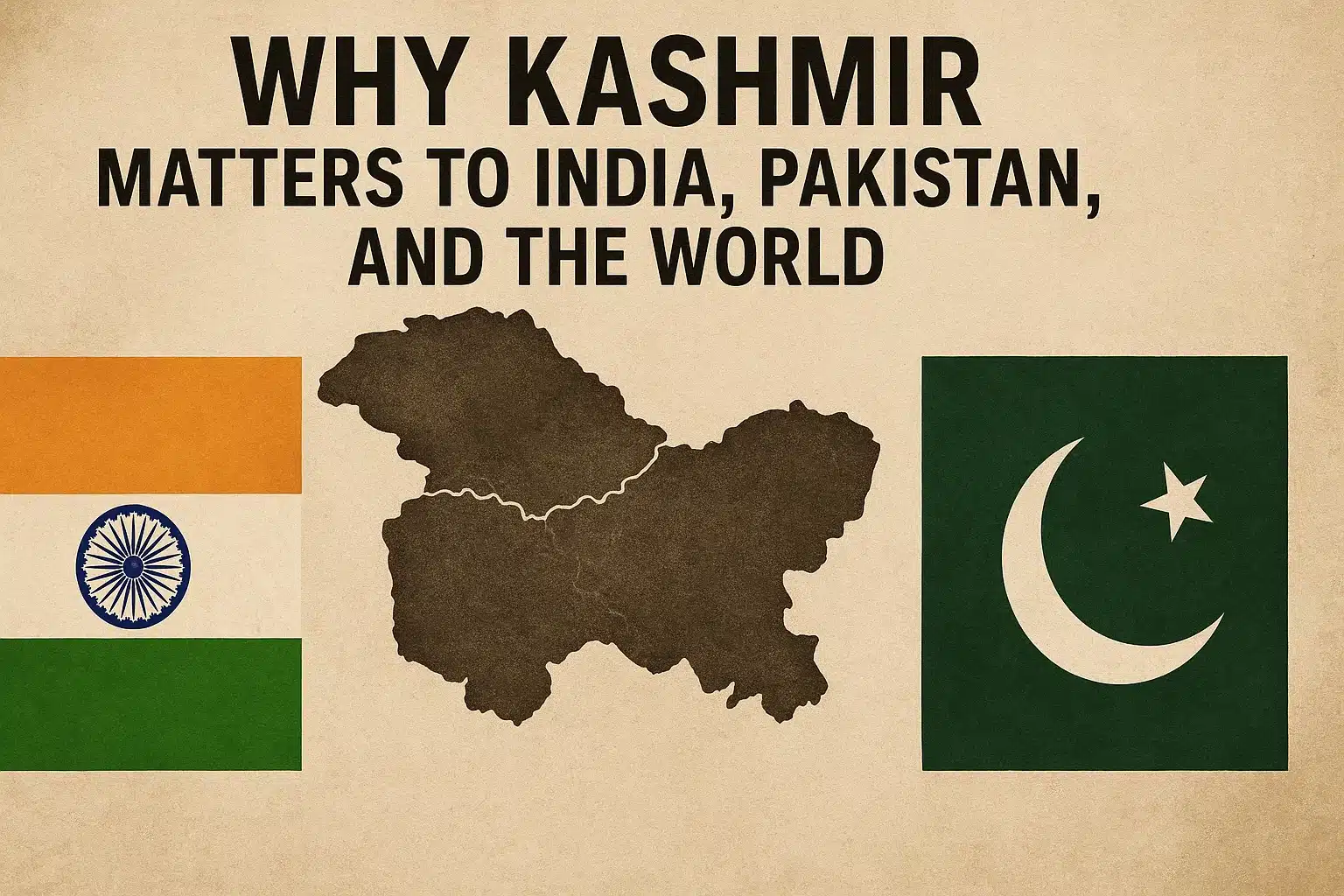

Muzaffarabad, September 2025 — The Kashmir conflict stands as one of the world’s longest-running and most dangerous territorial disputes. Tucked within the majestic Himalayas, the region is not only home to breathtaking landscapes but also a deeply contested political identity. For India and Pakistan, Kashmir represents far more than land: it is a question of ideology, national pride, survival, and justice. Yet for millions of Kashmiris, it remains primarily a question of dignity and the right to self-determination.
This article explores why Kashmir is so important to both India and Pakistan, how the dispute has evolved, and why the voices of Kashmiris themselves must be central to any resolution.
Historical Roots: Partition and the Unfinished Question
The story begins in 1947, when British India was partitioned into India and Pakistan. At that time, princely states were given the option to join either country or remain independent. The ruler of Jammu and Kashmir, Maharaja Hari Singh, initially sought independence but eventually signed the Instrument of Accession to India under duress, after tribal militias from Pakistan entered Kashmir.

The Azadi Times
No state grants. No corporate lobby. Just ground‑truth reporting from Kashmir & beyond
You make this possible.
Read Also: Kashmir Conflict & Human Rights
Pakistan immediately rejected this accession, arguing that as a Muslim-majority state, Kashmir naturally belonged with it. The first war between India and Pakistan broke out in 1947–48. The United Nations intervened and passed resolutions calling for a ceasefire, withdrawal of troops, and a plebiscite allowing Kashmiris to decide their future. That plebiscite, however, has never been held.
The partition’s unfinished business continues to define South Asia’s geopolitics. For India, Kashmir’s accession validated its secular identity. For Pakistan, Kashmir became a symbol of betrayal and injustice.



India’s Perspective: Territorial Integrity and Secular Identity
For India, Jammu and Kashmir is more than just a piece of disputed land — it is deeply tied to its national identity and territorial integrity. New Delhi repeatedly asserts that Kashmir is an “integral part” of the Indian union, a claim rooted in multiple layers of political, strategic, and ideological reasoning. One of the most prominent arguments centers on India’s secular nationalism. Despite Kashmir’s Muslim-majority population, Indian leaders have long projected the region’s accession as evidence of the country’s pluralist ethos, demonstrating that India can accommodate diverse religious and cultural communities under one national framework. Losing Kashmir, many argue, would undermine this secular foundation and weaken the narrative of a unified India.
Strategically, Kashmir holds immense importance because of its geography. The region borders both Pakistan and China, India’s two principal rivals, making it a critical buffer zone. Control of Kashmir provides India with leverage in its wider security calculations and regional power dynamics. Moreover, given the history of insurgency and militancy in the valley, India maintains one of the world’s largest troop deployments in the region. Officials in New Delhi argue that this heavy militarization is necessary to preserve stability and counter terrorism, despite criticism from international human rights organizations.
Read Also: Jammu and Kashmir: Complete Geopolitical and Historical Profile

Domestic politics also shape India’s approach to Kashmir. For many political parties, especially Hindu nationalist groups, the valley represents a symbol of sovereignty and strength. The 2019 decision to revoke Article 370 — which stripped Jammu and Kashmir of its semi-autonomous status — was celebrated across much of India as a “final integration” of the state. For Prime Minister Narendra Modi’s government, this move was not only a political victory but also a demonstration of India’s uncompromising stance on national unity. In essence, for New Delhi, giving up Kashmir would not simply mean territorial loss; it would represent a defeat of its secular and nationalist narrative, something successive governments have refused to accept.
Pakistan’s Perspective: Justice, Religion, and Water
For Pakistan, Kashmir has remained at the heart of its national identity since the country’s creation in 1947. Islamabad views the region as the “unfinished business of partition,” a belief rooted in historical, cultural, and religious considerations. With over 70 percent of Kashmir’s population being Muslim, Pakistan argues that the state should have naturally acceded to it at the time of partition. Successive Pakistani leaders have framed Kashmir not only as a territorial dispute but as a matter of justice and moral obligation, claiming solidarity with the Kashmiri people in their demand for self-determination.
Beyond religious and cultural affinity, Kashmir is also of critical strategic importance to Pakistan due to its water resources. The valley is home to the headwaters of the Indus River system, which sustains Pakistan’s agriculture and provides water for millions. Although the Indus Waters Treaty of 1960 created a framework for sharing water resources between India and Pakistan, fears of India manipulating flows remain an ever-present concern in Islamabad’s strategic calculations. For Pakistan, losing influence over Kashmir could jeopardize its long-term water security, adding another layer of urgency to the dispute.
Politically, Pakistan frequently highlights United Nations resolutions that guarantee Kashmiris the right to determine their political future through a plebiscite. At international forums, Islamabad positions itself as the defender of these commitments, often contrasting its stance with India’s rejection of outside mediation. Critics, however, argue that Pakistan’s position has not always been consistent, with its policies sometimes shaped more by strategic interests than by the pure principle of self-determination. Still, for Pakistan, Kashmir is far more than a territorial claim; it is tied to ideology, survival, and identity. From school textbooks to political speeches, Kashmir is embedded in the national consciousness as a cause that defines Pakistan’s existence and its vision of justice in South Asia.
Kashmir’s Significance Beyond Borders
While India and Pakistan continue to lock horns over sovereignty, the significance of Kashmir extends far beyond the territorial rivalry of these two South Asian neighbors. The region’s importance is deeply rooted in its natural wealth, strategic geography, and cultural legacy, making it a focal point of global attention.
Kashmir is blessed with abundant natural resources, particularly its rivers and glaciers, which serve as lifelines for South Asia’s water security. The Indus River system, originating in this region, sustains millions of people across Pakistan and northern India. As climate change accelerates the melting of Himalayan glaciers, the importance of Kashmir’s water resources is becoming even more pressing, with both countries acutely aware that control over these sources equates to long-term survival.
Equally important is Kashmir’s geopolitical location. Nestled between South Asia, Central Asia, and China, the region sits at the crossroads of major civilizational and trade routes. This geography makes it a natural strategic corridor and, at the same time, a potential flashpoint. For global powers, Kashmir is not just a bilateral dispute between India and Pakistan; it represents a delicate balance in a region where two nuclear-armed neighbors remain locked in decades of hostility.
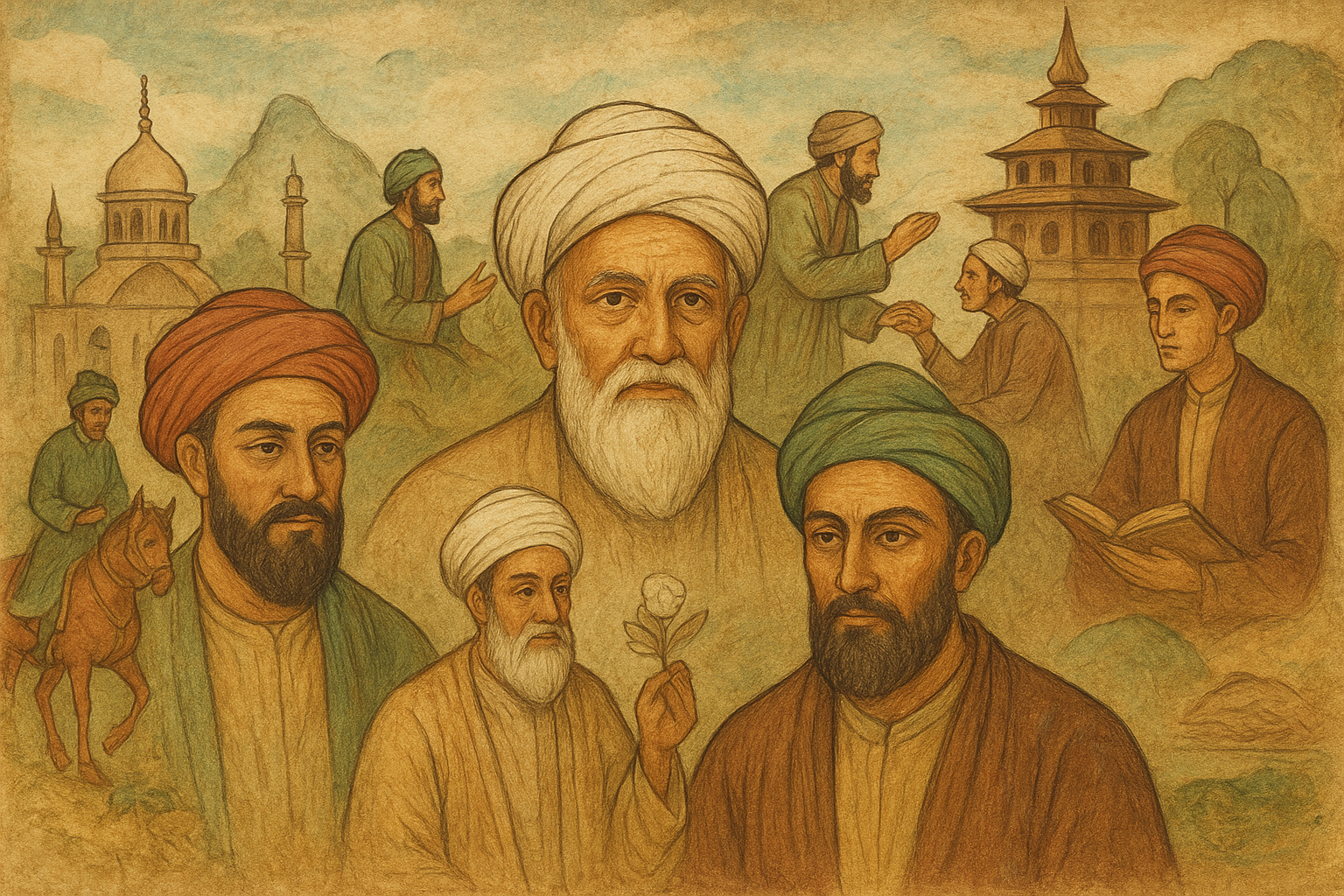
Beyond politics and strategy, Kashmir is also a cultural treasure. For centuries, it has been a cradle of Sufi traditions, artistic syncretism, and intellectual exchange. The valley has produced poets, saints, and thinkers whose legacies highlight Kashmir as a unique meeting point of Hindu, Buddhist, and Islamic influences. This cultural richness, however, has often been overshadowed by the ceaseless conflict.
Kashmiris’ Perspective: A Struggle for Self-Determination
Amidst the grand narratives of India’s nationalism and Pakistan’s ideology, the voices of Kashmiris themselves often remain marginalized. For many in the valley and across the divided territories, the conflict is less about national prestige and more about the fundamental right to self-determination.
Kashmiri nationalist groups, such as the Joint Awami Action Committee (JAAC) and other organizations, consistently emphasize that both India and Pakistan have reduced the Kashmir issue to a territorial dispute. By doing so, they argue, the two states have sidelined the role of the United Nations and ignored the principles of international law that call for the right of Kashmiris to decide their own political future.
“India and Pakistan have reduced our struggle into a territorial contest,” one Kashmiri activist told The Azadi Times. “For us, it is not about being Indian or Pakistani. It is about being Kashmiri and deciding our destiny ourselves.” This sentiment is not isolated—it resonates across villages, towns, and cities of Jammu & Kashmir, where the cry for Azadi (freedom) often transcends the binary choice of joining either India or Pakistan.
For ordinary Kashmiris, the struggle is deeply personal. It encompasses their identity, dignity, and the right to live without fear. Many in the valley feel trapped between two competing nationalisms, forced into a dispute they did not create but continue to endure. Their demand remains simple yet profound: the ability to shape their own future without external imposition.
Wars, Militarization, and Human Cost
Since the partition of the subcontinent in 1947, Kashmir has been the epicenter of hostility between India and Pakistan, resulting in three major wars—1947–48, 1965, and 1999 (the Kargil conflict). Each confrontation has left scars, not only on the political landscape but also on the lives of millions caught in the crossfire.
Today, Kashmir is one of the most heavily militarized zones in the world. With hundreds of thousands of troops deployed on both sides of the Line of Control (LoC), daily life in the region is overshadowed by checkpoints, surveillance, and an ever-present military presence. India alone maintains a staggering deployment of security forces, arguing that it is essential to curb militancy and safeguard national security.
The human cost of this prolonged conflict is devastating. Thousands of civilians have lost their lives, while countless others continue to live under the shadow of violence. Entire generations have grown up amid conflict, curfews, and restrictions on basic freedoms. Frequent communication blackouts and internet shutdowns further disrupt education, healthcare, and livelihoods, leaving Kashmiris feeling increasingly isolated from the outside world.
International human rights organizations such as Amnesty International and Human Rights Watch have repeatedly documented abuses in the region, ranging from extrajudicial killings and enforced disappearances to restrictions on freedom of speech and assembly. For Kashmiris, the militarization itself serves as a stark reminder of their lack of agency. Many argue that the very presence of massive armies on their soil is evidence that their voices are being silenced in the name of security.
International Reactions: Silence and Selectivity
Despite Kashmir’s undeniable global significance, the conflict rarely occupies center stage in international diplomacy. Major powers, including the United States and European Union member states, often issue carefully worded statements expressing “concern” about the situation, but these remarks rarely translate into meaningful action or sustained diplomatic pressure. For many observers, this pattern reveals a deep contradiction: while these nations promote human rights globally, their economic and strategic partnerships—particularly with India—often overshadow the plight of Kashmiris.
India’s growing role as a key player in global markets and geopolitics has further contributed to this silence. New Delhi’s economic clout, especially in technology and defense, gives it leverage that discourages Western capitals from taking strong positions. For Washington, maintaining close ties with India as a counterweight to China in the Indo-Pacific often takes precedence over raising uncomfortable questions about human rights in Kashmir.
China, meanwhile, adopts a cautious yet strategic approach. While it continues to back Pakistan diplomatically on the Kashmir issue, Beijing’s primary concern lies in protecting its own economic and territorial interests. With the China-Pakistan Economic Corridor (CPEC) running through Gilgit-Baltistan and broader Belt and Road Initiative (BRI) projects in the region, Beijing avoids moves that could destabilize its investments. Its stance, therefore, is less about moral support for Kashmiris and more about safeguarding its long-term regional ambitions.
The Organization of Islamic Cooperation (OIC) has consistently passed resolutions supporting the Kashmiri people’s right to self-determination. Yet these resolutions are largely symbolic, lacking enforcement mechanisms or collective diplomatic weight. Many Muslim-majority states, while voicing solidarity, prioritize trade and defense relations with India, further diluting the impact of the OIC’s statements. For Kashmiris, this selective advocacy only reinforces the perception of abandonment by the wider international community.
Why Kashmir Matters to the World
Kashmir is far more than a territorial dispute confined to South Asia—it carries global implications. At the forefront is the risk of nuclear escalation. India and Pakistan, both nuclear-armed, have fought wars over the region and continue to engage in frequent military skirmishes along the Line of Control. Any miscalculation could spiral into a larger conflict with catastrophic consequences, not just for the subcontinent but for global security.
Human rights concerns further elevate the issue to an international dimension. Reports of curfews, crackdowns, arbitrary detentions, and communication blackouts raise serious questions about adherence to international humanitarian law. The treatment of civilians in Kashmir often serves as a litmus test for the credibility of global institutions that claim to uphold human rights.
Kashmir also influences regional stability. The prolonged conflict has fueled extremism, mistrust, and hostility across South Asia. It remains a major obstacle to initiatives such as regional trade, cultural exchange, and cooperation within platforms like SAARC. A peaceful resolution would not only benefit Kashmiris but also unlock opportunities for economic integration and political stability across the broader region.
For the international community, then, Kashmir is not just a dispute between India and Pakistan. It is a challenge tied to nuclear security, human rights, and regional peace—issues that have direct consequences for global order.
The Road Ahead: Self-Determination or Stalemate?
The Kashmir conflict endures because of deeply conflicting narratives. For India, it is about sovereignty and national unity; for Pakistan, it is about justice and fulfilling the unfinished agenda of partition; and for Kashmiris, it is about freedom, dignity, and the right to self-determination. These competing visions have created a deadlock that has proven resistant to both war and diplomacy.
The absence of genuine dialogue and the erosion of mutual trust only deepen this stalemate. Since the revocation of Article 370 in 2019, the political landscape has shifted further, leaving little room for traditional negotiation frameworks. Yet experts and activists continue to stress that no durable peace is possible without centering Kashmiris themselves in the conversation. To ignore their voices is not only to sidestep UN resolutions but also to undermine the legitimacy of any potential settlement.
As one Kashmiri scholar poignantly told The Azadi Times:
“Kashmir is important to India and Pakistan for their national pride. But for us, it is important because it is our home, our heritage, and our future. Unless the world hears our voice, the conflict will never end.”
This statement captures the essence of the Kashmir conflict: a human struggle overshadowed by geopolitics. Whether the road ahead leads toward self-determination or continued stalemate depends not only on New Delhi and Islamabad but also on whether the international community is willing to move beyond silence and symbolism to meaningful engagement.
Kashmir is important to India as a symbol of secular unity, territorial integrity, and strategic defense. It is important to Pakistan as the unfinished business of partition, a matter of justice, and the guarantor of its water security. But most importantly, Kashmir is important to Kashmiris as their homeland and as the heart of their demand for self-determination.
Until the international community acknowledges this central truth, the conflict will remain unresolved. For India and Pakistan, Kashmir is a test of nationalism. For Kashmiris, it is a test of survival.