





Jammu Kashmir a region known for its breathtaking landscapes and complex history has witnessed significant political and social transformations since 1947. Central to this narrative are the flags representing its various parts, each symbolizing the identity and aspirations of a divided land. To truly understand the evolution of these flags, it is essential to explore Kashmir’s history before and after the partition of British India.
Kashmir Before 1947: A Sovereign Kingdom
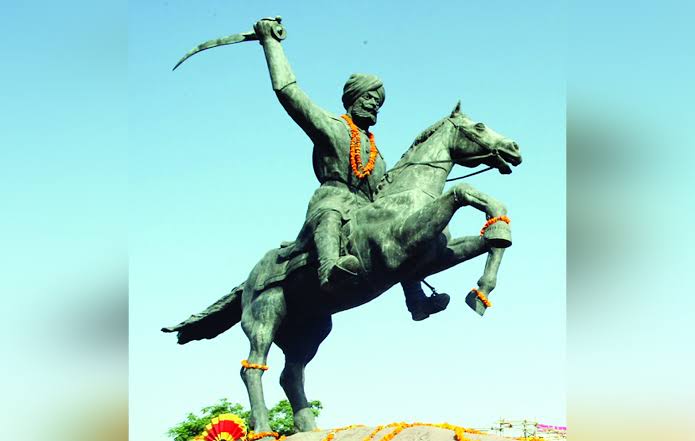
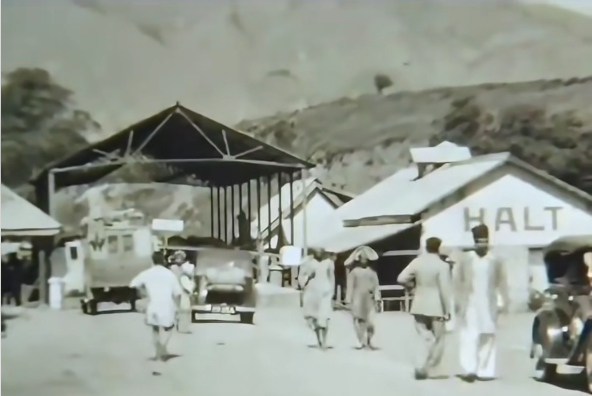
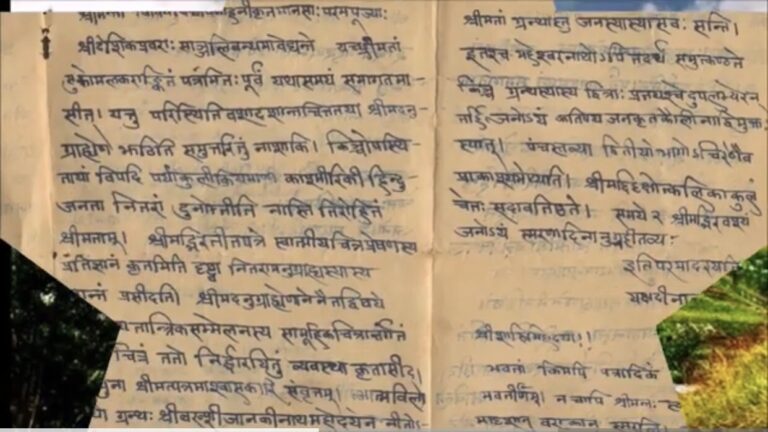
Before the partition of British India in 1947, Jammu and Kashmir was an independent princely state with its own unique identity. Governed by Maharaja Hari Singh, it was a land of diverse cultures, religions, and ethnicities. The state had its own army, currency, and flag that represented its sovereignty. This flag flew proudly across the unified regions of Jammu, Kashmir Valley, Ladakh, and Gilgit-Baltistan.
However, this sovereignty was challenged during the partition of British India, a time that reshaped the subcontinent.
Help us expose the truth
The Azadi Times is funded by readers like you. No corporate sponsors. No government influence. Just fearless reporting.
The Partition and the Tribal Invasion
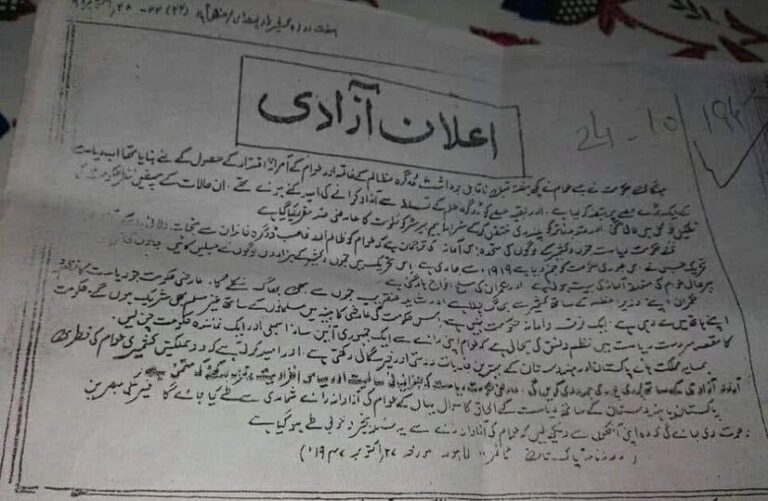
In August 1947, the princely states of British India were given the option to join either India or Pakistan or to remain independent. Maharaja Hari Singh initially decided to keep Jammu and Kashmir independent. However, within weeks, the region faced a tribal invasion from Pakistan, supported by its government. This led to chaos, as segments of the local population sided with the invaders.
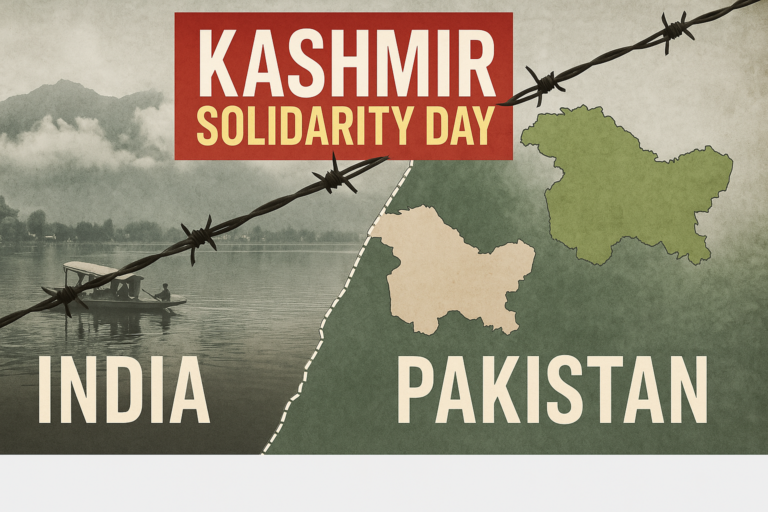
To protect his state, Maharaja Hari Singh sought military assistance from India. In exchange, he signed the Instrument of Accession in October 1947, agreeing to join India temporarily under certain conditions. This marked the beginning of the territorial division of Kashmir, with India and Pakistan claiming parts of the region. The conflict also resulted in the United Nations stepping in to define the Line of Control (LoC), effectively splitting Kashmir.
Post-Partition Kashmir and Its Flags
The division of Kashmir brought significant changes, including the adoption of new flags for the various regions now administered by Pakistan and India. Let us explore the current flags representing the divided state of Jammu and Kashmir.
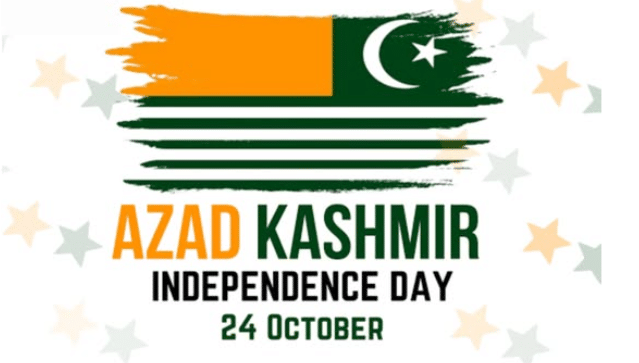
The Flag of Azad Jammu and Kashmir (AJK)
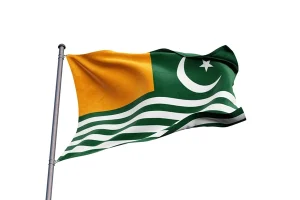
The flag of Azad Jammu and Kashmir (AJK), under Pakistan’s administration, represents the region’s unique identity.
Design and Meaning:
- Green field with a crescent and star: Reflects the Islamic heritage of the majority population.
- Four white stripes: Represent the rivers flowing through the region—Jhelum, Chenab, Indus, and Ravi.
- Green and white colors: Symbolize peace and harmony within the region’s diverse population.
The Flag of Gilgit-Baltistan (GB)
Gilgit-Baltistan, another region administered by Pakistan, has its own flag, introduced to highlight its distinct cultural and geographic identity.
Design Features:
- The flag incorporates symbols of the region’s mountainous terrain, natural resources, and its aspirations for autonomy.
- The green and white shades reflect harmony and connection to Pakistan, while unique emblems symbolize its local heritage.
(Image Placeholder: GB Flag)
The Flag of Indian-Administered Jammu and Kashmir
Until August 5, 2019, Indian-administered Jammu and Kashmir had a separate flag under Article 370 of the Indian Constitution, which granted the region special autonomy.
Design and Meaning:
- Red field: Symbolized labor and the region’s resilience.
- White plough: Represented agriculture, the backbone of the region’s economy.
- Three white stripes: Denoted the three main regions—Jammu, Kashmir Valley, and Ladakh.
However, the abrogation of Article 370 stripped Jammu and Kashmir of its special status, and the flag was officially retired. Today, only the Indian national flag represents this region.
(Image Placeholder: Former Jammu & Kashmir Flag)
The Unified Flag of Pre-1947 Kashmir
Before the partition, a single flag symbolized the unity of Jammu, Kashmir Valley, Ladakh, and Gilgit-Baltistan. This historical flag remains a poignant reminder of a time when the region was united as one sovereign state. It is a symbol of nostalgia for many Kashmiris who long for the undivided state’s cultural and historical identity.
(Image Placeholder: Pre-Partition Kashmir Flag)
Conclusion: Flags as Symbols of Division and Hope
The flags of Kashmir reflect the region’s turbulent history and its geopolitical complexities. Each flag tells a story of identity, struggle, and aspiration, representing the people of Jammu and Kashmir across its divided territories.
For many, these flags are more than just symbols; they embody the region’s resilience and hope for a peaceful and prosperous future. As the world continues to debate Kashmir’s future, its flags remain a testament to the rich history and enduring spirit of its people.


