Saturday, March 28, 2026
11.6 C
Srinagar
Home Blog Page 50

Kashmiri Youth Detained by Indian Army: Mental Health Ignored, Humanity Questioned

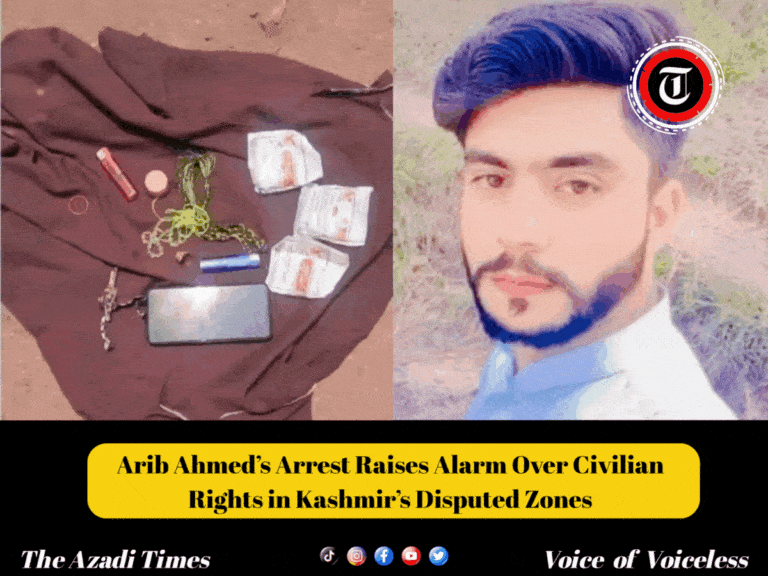
Arib Ahmed’s Arrest Raises Alarm Over Civilian Rights in Kashmir’s Disputed Zones

Datote, Kotli (Pakistan-administered Kashmir), June 30, 2025 — The recent arrest of Arib Ahmed, a 22-year-old youth from the Datote area in Kotli district of Pakistan-administered Jammu and Kashmir, by Indian forces has sparked widespread concern among human rights activists and independent observers. The incident has once again brought into sharp focus the fragile state of civilian protections across the ceasefire line, also known as the Line of Control (LoC) in the long-disputed region of Kashmir.

Ahmed, son of Muhammad Yousaf, reportedly crossed the heavily militarized LoC earlier today and was subsequently apprehended by Indian troops in the Poonch sector of Indian-administered Jammu and Kashmir. Photographs that emerged on social media show him blindfolded, shirtless, bound by hands and feet, and lying on a dirt path — a treatment that rights observers have termed “inhumane” and “potentially in violation of international humanitarian norms.”

Mental Health Background Ignored in Militant Allegations

Local journalists and several community members from Kotli have confirmed that Arib suffers from serious mental health issues. In fact, Ahmed is said to have a history of erratic behavior and previous self-harm incidents — facts that many believe should have guided Indian authorities toward a humanitarian approach rather than immediate criminalization.

Despite these concerns, sections of Indian media have swiftly labeled him a militant or “guide,” without providing verifiable evidence. Pakistani media outlets have largely refrained from echoing this narrative, instead focusing on the need for humane treatment and due process, a stark contrast that further underlines the polarizing media ecosystems on both sides.

“This is not the first time a mentally disturbed person has unknowingly crossed the LoC,” said Shahbaz Ali, a Muzaffarabad-based human rights lawyer. “Unfortunately, when it happens from this side into Indian-held areas, the treatment is often brutal, and international humanitarian standards are blatantly ignored.”

Reactions: Public Outcry and Identification

Hundreds of users on social media platforms like Facebook and X (formerly Twitter) have reacted strongly to the images, expressing anguish and solidarity. Several posts have gone viral identifying him as Arib Ahmed, with many users from his native area sharing stories of his past struggles with mental stability.

“I have seen this boy wandering alone many times in the hills,” wrote a Facebook user from Kotli. “He never posed a threat to anyone. This kind of treatment is unacceptable for any civilian, let alone someone mentally unwell.”

Another commenter questioned the silence of international human rights watchdogs:

“If the same had happened in Gaza or Ukraine, there would be global headlines. Why is Kashmir different?”

A Glaring Gap in International Oversight

Kashmir remains a United Nations-recognized disputed territory, and residents across both Indian- and Pakistan-administered regions are technically civilians caught in a geopolitical limbo. Yet, there is no comprehensive international mechanism in place to monitor or protest human rights violations in such contested zones.

Despite UN Security Council Resolutions calling for the right to self-determination for the people of Jammu and Kashmir, these resolutions remain unimplemented, and the protection of civilians in this conflict zone is left to the discretion of the respective militaries, both of which often prioritize national security over humanitarian principles.

“There needs to be a UN-backed civilian protection protocol for disputed territories like Kashmir,” said Dr. Sameena N., a scholar of international law based in Islamabad. “Until the Kashmir issue is resolved according to international law and the wishes of the Kashmiri people, we will continue to see such tragedies unfold.”

Comparative Treatment: A Tale of Two Sides

Observers also note a pattern in the comparative treatment of individuals who cross the LoC. On several occasions, Indian civilians who unintentionally entered Pakistan-administered Kashmir have been returned promptly and respectfully, often with the intervention of local elders and human rights groups.

“We don’t parade Indian civilians or mentally ill individuals in this manner,” said Advocate Khalid R., a legal rights activist in Rawalakot. “The contrast is painful not just in action, but in intent.”

As Kashmiris continue to live in one of the most militarized regions on earth, the need for cross-border legal frameworks to protect civilians, especially vulnerable populations like the mentally ill, has never been more urgent.

Organizations working in human rights advocacy, both locally and internationally, are being urged to take note of Arib Ahmed’s case as a symbol of the larger systemic neglect toward non-combatant civilians in conflict zones.

“Whether the person is from Indian-held Kashmir or Pakistani-held Kashmir, basic human dignity must not be negotiable,” said Fatima Bano, a youth leader from Mirpur. “This is not about nationalism. This is about humanity.”

The treatment of Arib Ahmed, a young mentally challenged civilian, has exposed glaring gaps in humanitarian standards along the LoC. It also reinforces the urgent need for international monitoring mechanisms and neutral humanitarian frameworks, especially in disputed territories like Jammu and Kashmir, where rights, borders, and identities remain unresolved.

Until the right to self-determination promised under United Nations Security Council resolutions is fulfilled, every civilian incident must be treated with utmost sensitivity and international scrutiny. Without this, the line between security enforcement and human rights abuse will continue to blur, often at the cost of the most vulnerable.
Abandoned at the Border: How Kashmir’s Tourism Dream Died Behind the LoC Fence

Kupwara, Indian-Administered Kashmir – What began as an ambitious plan to reimagine life along the Line of Control (LoC) through border tourism is now a quiet tragedy unfolding across the Himalayan frontier. Despite millions invested, countless hopes raised, and a brief era of cross-border curiosity, renewed conflict and neglect have pushed Kashmir’s border tourism into cold storage — perhaps permanently.

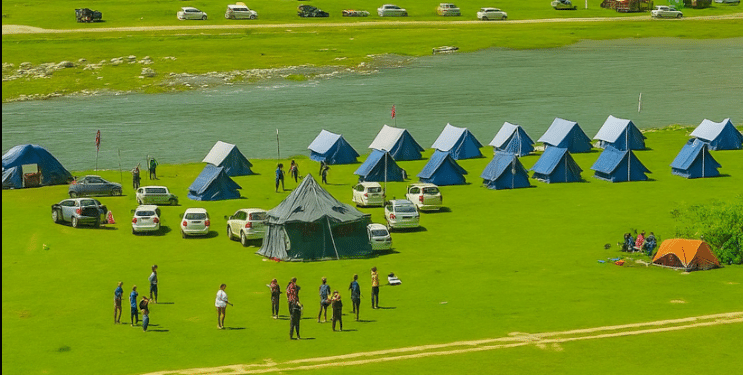
From the snow-wrapped valleys of Gurez to the wild meadows of Bangus and Keran, what once echoed with laughter, camera clicks, and cultural revival now lies still. Home-stays are shuttered, tents are rolled up, and communities are once again left stranded — both economically and emotionally.

A Border Reimagined — and Then Forgotten

Just two years ago, Indian-administered Kashmir’s border villages like Teetwal, Tangdhar, Keran, and Uri witnessed a renaissance of sorts. Official tourism boards promoted these zones as “India’s final frontier of peace,” while plans worth over $3.6 million USD (₹30 crore) were floated to convert these war-scarred lands into eco-tourism and heritage hubs.

Proposals included:

  • Eco-huts and solar-powered rest stops

  • Cultural cafés and traditional craft markets

  • LoC viewing decks for visitors

  • Heritage treks and spiritual tourism via the Sharada Peeth corridor

Local youth took the cue. “We had stopped thinking of war. We were thinking of Wi-Fi passwords for tourists,” said Sajjad Ahmad, 28, who had set up rental tents along the Kishanganga River in Gurez.

Between 2022 and 2024, border tourism was more than a development project — it was a rare Kashmir-led peace initiative. No speeches, no slogans — just a chance for divided communities to host, earn, and tell their stories on their own terms.

Pahalgam Attack & Policy U-Turn

That fragile window slammed shut in mid-2024, when a militant attack in Pahalgam killed 26 civilians. Almost overnight, the state rewrote its narrative from “border peace” to “border patrol.”

Despite the attack occurring far from the LoC, the ripple effect was brutal and swift:

YearGurezBangusKeranUriTeetwal
2024100,000+80,000+60,000–70,00080,00050,000
2025<2,000 (locals only)ClosedPermit-only (locals)RestrictedClosed

“From 100,000 to zero in a year,” noted one senior official, speaking anonymously. “The government is acting like border tourism was a PR stunt, not people’s livelihood.”

Local Entrepreneurs Left in the Cold

In the boom months, Keran had seen five new restaurants, while Tangdhar and Teetwal had registered over 45 home-stay conversions. Gurez, once synonymous with army movement and silence, had developed a growing riverside business culture.

Now, these investments lie frozen:

  • Home-stay costs: $6,000–$10,000 per setup, now unrecoverable

  • Tent camps: $1,000–$2,000 sunk per entrepreneur

  • Eco-huts & café ventures: $15,000+ in setup, maintenance, and licensing

“We were never asking for aid — just access,” says Nasreen Jan, a schoolteacher from Tangdhar who converted her ancestral home into a five-room stay. “Now, not even permits are allowed. We are invisible again.”

Digital Permits Suspended, Doors Closed

Since late 2024, digital permit systems — once a hallmark of transparency — have been suspended. Only local residents can access areas like Keran and Karnah. No online access for tourists. No timelines for reopening.

In Kupwara’s Deputy Commissioner’s office, staff cite “higher-level security orders” as the reason for the blackout. There are no public statements, no press briefings, no appeals for local rehabilitation.

“We’re told peace is restored, but our borders are shut. It’s selective peace,” says a resident of Keran.

Beyond economic fallout, the abrupt halt has bruised something deeper: a belief in co-existence and dignity through development. Gurez’s rivers — once the setting for student picnics and family reunions — now mirror abandonment.

“These borders once symbolized suffering,” explains anthropologist and border studies researcher Dr. Huma Qureshi. “Tourism helped reclaim them as spaces of memory, resilience, and reconciliation. That has been crushed again.”

Tourism was never just leisure in these zones. It was diplomacy, done quietly by ordinary Kashmiris — unarmed, unpaid, and unrecognized.

Whose Border Is It Anyway?

While the Jammu & Kashmir government has re-opened destinations like Gulmarg, Sonamarg, and Pahalgam for tourism, border zones are kept in the shadows as if their peace and people are dispensable.

Ironically, the same officials who praised border tourism as “a model of sustainable rural development” in 2023 now dodge media questions. Central and regional ministries remain silent. India-Pakistan Track II diplomacy is dormant. Meanwhile, locals watch their hopes rust along with their shuttered cafés.

The Real Line of Control

The suspension of border tourism is not just about canceled permits — it’s about who gets to define peace in Kashmir. For too long, policies have been made from Delhi and Islamabad, with little regard for what Kashmiris actually build, dream, or need.

Tourism was the one space where Kashmiris created their own narrative — as hosts, not headlines; as bridge-makers, not security threats.

That space has now been re-occupied — not by tourists, but by silence.

The collapse of border tourism in Kashmir is not just a policy failure — it’s a moral one. It reveals a region still held hostage by distant powers, where peace is allowed only on paper, and development is always conditional.

If Kashmiris are trusted enough to guard the border, they must also be trusted to grow beyond it.

Until then, border tourism will remain a metaphor — of what could have been, but never was allowed to be.

Kashmir Pays the Price: IMF Conditionalities and the Collapse of Public Welfare

Muzaffarabad – Pakistan-administered Jammu & Kashmir: The All Azad Jammu & Kashmir Government Employees Confederation, representing thousands of public servants across health, education, engineering, and administrative departments, has formally issued a comprehensive Charter of Demands, warning of statewide strikes and complete work stoppages if the government fails to meet their long-standing demands.

In a rare show of unity, the Confederation’s Secretary General, Mir Muhammad Arif, confirmed that multiple federations, including health, public sector, doctors, education, and technical workers, have agreed upon a joint agenda aimed at safeguarding the rights and dignity of AJK government employees.

“We are united across departments, regions, and affiliations,” said Mir Muhammad Arif during a press briefing in Muzaffarabad. “This charter is not just about economic rights, it is a declaration of dignity for the workers of this state who have kept its institutions alive.”

Mir Muhammad Arif stated from Muzaffarabad that all government employee federations in Jammu & Kashmir have come together under the All Government Employees Confederation in AJK, emphasizing that their platform is “united and unanimous.” The following federations have joined forces:

  1. Health Employees Federation AJK
  2. Public Sector Employees Federation AJK
  3. Doctors Joint Action Committee AJK
  4. PWD, WAPDA, MDA & Workers Federation AJK
  5. Education Employees Federation AJK
  6. Democratic Employees Unity AJK

Arif asserted, “Our federations have engaged in extensive consultation and are determined that the Charter of Demands reflects the true challenges and aspirations of our workforce in AJK, independent of any external pressures.”

Pension Reforms and IMF Conditions: A Rejection of Unjust Cuts

The Charter categorically rejects any proposal to reduce government employees’ pensions under “pension reforms” linked to IMF conditions. Key points include:

  • No Justification for Pension Deductions:
    The charter affirms that there was never any clause regarding pension cuts when employees joined service. Since the AJK government has neither sought IMF loans nor expended such funds on its employees, any federal notification regarding pension reductions is considered baseless and unjust.
  • Call for Clear Policy:
    It demands that the AJK government adopt a clear and independent policy to eliminate pension reduction measures, thereby relieving employees of ongoing economic uncertainty and enabling them to perform their duties without undue fear.

Addressing Disparities: GP Fund, Utility Allowance, and Salaries

The document highlights severe inequities compared to practices in Pakistan:

General Provident Fund (GPF) Issues:
Unlike their counterparts in Pakistan, the public employees in AJK do not receive any profit on their GPF deposits. Moreover, their principal amounts are not securely maintained, and the withdrawal process is exceedingly cumbersome. The charter calls for a streamlined procedure and for interest on GPF deposits to be allocated according to State Bank guidelines.

Universal Utility Allowance:
All government employees in AJK must be granted an undifferentiated utility allowance to ensure fair distribution across departments.

Salary Reforms and Increase:
The charter insists on increasing government employee salaries by 300% or, at the very least, by the same standard applied to assembly members. Additionally, it demands that all discrepancies in pay be eliminated by granting a uniform allowance of 150% to every department.

Housing and Rental Reforms:
In line with Pakistani practices, the charter calls for the allocation of funds for house hiring and an increase in housing rent to mirror local economic conditions.

Overhauling the Legal Framework and Service Structure

The Charter makes sweeping demands to restructure and improve employment conditions:

Repeal of the 2016 Act:
The “Mulaazim Kash Act 2016” must be repealed immediately. In its stead, the Industrial Rationalization Act 2017 should be enforced to ensure full unionization rights for AJK government employees.

Establishing Robust Service Structures:
A well-defined service structure must be developed for all cadres including health employees, allied health professionals, nurses, computer operators, and other support staff. The temporary positions carved out for supporting staff must be regularized and standardized according to established norms.

Upgrading Entry-Level Scales:
In accordance with a High Court decision, the entry-level scale for Junior Technicians (MCH) is to be upgraded from B-9 to B-12, with a similar upgrade recommended for paramedical staff.

Housing Facilities in District Headquarters:
All district headquarters should implement housing schemes to improve living conditions for employees.

Enforcement of Minimum Wage:
The government must implement a notification ensuring a minimum monthly wage of 37,000 PKR for all public sector employees in AJK.

Streamlining Biometrics:
The current biometric system must be simplified, ensuring that its objectives are met while exempting field employees from unnecessary burdens.

Enhancing Medical Allowances and Local Procurement:
There must be an increase in medical allowances along with a corrective overhaul of the local drug procurement system to eliminate corruption, backed by increased funding.

Tax Relief Measures:
The excessive taxation imposed on government employees must be scrapped, and employees should be declared exempt from these taxes.

Regularization and Equal Career Advancement

Permanent Status for All Contractual Employees:
The charter demands that all ad-hoc, temporary, contractual, and part-time employees—including those under the NISP program—be granted permanent status.

Reclassification of Health Workers and Supervisors:
Health workers and their supervisors must be reclassified as full civil servants, with a revised service structure similar to models adopted in other Pakistani provinces.

Revision of the Overall Service Framework:
There must be a comprehensive revision of the service structure for all government employees, including immediate implementation of the August 20, 2023 agreement, adherence to provisions of the 2016 Act and Ordinance 2023, and establishment of an appellate authority as directed by the Supreme Court.

Restoring the Death Package and Recruitment Quotas:
The death package for employees’ families must be reinstated. Additionally, the existing 25% recruitment quota for employees’ children should either be fully restored or, alternatively, all quota systems must be scrapped to prevent double standards.

Protest and Negotiation Demands

Support for Ongoing Strikes in District Poonch:
Employees in District Poonch, who have been on complete strike since February 20, 2025, receive unequivocal support from the charter. Despite protests on February 10 and 20, 2025, the government response has been insufficient.

Call for Mass Protest:
A mass protest is scheduled for February 26, 2025, across the capital and all divisional and district headquarters in AJK. The union warns that if the demands are not met, a comprehensive, indefinite strike will be initiated.

Immediate Negotiations:
The Charter emphasizes that swift negotiations are imperative to resolve these issues. Failure to negotiate will lead to a complete halt in government work, with full responsibility placed on the current administration.

Revisions in Drug Rules and Career Upgradation Procedures

Amendments to Drug Rules 2021:
In a bid to improve operational efficiency in the health sector, the charter calls for an amendment to allow qualified, retired dispensers from the Public Health Department to secure a drug sale license.

Career Advancement and Equal Opportunities:
Over the past five to ten years, while many cadres have seen regular upgrades, some have been left behind. The Charter demands that these remaining cadres be upgraded on the basis of equality. Moreover, the “officiating period” should be integrated into time-scale promotions, with any deviations from this requirement immediately rectified.

Voices from the Ground

Mir Muhammad Arif, Secretary General, All Azad Kashmir Government Employees Confederation:

“Our unified charter is the embodiment of our collective will. We reject any imposition of IMF-inspired conditions or federal mandates that do not reflect our unique regional realities. Our demands are rooted in the authenticity of our experience and our right to independent policy-making.”

Dr. Arif, Representative, Doctors Joint Action Committee AJK:

“It is unacceptable that our government employees, who never agreed to such pension cuts, are now facing retroactive deductions. Our pensions and GPF contributions must be protected with clear and transparent policies.”

Syeda U., Member, Health Employees Federation AJK:

“Nurses and allied health professionals deserve a structured career progression and the same dignity as their counterparts. This charter calls for immediate regularization and fair upgradation to reflect our real contribution.”

Muhammad B., Worker and Union Activist:

“The present system of accessing GPF funds is overly complex and unjust. We demand that procedures be simplified and aligned with the State Bank’s policies, so that our hard-earned money is not compromised.”

This Charter of Demands signifies far more than an issue of wage disparity. It is a declaration of AJK’s unique identity and a call for the region’s democratic rights. By uniting diverse federations into a single voice, AJK government employees challenge the imposition of policies that ignore the region’s distinct political and economic circumstances. Their demands not only focus on economic justice but also emphasize the need for regional autonomy and a governance model that is responsive to local needs.

As the scheduled protest on February 26, 2025, approaches, the fate of these demands—and the future of public sector reforms in AJK—will ultimately be determined by the willingness of the regional government to engage in meaningful negotiations. The outcome of these negotiations is critical, as it will either restore stability and confidence among government employees or plunge the region into prolonged industrial action with widespread economic repercussions.

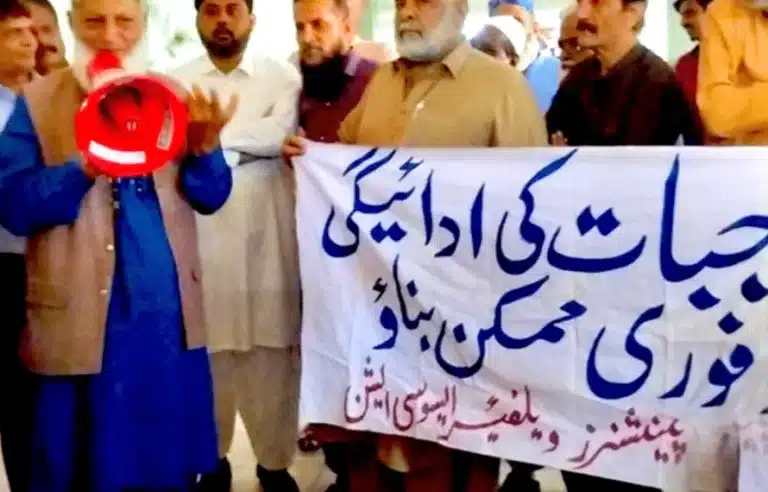
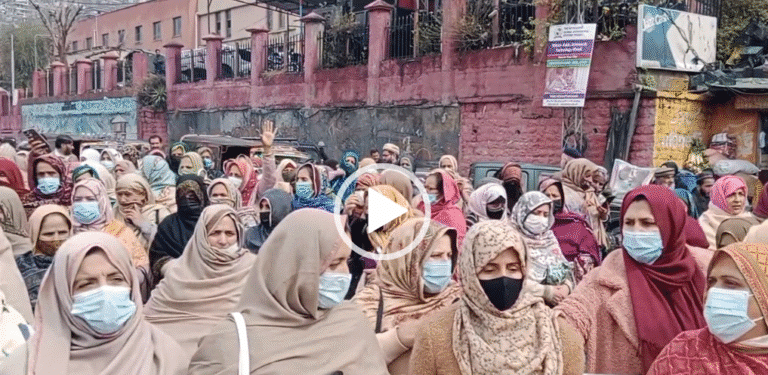
Retired Municipal Employees in Kashmir Left Without Pensions for 8 Months

Muzaffarabad, Pakistan-administered Kashmir – Hundreds of retired municipal employees in Azad Jammu and Kashmir (AJK) have not received their pensions for the past eight months, leaving many in financial despair amid rising inflation and health issues.

The affected pensioners, many of whom served for over 30 to 35 years in public sanitation and local governance departments, say they now struggle to afford basic necessities, including medical treatment. “I worked as a sanitary worker for over three decades. Today, I can’t even afford my diabetes medication,” said Abdul. G., a retired municipal employee from Muzaffarabad. “This is not the retirement we were promised.”

This crisis emerged after the AJK government announced the integration of salaries and pension payments under the AJK Accountant General’s office. The transition, intended to centralize payments and enhance transparency, has resulted in a complete halt in pension disbursements for many.

Shamim B., a 62-year-old widow of a former municipal worker, expressed her frustration. “My husband gave his life to public service. Now, I beg neighbors for money to buy groceries. We are being treated like we never existed.”

A delegation of retired employees recently submitted a petition at the Prime Minister’s Secretariat in Muzaffarabad, demanding immediate intervention. They have threatened to stage region-wide protests if their pensions are not restored by early July.

According to official records, the AJK government has disbursed PKR 1.087 billion (approx. USD 3.9 million) between July 2021 and November 2024 toward pensions of local government retirees. However, a senior official at the Local Government Board, speaking on condition of anonymity, admitted that “administrative delays during the transfer of responsibilities to the AG Office have left hundreds of pension cases pending.”

A new policy finalized this month mandates that all future pensions for municipal retirees be processed directly by the Accountant General’s office, theoretically streamlining future payments. However, implementation has yet to take effect for those already awaiting disbursements.

This pension crisis has reignited long-standing grievances in Pakistan-administered Kashmir, where many residents feel caught between bureaucratic inefficiency and political neglect. Local civil society organizations argue that the region’s retired workers—who contributed to the very infrastructure the state depends on—deserve dignity in their later years.

“We are tired of being treated as second-class citizens by both Islamabad and Muzaffarabad,” said Kashmir Pensioners’ Alliance spokesperson Riaz Ahmed. “We served the people for decades—why are we now being punished with silence?”

Activists are urging the AJK leadership and Pakistan’s federal government to ensure timely pensions and establish safeguards to prevent future disruptions. “This is a humanitarian issue, not just a financial one,” said Afsheen Mir, a rights advocate based in Rawalakot. “Pensions are not charity—they are earned rights.”

Jeff Bezos Marries Lauren Sánchez in Lavish Venice Ceremony Attended by Global Celebrities

Venice, Italy — Amazon founder and one of the world’s richest individuals, Jeff Bezos, tied the knot with American media personality Lauren Sánchez in a grand, three-day wedding celebration held in Venice. The event drew an elite guest list from across the globe, including celebrities, royals, and business magnates.

The main ceremony took place on the picturesque and historic island of San Giorgio Maggiore, where Matteo Bocelli, son of famed Italian tenor Andrea Bocelli, delivered a special performance. Guests arrived by water taxis and included notable figures such as Oprah Winfrey, Orlando Bloom, Kylie Jenner, and Ivanka Trump.

Lauren Sánchez dazzled in a custom haute couture gown by Dolce & Gabbana, reportedly taking over 900 hours to craft. Speaking after the ceremony, Sánchez said she felt “like a princess.” Intimate photos from the event, shared on social media platforms including Instagram, have garnered widespread attention and admiration.

The wedding festivities concluded on Saturday night at a medieval shipyard in Venice, featuring live performances by international music icons Lady Gaga and Elton John. However, the celebrations also drew criticism from some local and environmental groups. Protests erupted in parts of Venice, with residents expressing concerns about over-tourism, and climate activists highlighting what they described as the harmful environmental policies of Bezos-owned companies.

This marks the second marriage for both Bezos and Sánchez, who collectively have seven children from previous relationships. The couple got engaged in May 2023 aboard Bezos’s 417-foot luxury yacht Koru — a Māori symbol representing “new life.”

While no official figures have been disclosed, reports estimate the total cost of the extravagant wedding to be between $20 million and $50 million.

Water Crisis Deepens in Rawalakot as Climate Change and Mismanagement Collide

Rawalakot, Pakistan-administered Jammu & Kashmir: The scenic mountain town of Rawalakot, once known for its natural beauty and resilient spirit, is now facing one of the worst water shortages in its history. A combination of climate change, deforestation, and chronic mismanagement has brought this key urban center in Pakistan-administered Jammu and Kashmir (PaJK) to the brink of a water emergency.

Despite being surrounded by lush hills and natural valleys, Rawalakot is not situated near any major river or perennial stream. Historically, this didn’t pose a problem, as the town had a high groundwater table, easily accessible at depths of 50–80 feet. However, over-extraction, declining snowfall, and rapid urbanization have now pushed the water table down to as deep as 400 feet — and even then, successful boreholes are rare.

From Snow-Capped Serenity to Thirst-Stricken City

Over the past few years, Rawalakot has experienced an alarming reduction in winter snowfall, once a crucial natural source of replenishment for its underground aquifers. The prolonged dry spells have also dried up centuries-old natural springs in the surrounding villages, which had historically sustained rural populations.

“Villagers who once relied on mountain springs now walk miles or spend large portions of their income to buy water,” says local resident Altaf Hussain. “Rawalakot is drying up.”

Urban Water Infrastructure on the Verge of Collapse

According to the Public Health Engineering Department, Rawalakot’s current population — officially 56,000 as per the 2017 census — has swelled significantly due to migration from surrounding rural areas. This unplanned growth has placed unsustainable pressure on aging water infrastructure, which now fails to serve even 20% of the city’s daily needs.

  • Current daily water demand: 1.5 million gallons
  • Projected demand by 2030: 5 million gallons
  • Operational water supply schemes: Largely dysfunctional or dried up
  • Main source (Drik Dam): Critically low levels; expansion project stalled

In the last 15 days alone, over 70% of the city’s boreholes have gone dry, and both public and private tanker services are either overwhelmed or shut down due to lack of source water. Two small private tanker companies are now the city’s only operational lifelines, running 24/7 but at unaffordably high prices for many residents.

Policy Paralysis and Environmental Blind Spots

Rawalakot has an entire government department designated for water management, but observers say it has done little more than issue press releases and short-term advisories. No actionable plan exists for groundwater recharge, emergency water delivery, or long-term urban water sustainability.

Moreover, a major contributing factor to the water crisis — often overlooked — is the mass plantation of eucalyptus trees (known locally as “Safeda”). This fast-growing, non-native species is widely cultivated for commercial timber but is notorious for depleting groundwater reserves.

Despite environmental warnings and global research on the dangers of eucalyptus plantations, no government policy exists to curb or remove them in Rawalakot or its surroundings.

Is Anyone Listening?

The water crisis in Rawalakot reflects a broader governance challenge in Pakistan-administered Jammu and Kashmir, where environmental policy, urban planning, and climate adaptation remain critically underdeveloped. While the people of the region face daily water scarcity, elected officials, provincial departments, and central authorities have remained largely disengaged.

Local advocacy groups and civil society actors are calling for immediate action, including:

  1. Emergency water delivery programs using military or disaster relief frameworks.
  2. A rapid groundwater assessment and public release of actionable data.
  3. A ban on further eucalyptus cultivation and a government-led removal program.
  4. Revival and expansion of Drik Dam and other natural reservoirs.
  5. A long-term project to lift water from the Jhelum River, which could potentially serve the wider region.

Time is Running Out

Without urgent, coordinated, and science-backed interventions, Rawalakot could become a case study in environmental collapse within mountainous regions of South Asia. This is no longer just a development issue — it’s a matter of human security and survival.

As Pakistan and India continue to lock horns over territorial narratives, citizens in Rawalakot are left abandoned in a battle for basic life essentials — water being foremost. The need of the hour is for neutral, transparent, and inclusive policy responses that prioritize human rights and ecological sustainability over politics and profit.

Allegations of Systemic Corruption and Political Bias in AJK: Shaukat Nawaz Mir Speaks Out

Muzaffarabad, Pakistan administered Kashmir – Shaukat Nawaz Mir, a key leader of the Jammu Kashmir Joint Awami Action Committee (JKJAAC), has sharply criticized the misuse of public resources under the pretext of development projects in Rawalpindi, calling it “functional corruption” and a “double standard” that violates citizens’ rights.

Allegations of Misallocated Funds

Mir alleges a local project claimed to have drilled 250 boreholes across 200 households, effectively draining Rawalpindi’s (Pakistan) water supplies. “They fabricated 200 bogus beneficiaries on paper, recorded boreholes in 250 places—yet nothing was delivered,” he charged, estimating the scandalous cost at Rs. 500–600 million. He also emphasized that those responsible secured “500–700 votes at a time” and “spent crores,” while neglecting genuine public welfare.

“Are these people not entitled to rights? Are they not citizens of the state? This is functional corruption—and it’s happening before our eyes.”

AJK Legislative Seats: Diaspora vs Local

Azad Jammu Kashmir (AJK) Legislative Assembly comprises 53 seats 45 directly elected seats, including 33 within AJK territory and 12 reserved for refugees from Jammu and Kashmir settled across Pakistan (six from Jammu Province, six from Kashmir Valley). There are also five women’s seats, one each for UlemaTechnocrats, and Overseas Kashmiris.

The 12 refugee seats, constitutionally protected since 2018, are a flashpoint: representatives from these seats draw state funding and enjoy job quotas, despite not residing in AJK.

JKJAAC’s Opposition and UN-Endorsed Charter

In its 16‑point Charter of Demands, JKJAAC—under Mir’s leadership—calls for the abolition of the 12 refugee seatsand associated job quotas, accusing them of undermining democratic representation and enabling corruption.

The group also points out that these demands are aligned with the UN Charter, particularly the principle of self-determination. Its latest rally asserted, “lasting peace… remains unattainable until the Jammu and Kashmir issue is resolved in line with the aspirations… of the Kashmiri people,” clearly referencing UN guidelines.

Mir’s Call to Action

Mir has urged immediate government action, warning that if his June 8 deadline wasn’t met, JKJAAC would intensify its protest campaign. The group rejects perks lavished on elites, accuses them of aiding “RAW-funded narratives,” and vows to uphold public rights and institutional integrity.

The 12 diaspora seats have been contentious since their introduction, with critics arguing they fuel political manipulation, especially as elected holders allocate budgetary funds across Pakistan rather than within Azad Jammu Kashmir (AJK). Meanwhile, JKJAAC’s alignment with UN principles underscores the global dimension of Kashmir’s governance challenges.

Responding to Mir’s allegations could prompt serious reform within AJK’s political structure ahead of upcoming electoral events. Observers expect increased scrutiny from civil society, UN-aligned bodies, and media watchdogs.

Muhammad Hilal Khan – The Unsung Hero of Pakistan Who Rescues the Drowned Without Reward

0

Swat Valley, Pakistan — In the heart of the majestic Swat Valley, nestled among emerald mountains and ancient rivers, lives a man whose courage transcends headlines and whose name echoes not in breaking news, but in prayers. His name is Muhammad Hilal Khan, a local from the small village of Aligram a place few might find on a map, but one that has given the world a true hero.

Unlike most rescue responders, Hilal Khan is not affiliated with any NGO, government agency, or formal emergency service. He has no official uniform, no salary, and no media spotlight. Yet when someone drowns in the ferocious waters of the Swat River notorious for its beauty and brutality alike — there is one name the locals call out: “Find Hilal Khan.”

A Lifesaver Without Recognition

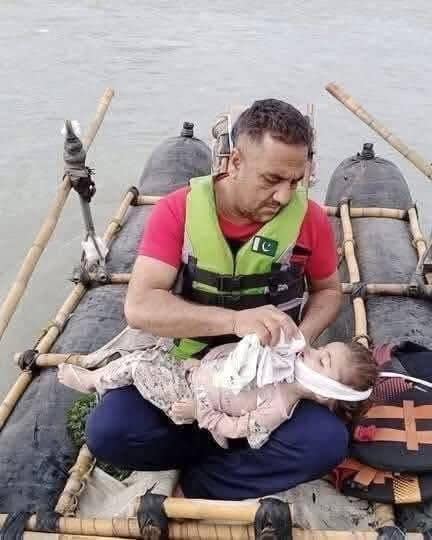
Every year, dozens of people go missing in the river’s violent currents. Most are presumed lost forever. But Hilal, often alone and without any modern equipment, dives into the treacherous waters to recover bodies, offering grieving families the chance for closure. He takes no money, asks no questions, and seeks no fame.

Hilal Khan does it for one reason: his unshakable faith in humanity and his devotion to God.

“I do it for Allah,” he once told a local journalist. “To help those in pain is my duty as a human.”

A Warrior During the 2022 Floods

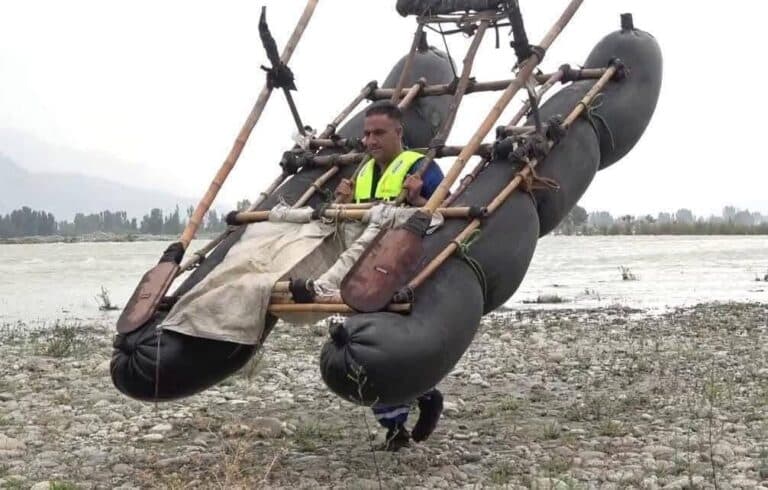
His heroism reached an even more extraordinary level during the catastrophic 2022 floods in Pakistan — one of the worst in the country’s history. When the valley was engulfed by raging waters and panic spread across Swat, Hilal did not flee. Instead, he turned a makeshift wooden float — barely more than a raft — into a lifeline.

As others sought higher ground, Hilal moved into the danger, rescuing the stranded, the elderly, the forgotten — often risking his own life. He used his own funds to build equipment, refusing to wait for government support or NGO aid. His only fuel? Compassion and courage.

A Hero Remembered in Silence

Despite his life-saving work, Hilal Khan remains absent from headlines, award ceremonies, and viral hashtags. But in the quiet corners of Swat, he is a legend. Families whose loved ones were returned dead or alive remember him not just as a rescuer, but as a symbol of hope and dignity.

“He gave me my son’s body when the river took him,” one mother recalled. “No one else came. Only Hilal.”

Hilal Khan reminds us that real heroes don’t need capes or cameras. They don’t act for fame. They act out of duty, faith, and an unwavering belief in humanity’s worth. At a time when the world celebrates influencers and entertainers, Hilal Khan stands as a stark and beautiful contrast — a man whose actions speak louder than any trending tweet ever could.

Kashmir’s Farmers were Left Thirsting for Water, while India and Pakistan continued to Politicize it

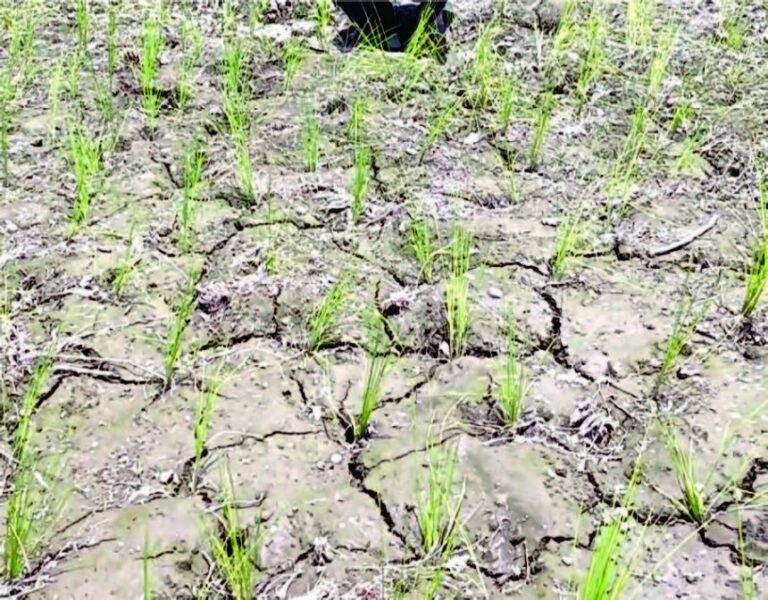
By Raja Irshad Ahmad | The Azadi Times Ganderbal, Jammu & Kashmir – As the lush green valleys of Kashmir charm the world with their natural beauty, the farmers of the region are battling a deepening crisis: a severe shortage of irrigation water that now threatens thousands of kanals of rice paddy fields across dozens of villages in Ganderbal district.

From Gund Rehman, Shalabugh, Tulamula, Paribal, to Ghat Gogjagund and Chhanduna, the impact is widespread. Villagers report that the Lift Irrigation Pump Station, a critical system feeding water into the Qazi Canal—the lifeline for these agricultural belts—is lying defunct due to a minor technical fault that remains unresolved due to departmental negligence.

Irrigation Department Admits Fault

The Superintending Engineer of the Ganderbal Irrigation Department acknowledged the issue, assuring the public that it would be resolved soon. But for farmers, every passing day brings crop failure closer. As one local farmer put it on social media:

“Both India and Pakistan take Kashmir’s water, but we can’t even get a drop to save our own crops. Is this not injustice?”

PDP Leader Blames Government Negligence

Former Member of Legislative Council Yasir Reshi of the People’s Democratic Party (PDP) strongly criticized the Jammu & Kashmir administration over the irrigation crisis, directly blaming the government for what he called a “man-made disaster.”

“This is not a natural calamity; it is the result of systemic negligence, mismanagement, and anti-farmer policies. From Sumbal to South Kashmir, thousands of kanals of agricultural land are turning barren due to water scarcity,” Reshi stated.

He also called on the administration to conduct an independent audit of Kashmir’s irrigation infrastructure, repair broken canals, and announce an emergency relief package for farmers.

When Politics Controls Water, Farmers Suffer

This crisis once again highlights a painful irony for Kashmiris: while India and Pakistan continue to share Kashmir’s rivers under the Indus Waters Treaty, the people of Kashmir—who live on the land these rivers flow through—often remain deprived of their basic irrigation needs.

With both nuclear neighbors managing Kashmir’s water for their national interests, Kashmiri farmers are caught in the middle, left to suffer silently.

As social media posts go viral, questions are once again being raised:

Why is it that Kashmir’s waters fuel agriculture in Punjab, Sindh, and Haryana—yet in the very place of origin, crops are dying from thirst?

The ongoing water crisis in Ganderbal is far more than a technical malfunction—it is a stark reflection of the political neglect that Kashmir’s agrarian communities have endured for decades. When thousands of kanals of fertile land are left to dry, not because of natural disaster but due to institutional apathy, the issue becomes one of injustice and denial of fundamental rights.

As India and Pakistan continue to manage Kashmir’s rivers for their own strategic and agricultural benefit under the Indus Waters Treaty, the people who live closest to these rivers remain deprived of the very water that originates in their homeland. Kashmiri farmers are not merely facing crop failure; they are being systematically disconnected from their own natural resources.

Unless the voices of these farmers are heard, and their right to water and livelihood is acknowledged and protected, such crises will continue to repeat—deeper, more devastating each time. It is time for both local and international institutions to recognize that access to water in Kashmir is not just a need—it is a right.

Muharram Crescent Sighted in Disputed Jammu and Kashmir: Shia Communities Begin Sacred Observances

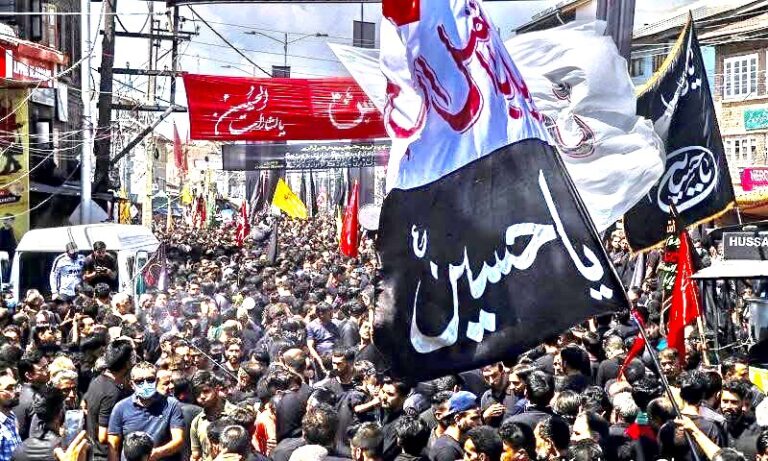
The crescent moon of Muharram ul Haram 1447 AH has been officially sighted across the disputed region of Jammu and Kashmir, including territories administered by both Pakistan and India. This marks the beginning of a sacred month for Shia Muslim communities, who commemorate the martyrdom of Imam Hussain (AS) through a series of mourning rituals and public gatherings.

The month of Muharram, particularly the first ten days leading up to Ashura on July 7, holds deep cultural and spiritual importance in Kashmir’s Shia-majority regions.

Preparations Underway Across the Disputed Region

From Gilgit and Skardu in the north to Kargil, Srinagar, Budgam, Muzaffarabad, and Rawalakot, local administrations have completed security arrangements and logistical coordination for upcoming majalis, processions, and communal observances.

In areas administered by Pakistan, district administrations have conducted coordination meetings with Shia clerics, peace committees, and police departments to ensure smooth management of public gatherings.

In Indian-administered Kashmir, particularly in Srinagar and parts of central Kashmir, authorities have also confirmed that public Muharram processions will be permitted in select zones after years of restrictions. Security forces have been deployed to facilitate peaceful commemorations.

Muharram in Kashmir: Cultural Identity Meets Faith

The observance of Muharram in Jammu and Kashmir is not only a religious act but also a reflection of centuries-old cultural identity. In the Shia tradition, the month is marked by public mourning, poetic recitations (marsiyas, nohas), community kitchens (sabeels), and peaceful processions.

“Ashura is a day of remembrance, not protest. It’s about justice and sacrifice — values that deeply resonate with Kashmiri history,” said a community leader in Budgam.

Many Kashmiris, regardless of sectarian identity, observe the solemnity of Muharram, reflecting the region’s deeply pluralistic heritage.

Demographic Heartlands: Shia Communities in Jammu and Kashmir

The month of Muharram carries immense religious and cultural significance for the Shia Muslim population across the disputed region of Jammu and Kashmir. In various subregions of this Himalayan territory — from rugged mountain valleys to urban centres — the Shia community not only observes Muharram with deep spiritual devotion but also plays a vital role in preserving and transmitting centuries-old mourning traditions. Key demographic pockets include:

Gilgit-Baltistan

This northern mountainous territory is home to one of the largest concentrations of Shia Muslims in South Asia, particularly in the districts of Skardu, Gilgit, Kharmang, Shigar, and Astore. Most Shia Muslims here belong to the Twelver (Ithna Ashari) school, while pockets of Noorbakhshi and Ismaili communities also coexist. In areas like Skardu and Kharmang, Shia Muslims form a clear majority, and Muharram observances shape the cultural calendar, with processions, nohas, and community-run sabeels stretching across towns and villages. The mourning traditions in Baltistan are infused with local language, poetry, and rituals that blend Persianate influences with Himalayan resilience.

Kargil in Ladakh

Nestled in the eastern Himalayas, Kargil is another prominent Shia-majority region. Often referred to as the religious heart of Shia Islam in Ladakh, Kargil hosts some of the largest Ashura gatherings in the entire disputed region. The observance of Muharram here includes community-wide participation, dramatic recitations of marsiyas and nohas, and symbolic re-enactments of the Battle of Karbala. The cultural richness of Kargil’s Shia population is evident in its religious schools, mosques, and public commemorations that bring together elders, youth, and religious scholars.

Central Kashmir (Indian-administered)

In the Kashmir Valley, Shia communities are predominantly concentrated in Budgam district, and parts of Srinagar, such as Zadibal, Bemina, and Rainawari. These areas are well-known for their historically rooted majalis (religious gatherings) and Ashura processions, some of which trace back centuries. Despite facing periodic restrictions, the community has sustained its traditions through private majalis, street-level recitations, and youth-led initiatives that ensure transmission of religious knowledge and cultural memory.

Pakistan-administered Kashmir

In Azad Jammu and Kashmir (AJK), Shia communities may be smaller in number compared to other regions, but their cultural and organizational impact remains strong. Districts like Muzaffarabad, Bagh, Hattian Bala, and Rawalakot witness organized Muharram processions, communal meals (langar), and local majalis, often coordinated in collaboration with Sunni neighbors — a reflection of inter-sect harmony that has historically marked the region. Shia ulema and youth organizations in AJK actively work to preserve religious narratives and engage in peaceful, disciplined commemorations throughout the ten days of mourning.

These geographic and cultural heartlands form a living spiritual corridor where Muharram is not only a time of mourning, but also one of identity, unity, and resistance against injustice. Across these communities — separated by political lines but united by faith — the memory of Karbala lives on through poetry, prayer, processions, and an unbroken chain of devotion that binds generations.

Coordinated Preparations Across the Divided Region

Local administrations across both sides of the ceasefire line also known as Line of Control (LoC), have confirmed the completion of security and logistical arrangements for processions, community gatherings (majalis), and public events.

In Gilgit-Baltistan, where Muharram processions are deeply embedded in local tradition, community leaders and officials have jointly prepared for peaceful observance, particularly in Skardu, often described as the spiritual capital of Shia Islam in the region.

In Indian-administered Ladakh, especially Kargil, preparations have been made for large-scale processions, including traditional recitations of nohas and marsiyas, which define the poetic mourning culture of the area.

Meanwhile, in Muzaffarabad and Rawalakot, district officials have held joint meetings with Shia scholars and community elders to ensure smooth coordination throughout the month.

Spiritual Significance Meets Cultural Identity

Across the disputed region, Muharram observance represents more than a religious event — it is a living tradition, passed down through generations. From the processions in the narrow valleys of Astore and Baltistan, to the poetic nohas of Kargil, and the silent marches in Budgam, the essence of Imam Hussain’s sacrifice binds communities together across sect, region, and border.

For many Shia families, Muharram is a time of spiritual retreat, communal bonding, and retelling the moral lessons of Karbala — justice, dignity, and resistance to oppression.

A Rare Opening in Indian-administered Kashmir

This year, authorities in Srinagar have permitted Ashura processions in selected zones — a first in decades — after years of restrictions citing security concerns. While cautiously welcomed, community voices continue to emphasize the need for consistent space for religious and cultural expression.

Ashura 2025: A Shared Commemoration Across Borders

Despite political divisions, the spirit of Muharram flows across the valleys of Kashmir, the mountains of Gilgit-Baltistan, and the plains of Ladakh. Ashura, to be observed on Sunday, July 7, commemorates the martyrdom of Imam Hussain (AS) at Karbala, a symbol of moral resistance cherished by many in the region, both Sunni and Shia.