20.4 C
Los Angeles
Saturday, October 10, 2026

One Killed in Qallan Shooting as Shutdown Eases in Major Azad Kashmir Cities

While business districts reopened in Mirpur, Muzaffarabad...

45-Year-Old Man Found Dead in Budgam’s Branwar Area

Police have launched an investigation after the...
Home Blog Page 91

Modi in Kashmir: Inaugurates $5bn Railway Project Amid Calls for UN Resolution Implementation

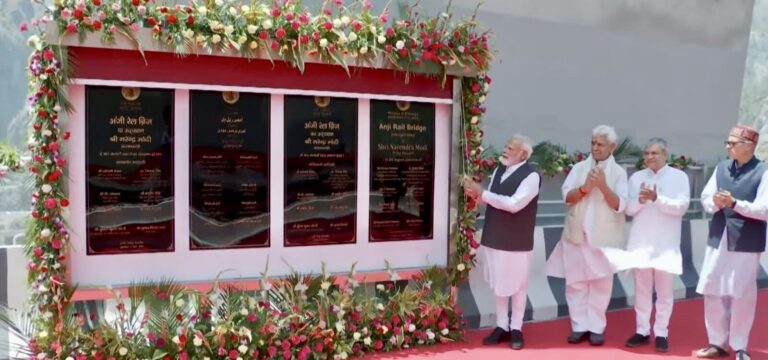
Baramulla, The Azadi Times – Indian administered Kashmir: India’s Prime Minister Narendra Modi has inaugurated the infrastructure projects to date — a 272-kilometre (169-mile) railway line connecting the Kashmir Valley to the Indian plains for the first time by train. The project is being promoted by Indian authorities as a strategic and logistical breakthrough, but on the ground, many Kashmiris continue to demand international attention and adherence to UN resolutions.

This event marks a significant political moment and a rare high-profile visit by Modi in Kashmir, a region where anti-India sentiment runs deep and the conflict remains unresolved.

A Monumental Railway in a Militarised Region

The new railway line begins in Udhampur, a garrison town in the Jammu region, and winds its way through Indian-administered Kashmir’s capital, Srinagar, ending in Baramulla, a town located near the highly militarised ceasefire line, Line of Control (LoC) that divides Kashmir between India and Pakistan. The Indian government estimates the total cost of the project at around $5 billion.

Read Also: UN Security Council Resolution 1947: A Missed Opportunity for Peace in Kashmir

Dubbed one of the most difficult tracks in the world by Indian Railways, the route includes 36 tunnels and 943 bridges, traversing the mountainous Himalayan terrain. The line is expected to significantly improve the movement of goods, people, and troops in a region previously reliant on treacherous roads and limited air connectivity.

One of the project’s most notable engineering feats is the Chenab River Bridge — a 1,315-metre-long steel and concrete arch bridge suspended 359 metres above the river, making it taller than the Eiffel Tower in Paris (330 metres). The structure is designed to withstand winds of up to 260 km/h (161 mph) and has a projected lifespan of 120 years.

Prime Minister Modi visited the Chenab Bridge under tight security, waved the Indian tricolour, and boarded a test train through the mountainous track to inaugurate another high-altitude structure — the Anji Bridge.

Modi’s Message vs Kashmir’s Reality

Addressing a state-organised event, Modi claimed the railway ensures all-weather connectivity, promotes spiritual tourism, and will open new livelihood opportunities for the region’s residents.

He also flagged off two “Vande Bharat” trains that aim to halve travel time between Srinagar and Katra, reducing the current six-to-seven-hour road journey to around three hours by rail.

Read Also: UN Doors Shut for Kashmiris? Pro-Independence Parties in AJK March for Peace Amid Rising Tensions

However, for many in Indian-administered Jammu and Kashmir, Modi’s arrival and the railway celebration are seen through a different lens. Kashmiris, particularly in Jammu and Baramulla, continue to demand the implementation of United Nations resolutions that call for a plebiscite on Kashmir’s future — a promise long denied and politically buried by successive Indian governments.

Tensions Simmer Beneath the Surface

Modi’s visit to Kashmir comes just weeks after a deadly conflict between India and Pakistan nearly pushed both nuclear-armed nations to war. In late April, a shooting attack in Indian-administered Kashmir left 26 people dead, mostly Hindu tourists, triggering a wave of cross-border retaliation involving missiles and drones.

India has blamed Pakistan for allegedly supporting the attackers — a charge Islamabad has strongly denied. While India and Pakistan each control parts of Kashmir, both claim the region in its entirety, and Kashmir remains one of the most militarised and contested territories on the planet.

Since 1989, armed resistance groups have been fighting Indian rule in the region. Many Muslim Kashmiris support the armed groups’ aim of uniting Kashmir either with Pakistan or making it an independent nation. India maintains these groups are backed by Pakistan, while Pakistan insists it provides only diplomatic support to the Kashmiri cause.

Infrastructure vs Self-Determination

While Indian officials showcase the rail project as a symbol of development and integration, local voices tell a different story. Critics argue that such grand infrastructure projects are being used as political tools to strengthen New Delhi’s grip over the disputed territory, rather than addressing the core political issue — the right to self-determination for the people of Kashmir.

In Jammu and across the valley, residents assert that development without dignity is not acceptable, and no number of bridges or trains can replace the fundamental right to decide their own political future.

Despite Modi’s rhetoric of unity and development, the ground reality in Kashmir remains tense, with civilians, activists, and journalists often under surveillance, detention, or facing restrictions. The heavy presence of security forces and lack of political dialogue continue to cast a long shadow over any celebration of connectivity.

Independent Journalism Under Threat

As an independent news organization in Kashmir, The Azadi Times reaffirms its commitment to presenting the untold side of the story. While mainstream Indian media hails Modi’s inauguration as a moment of pride, we stand with the voices who seek justice, dignity, and adherence to international law.

This project, as impressive as it may be in engineering terms, does not erase the reality that Kashmir remains a disputed territory, and its people continue to live under the shadow of military control, political repression, and broken promises.

The Train Arrives, But the Destination Remains Unclear

The new railway line may bring Kashmir physically closer to the Indian mainland, but it does little to bridge the political and emotional divide that continues to define the region. As the train speeds through the mountains, the call for freedom, dignity, and implementation of UN resolutions echoes louder than ever.

The people of Jammu and Kashmir, particularly the youth and civil society, continue to remind the world that the real connection they seek is not of steel and tracks, but of truth, justice, and the right to determine their own future.
Millions of Pilgrims Gather on Arafat for Key Hajj 2025 Ritual; Global Broadcast in 35 Languages

By The Azadi Times Staff | Makkah – June 6, 2025

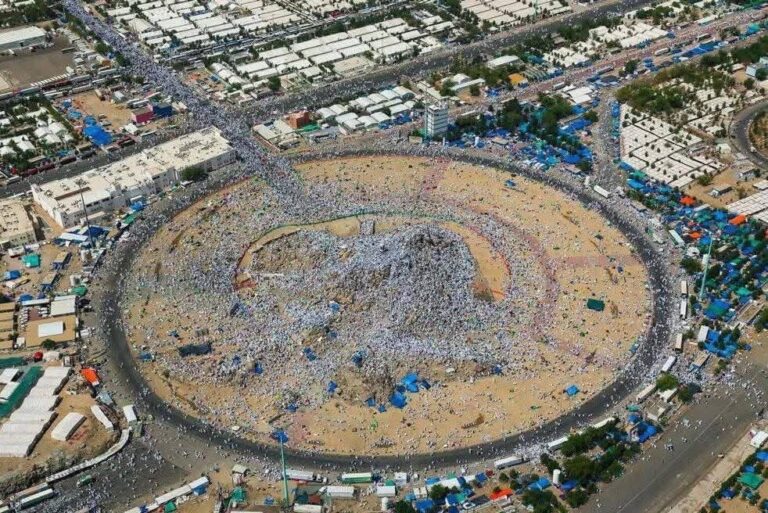
Millions of Muslim pilgrims from around the world gathered today at the sacred plains of Arafat, near Makkah, chanting “Labbaik Allahumma Labbaik” as they performed the most pivotal ritual of Hajj—Wuquf-e-Arafat.

The pilgrims arrived in Arafat from Mina after offering Fajr (dawn) prayers. They assembled under the scorching sun for midday (Zuhr) and afternoon (Asr) prayers, heartfelt supplications, and spiritual reflection, culminating in the Hajj sermon delivered from Masjid Nimrah.

This year’s Hajj sermon has been made globally accessible, broadcast live in 35 languages, including Urdu and English, allowing Muslims worldwide to spiritually connect with the momentous occasion.

Saudi authorities have made extensive arrangements to ensure the smooth conduct of the pilgrimage. From enhanced security and round-the-clock medical support to transportation and food facilities, every measure has been taken to facilitate the millions in attendance.

Following the rituals at Arafat, pilgrims will move toward Muzdalifah, pausing at Mash’ar al-Haram, where they will gather pebbles for the symbolic stoning of the devil in Mina, scheduled for the following day.

In a sign of growing diplomatic and religious cooperation, Pakistan’s Prime Minister Shehbaz Sharif and Chief of Army Staff Field Marshal Asim Munir are expected to arrive in Saudi Arabia tomorrow, likely to partake in Hajj proceedings and meet with Saudi leadership.

Hajj 2025 marks another year of spiritual unity for the global Muslim Ummah, with millions echoing the call of faith and peace under one sky.

Pakistan Declares Simla Agreement ‘Dead’ Amid Escalating Indo-Pak Tensions(

Srinagar, Indian administered Kashmir — In a significant development, Pakistan’s Defence Minister Khawaja Asif has declared the 1972 Simla Agreement with India as a “dead document,” signaling a potential shift in the longstanding framework governing Indo-Pak relations. This announcement follows heightened tensions between the two nations after the recent Pahalgam attack in Indian-administered Kashmir.

In a televised interview, Asif stated, “The Simla Agreement is now a dead document. We are back to the 1948 position, when the United Nations declared the Line of Control (LoC) a ceasefire line following the ceasefire and resolutions.” He emphasized that future disputes would be addressed through multilateral or international forums, moving away from the bilateral approach outlined in the Simla Agreement.

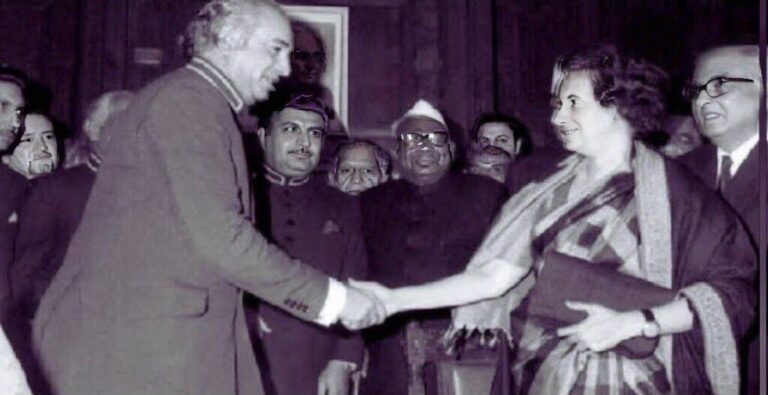
The Simla Agreement, signed in 1972 by then Indian Prime Minister Indira Gandhi and Pakistani President Zulfikar Ali Bhutto, was established to resolve conflicts between the two countries through peaceful means and bilateral negotiations. It also formalized the LoC as the de facto border in Jammu and Kashmir.

Tensions escalated after the Pahalgam attack on April 22, 2025, where 26 people were killed. India accused Pakistan of supporting cross-border terrorism and responded by suspending the Indus Waters Treaty, expelling Pakistani diplomats, and closing borders. In retaliation, Pakistan suspended the Simla Agreement, restricted trade, and closed its airspace.

Analysts warn that the suspension of the Simla Agreement could dismantle key diplomatic safeguards and raise concerns about regional stability. The agreement had been a cornerstone in maintaining a semblance of peace and order between the two nuclear-armed neighbors.

The international community is urged to monitor the situation closely and encourage both nations to engage in dialogue to prevent further escalation.

For more updates on this developing story, stay tuned to The Azadi Times.

Urs of Hazrat Mir Syed Ali Hamdani (RA) Being Observed in Srinagar with Great Reverence

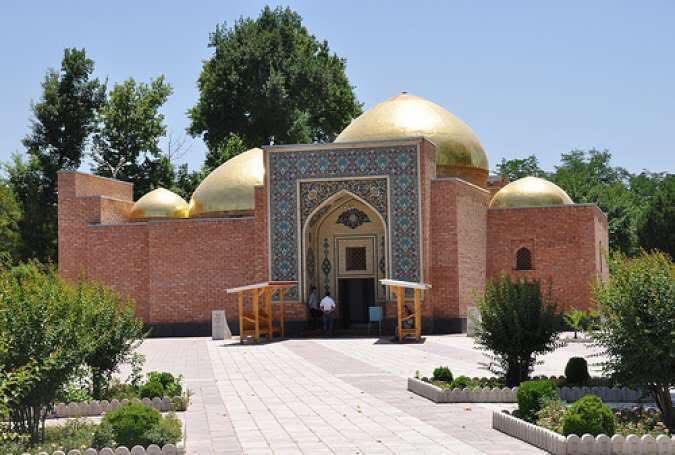
Srinagar, Indian administered Kashmir — The annual Urs Mubarak of Hazrat Amir Kabir Mir Syed Ali Hamdani (RA), a towering spiritual and intellectual figure of the Islamic world and the architect of Kashmir’s Islamic civilization, is currently being observed with profound reverence and devotion across the Kashmir Valley, especially in Srinagar.

Large gatherings of devotees, scholars, and spiritual leaders are taking place at the revered Khanqah-e-Moula in Srinagar — a sacred site associated with the 14th-century saint who laid the foundations of Islamic spirituality, culture, and civilization in Kashmir. Special prayers, Quran Khwani, and spiritual gatherings (Mehfil-e-Sama) are being held to commemorate his life, legacy, and immense contributions to the region.

Hazrat Syed Ali Hamdani (RA), born in 1314 CE in Hamadan (present-day Iran), was a renowned Sufi scholar of the Kubrawiya order. He visited Kashmir three times and played a pivotal role in spreading the message of Islam, establishing mosques, Khanqahs, schools, and welfare institutions, and transforming the region into a spiritual and cultural hub. His teachings emphasized monotheism, ethical conduct, social reform, and the integration of faith with action.

According to historical records, over 72,000 people embraced Islam through his preaching and example. He also introduced various handicrafts and industries, including carpet weaving, shawl making, and paper manufacturing — shaping the economic and cultural identity of Kashmir.

During the Urs, scholars reflect on his literary legacy — over 170 books authored in Arabic and Persian — covering subjects like Islamic jurisprudence, mysticism, ethics, and governance. His famous works such as Zakhirat-ul-Muluk, Sabheel-ul-Salikeen, and Maktoobat-e-Hamdani remain sources of guidance and inspiration to this day.

The management of Khanqah-e-Moula has made special arrangements for the influx of pilgrims. Security and administrative measures have also been enhanced to ensure smooth observance of the sacred event.

The Urs will continue for several days, with thousands expected to visit the shrine and pay their respects.

Hazrat Amir Kabir RA’s legacy continues to illuminate Kashmir’s spiritual and cultural identity, reminding generations of the transformative power of faith, knowledge, and service.

For more updates on Kashmir’s spiritual heritage, follow The Azadi Times.

Virat Kohli Finally Claims Elusive IPL Title as RCB Lift Maiden Trophy

0

SRINAGAR — In a historic triumph 18 seasons in the making, Virat Kohli and Royal Challengers Bengaluru (RCB) finally clinched their maiden Indian Premier League (IPL) title with a dramatic six-run victory over Punjab Kings in a thrilling final.

Kohli, 36, an icon of Indian cricket and the only player to have represented the same franchise since the IPL’s inception in 2008, was instrumental in the win. Opening the batting, he top-scored with 43 off 35 balls, helping RCB post 190-9 in their allotted 20 overs.

Punjab Kings, chasing their first title as well, fell agonizingly short, managing 184-7 despite a late flurry by Shashank Singh, who struck a valiant 61 not out, including 22 runs off the final four balls of the match.

“I never thought this day would come,” an emotional Kohli said post-match. “I’ve given every ounce of my energy to this team. This means so much to me.”

Kohli’s Loyalty Rewarded After 18-Year Wait

Having faced heartbreak in three previous IPL finals, Kohli finally lifted the trophy after a career defined by both personal brilliance and team misfortune. With 657 runs this season at an average of 54.75, he finished third on the tournament’s top scorers list.

Kohli’s IPL journey began in 2008 when he was just 19. Since then, he has amassed over 8,600 runs for RCB — all without switching franchises. This win completes his glittering resume that already includes the 2024 T20 World Cup and 2025 Champions Trophy.

“My heart and soul are with Bangalore. This is the team I’ll play for until my last IPL game,” he added. “Tonight, I’ll sleep like a baby.”

RCB’s Bowling Holds Firm Amid Late Punjab Charge

RCB’s bowling unit maintained composure even as Punjab mounted a fierce fightback. Romario Shepherd and Bhuvneshwar Kumar struck at key moments, removing captain Shreyas Iyer and power-hitter Marcus Stoinis. Australian quick Josh Hazlewood held his nerve in the final over, ensuring the Kings fell just short.

Andy Flower’s Coaching Masterstroke

The victory also marks a major milestone for head coach Andy Flower, who transformed RCB into a cohesive, title-winning unit in just two seasons. After a semi-final exit last year, Flower’s squad peaked at the right time this season, defeating Punjab twice in five days — once in the qualifier and again in the final.

Flower’s resume now includes franchise titles in the IPL, Pakistan Super League (with Multan Sultans, 2021), and The Hundred (with Trent Rockets, 2022).

England Stars Play Their Part

RCB’s international recruits also contributed significantly. England’s Phil Salt and Liam Livingstone took key catches, while Jacob Bethell was absent due to international duty but part of the title-winning squad. Livingstone, notably, secured back-to-back IPL titles, having won with Kolkata Knight Riders last season.

Grieving Father Seeks Justice After Sons Killed in Kashmir: Alleges Police Pressure and Threats

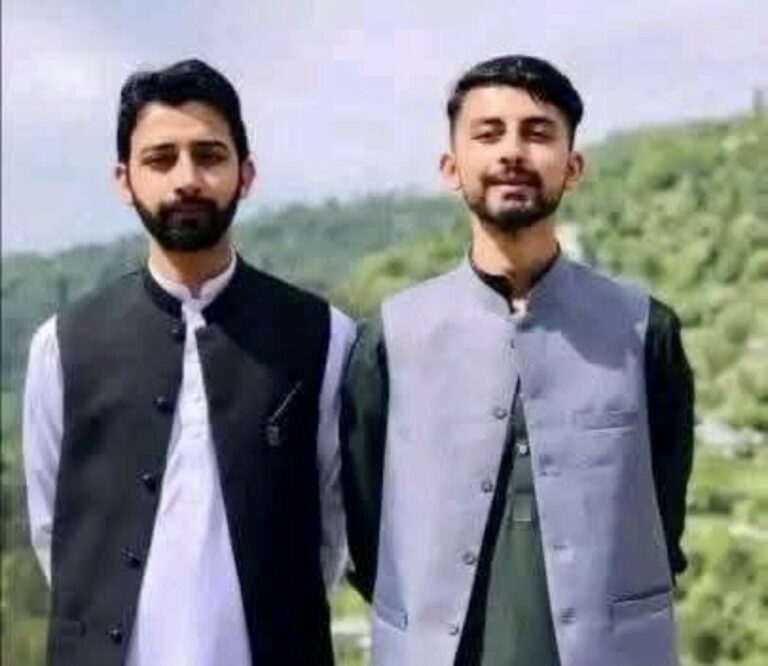
Muzaffarabad, Pakistan administered Kashmir — In a heart-wrenching appeal, Raja Naseem, father of the recently killed brothers Zarnosh and Jibran, has rejected all allegations made against his sons and submitted a formal request to Police demanding an impartial investigation into their deaths.

The case has sparked growing concerns over alleged police misconduct, human rights violations, and rising tensions between the state and civil society.

A video previously posted by one of the deceased, Zarnosh Naseem, has resurfaced on social media. In the video—verified by both his father and close relatives—Zarnosh claims he was summoned to the police station and pressured to act against the Jammu Kashmir Joint Awami Action Committee, a local civil rights group. He further alleged that the legal cases filed against him were fabricated.

“They were not criminals; they were community helpers.”

Raja Naseem described his sons as religious, community-oriented individuals whose character was widely respected. “The whole area stands as a witness to their moral conduct,” he said. “The large public turnout at their funeral was not for me, but for my sons’ uprightness and service to others.”

He recalled that Zarnosh had previously disappeared under suspicious circumstances, and only reappeared after public protests. While police claim he went into hiding due to pending cases, Raja Naseem disputes that account, asserting that his son feared being forcibly disappeared again.

“In an effort to pressure Zarnosh, police raided the university of my second son, Jibran,” the father claimed. “As a result, Jibran abandoned his studies. We had lost contact with both sons in recent weeks.”

“Our children didn’t die in an encounter—they surrendered.”

According to Raja Naseem, his sons were not killed in any armed encounter, but were allegedly arrested and killed in custody. He accused a senior police official (SSP) of threatening him directly.

“During a heated exchange, the SSP told me, ‘Both of your sons will be killed; their deaths are already written.’ And now they are gone.”

Demands for an Independent Inquiry

Raja Naseem and his family have demanded a transparent and independent investigation, accusing the authorities of staging a custodial killing. He warned that if justice is not delivered, the family will escalate their protest to the highest level.

“We’ve lost everything. If we don’t get justice, we will go to the extreme—possibly even self-immolate in front of the Muzaffarabad courts,” he said in a tearful statement.

Human rights observers are now closely monitoring the situation, calling for a thorough investigation and urging the state to ensure accountability and transparency in all law enforcement actions.

Thousands of Kashmiri Pandits Participate in Annual Kheer Bhawani Mela in Ganderbal

    0

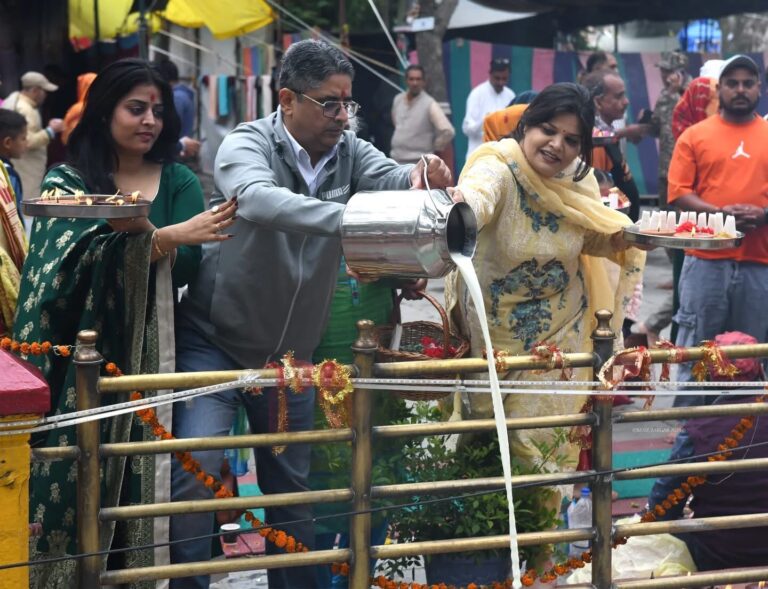
    Tula Mula, Ganderbal. Indian administered Kashmir — The annual Kheer Bhawani Mela at the historic temple in Tula Mula, Ganderbal, witnessed the participation of thousands of Kashmiri Pandits, including devotees from across India. The event was marked by special prayers and a spirit of communal harmony, as local Muslims extended warm hospitality to the visiting pilgrims.

    The festival, celebrated with religious fervor, saw the temple premises adorned for the occasion. Devotees offered prayers for peace and brotherhood in Jammu and Kashmir. Local Muslims upheld centuries-old traditions by facilitating the event, providing services to the pilgrims, and welcoming them with open arms.

    District administration and police officials were present to ensure the smooth conduct of the mela. Authorities had made comprehensive arrangements, including stringent security measures around the temple, to accommodate the large influx of visitors.

    The atmosphere in Tula Mula was vibrant, with a sense of joy and unity prevailing among attendees. Visiting Kashmiri Pandits expressed gratitude towards the local Muslim community and the district administration for their support and hospitality. Many voiced hope for a future where displaced Pandits could return to their homeland and live in harmony with their Muslim neighbors.

    The Kheer Bhawani Mela continues to stand as a symbol of Kashmir’s rich cultural tapestry and the enduring spirit of communal harmony.

    Philippine Scientists Discover Rare Plant That Cleans Toxic Soil Naturally

    Newly identified “hyperaccumulator” plant offers eco-friendly solution to rehabilitate land polluted by mining and industrial waste.

    Eco Breakthrough in the Philippines: Rare Plant Cleans Polluted Soil

    In a major environmental breakthrough, researchers in the Philippines have identified a rare plant species capable of absorbing toxic heavy metals from contaminated soil. This natural detoxifier, classified as a “hyperaccumulator,” could revolutionize efforts to restore environments degraded by mining and industrial pollution.

    The process used by the plant is known as phytoremediation—a green technology that uses living plants to clean up soil, air, and water tainted with hazardous contaminants.

    A Natural Solution to a Growing Crisis

    According to scientists from the University of the Philippines and the Department of Environment and Natural Resources (DENR), the newly discovered species has shown extraordinary abilities to extract high concentrations of nickel, cadmium, and lead from toxic land. The plant thrives in polluted soils and stores harmful metals in its leaves and stems without damaging itself.

    “This discovery has immense potential for rehabilitating degraded ecosystems—particularly those affected by heavy mining activities in Southeast Asia,” said Dr. Eliza Ramos, lead environmental biologist on the study. “It offers a cost-effective, sustainable alternative to traditional soil-cleaning methods.”

    What Is Phytoremediation?

    Phytoremediation is an eco-innovative technique that uses plants to:

    • Absorb and contain pollutants
    • Stabilize toxic soil
    • Prevent the spread of heavy metals into nearby waterways
    • Improve biodiversity and land usability over time

    Because it’s less invasive than mechanical excavation or chemical treatment, phytoremediation is increasingly being recognized as a vital tool in climate adaptation and land restoration efforts.

    Hope for Post-Mining Communities

    The implications are far-reaching. In the Philippines—where decades of extractive mining have left behind acres of unproductive, hazardous land—this discovery could aid communities struggling with environmental damage and health risks.

    Government agencies are now assessing how to scale phytoremediation projects using this native plant, especially in affected provinces such as Palawan, Zambales, and parts of Mindanao.

    Toward a Sustainable Future

    This discovery joins a growing body of eco-innovations aimed at combating climate change and pollution. From bioengineered trees to microbial soil treatment, nature-based solutions are becoming essential tools in the global sustainability toolkit.

    Environmental advocates have welcomed the find, calling it a “win-win for biodiversity and community resilience.”

    World’s Longest Train Journey: 18,755 KM Across 13 Countries in 21 Days

    An epic 21-day rail journey takes travelers across continents, covering nearly 19,000 kilometers with seven visas and unforgettable views.

    Travel the World by Train: 13 Countries, 18,755 KM, 21 Days

    For adventurous travelers and rail enthusiasts alike, the ultimate railway experience has arrived. A once-in-a-lifetime journey now offers the world’s longest continuous train ride—an astonishing 18,755 kilometers across 13 countries over 21 days.

    The journey begins in Portugal and winds its way through Spain, France, Germany, Poland, Belarus, Russia, Kazakhstan, Mongolia, and finally into China, with some routes also extending via Southeast Asia, depending on visa access and itinerary.

    This extraordinary voyage requires seven visas, careful planning, and a passion for immersive travel. It passes through diverse landscapes, from the European countryside to the vast Siberian steppes and the Mongolian desert, offering a front-row seat to the world’s most breathtaking and lesser-seen terrain.

    A New Era of Slow Travel

    In an age of instant flights, this rail route champions the philosophy of slow travel—a way to connect deeply with cultures, languages, and landscapes. Whether it’s the charm of a quiet Eastern European village or the bustle of Beijing’s central station, passengers experience the rhythm of the planet one track at a time.

    “This journey isn’t just about distance—it’s about rediscovery, connection, and endurance,” said a recent traveler who completed the entire route. “Every country has a story. And you live it, frame by frame, through your window.”

    What You Need to Know

    • 🗓️ Duration: 21 days
    • 🌍 Countries Covered: 13
    • 📏 Distance: 18,755 kilometers
    • 📄 Visas Required: 7 (country-specific; check updated travel advisories)
    • 🚆 Start to End: Lisbon to Shanghai (or reverse route depending on operators)

    Trending Among Train Lovers and Adventure Seekers

    Social media platforms have seen a surge in #LongestTrainJourney posts, with travel influencers and rail enthusiasts documenting their experiences under hashtags like #TravelByTrain, #EpicRailAdventure, and #AroundTheWorldTrain.

    Tour operators are now beginning to offer curated packages for this route, including visa assistance, onboard services, and cultural excursions during extended layovers.

    Final Thoughts

    As global tourism evolves, the longest train journey in the world stands as a testament to human engineering, curiosity, and resilience. It’s more than just transit—it’s an adventure of discovery across time zones, cultures, and continents.

    So if you’re ready for a trip that challenges the conventional and rewards the patient, this epic rail journey may be your next unforgettable chapter.

    Pakistani Man Marries Two Women Simultaneously in Unusual Ceremony in Chitral

    0

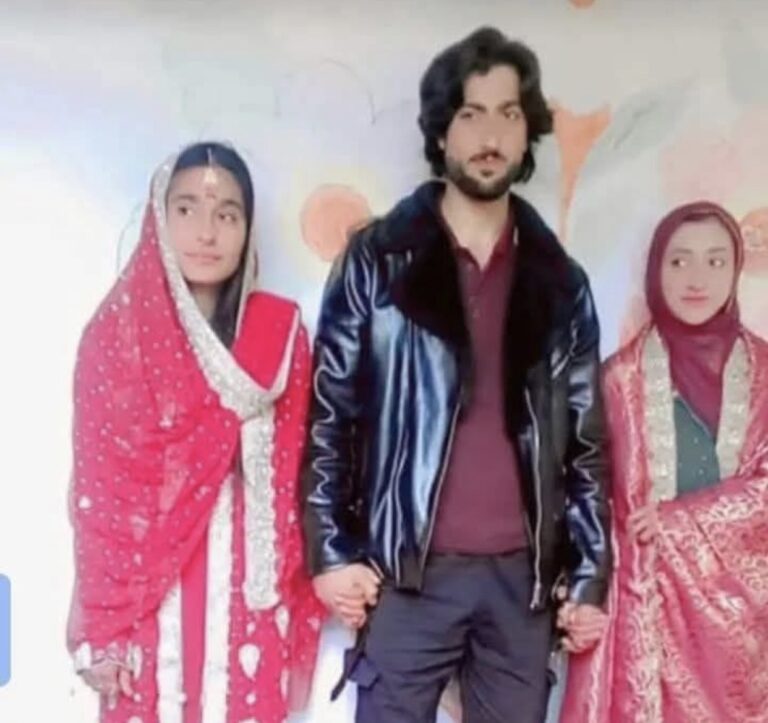
    CHITRAL, Pakistan – In a rare and controversial incident, a young man from the Turkho region of Chitral married two women at the same time after both arrived at his home expecting to wed him.

    The man, Sartaj Ahmed, originally from Sorich, Chitral, had reportedly promised marriage to both women over phone calls. The situation escalated when one woman, whom Ahmed had allegedly eloped with, arrived at his house—only to find another woman already there, also claiming he had vowed to marry her.

    Read Also: Pakistani TikToker Sana Yousuf Fatally Shot in Islamabad: Police Launch Manhunt for Suspect

    Village elders intervened after both women refused to return home, ultimately deciding that the only resolution was to solemnize a dual marriage. The nikah (Islamic marriage ceremony) was performed simultaneously, with Ahmed becoming the husband of both women in a single event.

    Controversy and Cultural Context

    Polygamy is legally permitted in Pakistan under Islamic law, allowing men to marry up to four wives—provided they treat each equally. However, such cases often spark debates over consent, gender rights, and societal pressures.

    Local sources say the women insisted on going through with the marriage despite the unusual circumstances. “Both women claimed they had been in contact with Sartaj and were determined to stay,” said a community member familiar with the case.

    Reactions and Legal Implications

    While some villagers accepted the elders’ decision as a pragmatic solution, others questioned whether the women were given fair agency in the matter. Human rights advocates in Pakistan have long criticized forced and coerced marriages, particularly in rural areas where traditional customs sometimes override legal protections.

    No formal complaints have been filed so far, but the case has drawn attention to the complexities of marriage practices in remote regions of Pakistan.

    This is a developing story. Updates will follow as more details emerge.

    — The Azadi Times