
Home Blog Page 90

Jammu Kashmir National Students Federation Vows to Continue Struggle Against Karachi Agreement

0

Paniola, Azad Jammu and Kashmir (PaJK): The Jammu Kashmir National Students Federation (JKNSF) held a significant meeting today in Paniola, reaffirming its long-standing demand for the annulment of the controversial Karachi Agreement. The gathering highlighted student activism, regional political grievances, and calls for justice in Kashmir, resonating with human rights concerns globally.

Senior leaders attending the meeting included JKNSF Publicity Board Chairman Zargham Jameel, District Poonch Chairman Hassan Sani, Central Committee Member Abdullah bin Masood, and other regional representatives. The meeting focused on the 28th April anniversary of the Karachi Agreement — a 1949 accord widely criticized for excluding the Kashmiri people’s participation in decisions affecting their future.

“The National Students Federation will continue its struggle until the Karachi Agreement is formally revoked,” declared Zargham Jameel during the session.

Demand for Immediate Arrests in JKNSF President’s Assault Case

Participants also strongly demanded the immediate arrest of those responsible for the assault on JKNSF Central President Khawaja Mujtaba Bande. Accusing state authorities and local police of protecting the perpetrators, the Federation warned of intensified protests if justice is delayed.

“The state’s complicity must end. We demand immediate action and arrests,” emphasized Hassan Sani, who chaired the meeting.

Organizational Expansion Across Constituency 5

Strategic organizational growth was another major focus. A special committee, headed by Hassan Sani, was established to initiate JKNSF’s presence at ward levels and across educational institutions within Constituency 5. The plan aims to empower youth and strengthen grassroots political mobilization.

Condemnation of Student Arrests in Indian-Administered Kashmir

The JKNSF also condemned the recent wave of arrests and reported mistreatment of students in Indian-administered Kashmir. The Federation expressed solidarity with detained students and called on international human rights organizations to intervene.

“Student activism is not a crime. We stand with the students who are facing violence and arbitrary detention,” said Abdullah bin Masood.

A Renewed Call for Justice and Self-Determination

Concluding the meeting, participants pledged to continue their peaceful struggle under the banner of “Knowledge, Struggle, Victory,” a motto symbolizing their commitment to education, activism, and human rights in Kashmir.

The JKNSF’s renewed energy and activism come at a time of growing international attention on human rights issues in both Indian and Pakistan-administered Kashmir, signaling a potential surge in youth-led political movements across the region.

China Calls for Restraint Amid India-Pakistan Tensions Over Pahalgam Incident

0

Muzaffarabad, AJK (Pakistan administered Kashmir): In the aftermath of the tragic Pahalgam attack that claimed the lives of 26 tourists, China has urged India and Pakistan to exercise restraint and engage in dialogue to prevent further escalation. The Chinese Foreign Ministry issued a statement emphasizing the importance of maintaining regional peace while expressing understanding of Pakistan’s security concerns.

China’s Position on the Incident

The Chinese Foreign Minister, in an official statement, stated, “We fully understand Pakistan’s legitimate security concerns and support its efforts to safeguard its sovereignty and territorial integrity.” The minister also reiterated China’s call for impartial and timely investigations into the Pahalgam attack, stressing the need for transparency and justice.

China’s appeal for calm reflects its broader interest in promoting stability in South Asia, a region that has been marred by decades of periodic conflict and mistrust between nuclear-armed neighbors India and Pakistan.

The Pahalgam Attack and Its Aftermath

The Pahalgam incident, which occurred four days ago in Indian-administered Kashmir, saw armed assailants open fire on a group of tourists, leading to the deaths of 25 Indians and one local horseman. The attack has sparked outrage and grief on both sides of the border. However, it has also led to heightened tensions, with India accusing Pakistan of involvement—a claim that Islamabad has strongly denied.

India responded to the attack with a series of measures, including:

  • Suspending the Indus Waters Treaty, an agreement that governs the shared rivers between the two nations.
  • Heightened security protocols and diplomatic démarches against Pakistan.

Pakistan, in turn, implemented its own countermeasures:

  • Halting all trade with India.
  • Closing Pakistani airspace to Indian airlines.
  • Declaring Indian diplomats in Pakistan as persona non grata and ordering their departure.

Calls for Impartial Investigations

Pakistan has sought international support for an independent investigation into the Pahalgam attack, aiming to clear its name and ensure that the victims receive justice. The Pakistani government has also launched a diplomatic campaign, with senior officials reaching out to global leaders to provide their perspective on the incident.

Islamabad maintains that any resolution to the crisis must involve unbiased investigations and the de-escalation of hostilities. “We are committed to peace, but any baseless allegations without evidence will not be accepted,” a Pakistani official stated during a press briefing.

Regional Stability and China’s Role

China’s involvement as a neutral actor in this situation is crucial, given its close ties with Pakistan and its economic and strategic interests in South Asia. The China-Pakistan Economic Corridor (CPEC), a flagship project under China’s Belt and Road Initiative, underscores Beijing’s commitment to fostering economic collaboration in the region.

At the same time, China’s call for dialogue reflects its broader diplomatic approach of encouraging peaceful conflict resolution. The Chinese Foreign Minister urged both India and Pakistan to prioritize dialogue over confrontation, stating, “Peace and stability in South Asia are in the interest of all parties involved.”

Global Reaction and Broader Implications

The Pahalgam attack has drawn international attention, with world leaders expressing concern over the potential for escalation. Observers warn that heightened tensions between India and Pakistan could have far-reaching implications, not only for South Asia but for global security.

While some nations have supported India’s right to address security concerns, others have called for restraint and impartial investigations. The international community has emphasized the importance of maintaining peace in a region that has witnessed multiple conflicts over the past seven decades.

A Call for Restraint and Dialogue

As tensions simmer, China’s diplomatic intervention serves as a reminder of the critical need for restraint and dialogue. Both India and Pakistan face significant domestic and international pressures to de-escalate, and the coming weeks will likely determine whether this crisis leads to further confrontation or a renewed commitment to peace.

For now, the focus remains on ensuring justice for the victims of the Pahalgam attack and preventing further deterioration of relations between the two neighbors. The international community, including China, continues to advocate for constructive engagement and mutual understanding to address the root causes of conflict in South Asia.

Kashmiri Leaders Warn Islamabad Over Enforced Disappearances, Demand End to Illegal Detentions

0

Rawalakot, AJK, (Pakistan-administered Kashmir): In a fervent address at the “Oath-Taking and Rights Conference” held in Bhora Union Council, Chhapriyan Khori Kair, DhirKot, a tehsil in Bagh district in Pakistan-administered Kashmir, Sardar Umar Nazir, a prominent figure of the Jammu and Kashmir Joint Awami Action Committee, denounced the ongoing enforced disappearances of Kashmiri citizens allegedly perpetrated by Pakistani authorities.

Nazir highlighted a disturbing pattern of abductions, particularly from Islamabad, where numerous individuals have reportedly vanished without trace. He emphasized that if any citizen is suspected of wrongdoing, due legal processes should be followed, asserting, “If there are charges or allegations against any individual, let the state’s courts, laws, and police handle the matter transparently.”

The leaders warned that the continuation of such practices would compel the Joint Public Action Committee to devise a strategic response. He urged both the Government of Pakistan and the Government of Azad Kashmir to uphold human rights and cease any actions that undermine the rule of law.

This call to action resonates amid broader concerns about human rights in the region. Notably, the case of journalist and poet Ahmad Farhad, who was forcibly disappeared from his Islamabad residence on May 15, 2024, drew international condemnation. Amnesty International reported that Farhad’s abduction was followed by weeks of uncertainty regarding his whereabouts, highlighting the peril faced by critics of enforced disappearances.

The Joint Public (Awami) Action Committee’s stance underscores a growing demand for accountability and adherence to legal norms in addressing allegations against citizens, reflecting a broader push for human rights and justice in the region.

Kashmir’s Leepa Valley, Kupwara Brace for Uncertain Future Amid Fresh Crossfire

    0

    Muzaffarabad, Leepa Valley, Kupwara, LoC (Jammu & Kashmir): In the wake of a deadly attack on Indian tourists in Pahalgam, located in Indian-administered Kashmir, cross-border tensions between India and Pakistan have reignited, with residents along the Line of Control (LoC) fearing a return to violence. Recent nights have seen intense exchanges of fire in the Leepa Valley (Pakistan-administered Kashmir) and the Uri sector (Indian-administered Kashmir), disrupting the fragile calm established by a 2021 ceasefire agreement.

    Renewed Hostilities and Civilian Anguish

    Over the past week, heavy gunfire and shelling have kept communities on both sides of the LoC awake through the night. While no casualties have been reported in the latest skirmishes, the psychological toll is palpable. Sohail Ali ul Mughal, a lawyer and resident of Leepa Valley, described the terror of recent nights: “The firing began suddenly around midnight. We moved our elderly family members to underground bunkers immediately. Everyone here lives in constant dread.”

    Leepa Valley, home to approximately 40,000 people, lies just 5 kilometers from the LoC. Mughal’s own home suffered damage during the 2019 shelling, a grim reminder of the vulnerability of border communities. Similar anxieties grip villages in Kupwara, a highly sensitive district in Indian-administered Kashmir, where authorities recently mandated permits for entry into LoC-adjacent areas. Residents like Peerzada Syed in Karnah have begun reinforcing personal bunkers, fearing a repeat of past tragedies. “We’ve seen shelling destroy lives and livelihoods. We pray for peace but must prepare for the worst,” Syed shared.

    Bunkers and Broken Promises

    Following the 2021 ceasefire, both governments pledged to shield civilians from cross-border violence. However, the surge in hostilities has exposed the fragility of these assurances. In Leepa Valley and Uri, decades-old underground bunkers—some government-built, others makeshift—are being hastily cleared and reinforced. Yet, many lack basic amenities like electricity or water, leaving residents to question their efficacy.

    On the Indian side, villages such as Tod in Kupwara’s “zero line” have endured repeated shelling. A local resident recalled the 2017 death of a relative in crossfire, lamenting, “Four years of peace let us farm and send children to school. Now, that feels threatened.”

    Economic Fallout and Lost Opportunities

    The resurgence of violence also threatens economic stability. Leepa Valley, once emerging as a tourist destination after road improvements in 2022, now faces uncertainty. Over 30 new hotels and guesthouses had sprung up, capitalizing on the region’s natural beauty. Bashir Alam Awan, a local council member, warned, “Tourists won’t come if firing continues. Livelihoods are at stake.”

    Similarly, in Uri’s Bhatgraan and Churanda villages, government-built bunkers remain ill-equipped, forcing residents to rely on personal savings for safety measures. “The poor can’t afford bunkers. We pray India and Pakistan resolve this,” said Mohammed Qadoos, a shopkeeper.

    Historical Context and Diplomatic Strain

    The LoC, spanning 744 kilometers in Kashmir, has been a flashpoint since India and Pakistan’s 1947 partition. A 2003 ceasefire, periodically violated, saw brief success in 2021 before recent events undermined it. Analysts suggest the Pahalgam attack has strained diplomacy further, with both armies accusing each other of provocations.

    While the 2021 agreement reduced casualties significantly, its collapse risks a humanitarian crisis. Experts warn that military escalations could mirror the 2019 Balakot strikes, which brought the nuclear-armed neighbors to the brink of conflict.

    Voices from the Ground

    Amid the turmoil, civilians cling to resilience. “We won’t leave our homes,” asserted Awan, reflecting a sentiment common in Leepa Valley. Yet, nights are punctuated by fear, as families monitor the skies for jets and bunker down. Sohail summarized the exhaustion: “No one sleeps when the firing starts. We check on neighbors, hoping the morning brings quiet.”

    As India and Pakistan trade accusations, border communities remain caught in the crossfire their lives suspended between hope for peace and preparations for war. With bunkers readied and prayers whispered, the people of Leepa Valley and Kupwara await a resolution that seems increasingly elusive.

    Massive Protests in Gilgit Baltistan Against Land and Mineral Resource Seizures

    0

    Shigar, Gilgit Baltistan (Pakistan administrated Kashmir): Thousands of residents took to the streets of Shigar in Gilgit-Baltistan today to protest against the increasing encroachments on mountains, pastures, and mineral resources. Chanting powerful slogans like “No to Land Grabbing” and “No to Seizure of Our Minerals,” the demonstrators turned the town into a sea of resistance, demanding an end to what they described as the illegal appropriation of their ancestral lands and natural resources.

    The protest highlighted growing public anger over what locals allege is a systematic attempt to seize land and mineral wealth without the consent of the indigenous communities. Protesters marched through major streets, waving banners and raising their voices against the exploitation of their natural heritage.

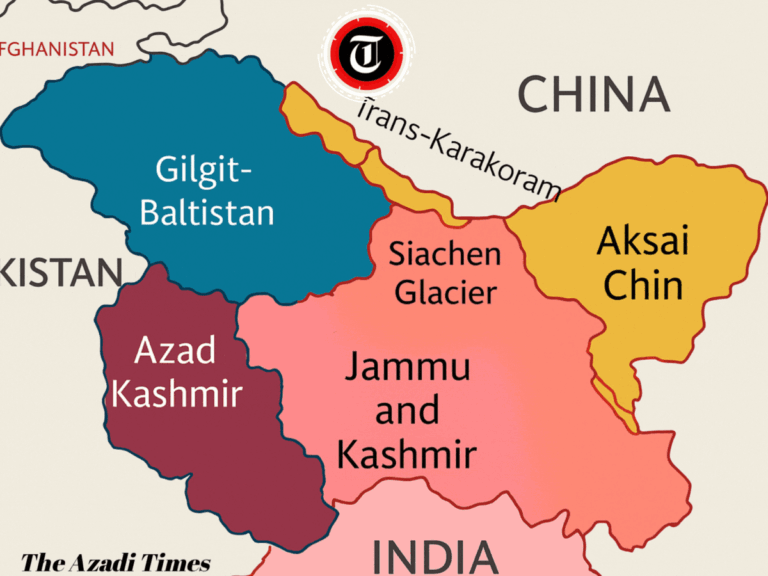
    Gilgit-Baltistan, which remains a part of the broader Jammu and Kashmir dispute under international law, has seen increasing tensions in recent years over land rights, resource control, and political disenfranchisement. Residents have long complained of being treated as second-class citizens, with little say in decisions that affect their land and livelihoods.

    The Shigar protest is being seen as part of a larger wave of public dissent across the region, with citizens calling for greater autonomy, protection of their rights, and an end to external exploitation.

    Organizers of the demonstration warned that unless authorities address their demands, the movement would expand across Gilgit-Baltistan. They emphasized that the land, pastures, and mineral resources are the rightful inheritance of the local people, not commodities to be seized by powerful interests.

    This fresh wave of protests adds yet another layer to the already complex situation in Jammu and Kashmir, where demands for political rights, land protection, and local empowerment continue to grow stronger by the day.

    Tensions Escalate Along Line of Control in Kashmir’ Leepa Valley

    0

    Leepa Valley, AJK (Pakistan administered Kashmir): The Line of Control (LoC) in Leepa Valley, Kashmir witnessed renewed tensions between India and Pakistan, with both sides engaging in post-to-post firing and shelling in the Leepa Valley sector of Azad Kashmir (PaJK). This development comes just two days after a deadly terrorist attack in Pahalgam, Kashmir.

    Recent Developments
    On the night of April 25, 2025 around 1:30 am, both sides resumed firing using small arms along the LoC in the LeepaValley sector. This follows a similar incident two days prior, where ceasefire violations were reported in the same area.


    The renewed tensions have spread fear and panic among the local population, with many residents feeling caught in the crossfire. The situation along the LoC remains volatile, with both sides dug in.


    The LoC has been a flashpoint for tensions between India and Pakistan for decades, with both countries claiming sovereignty over the region of Kashmir. Recent incidents, including the Pahalgam attack, have further strained relations.


    The situation along the LoC in Kashmir remains precarious, with both sides showing no signs of backing down. Diplomatic efforts will be crucial in easing tensions and preventing further escalation.

    Maharaja Hari Singh: The Last Dogra Ruler Who Shaped Jammu & Kashmir’s Sovereignty

    By Sameena Raja, Jammu & Kashmir: Sixty-four years ago, on April 26, 1961, Maharaja Hari Singh, the last Dogra ruler of the princely state of Jammu, Kashmir, and its Tibetan frontiers (Aksai Tibetha), passed away. His death marked the end of an era defined by his fierce commitment to preserving the region’s autonomy amid the turbulence of South Asia’s partition.

    Early Life & Ascension

    Born on September 23, 1895, in Jammu’s Amar Mahal, Hari Singh was the only surviving son of Raja Amar Singh, brother of Maharaja Pratap Singh. After his father’s death in 1909, British authorities appointed Major H.K. Brar as his guardian, under whom Hari Singh absorbed ideals of justice, democracy, and patriotism. Educated at Mayo College, Ajmer, and trained at the British Imperial Cadet College in Dehradun, he ascended the throne in 1925 following Maharaja Pratap Singh’s death.

    Reforms & Vision

    In his inaugural address, Hari Singh declared his “religion to be justice,” transcending his Hindu roots. His reign saw transformative policies:

    • Mandatory primary education.
    • Abolition of child marriage.
    • Opening places of worship to all castes.
    • Establishment of an elected legislature and independent judiciary.
    • The landmark State Subject Rules (1927), reserving landownership and state employment exclusively for locals—a bulwark against external influence.

    Controversies & Allegations

    Critics labeled Hari Singh a spendthrift and accused him of indulgent behavior, often citing lavish expenditures during Maharaja Pratap Singh’s funeral. A 1924 London court case involving an unnamed “Mr. A” further fueled speculation, though no conclusive evidence linked him to the allegations.

    The 1947 Crucible

    As British India dissolved, Hari Singh sought to maintain Jammu & Kashmir’s independence. Despite pressure from India, Pakistan, and internal political factions, he resisted full integration. His conditional accession to India in 1947, under duress from Pakistani tribal invasions, preserved a fragile sovereignty.

    Hari Singh’s diplomatic maneuvering ensured Jammu & Kashmir retained its constitutional presidency and prime ministership during his lifetime. His son, Dr. Karan Singh, upheld this legacy, refusing to dilute the region’s distinct identity.

    Legacy & Unfinished Struggle

    Hari Singh’s death in 1961 left a void in the fight for Kashmir’s self-determination. Today, activists advocating for the region’s sovereignty trace their roots to his vision. His State Subject Rules remain a cornerstone of Kashmiri identity, shielding the region from demographic and cultural erosion.

    “Had Hari Singh not ruled in 1947,” notes historian Sameena Raja, “Jammu & Kashmir would have vanished like the 562 other princely states absorbed by India and Pakistan.”

    A Call to Preserve History

    As modern debates over Kashmir’s status rage, Hari Singh’s legacy faces revisionism. Supporters urge transparency in portraying his complex role—champion of reform and target of colonial-era intrigue. “The truth must prevail without fear,” Raja asserts.

    Palestinian President Condemns Pahalgam Attack, Reaffirms Support for India

    0

    Beirut (News Desk): Palestinian President Mahmoud Abbas has strongly condemned the recent terrorist attack in Pahalgam, India, labeling it a “heinous act” and expressing solidarity with New Delhi in a letter addressed to Prime Minister Narendra Modi.

    In his message, Abbas extended heartfelt condolences to the families of the victims who lost their lives in the assault and wished a swift recovery for those injured. He emphasized Palestine’s firm support for India’s efforts to uphold peace and security, particularly in the Kashmir Valley.

    “The tragic incident has deeply saddened us,” Abbas wrote, reiterating his government’s backing for India’s initiatives to combat terrorism and maintain stability in the region. “We vehemently condemn the heinous crime committed in the Kashmir and stand with India in its endeavors to preserve security and stability,” he added.

    The Palestinian leader’s statement comes amid global condemnation of the attack, which claimed multiple innocent lives. Abbas’s remarks underscore ongoing diplomatic solidarity between Palestine and India, reinforcing mutual commitments to counter terrorism and promote regional peace.

    International observers have noted the significance of Abbas’s outreach, highlighting shared concerns over extremist violence and collaborative strategies to address security challenges.

    Reporting contributed by international affairs correspondents.

    Skardu Travel Guide: Explore Natural Wonders, Cultural Heritage & Adventure in Gilgit-Baltistan

    Discover Skardu, Gilgit Baltistan mountain paradise. Plan your trip with our guide to top attractions, trekking routes, cultural insights, and travel logistics in Gilgit-Baltistan.

    Perched at 7,500 feet above sea level, Skardu is the administrative capital of Baltistan and a cornerstone of tourism in Pakistan administrated Kashmir’s Gilgit-Baltistan region.

    Nestled between the towering peaks of the Karakoram and Himalayan mountain ranges, this high-altitude city serves as a launching pad for adventurers seeking to conquer K2, explore glacial plateaus, or immerse themselves in centuries-old Balti culture.

    Natural Beauty and Key Attractions in Skardu

    Skardu’s dramatic landscapes a blend of emerald valleys, turquoise lakes, and snow-capped peaks have earned it global acclaim. Key destinations include:

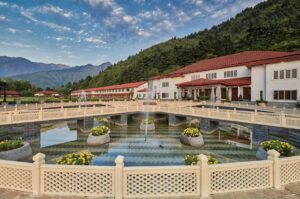
    • Shangrila Resort: A serene lakeside retreat often dubbed “Heaven on Earth.”
    • Satpara Lake: A glacial lake surrounded by orchards and hiking trails.
    • Deosai National Park: The world’s second-highest plateau, known as the “Land of Giants” for its brown bears and wildflowers.
    • K2 Base Camp: The starting point for treks to the world’s second-highest peak.
    • Shigar, Kharmang, and Khaplu Forts: Restored medieval castles showcasing Baltistan’s architectural heritage.

    Cultural Heritage and Local Traditions of Skardu

    Skardu in Spring

    Skardu is a cultural crossroads where diverse communities, including Shia, Sunni, Noorbakshi, and Ismaili Muslims, coexist peacefully.

    The Balti people, renowned for their hospitality, preserve ancient traditions through folk music, festivals, and handicrafts. The Balti language, a Tibetan dialect, remains widely spoken, adding to the region’s unique identity.

    Travel Logistics: Getting to and Around Skardu

    • By Air: Skardu International Airport connects daily to Pakistan’s Islamabad, Lahore, Karachi, Sialkot, Faisalabad, and Multan via Pakistan International Airlines.
    • By Road: The Karakoram Highway (KKH) links Skardu to Islamabad via the scenic Babusar Pass. The newly upgraded Shara-e-Baltistan (Jaglot-Skardu Road) ensures smooth access to the city.
    • Local Transport: Jeeps and 4×4 vehicles are available for remote destinations like Hushe Valley or the Siachen Glacier base.

    Skardu Tour Itinerary: Districts and Highlights

    Tourism in Gilgit-Baltistan is broadly divided into the Skardu Tour and Hunza Tour. The Skardu circuit spans four districts and Astore, offering diverse experiences:

    1. Skardu District

    • Deosai National Park: A summer haven for trekking and wildlife photography.
    • Khaplu Fort: A 19th-century palace turned heritage hotel.
    • Shigar Valley: Home to the 17th-century Amburiq Mosque and apple orchards.
    • Satpara Dam: A hydroelectric project with panoramic views.

    2. Ghanche District (Khapalu Valley)

    • K2 Base Camp: The ultimate trekking destination for mountaineers.
    • Gondogoro La Pass: A challenging route offering vistas of Gasherbrum and Masherbrum peaks.
    • Hushe Valley: A gateway to untouched glacial landscapes.

    3. Shigar and Kharmang Districts

    • Kharpocho Fort: A 16th-century fortress overlooking the Indus River.
    • Manthokha Waterfall: A hidden gem near Kharmang.

    4. Astore District

    • Nanga Parbat Base Camp: A trekker’s paradise with views of the “Killer Mountain.”

    Best Time to Visit Skardu

    • Summer (June–September): Ideal for trekking, with temperatures ranging from 15°C to 25°C.
    • Winter (December–February): Perfect for snowfall enthusiasts, though some roads may close.

    Essential Travel Tips for Skardu

    • Permits: Foreign tourists require permits for restricted zones like Deosai or Siachen.
    • Currency: ATMs in Skardu city dispense cash, but carry reserves for remote areas.
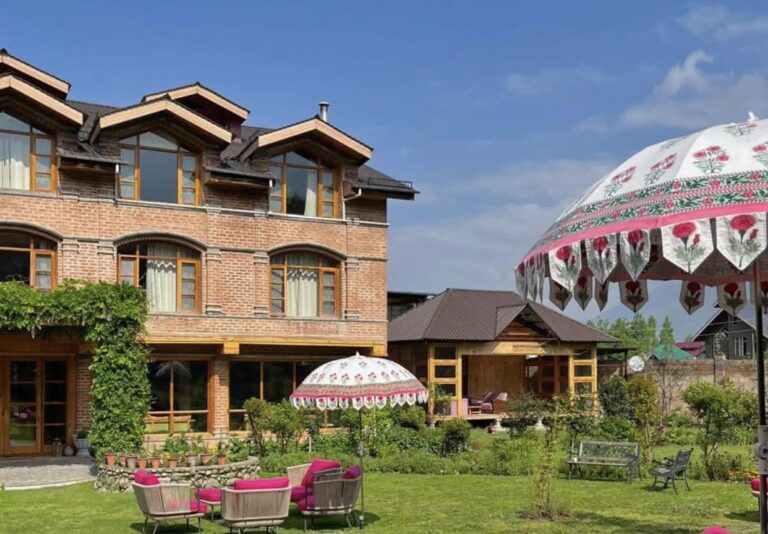
    • Accommodation: Options range from budget guesthouses to luxury resorts like Serena Shigar Fort.

    Why Skardu Belongs on Your Travel Bucket List
    From its UNESCO-tentative heritage sites to its role as a gateway to the Karakoram, Skardu is more than a destination it’s an experience. Whether navigating the rugged trails of Deosai, marveling at K2’s majesty, or savoring apricot-based Balti cuisine, Skardu promises an unforgettable journey into the heart of Pakistan’s mountain culture.

    Italian Researcher Marries Local Tour Guide from Pakistan-administered Kashmir

    0

    Skardu, Gilgit Baltistan (Pakistan administrated Kashmir): In a heartwarming tale that transcends borders and cultures, a local resident of Skardu, Gilgit Baltistan (Pakistan-administered Kashmir), and an Italian researcher have tied the knot after initially connecting through Facebook.

    Adnan Saleem, a licensed tour guide from Skardu, and Marta Gandini, an Italian academic, first became friends online in 2021. Their friendship blossomed into love, leading Marta to embrace Islam and adopt the name Noor-ul-Ain before marrying Adnan.

    Noor-ul-Ain, highly educated and involved in research work, has not only accepted her husband and his homeland with an open heart but has also warmly embraced Islam and the vibrant culture of Pakistan-administered Kashmir.

    Speaking about their relationship, Adnan shared that his profession requires him to explore and understand various cultures, a passion that played a significant role in connecting him with Noor-ul-Ain. He remarked, “I take a deep interest in studying different cultures, and that interest has always helped me in my profession and personal life.”

    According to Adnan, Noor-ul-Ain’s fascination with the unique culture of Gilgit-Baltistan has helped her settle comfortably into her new life. “Her interest in local traditions will make her life here much easier,” he said.

    Noor-ul-Ain herself expressed her happiness about moving to Skardu, praising the breathtaking scenery and the warmth of the people. “I feel very much at home here. The landscapes are beautiful, and the people are kind, loving, and hospitable,” she said.

    Reflecting on her cross-cultural marriage, Noor-ul-Ain added, “I believe that hearts know no borders, and that’s why it was possible for me to marry someone from another country.”

    Currently, Noor-ul-Ain works as a kitchen manager at a local school and describes her new life as fulfilling and peaceful.

    This inspiring union stands as a testament to the idea that cultural curiosity and genuine human connection can bridge even the widest geographical divides.