
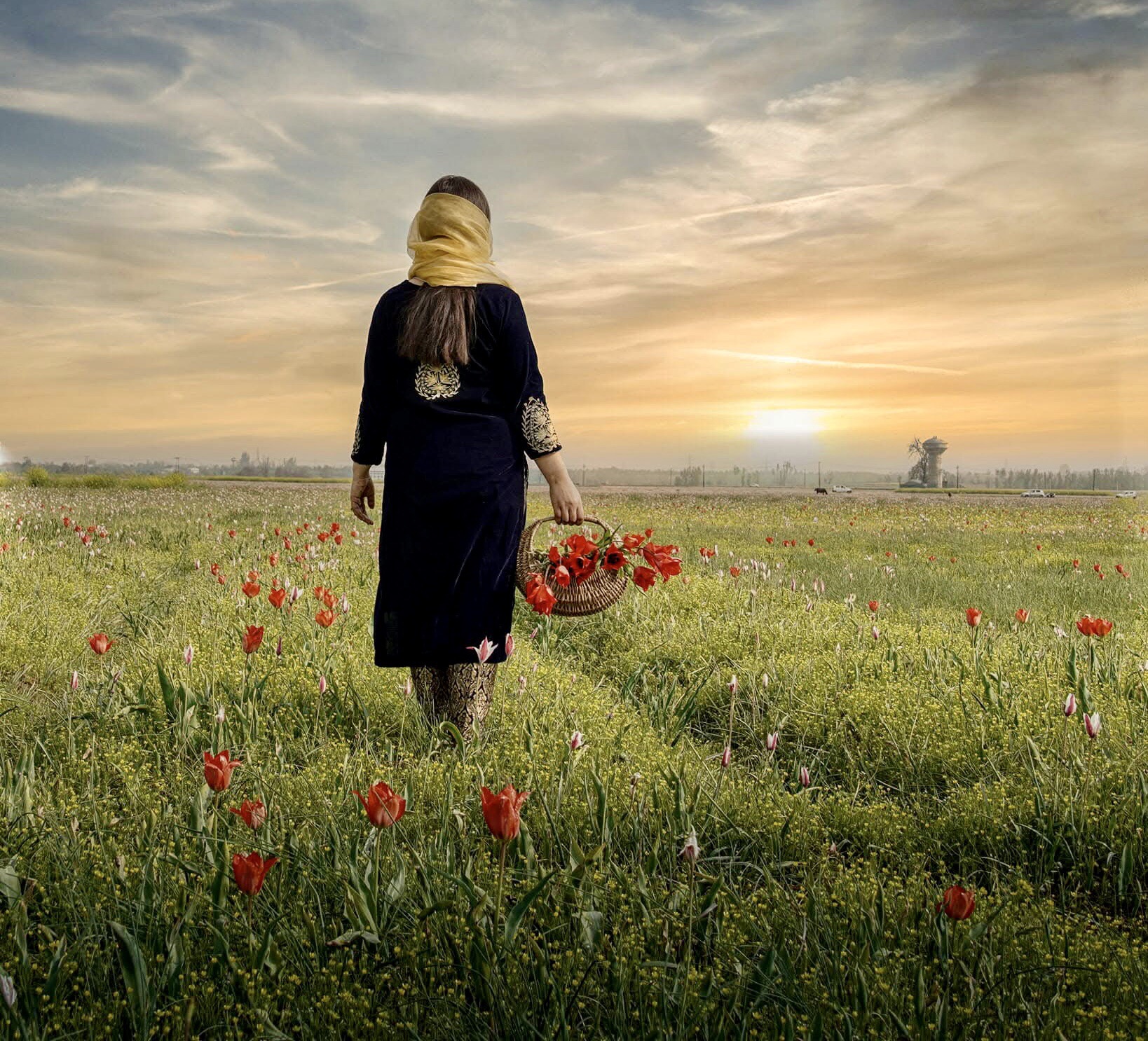

Twenty kilometers from Srinagar, nestled in the Pulwama district, lies the quaint town of Pampore, Kashmir’s “Saffron Capital.” Here, the air turns fragrant every autumn as millions of purple Crocus sativus flowers bloom, painting the landscape in vibrant hues. Recently, a group of students and professors from Kolkata University embarked on an educational journey to these iconic saffron fields in Pampore, Kashmir, to unravel the secrets of this “red gold.”
As their bus rolled to a stop on the dusty roadside, Professor Rauf addressed the students: “Remember, these flowers are the result of generations of labor. Treat them with respect.” The group split into two, with Professor Ashraf leading one team to meet a local farmer, Ramzan Joo, whose family has cultivated saffron for decades.
The Art and Science of Saffron Cultivation in Kashmir
Under the crisp October sun, Ramzan Joo sat amidst a sea of violet blooms, carefully plucking flowers. “Welcome!” he greeted the visitors, his hands stained crimson from the delicate stigmas. “Let me show you how saffron in Jammu and Kashmir comes to life.”

He began by explaining the process: “First, we plant the bulbs in well-drained, sloping fields between August and September. By mid-October, the flowers bloom, and we race against time to harvest them at dawn.” The students scribbled notes as he described how 150,000 flowers yield just one kilogram of saffron—a labor of love that justifies its title as the world’s costliest spice.
When asked about challenges, Ramzan sighed. “Climate change has disrupted rains and snowfall. Yields have dropped from 16 kg per hectare to barely 2 kg.” Yet, he smiled proudly: “Our saffron fields in Pampore, Kashmir have a GI tag now. No imitation matches our quality.”
The Legacy of Kashmiri Saffron
Ramzan Joo’s eyes sparkled as he shared stories of Mughal emperors who prized Kashmiri saffron for its aroma and medicinal properties. “Akbar’s court historian, Abul Fazl, wrote extensively about it in the Ain-i-Akbari,” he said. “We call it Kong Posh—the flower of light. It’s not just a spice; it’s our heritage.”



The students learned about saffron’s diverse uses: from flavoring Rogan Josh and Kahwa to crafting vibrant dyes for Pashmina shawls. “Hindus use it for tilak markings, and our poets, like Habba Khatoon, compared its beauty to love,” Ramzan added.
As the group sipped on steaming saffron tea prepared by Ramzan’s wife, Zaina, he revealed a harsh truth: “Many farmers are switching to apples or construction work. Without support, saffron cultivation in Kashmir could vanish.”
Challenges and Hope in the Saffron Heartland
The decline of Kashmir’s saffron industry is multifaceted. Cheap Iranian imports flood markets, undercutting local growers. Urbanization encroaches on fields, and youth increasingly abandon farming for city jobs. “My sons don’t want this life,” Ramzan admitted. “But I pray the GI tag revives our pride.”


The National Saffron Mission (2010) introduced irrigation projects and training, yet inconsistent funding and delayed tech adoption hindered progress. “We still dry stigmas on wooden trays,” Ramzan said. “Solar dryers could help, but access is limited.”
Despite this, innovation blooms. Agri-tourism initiatives invite travelers to Pampore during harvest season, offering hands-on picking experiences. E-commerce platforms like Kashmir Box now connect farmers directly to global buyers.
A Taste of Tradition: Saffron’s Cultural Roots
The visit concluded with a stroll through the saffron fields of Pampore, Kashmir, where the students marveled at endless rows of purple and gold. Professor Rauf quoted Sanskrit poet Kalidasa: “Even the gods envy Kashmir’s beauty and its saffron is proof.”
Before departing, Ramzan gifted the group a small pouch of saffron. “This is Shahi grade—the finest,” he said. “It sells for ₹1.5–2 lakh per kilogram. Treasure it.” As the bus pulled away, Ramzan waved goodbye, his figure growing smaller against the backdrop of crimson-streaked skies.
Preserving Kashmir’s Golden Heritage
The story of saffron in Jammu and Kashmir is one of resilience and reverence. While climate change and globalization threaten its future, the GI tag and grassroots efforts offer hope. For visitors, a trip to Pampore is more than a sensory delight—it’s a chance to witness a 2,500-year-old legacy clinging to life.