

SRINAGAR, Indian-administered Kashmir — There is a sound that travels across the Line of Control (LoC) faster than any political statement, deeper than any diplomatic cable, and with a resonance that no government whether in New Delhi or Islamabad has ever managed to fully control. It is the sound of the “Kashmir song.”
For decades, the phrase has meant different things to different audiences. To a Pakistani listener, it may evoke the martial anthems released by the Inter-Services Public Relations (ISPR) on Kashmir Solidarity Day, with lyrics declaring “Kashmir Hai Pakistan”. To a Kashmiri living in the Valley, it may be the haunting refrain of a Rouf song sung at a wedding, or the defiant verses of a rapper like MC Kash, whose music emerged from the rubble of 2010 . To an international observer, it might be the unexpected sight of Led Zeppelin’s nine-minute epic “Kashmir” a song written by a British rock band about a desert journey becoming an unlikely soundtrack to a separatist movement .
This is the paradox of the Kashmir song: it is simultaneously a tool of state narrative, a vessel of folk memory, and a weapon of cultural resistance. And understanding why it matters requires looking beyond any single track, any single government’s propaganda, and into the deeper mechanics of how music functions in a conflict that has outlasted generations.
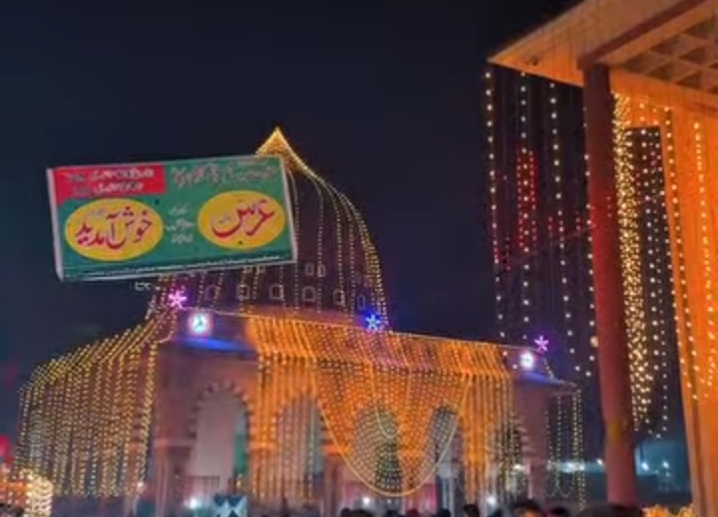
The State’s Song: Anthems of Solidarity and Their Limits
Each February 5, on Kashmir Solidarity Day, Pakistan’s military media wing releases a song. In 2026, the ISPR released “Kashmir Hai Pakistan,” described as embodying “the unshakable truth that Kashmir is the jugular vein of Pakistan” and paying tribute to the “unparalleled sacrifices” of Kashmiris . Similar releases have marked Youm-e-Istehsal and Black Day, with titles like “Azadi” and “In the World of Humans,” all carrying the same core message: Pakistan stands with the Kashmiri people against Indian oppression.
These productions are polished. They are emotional. They are also, by design, instruments of state policy. They frame the Kashmiri struggle in a specific vocabulary one that emphasizes sacrifice, solidarity, and the eventual arrival of freedom while carefully avoiding any ambiguity about where Pakistan stands.
But here is what the state anthems rarely achieve: they do not become the songs that Kashmiris sing to themselves in the dark. They are broadcast, shared, and then, often, set aside. The ISPR song exists in a media ecosystem where its primary audience is already convinced. It preaches to the converted, and in doing so, it reveals the limits of top-down cultural production in a conflict defined by lived experience rather than slogans.
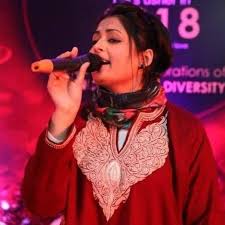
The more interesting question is not what Pakistan produces for Kashmir, but what Kashmir produces for itself.
The Folk Root: Rouf, Chakri, and the Memory That Refuses to Die
Long before the dispute became a matter of UN resolutions and nuclear-armed neighbors, the Kashmir Valley had its own musical grammar. The Rouf — a dance-song performed by women, arms interlinked, moving in rhythmic lines at weddings and Eid celebrations — is perhaps the purest expression of this heritage . The Chakri, a responsorial song form performed with the harmonium, rubab, and sarangi, carried stories of Yusuf-Zulaikha and Laila-Majnun across generations.
These forms were never explicitly political. They did not need to be. In a region where political expression has been repeatedly constrained, the preservation of folk music became its own quiet act of defiance. To sing a Kashmiri Rouf song is to insist that there is a culture here that predates the border, the barbed wire, and the bunkers.


This is why the folk tradition matters for anyone trying to understand the “Kashmir song” as a category. The resistance song did not emerge from nowhere. It grew from a soil already saturated with melody. When a young Kashmiri in 2010 picked up a microphone to rap about the stones and the gunshots, he was not inventing a new language. He was translating an old one.
The Rupture: When Music Became a Weapon
The turning point came in the second decade of the twenty-first century. As the Taylor & Francis study on “Languages of resistance in Kashmir” notes, the uprising that followed the death of Burhan Wani in July 2016 represented a transformation in which “armed rebels” were replaced by “civilians throwing stones” and culture became the primary battlefield.
MC Kash, a rapper from the Valley, became the emblem of this shift. His music was in English, Urdu, and Kashmiri a hybrid language for a hybrid conflict. The study notes that when he burst onto the scene, “a two-decade-long war had pushed Kashmir into a cultural hiatus” . The protest songs that existed before were largely in Kashmiri or Urdu, limiting their reach to the Valley itself. MC Kash broke that ceiling.
But the most revealing moment in this cultural shift came from an unexpected direction: Pakistan.
The Songs of the Freedom Movement
Ask a Kashmiri which song belongs to the freedom movement and you will not get one answer. You will get a lineage. The anthems released from Islamabad are heard, discussed, and then filed away. The songs that stay — the ones sung at protests, in prison courtyards, at funerals, and at rallies — are the ones that belong to the movement itself. And within that archive, a few tracks and slogans carry a weight that no state production can match.
JKLF and the slogan that became a song
The Jammu and Kashmir Liberation Front never needed a studio. Its most enduring “song” is a chant: “Hum kya chahte, Azadi” — what do we want, freedom. It was born in the streets of Srinagar in the early 1990s and became the ideological signature of the JKLF’s secular, pro-independence current. It is not a composed track — it is rhythm and repetition — but that is precisely why it has outlasted almost everything produced with a budget.
Asif Hashmi and the anthem of breaking chains
But the JKLF’s musical footprint is not limited to slogans. Asif Hashmi, a singer from Bagh district in Pakistan-administered Kashmir, released “Zanjeer Tootnay Ki Awaz AA Rahi Ha” — “the sound of chains breaking is coming” — through the Kashmir National Band. The song, uploaded in 2016, has drawn over 120,000 views on YouTube, and it carries the unmistakable cadence of a movement anthem: simple, repetitive, and built for a crowd to sing along. Hashmi is ideologically affiliated with the JKLF, and his music has been described as “politically charged anthems advocating for the rights and autonomy of the people of Jammu and Kashmir”.
What makes Hashmi’s story matter for this archive is what happened to him. In June 2025, he was reported missing from Rawalpindi after warning his followers of potential abduction . His wife issued separate statements expressing fear for his safety. Human rights defenders described it as a possible case of enforced disappearance, with one associate saying: “If there are any legal allegations against Asif Hashmi, he should be brought before a court of law, not disappeared in this manner” .-1
This is the other side of the Kashmir song: the singers themselves are not protected by the anthem. Hashmi’s music outlived his visibility. The song continues to circulate online while the man who sang it remains unaccounted for. For Azadi supporters, this is not an abstract irony. It is the price of the archive.
The revolutionary verse that crossed the Line of Control
One of the most striking musical developments in recent years came from Pakistan-administered Kashmir, where protesters adopted “Sarfaroshi Ki Tamanna” — the poem written by Bismil Azimabadi and popularised by Ram Prasad Bismil during India’s anti-colonial struggle. During the 2026 protests in PoK, videos showed women and children chanting the verse alongside “Inquilab Zindabad.” The choice is remarkable: a poem born in the Indian freedom movement, now sung in the Kashmir movement, against a state that claims the same anti-colonial legacy.
Zanaan Wanaan and the female voice of dissent
The feminist collective Zanaan Wanaan — Kashmiri for “Women Speak” — emerged in February 2020, during the communication blackout that followed the revocation of Article 370. Academic research published by Taylor & Francis treats their body of work as a “dissent anthology” that produces anticolonial knowledge outside hegemonic cultural production. In practice, these songs do something the state anthems cannot: they make grief specific. They name the half-widow, the disappeared, the mother at the checkpoint.
MC Kash and the rap that broke the silence
MC Kash — Roushan Illahi — released “I Protest” in 2010, during the uprising that followed that summer’s killings. The song named sixty-five civilians and protesters who had been killed up to the day he wrote it. It was recorded in English, Urdu, and Kashmiri, and it became an immediate hit inside the Valley and outside it. The studio where it was recorded was raided by police after its release. For young Azadi supporters, these tracks function as a parallel news service — they carry dates, names, and grievances that do not appear in official statements.
A note on the archive
The songs that matter in the movement today are the ones sung at funerals, at anniversaries, and in the courtyards of Budgam. They do not need a budget. They need only a crowd willing to remember — and sometimes, they need a singer willing to disappear for them.
Updated Song List (Sidebar / “Key Tracks” Box)
| Song / Slogan | Associated With | Why It Matters |
|---|---|---|
| “Hum kya chahte, Azadi” | JKLF / separatist movement | The foundational chant of the 1990s; no studio required |
| “Zanjeer Tootnay Ki Awaz AA Rahi Ha” — Asif Hashmi | JKLF-aligned singer, Kashmir National Band | Movement anthem; singer reported missing from Rawalpindi in 2025 -1 |
| “Sarfaroshi Ki Tamanna” | PoK protests (2026) | Indian freedom poem repurposed against Pakistani administration |
| “I Protest” — MC Kash | 2010 uprising | Named 65 martyrs; studio raided by police |
| Zanaan Wanaan dissent anthology | Feminist collective, post-2019 | Women’s voices outside hegemonic production |
The Anthem That Divided Its Own Audience
In November 2016, a song was released in Pakistan that described “atrocities” in Indian-administered Kashmir. It was dedicated to Burhan Wani. It featured Pakistani rock stars — Ali Azmat, Umair Jaswal, Alycia Dias — and was produced by Omar Ahsan. It blended rock balladry with Sufi music, designed explicitly to reach “the younger generation who connect with new music”.
The BBC reported that within 48 hours, the anthem received more than 20,000 views and 1,000 shares. Pakistani media covered it extensively. But the story the BBC told was not simply one of a successful propaganda release. It was a story about the cost of taking a position.
Several Pakistani artists refused to sing on the track, fearing backlash from Indian fans. Umair Jaswal, one of those who did participate, claimed he lost at least 10,000 Facebook followers “from across the border” after posting about the song. He insisted the anthem was “not anti-Indian in its content,” telling a Pakistani newspaper: “We have a humanitarian issue going on in Kashmir. It’s time we put the focus back on Kashmir”.
This is the dilemma of the Kashmir song as a commercial and artistic product. It cannot escape the political gravity of its subject. To sing about Kashmir is to take a side, whether one intends to or not. And in a globalized music market where Indian audiences represent a massive demographic, the calculus is never simple.
What the BBC’s reporting reveals is something more nuanced than a tale of patriotic triumph. It shows that even within Pakistan, the Kashmir song is contested territory — a space where artists must weigh conviction against career, and where the line between solidarity and spectacle is never entirely clear.
The Unexpected: Led Zeppelin in the Valley
Perhaps the strangest chapter in the story of the Kashmir song involves a British rock band that had never set foot in the region.
In 2013, Public Radio International’s “The World” reported a curious phenomenon: a song by Chris de Burgh, the Irish singer best known for “The Lady in Red,” had become an unlikely hit among separatists in Kashmir. The song was used in a video and posted online, helping to raise awareness of violence in the region.
But the deeper oddity is Led Zeppelin’s “Kashmir,” a 1975 epic that Robert Plant has described as evoking a desert landscape rather than the Himalayan valley. The song has been covered hundreds of times, from Jeff Buckley to a Gregorian chant version . It has no political content whatsoever. And yet, in the global imagination, the title alone has made it a kind of accidental ambassador for a place most listeners will never visit.
This is the final layer of the Kashmir song phenomenon: the way the word itself — “Kashmir” — has become a signifier that transcends its creators’ intentions. A rock band from England writes a song about a mystical journey. Decades later, that song becomes a search result that sits alongside ISPR anthems and Kashmiri folk recordings. The algorithm does not distinguish between them. The listener must.
Why the Song Outlasts the Statement
The ISPR will release another song next year. It will be polished, emotional, and quickly consumed. The folk singers of the Valley will continue to perform Rouf at weddings, their voices carrying across courtyards and into the night. A young rapper somewhere in Srinagar or Sopore will write verses that no government has approved. And somewhere, someone will listen to Led Zeppelin and wonder what Kashmir actually sounds like.
The Kashmir song is not one thing. It is a contested archive — a record of state ambition, cultural survival, commercial calculation, and accidental resonance. The songs that will matter in the long run are not necessarily the ones with the highest production budgets or the most explicit political messages. They are the ones that Kashmiris themselves choose to sing when no one is watching.
For an international audience trying to understand this region beyond the headlines, the music offers something that no diplomatic statement can: a glimpse of what it feels like to live inside a dispute that has no end. The anthem tells you what a government wants you to believe. The folk song tells you what a people refuse to forget.
And the fact that both can be called “the Kashmir song” is precisely the point.
Hidayat / Guide for Readers and Researchers:
If you are approaching the “Kashmir song” for the first time, begin with the folk traditions — Rouf, Chakri, and the Sufiana Kalam repertoire — to understand the cultural foundation. Then move to the protest music of the 2010s, particularly the work of MC Kash and the feminist collective Zanaan Wanaan, which the Taylor & Francis study examines as forms of “anticipatory knowledge” produced outside hegemonic structures . Finally, examine the state-produced anthems not as music but as policy documents in sonic form. The contrast will tell you more about the region than any single source could.