
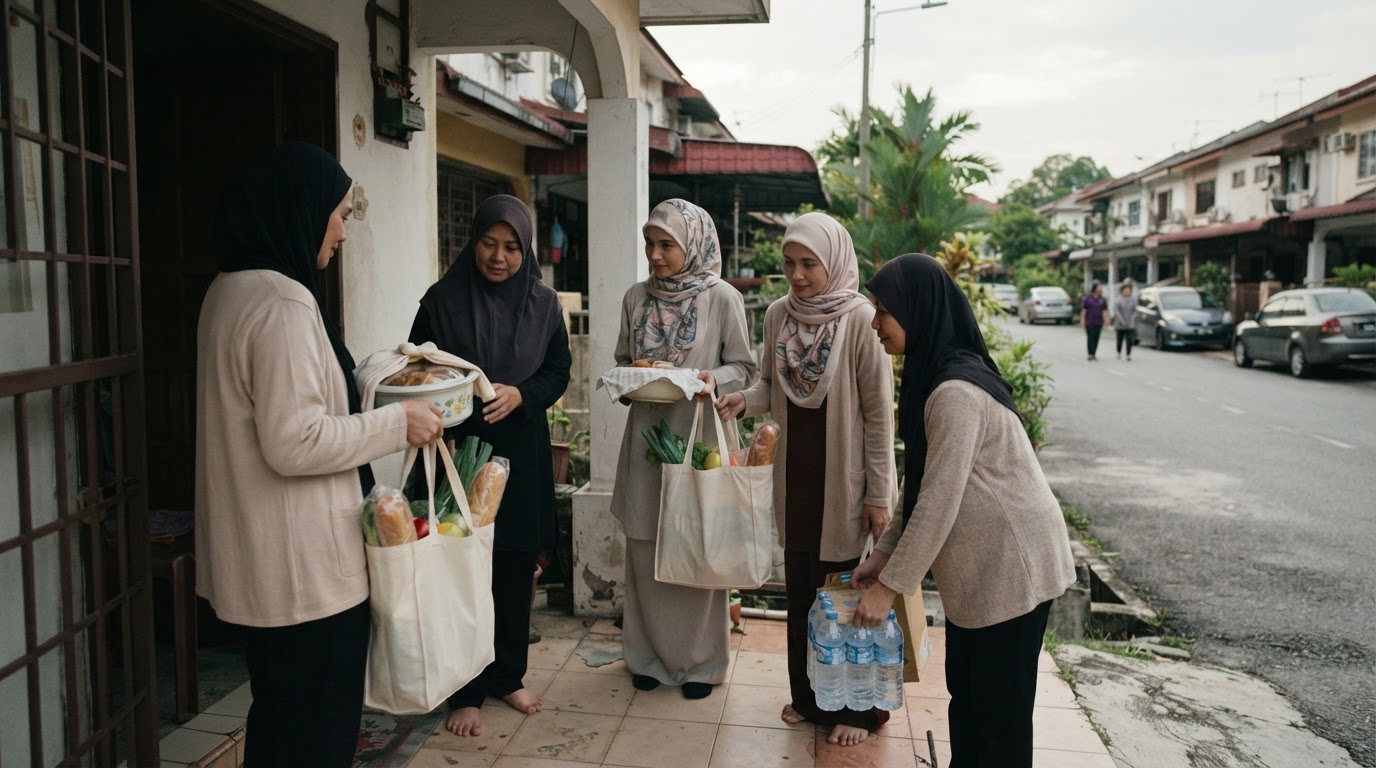
Across Muslim communities, meals and gatherings after a death can offer comfort and express shared grief. But when a voluntary act becomes an expensive expectation, bereaved families may face pressure at the very moment they need support. A look at Islamic guidance, funeral customs across traditions and the case for turning remembrance into lasting help.
Across the Muslim world, the days following a death may include visits from relatives and neighbours, condolences, Quran recitation, prayers for the deceased and communal meals. The timing and form of these practices vary widely by country, community and school of thought. In some parts of Kashmir, for example, a fourth-day gathering is known as Chaharum; elsewhere, families may observe different local customs or no fixed-day gathering at all.
For many, these occasions are an expression of love and solidarity. They help a bereaved household feel less alone. Yet the customs can also create a difficult question: when a family is expected to arrange food for a large gathering, is the tradition easing grief — or adding to it?

Muhammad Salman, who is from Muzaffarabad, told The Azadi Times that social expectations can make families feel judged if they do not hold a customary khatam or meal after losing a loved one. In such circumstances, a decision not to arrange a gathering may be interpreted by some as a sign that the family is not sufficiently grieved. His observation points to a wider concern: a personal expression of mourning can become a public test of devotion, affection or respect.
When a custom becomes an obligation
There is an important difference between a voluntary gathering that comforts a family and a social expectation that places it under financial pressure. A household that has just lost its main earner may be struggling with funeral expenses, debts, school fees and the uncertainty of daily life. Asking that household to host a large meal can deepen its hardship, particularly if the family borrows money or uses assets that should pass to the legal heirs.
The pressure is not always expressed openly. It may come through comparisons with what another family arranged, comments from relatives, or the fear that neighbours will think less of those who choose a simpler observance. In close-knit communities around the world, where social ties and reputation matter, such expectations can be difficult to resist.


That does not mean every Chaharum or Quran gathering is wasteful, nor that people who arrange one are acting without sincerity. Families differ in their means, beliefs and local traditions. The central question is whether the practice remains voluntary, affordable and compassionate — and whether it respects the wishes and financial rights of everyone concerned.
What do Islamic sources and scholars say?
A well-known report in Jami‘ al-Tirmidhi (Hadith 998) says that when news of Ja‘far ibn Abi Talib’s death reached the Prophet Muhammad, he instructed people to prepare food for Ja‘far’s family because they had been struck by a calamity. The report is commonly cited in support of the practice of neighbours and relatives providing meals to the bereaved.
The emphasis in this narration is significant: food is brought to the grieving household. The bereaved are not asked to host a feast. The distinction is central to many scholarly discussions about funeral meals.

There is no single Sunni ruling that can accurately be presented as the view of every Sunni scholar. Darul Uloom Deoband, for example, has issued Hanafi fatwas opposing the specification of the third, fourth or fortieth day as a fixed religious ceremony and objecting to the bereaved family arranging a public meal as a customary obligation. Other scholars distinguish between a prohibited or blameworthy burden and voluntary charity or hospitality, and differ over particular forms of Quran recitation and the dedication of its reward.
Egypt’s Dar al-Ifta addressed a question about a fourth-day gathering practised in Kashmir in a fatwa dated 3 August 2015. The ruling is useful as a documented example of how one Sunni institution assessed a specific local custom, rather than as a universal ruling for all Muslim communities. It said that acts such as feeding people, reciting the Quran and giving money to the poor may be performed as charity, with the reward intended for the deceased. It considered the described local practices permissible when accompanied by the intention and prayer that the reward reach the deceased. This is an institutional Sunni opinion, but it should not be mistaken for a universal consensus.
In the Shia legal rulings published by the office of Grand Ayatollah Ali al-Sistani, it is recommended that food be sent to the family of the deceased for three days, while eating in their home during that period is described as disliked. The same rulings encourage a simple condolence gathering and warn against extravagance and practices contrary to Islamic law. These rulings do not establish a compulsory third-day feast for the wider community.
The sources therefore show differences in how scholars assess fixed-day gatherings, collective recitation and meals. But a common ethical thread is visible: the bereaved should be comforted, not burdened; extravagance should be avoided; and charity should reach people who need it.
Local customs, shared grief and community support
It would be too simple to dismiss all local mourning customs as meaningless or harmful. In Kashmir, where The Azadi Times is based, condolence visits, collective prayer and community gatherings form part of how some families experience bereavement. The details differ between communities, but the wider human purpose is familiar across societies: helping people feel less isolated after a loss. Any assessment of a custom should distinguish its spiritual meaning from social pressure or unaffordable expectations.
In many villages and neighbourhoods, relatives and neighbours cook, bring groceries, help with household tasks and sit with the family. Such support can be particularly important for elderly people, widows, children and households with no nearby relatives. The value lies not necessarily in the size of a gathering or the cost of its food, but in the presence and practical care it provides.
The challenge is to preserve that solidarity without turning it into a financial competition. A modest gathering, a shared prayer or a visit can offer comfort. So can a neighbour who quietly pays for groceries, helps a child return to school or checks on a grieving parent weeks after the crowds have gone.
One day of food — or months of support?
Consider a family that has limited savings after a death. The money spent on a large meal might instead cover several months of basic groceries, school transport, medicines, rent or a small investment that helps a surviving family member earn an income. For a household facing hardship, this support can have a lasting effect.
This is not an argument that feeding guests has no value. Feeding a hungry person is an act of charity, and a simple meal shared with neighbours can strengthen bonds. But if the choice is between an expensive event attended largely by people who can afford their own meals and sustained help for a family in genuine need, the latter may answer a more urgent human need.
Support can be organised transparently and with the family’s consent. A neighbourhood committee could ask whether the bereaved household needs food, help with bills, school fees or medical assistance. Contributions could be directed to verified needs, with clear records and without publicising the recipients. Families should also ensure that money belonging to the deceased’s estate is not spent without the consent of all rightful heirs, including minors whose interests require protection.
Remembering without judging the bereaved
Grief cannot be measured by the number of guests invited, the quantity of food served or the scale of a religious gathering. Some families find comfort in collective recitation; others prefer quiet prayer and privacy. Some can afford a meal; others cannot. None of these choices, on its own, proves how deeply a person loved the deceased.
Communities can make mourning more compassionate by removing the pressure to host, offering food to the bereaved rather than expecting them to provide it, and allowing families to choose how they remember their loved ones. Religious scholars from different schools can help by explaining both the areas of agreement and the genuine differences in their rulings, without turning grief into a sectarian argument.
For communities everywhere, including Kashmir, the question is not whether local traditions should be erased. It is whether their most humane purpose — standing beside people in sorrow — can be strengthened. A prayer, a simple meal, a bag of groceries, a school fee paid on time or months of support for a vulnerable household can all be expressions of remembrance.
Perhaps the most meaningful measure of a community’s respect for someone who has died is not how much it spends on one day, but how faithfully it supports the people the deceased has left behind.
Sources and further reading
- Egypt’s Dar al-Ifta: Kashmir’s fourth-day meal and recitation custom (2015)
- Office of Ayatollah Sistani: Rulings on funeral observances (Urdu)
- Office of Ayatollah Sistani: Recommended acts after burial
- Darul Uloom Deoband: Rasm-e-Chaharum, 15th and 40th day gatherings
- Jami‘ al-Tirmidhi 998: Preparing food for Ja‘far’s family
- Jahangir and Hamid: “Mapping Mourning Among Muslims of Kashmir”, Omega
- Research on community practices and mental health in Kashmir