

Late on Wednesday night, police in Rawalakot said they had rescued a serving district judge who, they said, had been abducted at gunpoint while travelling towards Muzaffarabad. Police linked the abduction and separate shooting incidents, which left a police officer and a civilian injured and damaged parts of a hospital, to armed members of the banned Jammu Kashmir Joint Awami Action Committee (JAAC). These are police allegations, and The Azadi Times could not independently verify them. The JAAC has consistently rejected government accounts of its conduct.
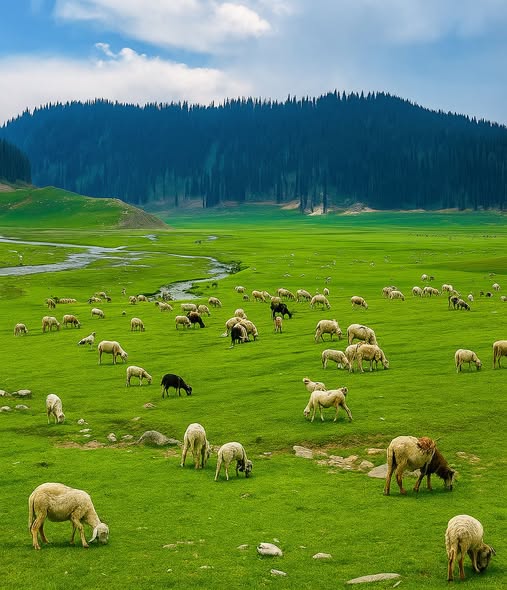
The episode is a snapshot of a region that many travellers still picture as Pakistan’s gentler alternative to the north: river valleys, pine forests, cool summers. For anyone weighing a trip, the honest answer to “is it safe?” in late 2026 is that it depends heavily on where you go, when, and who is advising you. This article sets out what governments say, what has happened on the ground this year, and what remains unknown.
What foreign governments advise
Two sets of advice matter most for travellers: the British Foreign Office (FCDO) and the US State Department.

The FCDO advises against all travel to within 10 miles of the Line of Control (LoC), the de facto frontier between Indian- and Pakistan-administered Kashmir. It also added a broader warning this summer: according to a tracker of changes to the FCDO page, on 6 June 2026 it began advising against all but essential travel to Azad Jammu and Kashmir. That is the second-highest warning level, and the FCDO notes that travel insurance could be invalidated if you travel against its advice.
A travel-industry roundup of the US position says Washington kept Pakistan at Level 3, “Reconsider Travel,” in a June 2026 update, and urged Americans to avoid the vicinity of the Line of Control entirely. We relied on a secondary source for the US detail, so readers should check the State Department’s own page. Advisories change quickly, and we recommend reading the live versions before booking anything.
One practical consequence matters for Kashmir specifically. Except at official crossing points, foreign nationals are not allowed within certain distances of Pakistan’s international borders, including 10 miles of the LoC. Valleys such as Neelum and Leepa lie close to that line, so large parts of the most scenic terrain are simply off-limits to foreigners regardless of personal risk appetite.


What has happened on the ground in 2026
The main reason for the upgraded warnings is not tourism-related at all. It is a political confrontation that has hardened over the past year.
The JAAC is a civil-society alliance founded in 2023 that has pushed a long list of demands. Its platform centres on removing perks and privileges for the political and bureaucratic elite and abolishing 12 seats in the legislative assembly reserved for refugees from Indian-administered Kashmir who live in Pakistan. The group previously staged a major shutdown in late September 2025, which ended after a peace agreement on 4 October 2025.
This year the dispute broke down. Talks collapsed in late May, and on 5 June authorities designated the JAAC a proscribed organisation under the AJK Anti-Terrorism Act, 2014. The AJK government said it acted over reports of potential violence, acquisition of weapons, attacks on law-enforcement personnel and plans to disrupt normal life. The JAAC denies those allegations. Amnesty International described the terrorism designation of a protest movement as a dangerous escalation in the crackdown.


The unrest turned deadly quickly. Clashes in Rawalakot on 7 June between the group’s supporters and security personnel left seven dead, and a strike on 9 June brought cities and towns across Azad Kashmir to a standstill. By 19 June, reporting put the toll at more than 20 dead. By August, Al Jazeera, citing residents and rights groups, said violence during the protests had killed more than 50 people. We have not seen a single authoritative official figure, and the number varies by source.
Elections added another layer. Polling was held in phases between 27 July and 10 August 2026, and the JAAC called for a boycott. Dawn’s editorial pages questioned the process, saying the legitimacy of elections held amid a popular uprising had been questioned even by mainstream parties like the PPP. Federal Information Minister Attaullah Tarar took the opposite view, saying militant elements within the banned JAAC pursued a “foreign agenda” and tried to disrupt voting through violence. The JAAC rejects that characterisation.
A reporting blackout
There is a second reason caution is warranted, and it applies to us as a news outlet. Authorities have banned international media from reporting from the region, and Dawn reported that the restriction followed an Al Jazeera report showing violence and low turnout. That makes independent verification harder for everyone, including travellers trying to judge conditions from the news. When information is restricted, the absence of reports from an area is not evidence that it is calm.
The Line of Control risk
Separately from internal politics, the LoC itself remains a hazard. The 2021 India–Pakistan ceasefire understanding has held unevenly. Pakistani media reported Indian fire in Leepa Valley and a Pakistani response on 1 August 2026. Indian outlets have reported Pakistani fire in the same sector in late October 2025. Each side blames the other, and we cannot adjudicate those claims. What is clear is that places close to the line can become inaccessible without notice. In earlier tensions, local residents reported that non-locals were barred from areas near the LoC for several days.
Is anywhere “safer”?
The answer is relative, not absolute. Reporting this summer described the JKJAAC protests as centred on Rawalakot and nearby Poonch areas, while the rest of AJK was described as tense but calm. That was in the early weeks of the unrest, and conditions have shifted since. Protests also reached other places, including weeks-long road blockades in Neelum Valley in June. Strikes can close shops, halt transport and disrupt communications with little warning.
We could not find reliable, independent data on current tourist numbers or on conditions at specific hotels and sites. Anyone who tells you a particular valley is “completely safe” right now is likely drawing on older information or offering a sales pitch.
If you still plan to go
For readers who decide to travel despite the advisories, practical caution is straightforward:
- Check live advisories from your own government immediately before booking and again before departure.
- Confirm access rules with the local administration. Permits for restricted areas change, and some areas will be closed to foreigners regardless.
- Check insurance fine print. Cover may be void if you travel against official advice.
- Avoid areas near the LoC and anywhere strikes or protests are announced.
- Build slack into your plans. Shutter-down strikes can halt transport for days.
- Use official and local-language sources, but be aware that government and protest-movement accounts diverge sharply. Local police have themselves warned of disinformation and AI-generated content, so cross-check claims.
- Leave if told to. If officials or your embassy advise departure, do not wait.
What we don’t know
This article reflects information available on 29 October 2026. Several questions remain open: how many people have died in total, whether the JAAC and the government will return to talks, how stable the new post-election government will be, and when restrictions on international media will lift. We will update this piece as verified information arrives.
For now, the plain conclusion is this. Pakistan-administered Kashmir has not stopped being beautiful. But in 2026 it is also a place with an active political crisis, a militarised frontier and limited independent reporting. Travellers owe themselves a more careful look than a scenic photograph can provide.
Readers with first-hand, verifiable information about current conditions in AJK are invited to contact The Azadi Times.