
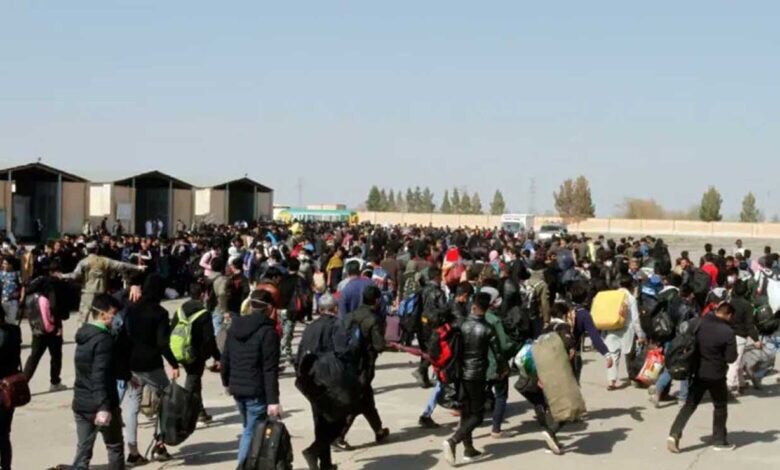

Kabul – More than 3,100 Afghan families, comprising over 18,600 individuals, have returned to Afghanistan from Pakistan and Iran in the past week, according to Afghanistan’s High Commission for Returnees.
The returnees crossed through several border points, including Torkham in eastern Nangarhar province, Spin Boldak in southern Kandahar, Islam Qala in western Herat, Abrisham in western Nimroz, and Bahramcha in southern Helmand.
The commission stated that it is providing temporary shelter, food, water, medical care, and transportation assistance to the returnees in their respective provinces.

Afghanistan hosts one of the world’s largest refugee populations, with nearly 7 million Afghans living abroad—mostly undocumented—primarily in Pakistan and Iran. Both countries have recently intensified efforts to repatriate undocumented foreigners, leading to a surge in returns.
Pakistan, which hosts an estimated 1.7 million undocumented Afghans, has set deadlines for their departure, citing security concerns. Iran, home to around 3 million Afghans, has also increased deportations amid economic pressures.
The Taliban-led Afghan government has urged neighboring countries to halt forced deportations, warning of a worsening humanitarian crisis. The UN and aid agencies have raised concerns over Afghanistan’s limited capacity to absorb returnees, particularly as the country faces severe economic challenges and restrictions on international aid since the Taliban’s takeover in 2021.




Analysts warn that mass returns could further strain Afghanistan’s fragile economy and social services, deepening the plight of millions already facing food insecurity and unemployment.
Reporting by The Azadi Times