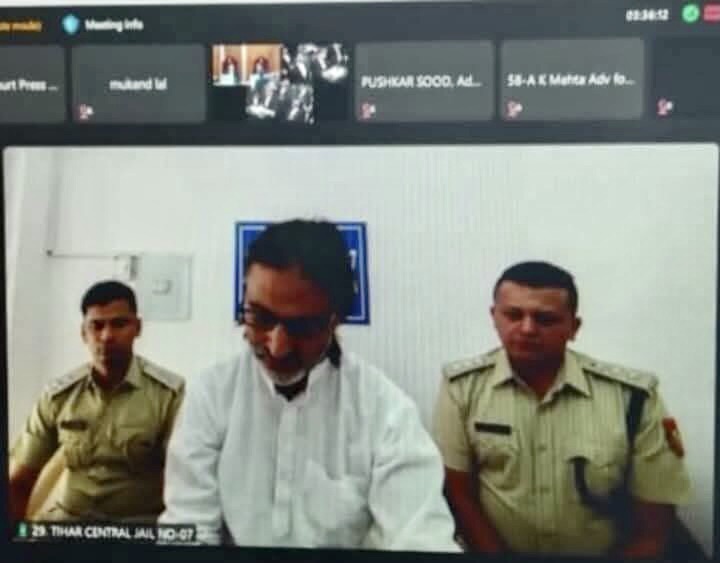

Srinagar, IaK: Jammu Kashmir Liberation Front (JKLF) leader Yasin Malik, currently incarcerated in India, appeared before the Supreme Court via video link today, firmly rejecting terrorism charges and asserting his status as a political figure. The hearing, presided over by Justices Abhay S. Oka and Ajay Bhuyan, centered on allegations linking Malik to militancy a claim he vehemently denied.
Speaking from detention, Malik referenced engagements with seven former Indian Prime Ministers as evidence of his recognized political role. He challenged the Central Bureau of Investigation’s (CBI) argument, presented by Solicitor General Tushar Mehta, which cited photographs of Malik with banned militant Hafiz Saeed. Malik dismissed the images as irrelevant, arguing they were being used to construct a false public narrative against him.
The JKLF chief highlighted that his organization had never been proscribed under India’s Unlawful Activities Prevention Act (UAPA), despite decades of scrutiny. He pointed to a 1994 ceasefire agreement, recalling that after being granted bail in 32 cases, none saw further prosecution. Malik accused the current government of disregarding past understandings, noting that administrations from Narasimha Rao to Narendra Modi’s first term had adhered to ceasefire terms—until fresh cases were filed against him three years ago.


Solicitor General Mehta countered that the 1994 agreement held no bearing on present legal proceedings, maintaining that Malik’s alleged militant ties remained under scrutiny. The court session underscored deepening tensions over Kashmir’s political dissent and India’s counterterrorism measures.
The hearing has drawn attention from human rights observers and Kashmiri groups, with supporters condemning the prosecution as a breach of historical accords. As proceedings continue, the case tests the delicate balance between India’s security policies and unresolved political negotiations in the region.