
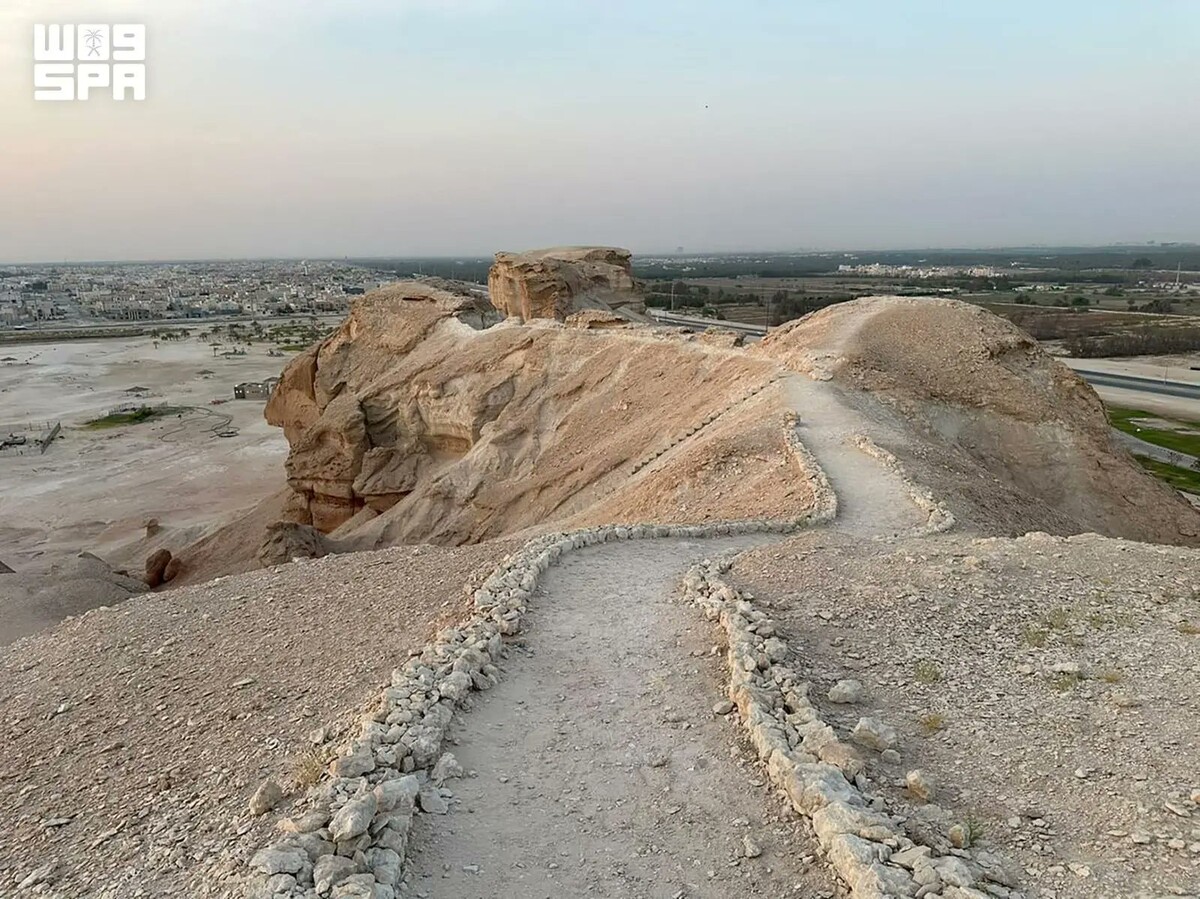

The Saudi Hiking and Climbing Federation has mapped and assessed more than 120 trails across the kingdom, focusing on safety standards and risk management.
Efforts are underway across various regions to develop hiking trails, improve route standards, identify potential risks, enhance safety, and regulate hiking activities.
According to the Saudi Press Agency, Captain Faris Hijazi, Director of Hiking Affairs at the Saudi Hiking and Climbing Federation, stated that field work has successfully completed the preparation, mapping, and inspection of over 120 hiking trails throughout the kingdom.

The development of hiking trails begins with site inspections and geographical studies of the area. This is followed by selecting appropriate routes, determining difficulty levels, identifying potential risks, and mapping entry and exit points.
Captain Hijazi emphasized that the safety of hikers is prioritized, making detailed route studies and risk assessments essential.
He added that due to the kingdom’s diverse geographical features, including mountains, valleys, and deserts, each hiking track must be evaluated according to its unique characteristics. To achieve this, continuous field monitoring of the routes is conducted to promptly detect any changes that could impact hikers’ safety.




During the inspection of hiking tracks, authorities also verify whether the designated difficulty rating corresponds to the trail’s actual nature. This helps hikers choose appropriate routes matching their physical capabilities, plan their journeys using accurate information, and adhere to safety guidelines.