34.2 C
Los Angeles
Friday, October 9, 2026

One Killed in Qallan Shooting as Shutdown Eases in Major Azad Kashmir Cities

While business districts reopened in Mirpur, Muzaffarabad...

45-Year-Old Man Found Dead in Budgam’s Branwar Area

Police have launched an investigation after the...
Home Blog Page 72

How to Go to Kashmir from Delhi: Complete Guide by Air, Train, Bus & Road (2025) Beyond State Narratives

For centuries, Kashmir has drawn travelers with its snow-capped mountains, tranquil lakes, and vibrant culture. Yet, most guides on “how to go Kashmir from Delhi” offer only surface-level information, often echoing state tourism narratives. The reality of traveling to, within, and beyond Kashmir is more complex—and more beautiful—than official brochures suggest.

This comprehensive, independent guide from The Azadi Times is written for those who seek authentic experiences, practical travel advice, and an honest look at both the joys and challenges of reaching Kashmir from Delhi—whether you’re an Indian citizen or an international visitor.

We go beyond the usual by covering every transport mode, sharing voices of real travelers and locals, and shining light on the “unseen Kashmir” beyond curated tour packages.

Kashmir’s Geography — Why Getting In Is Unique

Kashmir is divided by the Line of Control (LoC) into Indian-administered Jammu & Kashmir (including the Kashmir Valley, Jammu, and Ladakh) and Pakistan-administered Azad Jammu & Kashmir (AJK) and Gilgit-Baltistan. Both sides offer unique travel experiences, yet access and realities differ sharply.
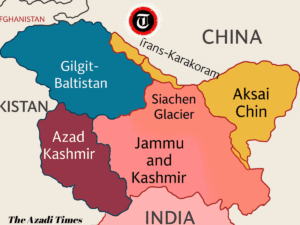
Political map of Jammu and Kashmir highlighting Indian-administered Jammu & Kashmir and Ladakh, Pakistan-administered Azad Jammu & Kashmir and Gilgit-Baltistan, and China-administered Aksai Chin; includes Line of Control (LoC) and Line of Actual Control (LAC) demarcations.
Political map of Jammu and Kashmir highlighting Indian-administered Jammu & Kashmir and Ladakh, Pakistan-administered Azad Jammu & Kashmir and Gilgit-Baltistan, and China-administered Aksai Chin; includes Ceasefire Line (LoC).
  • Indian-administered Kashmir: Srinagar, Gulmarg, Pahalgam, Sonamarg, and the Mughal Road are the main tourist draws.
  • Pakistan-administered Kashmir: Muzaffarabad, Neelum Valley, Rawalakot, and Gilgit-Baltistan (for the Karakoram mountains).

Most travelers from Delhi aim for Srinagar—the heart of the Valley. But with the right planning, you can see both sides of Kashmir’s story.

Overview of Transport Options — Delhi to Kashmir

How to Reach Kashmir from Delhi: Modes, Costs & Time

ModeRoutePrice (INR/USD)DurationHighlightsPros & Cons
FlightDelhi → Srinagar₹6,000–₹14,000 ($70–$170)1.5 hrsFast, scenic aerialQuick, but expensive
Train+RoadDelhi → Jammu (train), Jammu → Srinagar (road)₹1,000–₹2,500 ($12–$30) + road: ₹1,200–₹2,500 ($14–$30)8–14 hrs (train + road)See Jammu, gradual approachLonger, more connections
BusDelhi → Jammu (Volvo/Sleeper), Jammu → Srinagar (bus/shared taxi)₹1,200–₹2,500 ($14–$30)16–20 hrsBudget, local flavorUncomfortable, slower
Car/TaxiDelhi → Jammu → Srinagar₹12,000–₹20,000 ($140–$240)14–18 hrsFlexible stopsCostly, tiring
InternationalDelhi → Lahore/Islamabad (flight/road), onward to AJK/Gilgit₹15,000–₹35,000 ($180–$420)6–14 hrsUnique vantage pointsComplex permits, border issues

Rates updated July 2025. Prices may vary with season, airline, and fuel cost.

Delhi to Kashmir by Flight — The Fastest Option
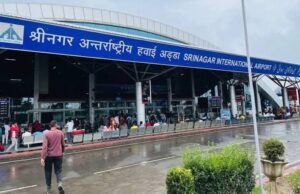
View of Srinagar International Airport bustling with passengers — over 28,000 flights and 4.4 million passengers recorded in 2024, focusing on safety, efficiency, and reliability.

Delhi to Kashmir by Flight: What to Know

  • Airlines: Air India, IndiGo, Vistara, GoFirst, and SpiceJet operate daily direct flights from Delhi (DEL) to Srinagar (SXR).
  • Time: 1.5 hours in the air; add 1 hour for airport procedures.
  • Cost: ₹6,000–₹14,000 ($70–$170) for a one-way ticket. Book early for best rates.

Pros

  • Fastest, safest, most reliable.
  • Breathtaking views of the Himalayas on descent.
  • Good connectivity for Indian and foreign travelers.

Cons

  • Flight delays during winter due to fog/snow.
  • Security checks can be lengthy (especially for international travelers).
  • Limited baggage allowance.

Insider Tip

“Landing in Srinagar felt surreal—the mountains seemed to rise right out of the runway. But the airport felt tense, with security everywhere. I wished I’d known to keep my papers handy.”
— Sara M., traveler from Mumbai

International Travelers

You’ll need an Indian visa. Srinagar Airport has no direct international flights; connect via Delhi or Mumbai. Keep your passport, visa, and any travel permits ready for inspection.

Delhi to Kashmir by Train — The Scenic Route

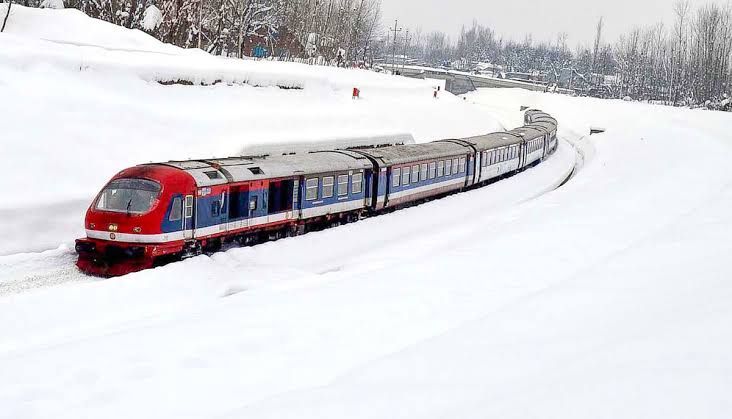
Train passing through snow-covered mountains in Kashmir
A train passing through snow-covered mountains in Kashmir

Delhi to Srinagar by Train: Step-by-Step

1. Delhi to Jammu

  • Trains: Rajdhani Express, Shalimar Express, Jammu Mail, Vaishno Devi Express.
  • Time: 8–12 hours (overnight options available).
  • Cost: ₹1,000–₹2,500 ($12–$30) for sleeper or AC classes.
  • Station: Jammu Tawi (JAT).

2. Jammu to Srinagar

  • Road: Shared taxis, buses, or private cars.
  • New Rail Link: Udhampur–Banihal rail now connects parts of the route, but full train to Srinagar is still pending (as of July 2025).
  • Time: 6–8 hours via road (NH44, Jawahar Tunnel).

Pros

  • More affordable.
  • See changing landscapes—plains, hills, tunnels.
  • Chance to stop in Jammu for local food or Vaishno Devi pilgrimage.

Cons

  • Train delays, crowded compartments.
  • Road from Jammu to Srinagar can be affected by landslides or military convoys.
  • No direct train all the way to Srinagar yet.

Traveler’s Voice

“I took the train to Jammu and then a shared taxi to Srinagar. It was a marathon trip—but the views of Pir Panjal mountains were worth it. Stopping for chai at roadside stalls gave me a feel for real Kashmir.”
— Rahul S., backpacker from Delhi

Delhi to Kashmir by Bus — Budget & Adventure
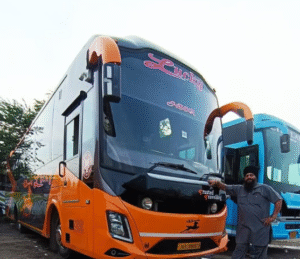
A man standing with a daily bus from Delhi’s Kashmir Gate to Jammu — the starting point for many travelers heading to Kashmir.

Delhi to Kashmir by Bus: What to Expect

1. Delhi to Jammu

  • Buses: Private Volvo, government roadways, sleeper options.
  • Cost: ₹1,200–₹2,500 ($14–$30).
  • Time: 12–16 hours (overnight buses available).

2. Jammu to Srinagar

  • Buses: JKRTC and private mini-buses, shared taxis.
  • Cost: ₹500–₹1,000 ($6–$12).
  • Time: 6–8 hours.

Pros

  • Most affordable.
  • Mix with locals, experience ground realities.
  • Can be booked last-minute.

Cons

  • Uncomfortable seats, limited amenities.
  • Longer travel time.
  • Security checks at checkpoints.

Local Insight

“Bus journeys are for those who want to see the real Kashmir—the chatter, the food, the patience. But be ready for delays and the unexpected.”
— Fayaz Ahmed, driver from Anantnag

Delhi to Kashmir by Road — Freedom and Flexibility
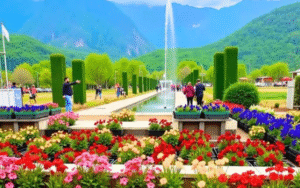
With over 1.7 million tulips in full bloom, the Srinagar Tulip Garden is painting the kashmir in a riot of colours and attracting the highest-ever number of visitors in its history.

Delhi to Kashmir by Car/Taxi

  • Route: Delhi → Ambala → Ludhiana → Jalandhar → Pathankot → Jammu → Udhampur → Banihal → Srinagar.
  • Distance: ~850 km.
  • Time: 14–18 hours non-stop; better split into 2 days.
  • Cost: ₹12,000–₹20,000 ($140–$240) for rental/self-drive, plus fuel.
  • Permits: No special permits for Indian citizens. International travelers must carry original documents.

Pros

  • Stop anywhere, choose your own pace.
  • Visit smaller towns—Patnitop, Kud, Ramban.
  • Good for families or groups.

Cons

  • Road blocks due to weather or security.
  • Tiring for solo drivers.
  • Police and military checkpoints can be frequent.

Safety Tips

  • Avoid night driving in hilly stretches.
  • Check weather forecasts, especially in winter.
  • Keep emergency contacts handy.

International Travelers — Entering Kashmir

Indian-administered Kashmir

  • Visas: E-visa or sticker visa required; not available on arrival in Srinagar.
  • Restricted Areas: Some border areas (e.g., Tangdhar, Gurez, Uri) require additional permits—usually not accessible to foreigners.
  • Embassies: Register with your embassy/consulate; keep contact info ready.

Pakistan-administered Kashmir (AJK & Gilgit-Baltistan)

  • Visas: Pakistani visa required; entry points are Islamabad, Lahore, or Karachi.
  • Access: Foreigners need no-objection certificates (NOC) for AJK/Gilgit, which must be arranged before arrival.
  • LoC Crossing: No civilian crossings allowed except for rare family reunification cases (heavily restricted and bureaucratic).
  • Tourism: Stunning places like Neelum Valley, Hunza, Skardu are open, but independent travel is advised due to periodic restrictions.

Traveler’s Insight

“Crossing the LoC is nearly impossible for tourists. I visited both sides over two trips—each offers a different story, and both are worth experiencing if you can.”
— Laila Q., journalist from London

Kashmir Tourism Beyond the State Narrative

What Most Guides Don’t Tell You

Most tourism packages and advertisements focus on “safe” destinations—Dal Lake, Gulmarg’s ski slopes, Pahalgam’s meadows. These places are beautiful, but they represent only a fraction of Kashmir’s reality.

Curated Tourism vs. Authentic Experience

  • State Curated: Security presence, sanitized itineraries, controlled routes.
  • Unseen Kashmir: Village stays, Sufi shrines, old Srinagar bazaars, remote valleys like Gurez, Lolab, and Neelum (on the Pakistan side).
  • Local Voices: Artisans, farmers, students, and elders have stories that never make it to government websites.

Local Perspective

“Tourists come for the postcard views, but the real Kashmir is in small villages and quiet conversations. We wish more people came to listen, not just to sightsee.”
— Nusrat Jan, Srinagar resident

Tourism Highlights — What’s Accessible & What’s Hidden

Indian-administered Kashmir

  • Accessible: Dal Lake, Gulmarg, Sonamarg, Pahalgam, Mughal Gardens.
  • Hidden Gems: Gurez Valley (permit needed), Bangus Valley, Lolab Valley, Sufi shrines, old city of Srinagar.
  • Culture: Sufi music, Kashmiri cuisine (wazwan), traditional crafts (papier-mâché, carpets).

Pakistan-administered Kashmir

  • Accessible: Muzaffarabad, Rawalakot, Neelum Valley, Hunza, Skardu, Fairy Meadows.
  • Hidden Gems: Shounter Lake, Leepa Valley, village stays, local festivals, mountain trekking.

Note on Accessibility

Security restrictions, weather, and permits shape what’s possible. Always check local advisories and avoid political hotspots during unrest.

Best Times to Visit & Safety Advice

When to Go

  • Spring (March–May): Blossoms, mild weather; best for sightseeing.
  • Summer (June–August): Cool in the hills; peak tourist season, crowded.
  • Autumn (September–November): Golden chinar leaves, harvest festivals, fewer crowds.
  • Winter (December–February): Snow sports in Gulmarg, magical landscapes; possible travel delays.

Safety Advice

  • Register with your embassy if you’re a foreigner.
  • Keep local emergency numbers handy (police, hospital).
  • Avoid large gatherings or protests.
  • Respect local customs and dress modestly.
  • Ask permission before photographing people.
  • Stay updated on weather and security alerts.
  • Carry extra cash—ATMs may be limited in remote areas.

Permits, Documents & Practical Tips

Indian-administered Kashmir

  • No special permit for Indian citizens for Srinagar, Gulmarg, Pahalgam.
  • Permits needed for Gurez, Tangdhar, Uri: Apply via district administration or local travel agent.
  • Foreigners: May be restricted from border areas.

Pakistan-administered Kashmir

  • NOC required for foreigners in AJK and Gilgit-Baltistan.
  • Domestic travelers: CNIC required; check for local festivals or closures.

Practical Tips

  • Book transport and accommodation in advance during peak seasons.
  • Use local taxis for short trips; negotiate fares before boarding.
  • Learn a few words of Kashmiri or Urdu—it helps break the ice.
  • Try local cuisine: Rogan Josh, Gushtaba, Kahwa, Noon Chai.
  • Respect local sensitivities around politics and religion.
  • Support local crafts—visit cooperative shops, not just tourist markets.

FAQs — How to Go Kashmir from Delhi & More

Q1: Can foreigners travel freely in Kashmir?
A: Most tourist areas are open, but some border regions require permits. Always check latest advisories.

Q2: Is there a direct train from Delhi to Srinagar?
A: No, as of July 2025. Train goes to Jammu; onward journey is by road or limited railway to Banihal.

Q3: Is Kashmir safe for solo travelers?
A: Main tourist areas are generally safe; exercise caution during unrest or in remote regions.

Q4: Can I visit both Indian and Pakistan-administered Kashmir in one trip?
A: Not directly. Crossing the LoC is not permitted for tourists; separate visas and travel plans are needed.

Q5: What is the “unseen Kashmir”?
A: It refers to places and experiences beyond official tourism—village life, local festivals, crafts, personal stories.

Q6: How much does it cost to go from Delhi to Kashmir?
A: Flights: ₹6,000–₹14,000 ($70–$170), Train+Road: ₹2,500–₹5,000 ($30–$60), Bus: ₹1,200–₹3,500 ($14–$42), Taxi/Car: ₹12,000+ ($140+).

Seeing Kashmir Beyond Borders and Narratives

Traveling from Delhi to Kashmir is more than a journey—it’s an entry into a world shaped by history, politics, and resilient beauty. While official tourism offers comfort and security, the real Kashmir is found in hidden valleys, local conversations, and moments that transcend state narratives.

Whether you’re seeking adventure, reflection, or understanding, go beyond the usual. Listen to Kashmiri voices, respect local realities, and explore both the celebrated and unseen sides of this extraordinary land.

The Azadi Times is committed to honest journalism, amplifying stories that matter. For more on Kashmir’s travel, culture, and untold histories, follow us, and travel thoughtfully.
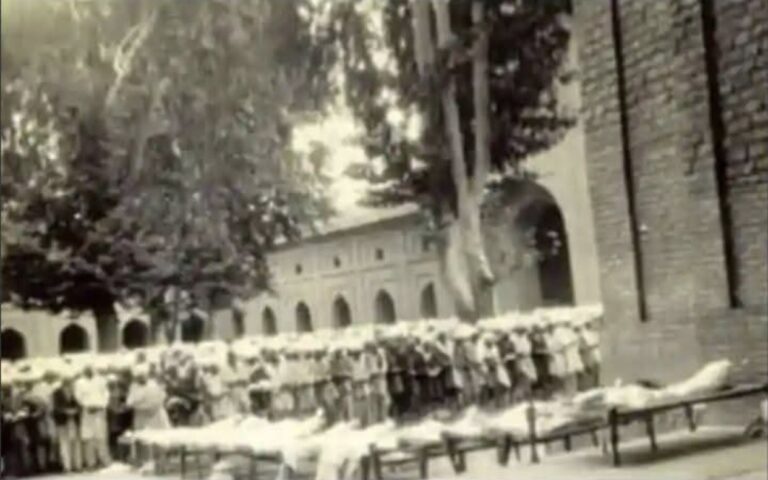
July 13, 1931: The Day Kashmir’s History Changed — and the Debate That Still Divides

0

On July 13, 1931, twenty-two Kashmiri Muslims were shot dead outside Srinagar Central Jail, trying—one after another—to complete the call to prayer as Dogra soldiers opened fire. The event, etched into Kashmir’s collective memory, marked the beginning of a political awakening and set off a struggle for dignity, rights, and self-determination. Nearly a century later, July 13 is both a day of solemn remembrance and heated debate: Was it a spontaneous uprising or a politically orchestrated plan? Is the story being suppressed or manipulated? And how does its legacy shape Kashmiri identity in a rapidly changing political landscape?

This feature examines the origins, controversies, commemoration, and contemporary relevance of Martyrs’ Day, offering international readers a balanced and nuanced perspective.

In the early 20th century, the princely state of Jammu and Kashmir was ruled by the Dogra dynasty. Maharaja Hari Singh presided over a diverse population, but the majority of Muslims faced systemic discrimination—land policies, taxation, and limited political participation were persistent grievances. The simmering discontent found voice in scattered protests and growing demands for reform.

Abdul Qadeer Khan, a cook from outside Kashmir, became a symbol of resistance when he allegedly urged the people to rise against the Maharaja’s regime. His arrest and trial drew thousands to Srinagar Central Jail on July 13, 1931. Tensions ran high, and the atmosphere was charged with anticipation and anger.

The Events of July 13, 1931

As the day unfolded, the crowd gathered in solidarity with Abdul Qadeer. When the time for Zuhr (midday) prayers arrived, a young man stood to deliver the azan (Islamic call to prayer). A Dogra soldier fired, killing him instantly. Another rose to continue the prayer—and was shot dead as well. This continued until 22 men had fallen, each determined to complete the azan despite the threat.

The killings sparked immediate outrage, riots, and a wave of mourning across the Valley. The funerals, attended by tens of thousands, became mass protests against Dogra rule. For many, July 13 marked the birth of Kashmir’s modern political consciousness—a turning point after decades of silence.

The Maharaja, under pressure, appointed the Glancy Commission, which recommended limited reforms, including greater Muslim representation in administration and politics. For many Kashmiris, however, the changes fell short of true justice.

The narrative of July 13 as a spontaneous popular uprising is challenged by some historians and political observers—especially those outside the Kashmir Valley or aligned with minority groups. They argue that the incident was not entirely organic, but may have been encouraged or manipulated by emerging political actors seeking to destabilize Dogra rule and further communal polarization.

Prem Nath Kaul, historian:

“The grievances were real, but the rapid escalation and subsequent violence suggest some orchestration. Some leaders benefited politically; the martyrs’ families remained powerless.”

This perspective finds echoes among some residents of Jammu and within Hindu minority communities, who recall the aftermath—attacks on Hindu shops and homes, and retaliatory violence. They contend that the events of July 13 set in motion a cycle of communal tensions that would haunt the region for decades.

Others, particularly National Conference leaders and Kashmiri civil society members, reject this revisionist view:

NC Youth Leader:

“To call it a planted plan is to insult the courage of those who stood up. They were not pawns; they were pioneers of Kashmiri resistance.”

For international readers, this debate highlights the complexities of historical memory in conflict zones—how martyrdom can be both a symbol of heroism and a tool of political mobilization.

Martyrs’ Day and the Politics of Remembrance

For decades, July 13 was officially observed as Kashmir Martyrs’ Day. State holidays, public ceremonies, and gatherings at Srinagar’s Mazar-e-Shuhada (Martyrs’ Graveyard) became annual rituals. The Jammu & Kashmir National Conference (NC)—whose founders were involved in the events of 1931—led these commemorations, using the day to reinforce their legitimacy and connect with the masses.

Omar Abdullah, NC leader:

“These martyrs lit the torch of political awakening. That flame still burns, despite every attempt to extinguish it.”

Such ceremonies served as reminders of sacrifice and as platforms for political messaging. But they also became contested spaces—other parties, especially those challenging NC’s narrative or advocating separatism, have at times sought to reshape the meaning of July 13, using it to advance their own visions for Kashmir.

The abrogation of Article 370 in August 2019 marked a seismic shift in Kashmir’s relationship with India. The region’s semi-autonomous status was revoked, direct rule from New Delhi imposed, and local political structures dismantled. Since then, July 13 has disappeared from the official holiday calendar, and public commemorations have been increasingly restricted.

For the past five years, authorities have regularly sealed the Martyrs’ Graveyard, detained activists, and prevented political leaders from gathering. Police cite “security concerns,” but critics see it as an attempt to erase uncomfortable histories and suppress Kashmiri identity.

Omar Abdullah, CM of Indian administered Kashmir:


BJP spokesperson:

“We cannot allow glorification of a communal riot that hurt the unity of the state.”

This suppression extends beyond July 13. Local holidays, public memorials, and even history curricula have been altered, reflecting a broader effort to redefine Kashmir’s narrative from above.

Despite restrictions, Kashmiris continue to remember July 13 privately, through prayers, stories, and social media. For many, the day is not just about the past, but about the ongoing struggle for dignity and recognition.

A Teacher in Budgam:

“We teach our students about the bravery of those 22 men. But now we whisper it—because speaking aloud feels dangerous.”

Young Journalist:

“We grew up seeing our elders pay respects at the graveyard. Now it’s surrounded by police. Even mourning feels like a crime.”

Historian in Jammu:

“It was a day of courage, yes, but also unleashed forces that no one fully understood.”

Elder at the Graveyard:

“They died for us. But even they didn’t know what they were dying for. And neither do our children today.”

These voices reveal the layered reality of remembrance—a mix of pride, uncertainty, and resistance. The right to memory itself has become a battleground.

The politics of Martyrs’ Day reflects deeper tensions in Kashmiri society. National Conference leaders frame July 13 as the foundation of a secular, democratic movement. Separatist groups emphasize its role in the fight for self-determination, often distancing themselves from NC’s legacy. The Indian government, meanwhile, presents it as a communal riot, or omits it altogether.

International human rights organizations and media—like BBC and Al Jazeera—have documented these shifting narratives, highlighting the ways in which history is weaponized, suppressed, or reimagined.

For The Azadi Times, the challenge is clear: To tell the story honestly, centering Kashmiri voices without falling into the traps of state-sponsored propaganda.

July 13, 1931, was not the end of Kashmir’s struggle, but the beginning of a long and winding road towards self-determination. The events of that day catalyzed movements for political rights, social justice, and, eventually, demands for autonomy or independence.

Today, the spirit of July 13 persists in the Valley’s ongoing calls for dignity and agency. Even as political repression intensifies, and as historical memory is contested, the aspiration for self-determination remains undiminished.

A Young Activist:

“They can erase the holiday, lock the graveyard, change the textbooks—but they cannot erase what people carry in their hearts.”

For international readers, July 13 offers a window into the complexities of South Asian politics, communal relations, and the universal human struggle for justice. It is a case study in how memory can be both a source of empowerment and a target of repression.

Journalists and scholars emphasize the need for balanced, fact-based reporting—neither glorifying nor dismissing the events, but seeking to understand them in all their ambiguity.

July 13, 1931, is a foundational moment in Kashmir’s story—a day of martyrdom, awakening, debate, and division. Its legacy is contested, but its impact endures. As Kashmir confronts new challenges, the struggle over memory and history remains central.

At The Azadi Times, we believe history belongs to the people, not to politicians or governments. The dignity of those who died should never be erased, nor their memory used for narrow gain.

To honor July 13 is not just to recall the past, but to assert the right to remember, to mourn, and to demand a future built on truth and justice.

Kashmir Schools to Revise Timings From Monday Amid Weather Changes

The Azadi Times | Srinagar: Starting Monday, the Jammu & Kashmir education department is expected to revise the timings of all government and private schools across the Valley, citing concerns over young students facing difficulties under the current schedule.

The move was announced Friday evening by Education Minister Sakina Itoo, who said the changes aim to ease the routine for children as weather conditions improve and temperatures drop following recent rains.

What Are the New School Timings?

According to Itoo, schools within Srinagar municipal limits will operate from 8:30 AM to 2:30 PM, while schools outside Srinagar and in other districts will run from 9:00 AM to 3:00 PM.

“We will revise the school timings from Monday. There has been a marked improvement in the weather, and temperatures have dropped slightly,” the minister said.

She added that another adjustment to the timings may be made later this year to accommodate the colder months at the onset of winter.

Why the Change?

Parents and teachers have raised concerns in recent weeks about younger children struggling with early start times, especially as seasonal rains have cooled temperatures and made mornings chilly. The government has taken these concerns into account in deciding to shift school hours slightly later.

“We will continue to monitor weather patterns and adjust school timings again when winter begins,” Itoo said.

What’s Next?

The education department has urged schools to implement the revised schedule from Monday and to stay prepared for further changes in the coming months as winter intensifies.

Plum Farmers in Kashmir Struggle as Prices Drop Despite a Bumper Harvest

    0

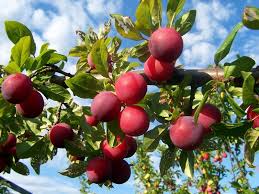
    The Azadi Times | Srinagar, Indian administered Kashmir: In Kashmir’s verdant valleys, the plum harvest is in full swing — but what should have been a season of joy and profit has turned into a story of frustration for local farmers. While this year’s crop is abundant, growers say a sharp fall in market prices has left them struggling to cover even their basic costs.

    According to farmers in Budgam, Ganderbal, and other parts of the valley, plum prices in local markets have dropped by 20–30% compared to last year. Many growers now fear losses despite the good harvest, especially those whose entire livelihoods depend on horticulture.

    “Right now, a crate of plums fetches just 100–150 rupees,” said Riyaz Ahmad, a farmer in Budgam, speaking to The Azadi Times.
    “But the packing, labor, transportation, and other costs per crate come to 30–50 rupees. There’s hardly any profit left.”

    A Fragile Fruit, A Race Against Time

    Plums are delicate fruits that must reach wholesale markets in Delhi, Chandigarh, and other cities within three days of picking — or risk spoiling entirely. Any delay, even a single day, can turn the harvest into a complete loss.

    “We have to rush the plums to market before they rot,” Riyaz said. “But without fast transport, we lose money and all our effort goes to waste.”

    Farmers have urged authorities to extend fast rail services — such as the Vande Bharat Express, which has previously been used to transport cherries quickly — to plums as well.

    “When cherries were sent on the Vande Bharat train, farmers earned good profits. We need the same for plums so the fruit stays fresh and reaches markets on time,” said Fayaz Ahmad, a fruit trader.

    A Call for Policy and Support

    Growers and experts alike are calling for a dedicated export policy for plums, along with better coordination between the horticulture department and agricultural marketing agencies. Such measures, they argue, would help ensure that seasonal fruits like plums, peaches, pears, and apples reach markets in good condition — improving farmer incomes and boosting the regional economy.

    Agricultural experts say that improving rail, road, and air links for perishable fruits could transform the valley’s horticulture sector. “If fast and efficient transport is provided, not only will farmers earn better, but the economy of the entire region could benefit,” one expert told The Azadi Times.

    A Missed Opportunity?

    While the harvest this year has been plentiful — government figures show plums are grown on about 1,500 hectares in Kashmir, producing roughly 8,000 tonnes annually — poor prices and logistical challenges are turning what could have been a prosperous season into a disappointment for many.

    Budgam remains the largest plum-producing district in the valley, followed by Ganderbal. Their moderate climate and fertile soils make them ideal for growing various plum varieties.

    But unless authorities act swiftly to support timely transportation and fair pricing, farmers warn that plum cultivation — once a symbol of Kashmir’s horticultural wealth — could become another casualty of neglect.

    Property of Three Kashmiri Men Seized as Crackdown on Dissent Continues in Ganderbal

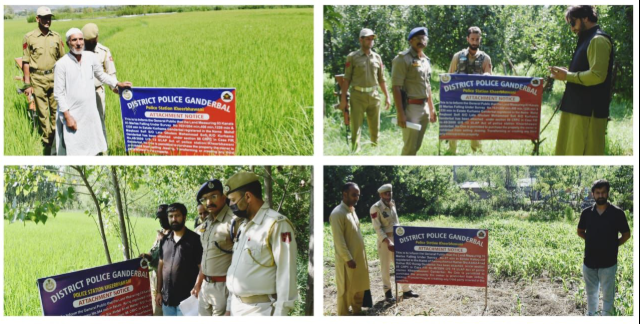
    The Azadi Times | Srinagar, Indian administered Kashmir: Authorities in Indian-administered Jammu and Kashmir have seized property worth approximately $380,000 USD belonging to three Kashmiri men accused of “militant” activities and currently living across the Line of Control in Pakistan-administered Kashmir.

    The move comes as part of what police describe as an ongoing campaign to dismantle “terrorist and separatist networks.” However, critics argue that such actions risk further marginalizing Kashmiri voices and suppressing legitimate aspirations for self-determination — a right enshrined in international law but denied to Kashmiris for decades.

    Whose Land, Whose Rights?

    According to police, the three men — Farooq Ahmad Rather, Noor Mohammad Paray, and Mohammad Maqbool Sofi, all originally from the Ganderbal district — have been accused of inciting violence from abroad. Officials claim the men have ties to separatist and militant groups and have been named in a 2009 case under India’s Unlawful Activities (Prevention) Act.

    The seized property reportedly includes 9 kanals and 1.5 marlas of agricultural land — about 1.1 acres — in their home villages. The seizures were carried out after approval by a special court.

    Police framed the action as a necessary measure to maintain order.

    “No individual, whether inside the Valley or abroad, will be allowed to promote terrorism or separatism. Legal action will continue against anyone disturbing the region’s peace,” a spokesperson said.

    A Community Under Pressure

    Local residents, however, view such seizures differently. Some argue they amount to collective punishment of families left behind, and say they target Kashmiri dissent rather than addressing root causes of the conflict which many see as the denial of Kashmiris’ right to determine their own political future.

    In an appeal to the public, police asked residents to report any “suspicious activity,” describing community cooperation as essential to “peace, prosperity, and development.”

    Yet for many Kashmiris, peace remains elusive in a region militarized for decades. Calls for dialogue and a political settlement — including the right to self-determination — continue to go unheard, leaving people trapped between competing narratives and state crackdowns.

    Observers note that property seizures and legal cases under counterterrorism laws have increased in recent years, part of a broader strategy that critics say conflates armed militancy with peaceful political dissent. For families of the men whose land was taken this week, the future remains uncertain — their homes now part of a larger, unresolved conflict.

    Return of the Lotus: Wular Lake Blooms Again After Three Decades

    Srinagar, Indian administered Kashmir: Kashmir’s largest freshwater lake, Wular, has once again come alive, offering a glimpse of resilience and renewal after decades of ecological decline. The lotus flowers and edible stems (locally known as nadru), which vanished following the devastating floods of 1992, have re-emerged, sparking hope and joy among local farmers who have long depended on this seasonal harvest.

    Spanning nearly 200 square kilometers between Bandipora and Sopore, Wular Lake was once a lifeline for hundreds of Kashmiri families. For generations, the seasonal collection of nadru, a prized ingredient in Kashmiri cuisine, sustained livelihoods in the surrounding villages. But the 1992 floods left a heavy layer of silt across the lake bed, suffocating the ecosystem and cutting off a critical source of income.

    A Recovery in Motion

    This revival is the result of an ongoing restoration effort led by the Wular Lake Management Authority, which began a massive clean-up initiative in 2020. Officials say more than 7.9 million cubic meters of silt have been dredged so far, uncovering the dormant roots of the lotus plants buried beneath decades of sediment.

    “For years the lotus stems were invisible, but the root systems remained alive under the silt. Once dredging began in specific zones, the plants started to reappear. This year we even introduced seeds in the dredged areas, and the results are visible now,” an official associated with the project told The Azadi Times.

    The department also plans to install retention basins along key tributaries of the Jhelum River to prevent further siltation in the future, he added.

    A Source of Livelihood Restored

    For many villagers, this development is more than just an environmental success — it represents a long-awaited return of dignity and economic opportunity. One farmer from Watlab recalled helping his father harvest lotus stems before the floods.

    “We thought it was gone forever. Now we see it again,” he said, his voice tinged with both nostalgia and relief.

    In the years after the floods, locals tried planting lotus seeds themselves, but without proper restoration efforts, those attempts failed. Only after the lake was cleaned did the ecosystem respond.

    While lotus harvesting continued in other lakes like Dal and Manasbal, Wular had remained barren since 1992. The work is far from over, but the sight of the pink flowers and tender stems in Wular again signals what many here hope is the beginning of a larger recovery — for the lake and the people who depend on it.

    Who is Mangru? The Railway Station Comedian Who Became a ‘Sigma Male’ Icon of the Internet

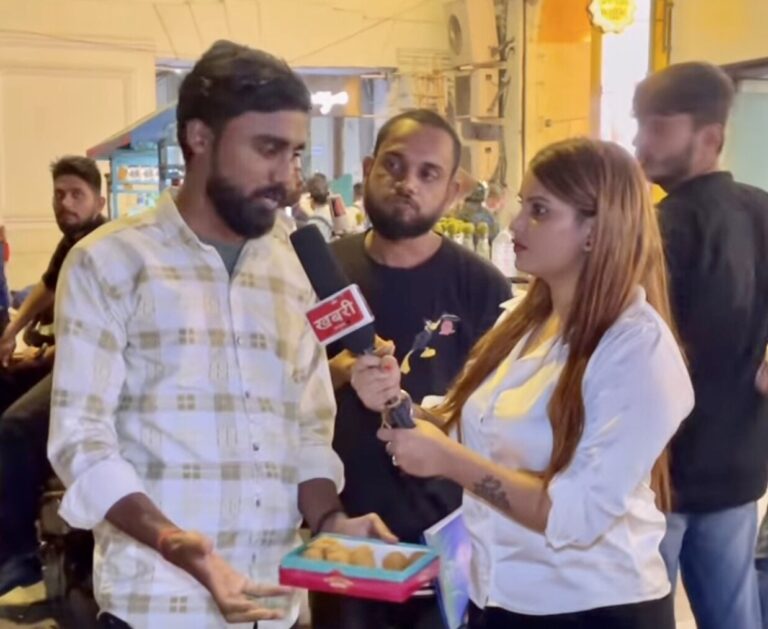
    “Mangru kon hai?” — this phrase (translated: “Who is Mangru?”) has echoed across social media platforms in recent months, especially in India and Pakistan. But unlike celebrities manufactured by media agencies or actors promoted by major production houses, Mangru emerged straight from the streets—or more precisely, from a railway station, with a disarming smile, witty one-liners, and raw authenticity.

    He didn’t need a scripted set or studio lights. All it took was a mic, a street-side reporter, and his unshakable “sigma male” attitude to captivate the internet.

    Who Exactly Is Mangru?

    Mangru is a viral street comedian from India, whose real name, background, or hometown is still largely unknown. What is clear, however, is that he has become a digital folk icon. He is frequently spotted in short-form interviews conducted by content creators and YouTube journalists, where his stoic replies, subtle sarcasm, and unexpected humour deliver a powerful punch—without him ever raising his voice.

    The Interview That Changed Everything

    Mangru first gained viral fame after a street interview clip was uploaded on YouTube titled “Sigma Male 🗿 Mangru vs Reporter”. The video, in which a female reporter asks Mangru casual lifestyle questions, shows him responding with deadpan expressions, unexpected metaphors, and an almost Zen-like disregard for modern social expectations.

    The public response? Massive.

    • Over 5 million views in less than two weeks.
    • #Mangru and #SigmaMale began trending on TikTok and Instagram reels.
    • Memes exploded across social media with captions like “Be like Mangru”, and “Mangru Mindset > Billionaire Mindset.”

    Why Is He Called a “Sigma Male”?

    In internet subculture, a “sigma male” is a term used to describe someone who lives outside the traditional dominance hierarchy. Not a follower, not a leader—just someone who does things his own way, unbothered by the world’s opinions.

    Mangru’s unfiltered responses, refusal to impress, and effortless calm in front of the camera matched this archetype. In a time when everyone is trying to go viral by doing something outrageous, Mangru went viral by doing nothing out of the ordinary—yet everything was extraordinary.

    Humour Without a Script: Mangru’s Secret Sauce

    What sets Mangru apart from mainstream comedians is his lack of performance. There’s no punchline delivery. No background music. No rehearsed flow.

    Instead, Mangru embodies a kind of accidental comedy—his humour stems from being completely himself. His blank stares, unusual analogies, and dismissive wisdom deliver a kind of comedy that’s deeply human, and unintentionally brilliant.

    The Working-Class Star: Why It Matters

    Mangru doesn’t look like a celebrity. He doesn’t dress like one either. Standing near a railway station in humble clothes, Mangru represents India’s invisible backbone: the working class. His rise to fame is a reminder that internet virality is no longer controlled by polished influencers or brand collaborations.

    His growing popularity reflects:

    • The audience’s fatigue with overproduced content.
    • A hunger for authenticity.
    • A cultural shift toward valuing grounded, everyday voices.

    Mystery Adds to His Magic

    So far, no one has found Mangru’s full name, hometown, or personal history. This mystery fuels his myth. He might just be another man waiting at a station—or he could be the philosopher-clown our overstimulated generation never knew it needed.

    From Meme to Movement?

    Mangru’s influence is already expanding:

    • His face is being printed on T-shirts.
    • Fan pages have popped up on Instagram and TikTok.
    • Other content creators are now mimicking his interview style—deadpan, casual, and clever.

    Could this be the beginning of a new genre of Indian street comedy? One where the humour isn’t forced, the setting isn’t fancy, and the stars are the people we pass by every day?

    In a digital world saturated with superficiality, Mangru is a rare symbol of unintentional brilliance and cultural truth. He reminds us that humour, charisma, and meaning can come from anyone—especially the kind of people we usually overlook.

    He doesn’t care about fame. That’s exactly why he became famous.

    Tragedy in Pakistan: Two Brothers Among 9 Shot Dead on Balochistan Road

    0

    Nine ethnic Punjabi bus passengers abducted and shot dead in Balochistan on N‑70 highway. President blames BLA. Similar attacks in 2024‑25 targeting migrants from Punjab. Government vows action.

    Balochistan, Pakistan: At least nine passengers—all reportedly from Pakistan’s Punjab province—were abducted and shot dead after two buses travelling from Quetta to Punjab were stopped late Thursday night on the N‑70 highway in Balochistan’s Loralai and Zhob districts, officials confirmed.

    According to Balochistan government spokesperson Shahid Rind, the attackers targeted individuals whose identity documents indicated they were from eastern Punjab. After being removed from the buses, the victims were taken a short distance away and executed—nine bodies were later recovered along the roadside with gunshot wounds .

    Punjab’s district administrator in Dera Ghazi Khan, Ashfaq Chaudhry, said the assailants appeared to specifically target Punjabis. Law enforcement is conducting a manhunt for the perpetrators.

    Who carried out the attack?

    No group has officially claimed responsibility. However, President Asif Ali Zardari condemned the “brutal killing of passengers” and accused the banned Baloch Liberation Army (BLA) of orchestrating the attack to destabilise Pakistan.

    The BLA, named in previous violent incidents across Balochistan—including mass shootings and a high-profile train hijacking in March that killed dozens—denied involvement. Instead, it claimed it was simultaneously engaged in an assault on a military camp far from the site of this attack.

    Background and broader conflict

    This incident bears disturbing resemblance to earlier ethnically targeted attacks, such as in August 2024 when BLA gunmen pulled passengers from vehicles on the same N‑70 highway, checked their identity cards, and executed at least 22 individuals—most of them from Punjab—before setting vehicles ablaze (BBC). In February 2025, the group claimed responsibility for killing seven more Punjabis in a similar roadside shooting in Barkhan district.

    The N‑70 National Highway stretches over roughly 440 km between Multan and Qilla Saifullah, cutting across Punjab and Balochistan provinces. It is a frequent corridor for violence, especially targeting migrant labourers from Punjab travelling for seasonal or low-paid work in Balochistan’s resource-rich but unstable regions.

    Efforts by the Pakistani state to suppress the insurgency—among other groups such as BLA and BLF—have failed to halt repeated attacks on civilians, security personnel, and foreign projects. The province remains an ongoing hotspot of ethnic and sectarian violence, state accusations of foreign support for insurgents notwithstanding.

    Local reactions and government response

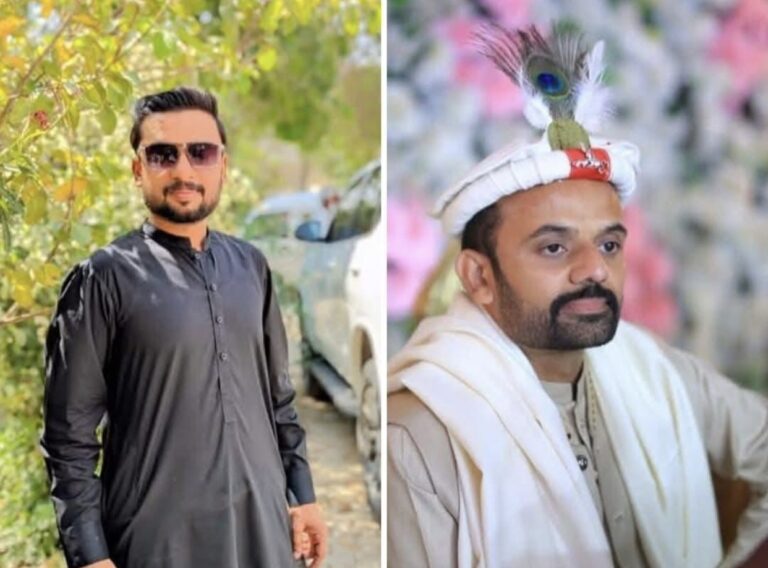
    Commissioner Saadat Husain of the Loralai Division confirmed recovery of nine victims’ bodies. He stated that among them were two brothers, identified as Osman and Jaber, who were travelling with their father to attend the funeral rites of their deceased parent in Dunya Pur. They were shot along with other mourners in a targeted ethnic attack .

    Prime Minister Shehbaz Sharif also issued a forceful condemnation, pledging a swift crackdown: “We will deal with the terrorists with full force, and the blood of innocent people will be avenged,” he stated .

    Impact and outlook

    Human rights groups have previously cautioned that ethnic targeting, extrajudicial killings, and unchecked militancy in Balochistan threaten to spiral into deeper civil conflict. Analysts warn that without political reconciliation and improved security measures, such cycles of violence may continue and radicalise further parts of Pakistan’s population.

    Thousands March on Karakoram Highway: Budhlas and Chalt Demand Release of Gilgit-Baltistan Detainees

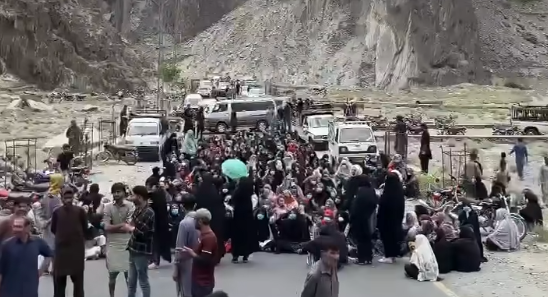
    Special Correspondent | Gilgit-Baltistan: Nagar — In a rare and powerful display of civil resistance, thousands of residents — men, women, children, and the elderly — from Budhlas and Chalt villages of Nagar district have begun a long march toward Gilgit, blocking the Karakoram Highway (KKH) at Harispo to demand the release of political prisoners associated with the Awami Action Committee Gilgit-Baltistan.

    Carrying banners and chanting slogans, the protesters called for the immediate release of prominent activist Ehsan Advocate and dozens of others who have been detained over recent months for their involvement in protests demanding fundamental rights and self-determination for the region.

    “We don’t accept the imposed narratives of India or Pakistan — our struggle is for dignity, justice, and the right to self-determination,” said one of the protesters, speaking to Azadi Times.

    The march, which began early in the morning, drew significant participation from women — a striking feature in the deeply conservative region — with mothers, sisters, and daughters walking alongside men. Witnesses reported that traffic on parts of the KKH came to a standstill as the crowds moved forward.

    The Awami Action Committee has emerged as a grassroots movement in Gilgit-Baltistan, much like its counterparts in Azad Jammu & Kashmir, advocating for local autonomy, protection of natural resources, and an end to what it describes as “systematic political suppression.”

    Critics accuse the authorities of cracking down on activists to silence dissenting voices. Human rights groups have repeatedly raised concerns over the arrests, warning that suppressing peaceful protests risks further alienating the local population.

    A statement from the Awami Action Committee released late last night called the detentions “illegal and politically motivated,” and vowed to continue the peaceful struggle.

    A Region in Flux

    Gilgit-Baltistan, which lies at the heart of the disputed Kashmir region, has long lived in a constitutional limbo — claimed by Pakistan but without the full rights accorded to its citizens. The people here say their voices remain marginalized despite being on the frontline of geopolitics.

    Protesters insist their movement is not about aligning with either India or Pakistan but about asserting their own agency.

    “We want the world to know: our struggle is indigenous and peaceful. We are Hussaini — we stand for truth and against oppression,” one young activist declared, referencing a popular slogan from the demonstration.

    As night fell, the marchers vowed to camp along the highway until their demands are met. Authorities have so far refrained from using force, though tensions remain high.

    For many here, today’s events are not just about the release of prisoners but about reclaiming dignity and asserting their right to determine their own future.

    Reporting by The Azadi Times Bureau — Gilgit-Baltistan
    For more independent and ground-level coverage of Kashmir and Gilgit-Baltistan, join The Azadi Times.

    From Real Estate to Real Change: British-Kashmiri Man Sells Properties to Build Schools in Azad Kashmir

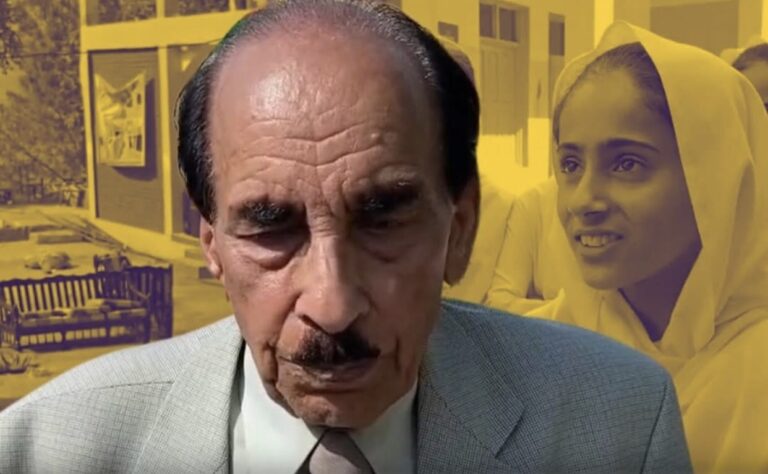
    Mirpur, AJK (Pakistan administered Kashmir): In an era where diaspora wealth often fuels luxury back home or political clout, one British-Kashmiri man is rewriting the script. Chaudhary Muhammad Aslam, a 65-year-old retired property investor based in the United Kingdom, has sold his entire real estate portfolio to fund the construction of schools in remote parts of Azad Jammu and Kashmir (AJK).

    His story is a quiet but powerful reminder that transformative change can come from those who walk away from comfort—and choose to invest in people, not politics.

    A Legacy Reimagined

    Aslam, originally from Mirpur district of Pakistan administrated Kashmir, migrated to the UK in the 1970s. Over five decades, he built a modest but valuable portfolio of five properties across England. But in 2023, a visit to his hometown profoundly shifted his priorities.

    “I saw children sitting on bare ground, under plastic sheets and broken roofs. Almost 20 years after the 2005 earthquake, many of the schools were still ruins,” Aslam told local media. “I returned to Britain and couldn’t sleep. I had to do something.”

    That “something” turned out to be everything. He sold all five properties, liquidated his savings, and donated the entirety to a UK-registered humanitarian organization, Muslim Charity, to spearhead school construction across the region.

    Schools Rebuilt, Futures Reclaimed

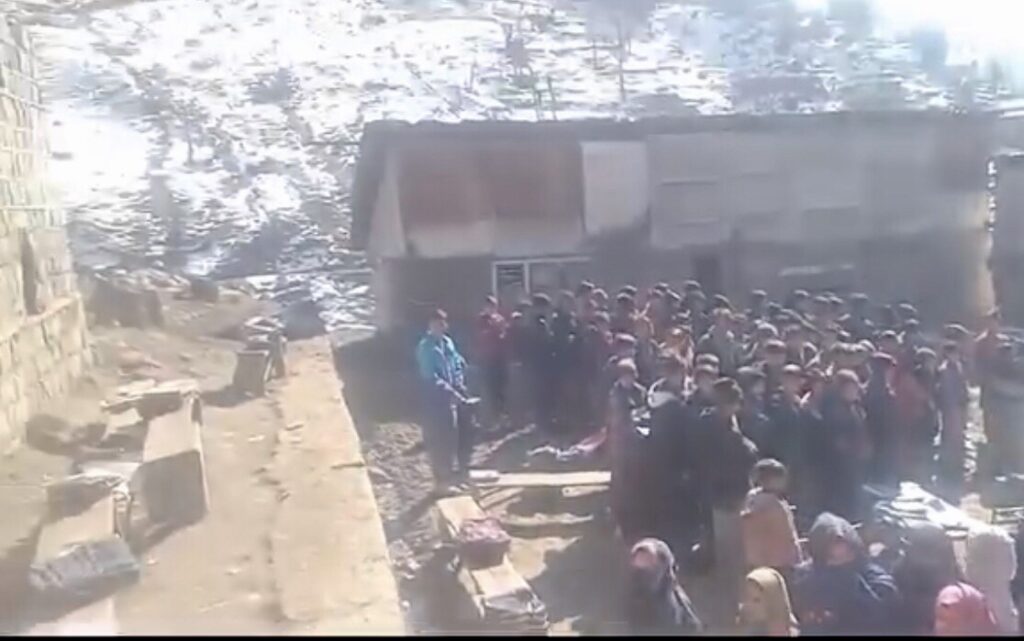
    Children study under open skies in Neelum Valley, Azad Kashmir. According to The Azadi Times, over 200,000 children in Pakistan-administered Kashmir still attend school without proper classrooms, highlighting the urgent need for educational infrastructure.

    The result: 35 newly constructed schools now dot the mountainous terrain of Azad Kashmir, particularly in the districts of Bagh, Haveli, Pallandri, Rawalakot, and Muzaffarabad. These are not just cosmetic upgrades—they are purpose-built, earthquake-resistant structures with classrooms, sanitation facilities, desks, blackboards, and secure roofs.

    Watch video of a school in Neelum Vallley here: https://www.facebook.com/share/v/1Dtwkmk6FW

    The initiative has already impacted over 5,000 students, many of whom had been learning under trees or in unsafe, makeshift classrooms.

    “These schools are a lifeline,” says Fatima Gul, a primary teacher in Rawalakot. “Before, we would cancel classes whenever it rained. Now, students come even in the snow.”

    Filling the Gaps Left Behind

    Despite numerous reconstruction pledges after the 2005 earthquake—which killed over 80,000 people and destroyed more than 3000 schools—many communities in Azad Kashmir have yet to see meaningful rebuilding. Large-scale government programmes and international donor commitments often faltered due to red tape, poor oversight, or shifting priorities.

    Aslam’s story illustrates how individual intervention can fill institutional voids. But it also raises uncomfortable questions: Why were these schools not rebuilt by the state? And why did it take a retiree living 6,000 kilometres away to bring change?

    Local voices echo this sentiment. “We are grateful to Chaudhary Sahib, but it shouldn’t have been his responsibility,” says Munir Hussain, a community elder in Bagh. “This is what governments are supposed to do.”

    Beyond Nationalism: A Human-Centric Approach

    Aslam’s work exists in a politically charged space—Azad Jammu and Kashmir, a region claimed by both India and Pakistan, but often neglected by both in terms of grassroots development. Yet, his project deliberately avoids nationalist rhetoric.

    There are no flags on the buildings, no slogans painted on the walls. Just education.

    In an interview, Aslam explained, “I didn’t do this for politics. I did it for the children of Kashmir. They don’t care about borders. They care about books, warmth, safety.”

    This resonates with a broader shift among diaspora Kashmiris who are increasingly disillusioned with state-led narratives from both India and Pakistan—and instead focus on bottom-up development rooted in community needs.

    A Model for the Diaspora?

    Aslam’s decision has sparked conversation in diaspora circles, especially in the UK, which is home to one of the largest Kashmiri-origin communities outside South Asia.

    “This could become a model,” says Dr. Nida Sadiq, a development economist at SOAS University of London. “We’ve seen enough political posturing. What Kashmir needs now is a diaspora that empowers—not dictates.”

    Others have pointed to the transparency of Aslam’s approach, particularly his partnership with Muslim Charity, which has published updates, financial audits, and construction timelines to ensure donor accountability.

    Challenges Ahead

    While the initial construction phase has been lauded, long-term sustainability remains a concern. Who will fund teacher salaries? Who will maintain the buildings?

    Muslim Charity says they are working with local school boards and village committees to create community-led oversight systems. There are also discussions about hybrid models where alumni donations and local fundraising can support operational costs.

    Final Thought

    In a region too often spoken for—but rarely spoken with—Chaudhary Muhammad Aslam’s initiative cuts through the noise. It is not a grand political statement, but a humble, concrete investment in the future of a people long caught between two states.

    It is a story not just of generosity—but of reimagining what solidarity can look like in Kashmir: not flags or tweets, but bricks, mortar, and a child walking to school with a backpack instead of a burden.

    For more context on education in post-earthquake Kashmir, visit UNESCO’s report on rebuilding efforts and Muslim Charity’s project page.