

Beyond the headlines about the Line of Control, Leepa is a working farming valley with pine forests, rice terraces and a fragile peace. Here is what is actually worth seeing, and what visitors need to know first.
Most people who hear “Leepa” hear it in a news bulletin about cross-LoC firing. Far fewer know it as a high-altitude valley where families grow rice on terraces, graze cattle in pine forests and wait for the road to reopen after the winter snow.
Leepa sits in Pakistan-administered Kashmir, in the Jhelum Valley area. Reference sources describe it as an arable valley in Hattian Bala District, administered by Pakistan. More recent descriptions place it in the newer Jhelum Valley District, so the administrative label depends on the source’s date. The valley lies close to the Line of Control (LoC), the de facto border dividing Kashmir between India and Pakistan, and that proximity shapes everything about it: who can visit, when, and how safe it feels.
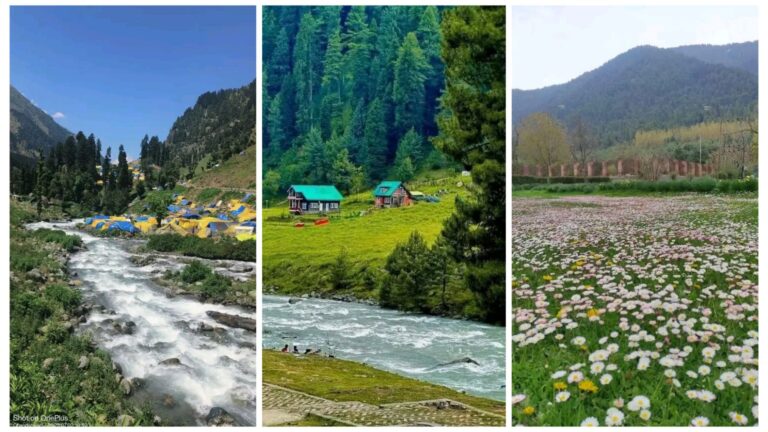
This ranking is an editorial judgment, not a scientific one. We scored each place on four things: scenery, cultural and historical value, accessibility, and how much a visitor learns about the real Leepa. Distances and elevations vary between published sources, so we give ranges where they disagree. Where something is disputed or could not be independently verified, we say so.
First, the Basics: Getting There
Leepa is a long and demanding journey. The route runs from Muzaffarabad along the Jhelum River to Hattian Bala, then climbs steadily towards Reshian. Public vans and buses from Muzaffarabad’s old bus stand reportedly take five to six hours. Private vehicles can be faster, but the road climbs through mountain terrain and conditions change with the weather.
Distance figures are inconsistent. One reference puts Leepa Valley about 83 km from Muzaffarabad, while another gives 105 km for Leepa village itself. The gap probably reflects different measuring points and routes. Treat any single number with caution.
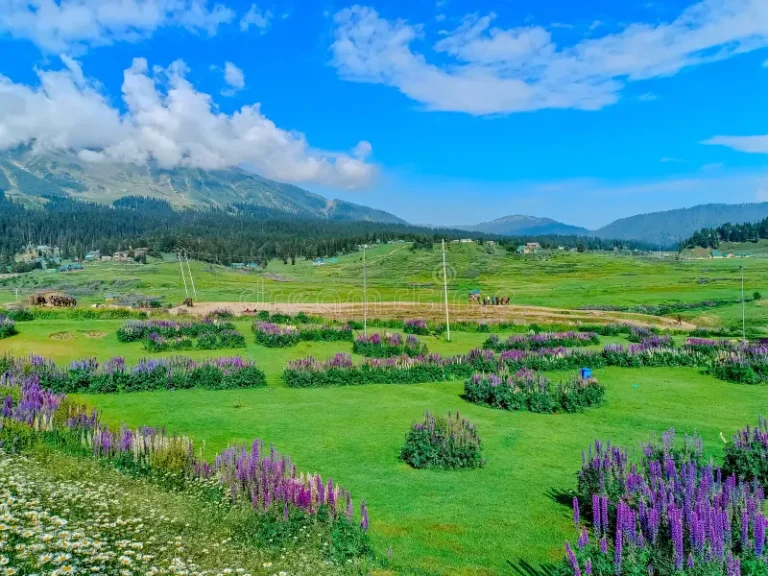

The most important practical point is permission. Travel guides advise checking current access requirements, including No Objection Certificates (NOCs), in Hattian Bala or from a reliable source before reaching Reshian. Because the valley is near the LoC, rules can tighten without notice. At times of tension, non-locals have reportedly been barred from areas such as the Kaman Bridge near the LoC. Check before you travel, and expect to turn back if officials say so.
The Ranking
7. Reshian: The Gateway
Best for: a first stop and orientation.
Reshian is where the real mountain journey begins, and few travellers linger. The village sits at about 1,674 metres, roughly 67 km from Muzaffarabad by one reference. It ranks last only because it is a staging post rather than a destination. Its value is practical: this is where visitors confirm road conditions, arrange jeeps and get a sense of local mood before going further.
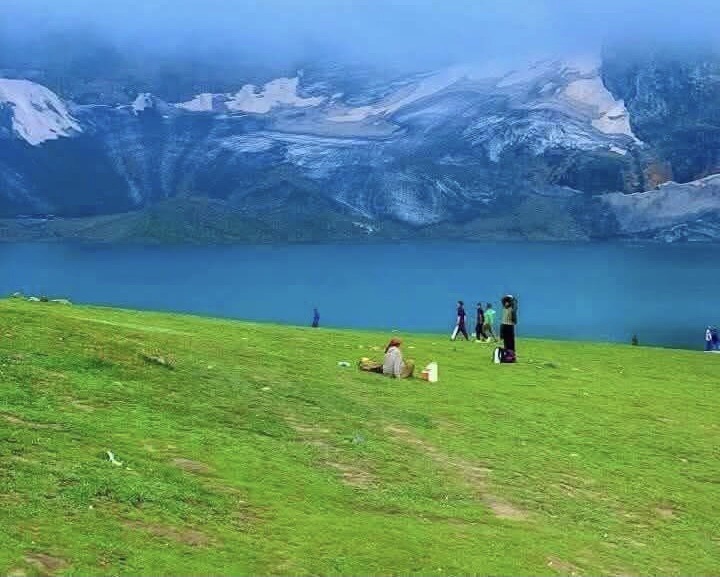

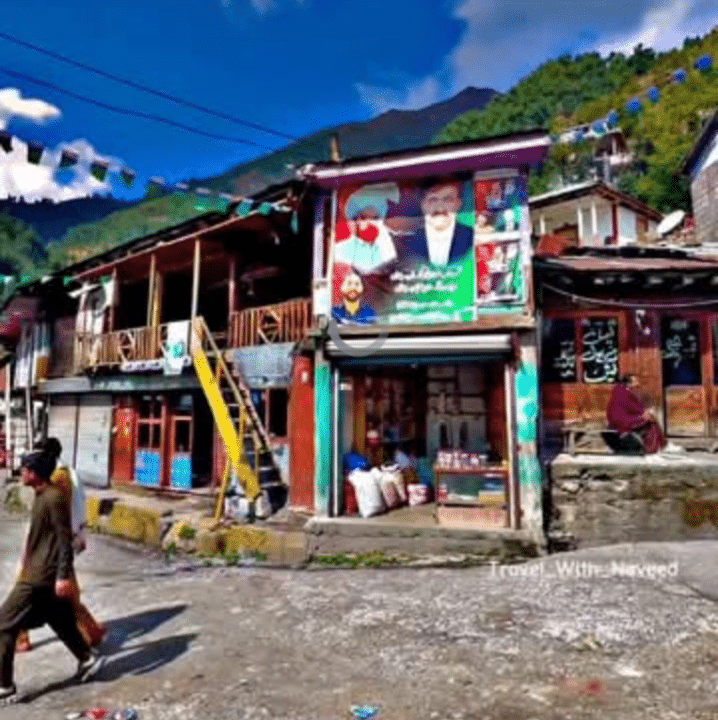
Reshian is also the best place to ask residents what has changed in recent years. Many people here have family in the higher villages and can say how the valley’s access rules differ from season to season.
6. Kazinag (Qazi Nag) Stream and Nullah: Scenery Under a Political Shadow
Best for: natural beauty, understanding the border geography.
A stream called Qazi Nag, or Kazinag, runs through the Chananian area, which one travel account describes as surrounded by broad pine forest with the stream flowing nearby. The name appears in more serious contexts too: an Indian opinion piece describes Leepa as a roughly nine-kilometre high-altitude valley running through the Kazinag spring.
We rank it sixth because the water and forest are beautiful, but visitors generally cannot reach the closest stretches near the LoC. The scenery is real. The access is limited by security rules, and readers should not expect to walk up to the stream’s border sections.
5. Treda Sharif and the Cross-Border Memory of Moji
Best for: history and social memory. Not recommended as a casual tourist stop.
This entry is less a tourist attraction than a reminder of how recent the divisions are. One commentary recalls that frontiers would “disappear” for one night each year, as pilgrims from nearby villages gathered at Treda Sharif in Moji hamlet near Leepa. We have not independently verified the current status of this gathering, and readers should treat it as historical context.
We include it because Leepa’s story is also a story of divided communities. Families here have relatives, shrines and fields on the other side of a line that did not always feel so rigid. Any honest account of the valley has to acknowledge that.
4. Dao Khan: High-Altitude Quiet
Best for: solitude, forest scenery, stargazing on clear nights.
Dao Khan is a high village in the Leepa area. Reported at about 2,490 metres, it has rest houses run by the AJK Tourism and Archaeology Department and the Forest Department for visitors. It lies about 71 km from Muzaffarabad and 4 km from Reshian, and is reached by jeep from Reshian.
Its rank reflects a trade-off. The altitude and calm are excellent, but facilities are basic and the jeep track is rough. It suits travellers comfortable with simple accommodation and weather delays rather than first-time visitors wanting comfort.
3. Chananian: Pine Forest, Rest Houses and the Border Close By
Best for: forest walks, a mountain-village stay.
Chananian stands at roughly 2,226 metres. One travel description places it opposite Leepa village, near the Line of Control, with accommodation in forest and tourism rest houses and tent services in the summer season.
Chananian ranks third for atmosphere and for how clearly it shows the valley’s two sides: a calm pine-forest landscape and a heavily guarded frontier. Visitors should know that proximity to the LoC means access can change, and that tourist infrastructure is seasonal and limited.
2. The Leepa Festival and Local Culture
Best for: understanding living culture and recovery after conflict.
Our second pick is an experience, not a place. A feature in Kashmir Times describes a festival in the valley with traditional games and folk songs, attended by tourists and by university students who travelled for hours to reach it. The same report says the valley has enjoyed a period of relative calm since 2021, when India and Pakistan agreed to adhere to the 2003 ceasefire, and quotes residents saying they can now farm and keep cattle without fear.
Events like this matter because they show Leepa as a community rather than a security story. They also illustrate a wider pattern across the LoC region. Along the Neelum Valley, another Pakistan-administered border area, hundreds of hotels and guesthouses sprouted up when the ceasefire held, with tourists arriving year-round. Tourism here depends directly on whether the guns stay quiet.
A caveat: festival dates and formats vary, and we could not confirm a fixed annual calendar. Check with local tourism offices before planning around one.
1. Leepa Village and Its Terraced Fields
Best for: the complete Leepa experience.
Leepa village is the valley’s heart and our first choice. It is reported at an altitude of 1,921 metres, about 105 km from Muzaffarabad. A travel account describes it as lying in the centre of the valley. The rice terraces, the wooden footbridges and the daily rhythm of farming and cattle-rearing explain why visitors who reach it often call it the most memorable stop in the Jhelum Valley region.
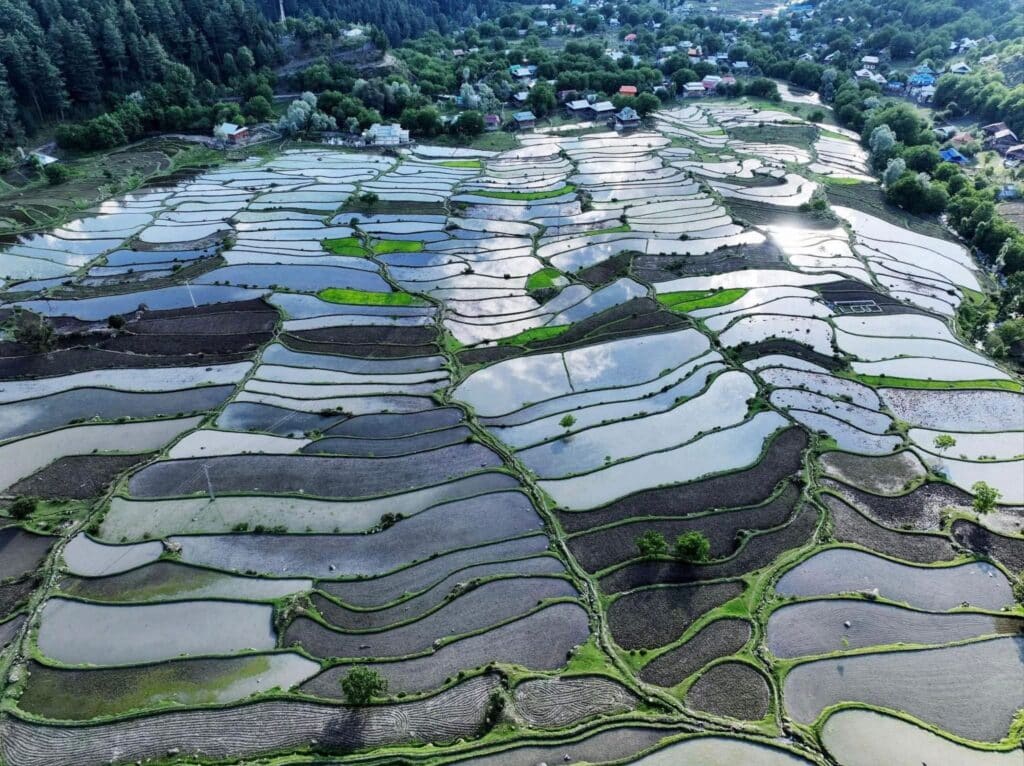
It wins for a combination of things the others lack: a real working community, genuine scenery, and a clear view of what peace means in practice. Photographs from reporting on the valley show farmers ploughing with oxen and transplanting paddy seedlings, a reminder that this is first of all farmland.
What the Ranking Cannot Show: The Security Reality
No honest guide to Leepa can end with scenery. The valley has repeatedly been caught in exchanges of fire between Indian and Pakistani forces, and each side blames the other.
Earlier episodes caused real civilian harm. In one reported incident, four civilians were injured in Leepa valley during cross-LoC fire, and Pakistan’s military media wing accused Indian troops of deliberately targeting civilians. India has made its own counter-claims in other incidents. Indian outlets reported that Pakistani forces fired on Indian positions in the Leepa sector during the night of 26–27 October 2025. More recently, Pakistani media have reported Indian fire in the valley and a Pakistani response on 1 August 2026. four civilians injured in cross exchange of fire along loc +2
We cannot independently verify these competing accounts, and The Azadi Times is not adopting either side’s version. What the pattern shows is that the 2021 ceasefire understanding has been tested. One Indian commentator has described Leepa’s remoteness as making it an ideal location for secret, brutal warfare, a view that illustrates how strategists see the valley while residents simply see home.
For visitors, the practical meaning is clear. Conditions can change within hours. Access can be closed with no warning. And anyone planning a trip should follow official advice, avoid sensitive areas near the LoC, and never photograph military positions.
Practical Advice for Visitors
- Confirm access first. Ask the Hattian Bala administration or reliable local contacts about NOC requirements before you leave Muzaffarabad.
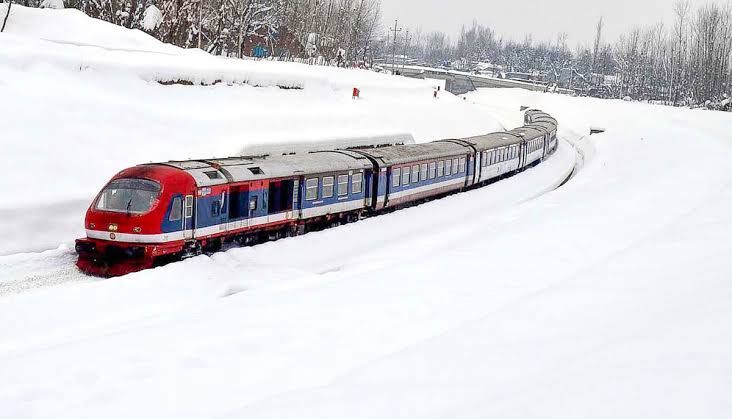
- Travel in the warm months. Leepa is known for heavy snowfall, and roads can be blocked in winter.
- Expect basic facilities. Rest houses and seasonal tents exist, but this is not a resort destination. Carry cash, medicines and spare food.
- Respect local sensitivities. This is a conflict-affected community. Ask before photographing people, and avoid political arguments with strangers.
- Be ready to turn back. If officials close the road, that decision is final, and pushing on risks you and the residents who host you.
Why Leepa Matters
Leepa shows what happens when a place is defined by its border. The same valley is a farming community, a tourism hope, a historical memory of divided pilgrims and a recurring flashpoint. Its fortunes rise and fall with the ceasefire, and its residents carry the consequences.
If peace holds, the valley could develop slowly and sustainably, as locals and officials have said they hope. If it breaks, the visitors leave first and the residents stay. That is the fact any ranking should keep in view.
The Azadi Times invites readers from Leepa and the surrounding area to share corrections, local knowledge and first-hand accounts. Details such as distances, elevations, access rules and incident reports change, and we will update this article as verified information arrives.