JKJAAC leader urges Kashmiris to reject the term ‘Azad Kashmir’, signalling a sharper shift in political discourse amid escalating tensions in the region.
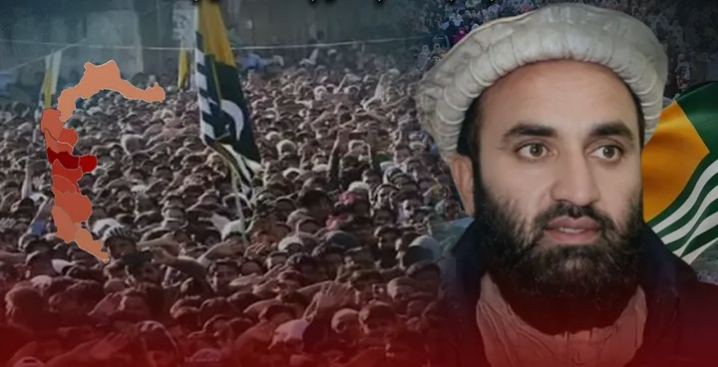
MUZAFFARABAD, November 10, 2026 — Sardar Umar Nazir Kashmiri, a prominent leader of the Jammu Kashmir Joint Awami Action Committee (JKJAAC), has called on people to stop using the term ‘Azad Kashmir’ and instead refer to the region as ‘Pakistani-Occupied Kashmir’, marking a significant development in the political rhetoric surrounding the ongoing rights movement.
In a statement circulated on social media on Tuesday, Kashmiri said that the expression ‘Azad Kashmir’ should no longer be used in written or spoken communication.
“From today onwards, Azad Kashmir should neither be written nor referred to by that name. Everywhere, it should be written and called Pakistani-Occupied Kashmir,” he said.
The statement was shared by the social media account JAAC Updates AJK and subsequently circulated by other accounts associated with Kashmir-related political discussions.
The remarks represent a notable departure from the terminology traditionally used by successive political and administrative institutions in the region, where the official designation has been Azad Jammu and Kashmir.



A Shift in Political Narrative
Kashmiri’s statement comes against the backdrop of growing political tensions between the population, the regional administration and Pakistan’s state institutions.
The Jammu Kashmir Joint Awami Action Committee has been at the forefront of a prolonged public rights movement, with its demands encompassing economic relief, governance reforms, access to public services and greater political accountability.
The movement has also witnessed increasing debate over political representation, the region’s constitutional status and the relationship between the people of Jammu and Kashmir and Pakistan’s federal institutions.

By rejecting the term ‘Azad Kashmir’, Kashmiri appears to be challenging the political language traditionally used to describe the territory’s administrative and constitutional arrangement.
The alternative terminology he has proposed reflects his political position that the existing description does not adequately represent the region’s political reality.
Previous Criticism of Pakistan’s Role
The latest statement follows Kashmiri’s recent public remarks questioning Pakistan’s traditional claim of acting as the international advocate and political representative of the Kashmiri people.
Addressing a gathering in Rawalakot on November 9, he argued that Kashmiris should develop the capacity to represent their own political interests rather than depend on external actors.
“There is no one who will be our advocate. We must become our own advocates. We have no big brother,” he said, according to remarks reported from his address.
His comments questioned the established political narrative surrounding Pakistan’s role in the Kashmir dispute and emphasised the need for an independent Kashmiri political voice.
The latest terminology demand appears within the same broader political debate over identity, representation and the region’s future.
Background: The Joint Awami Action Committee Movement
The Jammu Kashmir Joint Awami Action Committee has emerged as a significant platform for public mobilisation over economic and political grievances in the region.
Its campaign has included demonstrations, shutter-down strikes, sit-ins and demands for structural reforms.
The movement’s demands have included affordable electricity, fair wheat prices, reductions in privileges enjoyed by the political and administrative elite, and improvements in healthcare, education and public services.
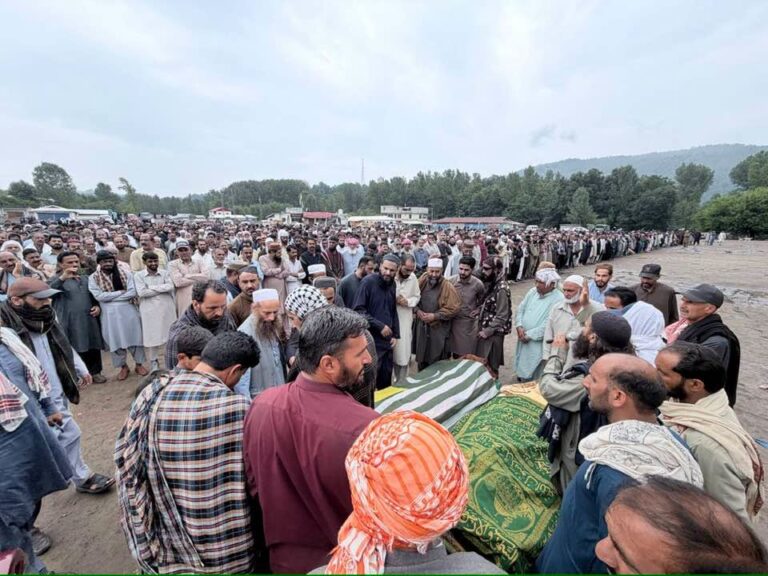
However, the movement has also entered a particularly difficult phase following deadly confrontations and security operations in Rawalakot in November.
The committee and its representatives have raised allegations concerning the use of force against demonstrators, civilian casualties and restrictions on civil liberties. These allegations have been disputed in accounts of the security operations, highlighting the need for independent investigations and access for journalists.
The developments have attracted attention beyond the region, particularly among overseas Kashmiris and organisations monitoring human rights and political developments.
A Contested Question of Identity and Political Status
The terminology used to describe the territory has long reflected competing political and constitutional positions.
Pakistan officially refers to the territory as Azad Jammu and Kashmir, while India generally uses the expression Pakistan-occupied Kashmir. International media organisations, including Reuters, frequently use the descriptive term Pakistan-administered Kashmir.
These different expressions are not merely geographical descriptions; they also reflect competing political narratives surrounding the wider Jammu and Kashmir dispute.
Kashmiri’s latest statement therefore raises questions about whether the terminology traditionally used within the region will increasingly be challenged by political activists and representatives of the ongoing rights movement.
His call also places the question of political identity more prominently within the movement’s public discourse.
International Attention and the Road Ahead
The latest remarks come at a time when developments in Pakistani-administered Jammu and Kashmir are receiving renewed international attention.
Recent unrest, allegations of excessive force, communication restrictions and disagreements between the authorities and movement representatives have raised concerns about the protection of fundamental rights and the need for credible accountability mechanisms.
The United Nations and international human rights organisations have also been monitoring developments relating to the rights situation in the region.
Whether Kashmiri’s proposed terminology will be adopted more widely by the Joint Awami Action Committee, other political groups and the wider population remains to be seen.
For now, his statement signals another important dimension of the ongoing political debate: beyond economic demands and administrative reforms, questions of identity, representation and the language used to describe the territory are increasingly becoming part of the public movement.
The Azadi Times will continue to monitor developments surrounding the Joint Awami Action Committee, the political situation in Jammu and Kashmir and the evolving demands of the region’s population.