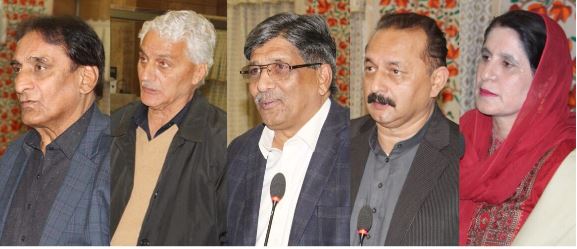
The Advisory Council of the Jammu Kashmir Joint Awami Action Committee (JKJAAC) has welcomed an Azad Jammu and Kashmir Legislative Assembly resolution recognising the need for political dialogue, while urging the government to form a fully empowered negotiating committee within 48 hours and hold the first formal meeting in Rawalakot within five days.
In a statement, the council said the first meeting should take place in Rawalakot or another location in Azad Jammu and Kashmir mutually agreed by both sides. It described JKJAAC as a united and peaceful civic-rights movement and said the committee was ready for meaningful, empowered and result-oriented negotiations.
The council said talks should not be made conditional on a collective admission of guilt, unproven allegations, the prior ending of the sit-in or unconditional compliance by either side. It called for the unilateral conditions included in the assembly resolution to be converted into reciprocal, simultaneous and independently verifiable confidence-building measures.

Calls for steps to create a safe negotiating environment
The statement said JKJAAC was prepared to cooperate in maintaining peaceful order, facilitating humanitarian corridors and voluntary movement, supporting the role of unarmed volunteers and promoting responsible communication. It called for arrangements that would facilitate movement across the towns, cities and villages of Azad Jammu and Kashmir.
The council urged the government to cancel what it described as a repressive security operation against people participating in the peaceful sit-in, withdraw security forces, restore internal routes and communications, stop arrests and retaliatory measures, and give an assurance that force would not be used during negotiations.
It said responsibility for deaths, injuries, arrests, alleged enforced disappearances and alleged offences should be determined through independent investigations and competent courts, rather than through collective accusations.


Five issues proposed for the talks
The council said the central agenda for negotiations should be the committee’s five core demands:
- Protection of human life and de-escalation of tensions.
- A safe and credible environment for negotiations.
- Redress and rehabilitation for people affected by loss of life and property, investigations into the incidents, and the establishment of a National Reconciliation Commission to support lasting solidarity.
- Implementation of previous agreements and government commitments, including those made in October 2025.
- Empowered negotiations, joint monitoring and independent verification.
Appeal for a joint national effort
The Advisory Council appealed to all members of the AJK Legislative Assembly, the government and opposition, JKJAAC, the six-member committee of Poonch elders led by Sardar Masood Khan, political leaders, former judges, civil society representatives, lawyers, journalists, academics and experienced retired civil, military and police officers from Azad Jammu and Kashmir to contribute to a workable negotiating framework and a dignified settlement.
It said the process should not be treated as a contest over which side wins or loses the narrative. The stated objective, it added, should be to prevent further loss of life, restore civilian life and public trust, and reach a fair, written and enforceable agreement.
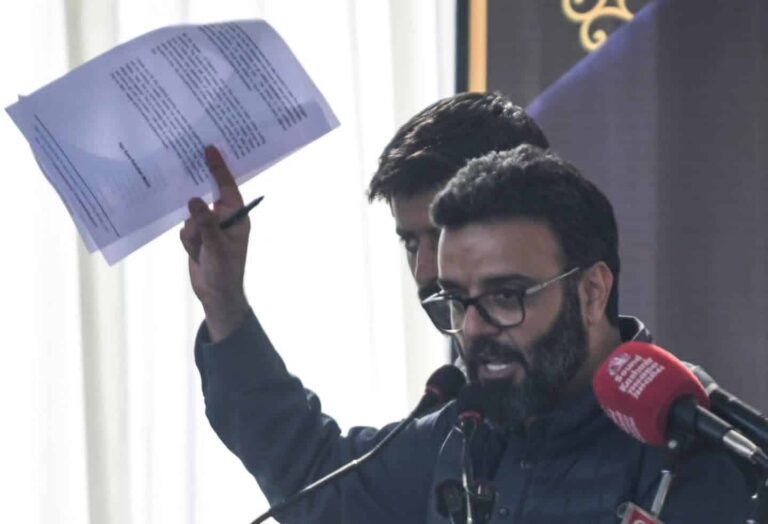

The council also reiterated the position set out in its statement of 24 November 2026: peaceful protest and a security operation are not equivalent actions; an entire civic-rights movement should not be held collectively criminally responsible; and credible negotiations require equality, protection, good faith, written assurances and independent verification.
“Ready for talks, not to abandon peaceful rights advocacy”
In its concluding message, the council said it was ready for negotiations but not to abandon the peaceful public-rights movement, and ready for independent investigations but not for collective admissions of guilt. It said peace must be based on justice, equality and verifiable implementation.
“Forces should withdraw, civilian institutions should fulfil their constitutional responsibilities, and the people’s voices should be heard,” the statement said, calling for empowered and result-oriented talks to begin before another life is lost.
Issued by: Advisory Council, Jammu Kashmir Joint Awami Action Committee.