
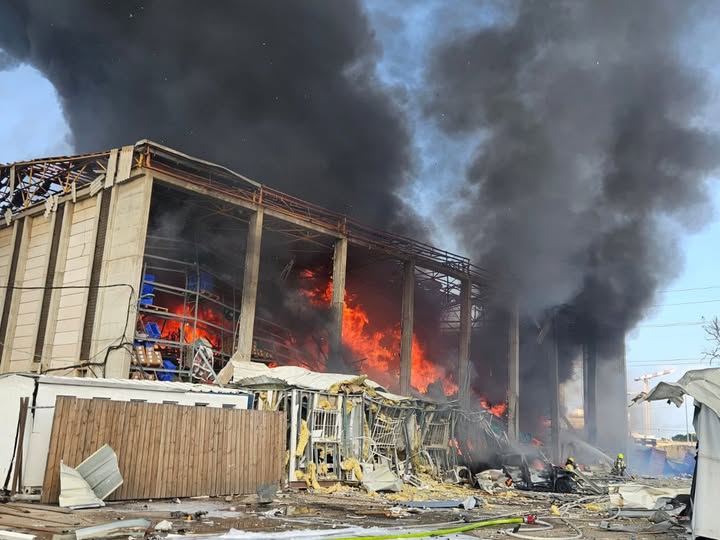

Tel Aviv, June 2025 — In a significant escalation, Iranian missile strikes have reportedly hit multiple strategic locations across the occupied Palestinian territories, including key Israeli military intelligence centers. Among the targets was the Aman logistics center—part of the Israeli military’s intelligence infrastructure located in Glilot—which remains ablaze, according to circulating video footage.
Direct Hit on Israeli Intelligence Installations
CNN confirmes that the MOSSAD HQ has been HIT by Iranian missiles 💥🇮🇱 pic.twitter.com/HhlFVUVjkE
— Dr. Anastasia Maria Loupis (@DrLoupis__) June 17, 2025
The Iranian missile barrage, which comes amid heightened regional tensions, appears to have targeted highly sensitive Israeli security sites. Footage aired briefly on Hebrew-language media—before being taken down—shows fires engulfing what has now been confirmed as the Aman logistics hub. The facility is considered a backbone of the Israeli Defense Forces (IDF) intelligence operations.



Initial statements from the Israeli military attempted to downplay the attack, suggesting the missiles only caused damage to a nearby bus parking area. However, emerging reports strongly dispute that claim.
Mossad Headquarters and Unit 8200 Also Targeted
In addition to the Glilot strike, missiles reportedly reached Herzliya, home to the headquarters of Mossad—Israel’s foreign intelligence agency. While official confirmation remains limited, sources close to the matter indicate that the Mossad facility sustained significant structural damage.
Read Also: Israeli Largest Oil Refinery Crippled in Iranian Strike; Three Dead in Haifa Attack


Even more concerning for Israeli intelligence operations are reports suggesting the destruction of backup installations associated with Unit 8200, Israel’s elite cyber intelligence and surveillance unit. Known for its role in electronic warfare, cyber intelligence, and high-level intercepts, Unit 8200 is considered a critical pillar of Israel’s national security architecture.
Media Censorship and Information Control
Visual evidence and reports briefly published in Hebrew media, showing flames and destruction at the Glilot base, were rapidly scrubbed from public platforms. Analysts suggest this is part of a broader media blackout imposed by Israeli authorities to maintain public calm and prevent revealing vulnerabilities in the country’s intelligence infrastructure.
Strategic Implications of the Attack
Military experts view the attack as a game-changing moment in the shadow conflict between Iran and Israel. Unlike previous proxy engagements and indirect strikes, this appears to be a direct and high-precision strike targeting the heart of Israel’s security command.
“This is not just a missile hitting a random facility. These are calculated strikes on the nerve centers of Israeli intelligence,” said a senior Middle East analyst. “If the reports about Unit 8200 facilities are accurate, this could temporarily paralyze portions of Israel’s cyber and signals intelligence capabilities.”
Rising Tensions and International Fallout
The missile attack follows a series of escalatory events in the region, including Israeli airstrikes in Syria and ongoing operations in Gaza. Analysts believe Iran’s decision to directly hit Israeli military targets marks a shift in strategy—from covert, deniable actions to overt military confrontation.
While Israel has not yet issued an official response, international observers warn of potential retaliation that could trigger broader conflict across the region. Security alerts have already been raised in neighboring countries, and diplomatic channels are reportedly active behind the scenes.
As smoke still rises from damaged intelligence compounds, the full extent of the Iranian missile strikes remains unclear. However, one thing is certain: Israel’s most sensitive security institutions have come under direct fire, and the geopolitical ramifications could be far-reaching.