

A year ago, a Jammu Kashmir Joint Awami Action Committee (JKAAC) public movement that originated from Pakistan-administered Kashmir’s cities Kotli, Mirpur, and Rawalakot has now ended, yet its momentum continues unabated.
The evidence of this is in the last speech by Shoukat Nawaz Mir, a senior member of the Jammu Kashmir Joint Awami Action Committee, where he declared that their next step is the recognition of statehood, a message both for the populace and the authorities.
The Joint Awami Action Committee traces its roots back to Independent Jammu and Kashmir, where it emerged as the first national movement in Pakistani-administered Kashmir, championing the cause of the people from all over the region.
Initially fueled by nationalist sentiments, with contributions from organizations like Jammu Kashmir Liberation Front (JKLF), traders union, and Jammu Kashmir National Student Federation (JKNSF), it gradually evolved into a national movement, encompassing diverse ideologies.
Notably, it became a platform where Kashmiris rallied under the singular banner of Kashmir’s flag, distinct from any Pakistani flag, a sight unseen since the 1947 division of Kashmir.

The pinnacle of the Jammu Kashmir Joint Awami Action Committee’s efforts came with their long march, a culmination of a year-long protest against injustices, particularly focusing on electricity production costs and subsidized flour prices in the region.
Despite government attempts to thwart the march, including road closures and seeking assistance from Pakistani forces, the public movement persevered, reaching Muzaffarabad on May 11. However, the peaceful protest turned tragic when on May 13, authorities resorted to open fire, resulting in three deaths and 180 injuries.
Leadership Of Jammu Kashmir Joint Awami Action Committee long march
The leadership during this long march was diverse, with Dr. Toqeer Gilani leading the caravans from Kotli and Mirpur, Qari Naseer from Rawalakot, and Shoukat Nawaz Mir at the forefront in Muzaffarabad.
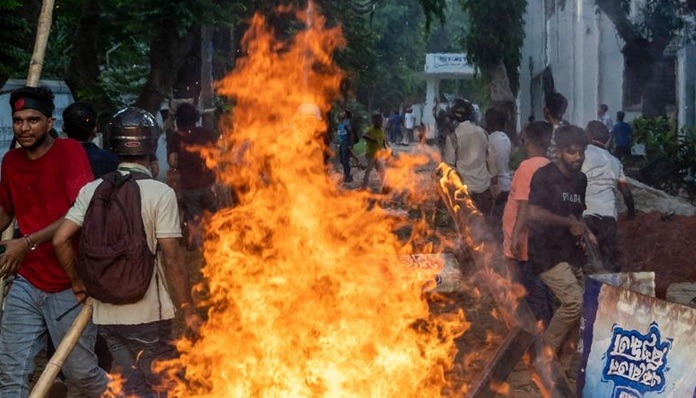

The actions of protestors during the march, such as removing Pakistani flags and signs indicating Kashmir’s affiliation with Pakistan, gained traction on social media, resonating with many who supported their cause.
Following the fulfillment of the demands by the Awami Action Committee, including concessions on electricity costs and flour prices, a black day was observed on May 14 across Pakistan-controlled Kashmir, commemorating the sacrifices made during the protest.
As the public movement transitions into its next phase, as articulated by senior members, the focus shifts towards achieving statehood recognition.
This marks a significant development in the ongoing struggle for the rights and autonomy of the people of Azad Kashmir.