Friday, March 27, 2026
21.6 C
Srinagar
Home Blog Page 43

AJK BISE Mirpur: Your Comprehensive Guide to Exam Results, Roll Slips & Key Dates

Mirpur, AJK, July 2025 — In a bid to streamline academic procedures for over 200,000 students across Azad Jammu & Kashmir (AJK) and adjoining districts, the Azad Jammu & Kashmir Board of Intermediate and Secondary Education, Mirpur (AJK BISE Mirpur) has launched its 2025 exam cycle with robust digital initiatives and comprehensive guidelines. With its fully computerized system and a wide array of online services, the Board is setting the tone for transparent and efficient educational administration in the region.

Since its inception in 1973, AJK BISE Mirpur has become the academic backbone for students enrolling in Matric (SSC), Intermediate (HSSC), and Supplementary examinations. The Board, whose headquarters are located at Sector F-3, Part-I, Kotli Road, New Mirpur City, continues to foster academic excellence through standardized syllabus design, regulated exam scheduling, and speedy result declaration. Its official portals (ajkbise.net and ajkbise.edu.pk) provide a one-stop solution for registration, exam management, and result publication.

What is AJK BISE Mirpur and Why It Matters

AJK BISE Mirpur plays a pivotal role in shaping educational outcomes in AJK and neighboring regions. The Board’s responsibilities range from registering students and schools to designing syllabuses in alignment with federal standards and preparing rigorous exam question papers. Moreover, the Board publishes results and manages the issuance of certificates, migration letters, and various duplicate documents, thereby controlling the academic destiny of an entire area.

“Every result announcement from AJK BISE Mirpur is a critical milestone for our students and their families,” said a Board official in a statement released on its official website. “We strive to ensure maximum transparency and accuracy through our computerized systems to prevent any discrepancies.”

Key Dates for the 2025 Examination Cycle

The Board has already released a detailed exam schedule for the 2025 academic session. Here are some highlights:

  • SSC Part-II (10th): Exams begin on 5 March 2025, with theory papers ending on 18 May 2025, and results expected on 13 July 2025.
  • SSC Part-I (9th): Exams start on 6 March 2025, wrapping up by 19 May 2025, with results anticipated in early August 2025.
  • HSSC Part-II (12th): Exams begin on 12 April 2025 and conclude on 25 May 2025, with results declared in late July 2025.
  • HSSC Part-I (11th): Exams commence on 13 April 2025 and conclude on 26 May 2025, with results to be announced in early August 2025.
  • Supplementary Exams: Held during September-October 2025, with results expected in November 2025.

Students are advised to cross-check the date sheet publication—typically released 30 to 45 days in advance of theory exams—to avoid last-minute scheduling conflicts.

How to Check Results and Download Roll Number Slips

With technology at the forefront of the Board’s operations, students can now access their exam results and roll number slips online. The following methods are available:

Checking Results Online

  1. Official Website Method:
    • Navigate to ajkbise.net and select the “Results” tab.
    • Choose the appropriate exam category (SSC or HSSC) and select the relevant part (I/II).
    • Input your 6-digit Roll Number and click “Search” to view and download your result card.

    For example, a student entered Roll No 181556 and instantly received detailed marks and status information, such as “PASS 537/600 D Grade – Govt. High School, Chakothi.”

  2. Name Search Option:
    • Visit the results mirror site at Hamariweb Results to search by name if the Roll Number is unavailable.
    • Enter the full name as recorded along with the father’s name to retrieve results.

    Note that the name search functionality becomes active a few hours after the official result declaration.

  3. SMS Service:
    • Send an SMS in the format “AJKBise RollNumber” (e.g., “AJKBise 181556”) to 5050 to get instant result details via text.

Downloading Roll Number Slips

Roll number slips, or admit cards, are issued 10–15 days before the theory examinations begin. Separate procedures exist for regular school candidates and private candidates:

  • For Regular Students:
    Schools log into the Institute Panel on ajkbise.net to print and stamp roll number slips before distributing them.
  • For Private Candidates:
    Candidates must visit the Downloads section on the official website, enter their Form Number or CNIC, and select the exam type to download the PDF version of their roll number slip.

A tutorial video on Facebook provides step-by-step guidance, ensuring that students verify critical details such as their photograph, subject roster, and exam center information to avoid last-minute issues.

Understanding Date Sheets and Exam Instructions

The date sheet is an essential document that serves as the roadmap for exam timings and paper sequence. Students can download the PDF from the “Date Sheets” tab on the Board’s homepage. Important abbreviations such as “Phy-II” for Physics Part-II or “CSc-I” for Computer Science Part-I are commonly used and explained in detail in the document.

The Board’s instructions also highlight procedural notes such as calculator rules, COVID-19 SOPs (if applicable), and policy on late arrivals. This rigor ensures that the exams are conducted fairly and in a standardized manner.

Section-Wise Overview: SSC, HSSC & Supplementary Exams

SSC (Matric) Exams

For students in the 9th and 10th classes, the Board conducts comprehensive evaluations across a wide range of subjects:

  • Subjects Include: English, Urdu, Islamiyat, Mathematics, and Pakistan Studies among others.
  • Statistical Highlights: In 2024, the passing percentage was 74.27%, with 52,681 students successfully clearing the exams. Notably, the topper scored an impressive 1184/1200.

HSSC (Intermediate) Exams

Intermediate examinations, conducted for the 11th and 12th classes, offer various academic streams including Pre-Medical, Pre-Engineering, ICS, Commerce, and Humanities. Recent adjustments include the reversion of the Math paper to the old federal syllabus, as confirmed in a press release dated 21 May 2025. Students transferring from FBISE are advised to secure their Equivalence Certificates early to ensure university admissions proceed smoothly.

Supplementary Examinations

Supplementary exams allow students who have failed in up to two subjects to reappear and improve their scores. The online application process is straightforward, with fees of Rs. 650 per subject, and the results are typically announced by mid-November.

Challenges and Ongoing Reforms

Despite its modernized framework, AJK BISE Mirpur is not without challenges. As is often the case with large-scale educational administrations, issues such as data entry errors, occasional delays in result processing, and misprints on roll number slips have surfaced from time to time. Additionally, the integration of a fully computerized system across a geographically dispersed region presents logistical and technical hurdles.

In response, the Board has instituted several remedial measures. Online correction forms have been introduced to rectify discrepancies such as misspelled names on admit cards, and technical support channels have been fortified to assist students and educators in navigating the digital systems. Regular audits and feedback mechanisms are also being employed to continuously improve the process.

Furthermore, the Board faces the twin challenges of maintaining high standards in exam scheduling and adapting to unforeseen disruptions, such as sudden changes in governmental policies or public health emergencies. These issues are compounded by the inherent difficulties in coordinating between multiple districts, each with its unique administrative challenges.

“Managing an institution of this scale in a region like AJK comes with its set of challenges,” commented an administrative officer at the Board. “However, our focus remains on continuous improvement and ensuring that every student’s academic journey is as smooth as possible.”

Broader Implications for the Region

The efficient functioning of AJK BISE Mirpur has broader implications beyond individual academic results. As the primary educational authority in the region, the board plays a key role in setting academic standards and influencing future educational policies. Its ability to operate transparently and effectively has a ripple effect on societal development, impacting higher education institutions, employment rates, and even local economies.

Education in Azad Jammu & Kashmir has often been viewed as both a challenge and an opportunity. In a region marked by political complexities and limited resources, institutions like AJK BISE Mirpur are instrumental in cultivating a skilled workforce that can drive regional development. In this context, reforms initiated by the board — particularly those that enhance digital access and transparency — are seen as essential steps toward bridging the educational divide.

Official Channels and Contact Information

Students, parents, and educators are encouraged to refer to the official channels for the most current updates:

Future Prospects for AJK BISE Mirpur

Looking forward, AJK BISE Mirpur is poised to further enhance its digital capabilities and streamline administrative processes. By investing in new technologies and refining its operational strategies, the Board aims to reduce delays, minimize errors, and provide an even more user-friendly experience for students across the region. Continuous updates and proactive communication remain pivotal in ensuring that the academic community is always well-informed.

In today’s fast-paced digital world, the AJK BISE Mirpur Board is not just an educational authority—it is a lifeline for students aspiring to secure their academic futures. As the 2025 examination cycle unfolds, the Board’s commitment to transparency, efficiency, and progress positions it as a respected institution in the region’s education landscape.
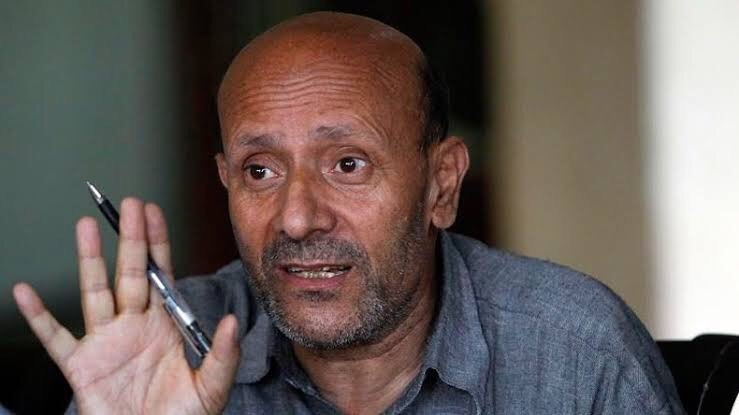
Jailed MP Engineer Rashid to Table Resolution in Parliament Seeking Full Statehood for Jammu & Kashmir

Kupwara, Indian administered Jammu & Kashmir — The Awami Ittehad Party (AIP) has announced that its president, Engineer Rashid, currently incarcerated, plans to move a resolution in the upcoming session of India’s Parliament on Monday, demanding the restoration of full statehood for Jammu & Kashmir.

In a statement issued on Saturday, AIP chief spokesperson Inam-ul-Nabi said, “Despite being unjustly imprisoned, Engineer Rashid has not allowed the chains of incarceration to silence the voice of his people. He will continue to utilize every democratic platform available to uphold the aspirations and sentiments of the people of Jammu & Kashmir.”

The spokesperson added that the demand for statehood is not a concession but a constitutional right that was “unilaterally taken away” in 2019, referring to the revocation of Article 370 and the downgrading of Jammu & Kashmir from a state to a Union Territory.

“It is time for Parliament to correct this historical wrong,” Inam said. “Engineer Rashid’s resolution reflects the people’s yearning for dignity, democratic rights, and self-respect.”

The party emphasized that Rashid’s presence in Parliament is not merely symbolic, but rather an extension of his decades-long struggle for justice and meaningful representation.

Inam further noted, “His decision to move this resolution even from behind bars demonstrates that neither prison walls nor injustice can suppress the democratic spirit he embodies.”

The AIP also urged all political parties — particularly those claiming to represent Jammu & Kashmir — to support the resolution and stand for the restoration of constitutional guarantees and democratic institutions in the region.

Engineer Rashid, who was elected as Member of Parliament from the Baramulla constituency in the 2024 general elections, remains in jail facing charges under the Unlawful Activities (Prevention) Act.

The resolution is expected to draw attention to the ongoing debate over political rights and autonomy in the disputed region, which continues to witness tensions amid competing state narratives from India and Pakistan.

This is a developing story. Updates will follow as more information becomes available.

Gilgit-Baltistan Protests: Authorities Crack Down on Baba Jan

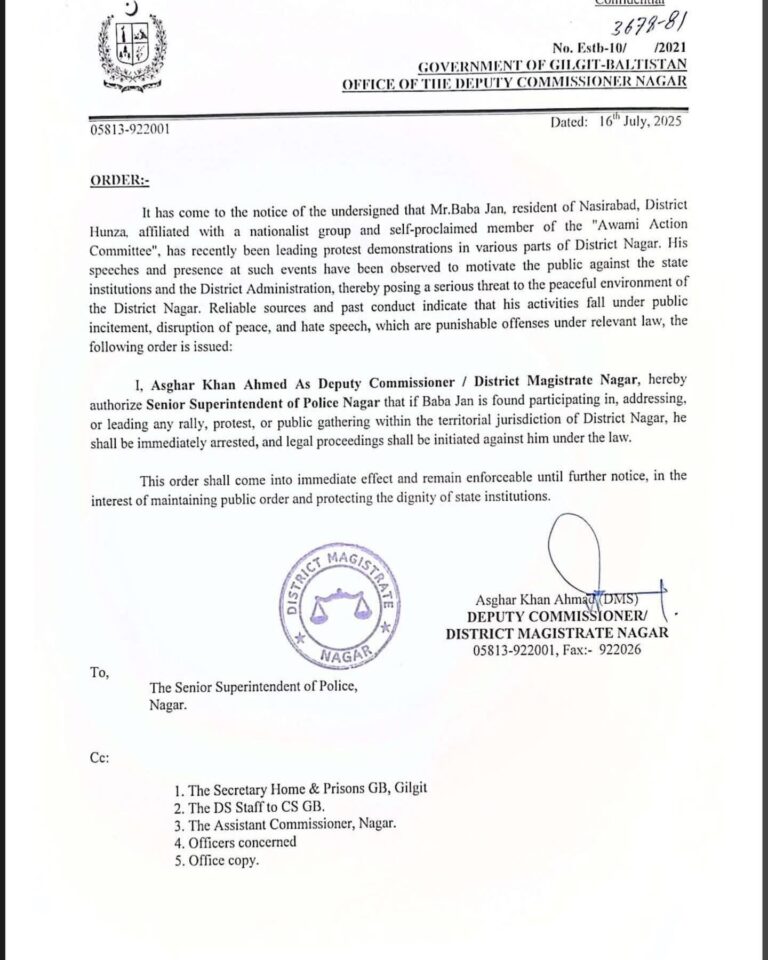
Gilgit, (GB) Pakistan administered Kashmir: In a concerning development, the Deputy Commissioner of Nagar district in Gilgit-Baltistan has issued a notification authorizing the arrest of prominent leader Baba Jan during public gatherings or rallies. This move has sparked widespread debate on social media, with many labeling it a human rights violation.

Baba Jan, known for his advocacy for the rights of the people of Gilgit-Baltistan, has been actively involved in protests demanding the release of Awami Action Committee Gilgit Baltistan members. The recent notification by the district administration warns that Baba Jan will be arrested if he participates in or addresses any public gathering or rally.

Background of the Protests

The people of Gilgit-Baltistan have been protesting against the government’s decision to increase the subsidized wheat price, a move that has exacerbated the region’s economic woes. The Awami Action Committee, a coalition of political and civil society groups, has spearheaded the protests, which have entered their fourth week. Demonstrators are demanding the restoration of the wheat subsidy, suspension of the Finance Act of 2022, and revocation of various taxes, among other grievances ¹.

Human Rights Concerns

The crackdown on Baba Jan has raised concerns about the government’s commitment to protecting human rights in Gilgit-Baltistan. The region has a history of human rights abuses, and the authorities’ actions have been criticized for being heavy-handed. The debate on social media reflects the growing unease among the public about the government’s approach to handling dissent ².

Demands of the Protesters

The protesters in Gilgit-Baltistan are demanding:

  • Restoration of Wheat Subsidy: The government had previously provided subsidized wheat to the region, which has been discontinued, leading to widespread discontent.
  • Release of detained leaders of Awami Action Committee Gilgit Baltistan.
  • Suspension of Finance Act: The protesters are demanding the suspension of the Finance Act of 2022, which they believe will further exacerbate the economic situation in the region.
  • Revocation of Taxes: The protesters are also demanding the revocation of various taxes imposed on the region, which they believe are unfair and burdensome.
  • Land Ownership Rights: The protesters are demanding that land ownership rights be given to the locals, as the current system allows outsiders to own land in the region.

The situation in Gilgit-Baltistan remains tense, with the protesters determined to achieve their demands. The government’s response to the protests will be crucial in determining the future of the region.

US Declares TRF a Terrorist Organization After Deadly Kashmir Attack

WASHINGTON — The United States has designated The Resistance Front (TRF), considered an offshoot of the banned Pakistani militant group Lashkar-e-Taiba, as a foreign terrorist organization over the deadly April attack in Indian-administered Kashmir that killed 26 people.

US Secretary of State Marco Rubio announced the designation on Thursday, saying it was part of Washington’s commitment to ensuring justice for the victims of the Pahalgam attack, which targeted tourists in the Baisaran area of south Kashmir’s Anantnag district on April 22.

The TRF — also known as Kashmir Resistance — initially claimed responsibility for the attack before later denying its involvement. India has blamed Pakistan for backing such groups, a charge Islamabad has denied, calling for an independent investigation.

Affirmation of US-India cooperation

India welcomed Washington’s move, with Foreign Minister Subrahmanyam Jaishankar calling it a “strong affirmation of India-US counter-terrorism cooperation” in a post on X (formerly Twitter).

The US designation also lists TRF as a “specially designated global terrorist,” noting that it emerged in 2019 and acts as a front and proxy for Lashkar-e-Taiba — the same group blamed for the 2008 Mumbai attacks that killed more than 170 people.

Pakistan’s response

Pakistan’s foreign ministry said on Friday it “condemns terrorism in all its forms and manifestations” and dismissed any link between TRF and the now-defunct Lashkar-e-Taiba, which it claims to have dismantled.

“Pakistan has dismantled concerned outfits, arrested and prosecuted their leadership, and deradicalized their cadres,” the ministry said.

Escalation and ceasefire

The April attack triggered heavy hostilities between nuclear-armed India and Pakistan, which saw airstrikes, artillery exchanges, and drone attacks across the Line of Control. The fighting claimed dozens of lives on both sides before a ceasefire was reached on May 10.

The truce was first announced by former US President Donald Trump on social media after Washington mediated between New Delhi and Islamabad. However, India later asserted the ceasefire resulted from direct engagement between the two governments without outside involvement.

Regional context

India and Pakistan both claim the Himalayan region of Kashmir in full but administer separate parts of it. The two countries have fought several wars over the disputed territory since their independence in 1947.

South Asia analyst Michael Kugelman wrote in Foreign Policy that the US decision signals Washington’s alignment with India’s view of the attack and could strengthen bilateral ties:

“Washington is flagging its concern about the terrorist attack that provoked the recent India-Pakistan conflict, and siding with New Delhi’s view that the group is linked to Lashkar-e-Taiba,” he said.

The Resistance Front’s designation is likely to increase pressure on Pakistan at a time when Washington views India as a key partner in its strategy to counter China’s influence in the Indo-Pacific region.

Torrential rains raise flood concerns in Kotli, authorities issue warnings and set up control room

0

Kotli, (AJK) Pakistan administered Kashmir — Authorities in Kotli have issued warnings and stepped up preparedness as monsoon rains increase the risk of flooding and river surges along the Poonch River and nearby areas.

Under the supervision of the Assistant Director of Civil Defence Kotli, a unit-level awareness and warning campaign has been launched to inform residents of potential hazards and necessary precautions.

Civil Defence volunteers are visiting homes, neighbourhoods, and community spaces to advise people on safety measures, while announcements are also being made through mosques to ensure the message reaches everyone effectively and promptly.

Residents have been urged to strictly follow administrative instructions and to avoid unnecessary movement near the river.

In case of any emergency, the public has been advised to immediately contact the fusion control room, Rescue 1122, or the nearest Civil Defence unit.

The District Administration and District Disaster Management Authority (DDMA) of Kotli stated that they remain active and committed to safeguarding lives and property amid the ongoing monsoon season.

India approves survey for new Jammu–Vaishno Devi railway line, as broader Kashmir connectivity plans face questions

Srinagar, Indian administered Kashmir — India’s Ministry of Railways has approved a final location survey (FLS) for a proposed railway line between Jammu and the pilgrimage town of Vaishno Devi (Katra), marking another step in its effort to expand transportation infrastructure in Jammu & Kashmir.

The survey will cover a distance of approximately 77.96 kilometres, with an estimated cost of 125.9 million rupees (about $1.5 million). According to officials, the Northern Railway zone will oversee the survey, which is intended to pave the way for future construction.

Authorities describe the proposed rail link as part of a broader plan to improve mobility in the region, which remains physically and politically fragmented. Alongside the Jammu–Katra line, five other surveys are currently underway in the Kashmir Valley:

  • Baramulla to Uri (46 km)

  • Sopore to Kupwara (37 km)

  • Anantnag to Pahalgam (78 km)

  • Awantipora to Shopian (28 km)

  • A proposed double track between Banihal and Baramulla (118 km)

While these projects are presented as steps toward better regional connectivity, several other ambitious railway plans in Jammu & Kashmir have been shelved over the years due to high costs and low projected ridership.
One such project, the Srinagar–Kargil–Leh line — which would have stretched 480 km across the Himalayas at an estimated cost of 558.96 billion rupees (roughly $6.7 billion) — was dropped after surveys in 2016–17 indicated insufficient demand. Similarly, the proposed Jammu–Poonch line via Akhnoor and Rajouri (223 km) was halted despite a completed survey and an estimated cost of 227.71 billion rupees (about $2.7 billion).

The approval of the Jammu–Katra survey comes just weeks after India inaugurated its largest rail project in the region, the Udhampur–Srinagar–Baramulla Rail Link (USBRL), which took nearly three decades to complete. That 272-km line features 36 major tunnels spanning about 120 km, eight escape tunnels, and 943 bridges crossing rivers, valleys, and rugged mountains.

Independent observers note that while improved transport links can facilitate economic activity and personal mobility, they also raise questions about who benefits from these investments and how they fit into the region’s unresolved political context.

Kashmir Power Struggle Reignited: Former Top Judge Calls Refugee Seats in AJK “Illegal”

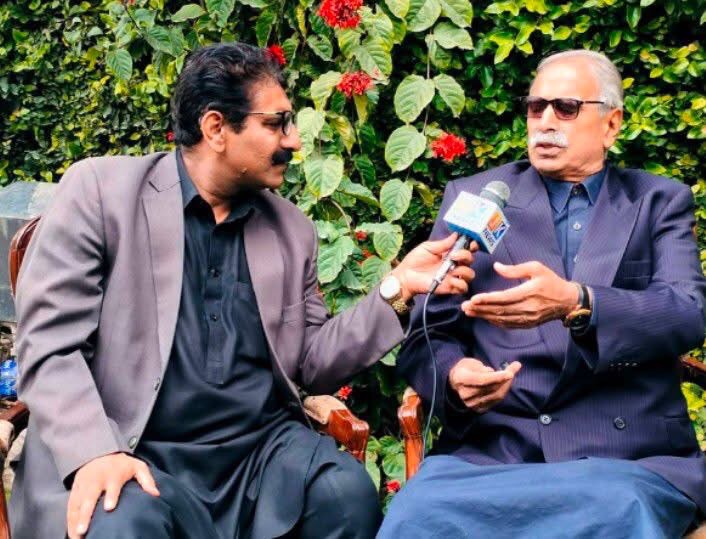
The Azadi Times | Location: Muzaffarabad, (AJK) Pakistan administered Kashmir: A day after stepping down from a 15-year career on the bench, former Chief Justice of Azad Jammu & Kashmir (AJK) Supreme Court Justice Muhammad Azam Khan has delivered an unusually blunt indictment of Pakistan-administered Kashmir’s electoral architecture, describing 12 legislative seats reserved for Kashmiri refugees living in Pakistan as “100 per cent illegal” and demanding their immediate abolition.

Speaking exclusively to Daily Jammu & Kashmir in Mirpur on Wednesday, Justice Khan said the seats were “engineered from Islamabad to dilute the vote of the 4.5 million people who actually live in AJK” and warned that they “violate the spirit, if not the letter, of the UN resolutions on Kashmir”.

The judge’s remarks quickly gained traction online, with critics highlighting his silence during his 15-year tenure. The hashtag #TooLateJudge began trending across Pakistan-administered Kashmir, as social media users questioned why such truths only emerge post-retirement.

“Another classic case of speaking truth to power only after leaving power,” wrote a prominent diaspora account with hundreds of thousands of followers.

What Are AJK Refugee Seats?

Under the AJK Interim Constitution — drafted in 1974 and revised several times — 12 of the 53 seats in the Legislative Assembly are reserved for refugees who fled Indian-administered Jammu & Kashmir between 1947 and 1989 and are now settled across Pakistan. Critics say the arrangement allows federal authorities to influence AJK politics because these “refugee representatives” are elected by an electorate that resides outside the territory.

This statement arrives at a critical time for the region:

General elections are weeks away in AJK, and the Jammu Kashmir Joint Awami Action Committee (JKJAAC), known for mobilizing mass protests over electricity tariffs and basic rights, is preparing for territory-wide protests.

A 2024 poll by a policy think-tank revealed that:

  • Only 11% of AJK residents believe refugee seats promote Kashmiri unity.
  • 64% see them as tools of electoral manipulation.

Silence in Service, Truth in Retirement

The ex-chief justice, known for uncontroversial rulings on administrative matters, never dissented on the refugee seat issue during his judicial career. When asked why he spoke up now, he said:

“While in office, institutional discipline binds you. Now, I speak as a citizen with a conscience.”

Legal experts note this trend is common across South Asia, where retired judges and generals often reveal inconvenient truths only after leaving office.

In the UK, the Kashmiri Youth Forum hosted a town-hall titled “Why Do Leaders Speak After Retirement?”, attracting over 1,000 participants. Analysts described this as part of a wider civil-military imbalance in Pakistan.

“When institutions are captured, silence is the price of survival,” noted one political scientist during the panel.

Pakistan’s Ministry of Kashmir Affairs refused to comment, citing ongoing petitions in the Islamabad High Court challenging the AJK constitutional structure. The Prime Minister’s office has not responded to media queries.

For many residents of AJK, the judge’s statement—though delayed—is seen as a long-awaited validation.

“We’ve been saying this for years,” said a schoolteacher from Hattian Bala. “At least now the world is listening.”

Assembly Seat Breakdown (AJK Legislative Assembly)

  • Territorial (General) Seats: 41
  • Refugee Seats (Non-Resident): 12
  • Reserved (Women & Technocrats): 10

Sources: AJK Election Commission, UN Human Rights Office, Public Opinion Poll (2023)

Unity or Oblivion: Veteran Leader Invites All Pro-Independence Parties to Historic APC in Kotli

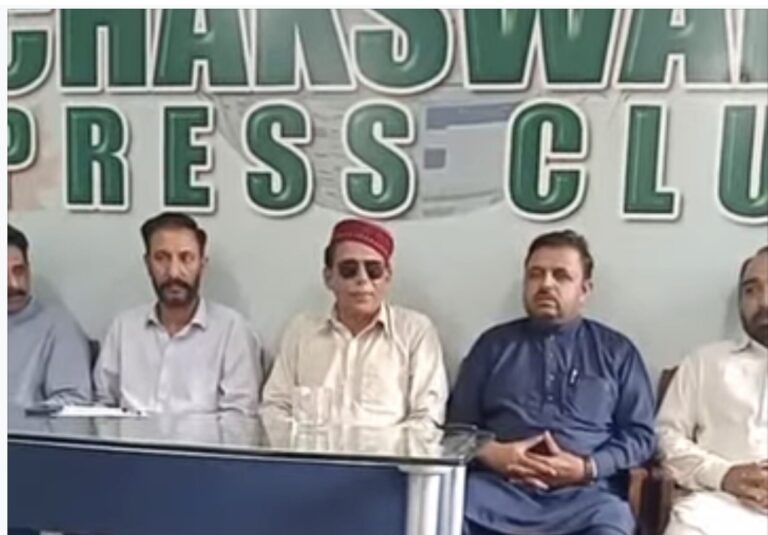
Kotli, AJK (Pakistan administrated Kashmir): In a landmark political move aimed at uniting the fragmented pro-independence movement, veteran Kashmiri leader Sadaqat Mughal Kashmiri has called for an All-Parties Conference (APC) in Kotli, urging every pro-independence party in Jammu & Kashmir and Gilgit-Baltistan to join forces for a common cause: national unity.

“Disunity Has Cost Us Decades”: Mughal’s Historic Call for Unity

“Disunity has cost us decades,” Mughal told The Azadi Times late Thursday night. “We have wandered like the nation of Moses in the desert. The desert ends only when we walk together.”

After six years of grassroots outreach and personal appeals to nationalist leaders, Mughal—who returned to Azad Jammu and Kashmir (AJK) after years of political exile—has issued a final, open invitation to all pro-independence and progressive political parties to join a joint platform for Kashmiri unity.

A Personal Odyssey for National Unity

Mughal said he personally visited the headquarters of nearly every nationalist and liberation group—from veteran fronts to rising youth-led alliances.
“I never sought a post; I only carried a plea: have mercy on this nation and merge your flags,” he stated.

While multiple short-lived coalitions emerged over the years, Mughal claims his own organisation—the Jammu & Kashmir Liberation Front (Nazreyati)—was never included.
“Everyone knew Sadaqat Mughal stands for unity, yet no one dialed my number,” he said.

The 19 July APC: A Fresh Push from the Ground Up

Refusing to be deterred by past disappointments, Mughal and his party have now called a historic All-Parties Conference (APC) at Poonch House, Kotli, scheduled for 19 July at 11 a.m..

Invitations have been officially sent to:

  • All pro-independence parties in AJK and Gilgit-Baltistan
  • Progressive and left-leaning student organisations
  • Diaspora representatives currently present in the territory

Mughal confirmed that he and his team personally delivered invitation letters to senior leaderships.
“I can now look every activist in the eye and say: ‘I knocked on every door—come and see who opens theirs.’”

No Hidden Agenda, Just One Question: Unity

Mughal insists that the Kotli APC has no pre-set leadership agenda, no power-sharing deals, and no secretive discussions.
“The agenda is one line: How do we turn our scattered voices into one roar for freedom and justice?”

He promises the APC will conclude with a joint declaration and a unified action roadmap for continued cooperation.

Direct Appeal to Activists: “Watch Who Comes and Who Stays Away”

In a strong message to grassroots activists and political cadres, Mughal said:
“Your leaders will decide on the 19th, but the real jury is you. Watch closely who comes, who stays outside, and why.”

He emphasized his longstanding commitment to workers’ issues—from social media bans, missing posters, to custodial injustice.
“Neither the nation nor the cadres ever felt my love for the motherland; had they felt it, they would have walked with me.”

Weathering Criticism and Past Failures

Acknowledging skepticism surrounding the APC, critics cite previous alliance failures, ego-driven infighting, and external pressure.
But Mughal insists that this moment is different and urgent:
“Failure this time is not an option; it is extinction.”

He points to rising inflation, shrinking civil liberties, and looming demographic shifts as factors that make this a now-or-never moment for political unity.

A Final Warning—and a Proverb of Hope

Quoting a powerful Kashmiri proverb, Mughal concluded:
“A single stick breaks; a bundle resists the storm. On the 19th we either become that bundle or we remain broken sticks under the boots of indifference.”

Live Coverage and Security Update

According to local sources, the Kotli administration has been officially informed of the upcoming gathering.
Security officials confirm that no restrictions have been imposed so far.

Live updates from the APC will be available on the newspaper’s website and social media under the official hashtag:
#UnityForKashmir

The Azadi Times will publish the joint declaration and complete participant list as soon as the Kotli session concludes tomorrow afternoon.

Joint Awami Action Committee Announces Renewed Protest Movement Amid Accusations of Government Betrayal

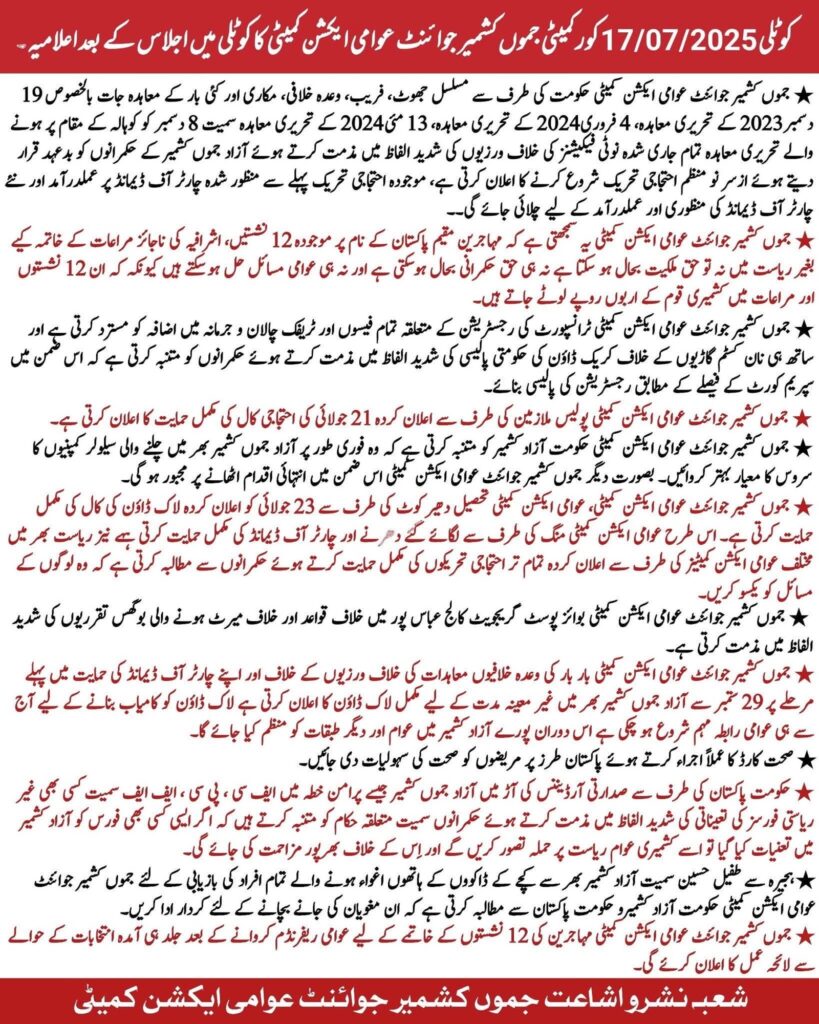
Kotli, AJK (Pakistan administered Kashmir) — The Jammu & Kashmir Joint Awami Action Committee (JKJAAC) concluded a marathon core-committee meeting here on Thursday night with a sweeping “renewed resistance plan”, blaming the Azad Jammu & Kashmir (AJK) government for “serial betrayal” of four written accords reached between December 2023 and December 2024 and vowing an indefinite, territory-wide lockdown beginning 29 September.

Reading out a 12-point communique, committee core member Imtiaz Alam said the movement would simultaneously push for implementation of the previously-agreed Charter of Demands and a freshly-approved set of grievances. “Enough is enough. Every clause signed by the rulers has been violated. The people of AJK will now speak through the streets,” he declared.

Key Resolutions from the Declaration:

JKJAAC’s press release.
  1. Renewed Protest Movement
    The JKJAAC condemned the government’s failure to honor past agreements and announced a reorganized protest movement to demand implementation of its four-point charter. A new charter will also be introduced to address unresolved grievances.
  2. Abolition of Refugee Seats
    The committee labeled the 12 reserved seats for “migrants from Jammu and Kashmir” as a tool for elite privileges, alleging corruption and calling for their elimination to restore “rights of ownership and governance” to locals.
  3. Rejection of Transport Fee Hikes
    The JKJAAC opposed increased vehicle registration fees and traffic fines, demanding policies aligned with Supreme Court rulings. It also condemned crackdowns on non-customs vehicles.
  4. Support for Police Protests
    The committee backed AJK police personnel’s planned protest on July 21 over unresolved demands.
  5. Demand for Better Cellular Services
    The government was warned to improve telecom services or face “extreme measures” from the public.
  6. Lockdown Call & Solidarity
    The JKJAAC endorsed a lockdown announced by Dhirkot’s Action Committee on July 23 and pledged support for all ongoing protests across AJK.
  7. Condemnation of “Bogus Appointments”
    The committee denounced alleged illegal appointments at Boys Postgraduate College Abbas Pur.
  8. Indefinite Lockdown from September 29
    A state-wide indefinite lockdown was declared starting September 29, citing repeated government betrayals. A public mobilization campaign begins immediately.
  9. Health Card Implementation
    Authorities were urged to operationalize health cards on the model of Pakistan’s Sehat Card program.
  10. Rejection of Federal Forces
    The JKJAAC warned against deploying FC, Rangers, or any “non-state forces” in AJK, vowing resistance if attempted.
  11. Demand for Recovery of Kidnapped Individuals
    The committee demanded urgent action to secure the release of abducted persons, including Tufail Hussain from Hajira.
  12. Referendum on Refugee Seats
    A public referendum on abolishing migrant seats was proposed, with an election strategy to follow.

Hashtags #RightsMovementAJK and #AJKRightsmovement trended across Kashmiri social media within minutes of the announcement, with activists already pasting strike posters in Mirpur, Kotli and Muzaffarabad late Thursday night.

Speaking to Kashmir Independent, senior leader Amjad Hussain warned, “If rulers still choose deception over dialogue, the September lockdown will morph into a civil-disobedience movement the likes of which AJK has never seen.”

Escalating Tensions

The JKJAAC’s declaration signals heightened unrest in AJK, with accusations of systemic exploitation and threats of mass mobilization. The call for an indefinite lockdown from September 29 could escalate tensions further if demands remain unmet.

— Report by The Azadi Times (Independent News Network)

(Adapted from JKJAAC Press Release, Kotli, July 17, 2025)

Hong Kong Tech Firm Lightning International Holdings Limited Makes Waves in Global IoT Market

By Special Correspondent | The Azadi Times | Hong Kong, SAR — In the dense, steel-and-glass cityscape of Hong Kong, a new generation of companies is emerging—nimble, networked, and deeply plugged into the undercurrents of Asia’s global trade revolution. Among them is Lightning International Holdings Limited, a multifaceted enterprise quietly connecting goods, people, and markets across continents.

Operating behind the scenes in logistics corridors, industrial hubs, and freight networks, Lightning International is not yet a household name. But within Asia’s rapidly shifting commercial ecosystem, it’s gaining recognition as a strategic facilitator bridging supply chains and creating access for small and mid-sized enterprises navigating a fractured global economy.

At a time when geopolitical tensions, post-pandemic recovery, and economic diversification dominate the business agenda, Lightning International’s approach—lean, tech-enabled, and regionally responsive offers a compelling case study in how modern trade is evolving.

The Basics: What is Lightning International Holdings Limited?

Exterior view of Lightning International Holding Limited headquarters building

Lightning International Holdings Limited is a Hong Kong-based global technology and finance company active in electronics trading, industrial supply, OEM/ODM manufacturing, logistics, and cross-border commerce. Operating since May 2020, it has built networks across Greater China, Southeast Asia, the Middle East, Europe, and over 100 countries, serving more than 500 global brands.

With a mission to “connect global business opportunities with efficiency and trust,” the company facilitates trade and innovation for clients ranging from electronics retailers to industrial manufacturers.

Initially focused on ODM services for shared devices and IoT, Lightning has expanded into smart mobile power banks, shared IoT, new energy, and customized ODM solutions, positioning itself at the forefront of smart manufacturing and R&D in the shared IoT sector.

It operates through subsidiaries like Lightning Innovation (Vietnam) Co., Ltd., Shenzhen Souchong Sharing Industrial Co., Ltd., and others, under the legal entity G&L INT’L BUSINESS LIMITED, led by CEO Usui, Ben Jamin Yoshiharu (since 2022).

The company maintains its online presence through lighning.hk and lightningihltd.com, showcasing its diverse operations while staying true to its vision of bridging global markets with trust and innovation.

“We’re not just a supplier or a forwarder—we’re a bridge for businesses looking to scale internationally without the overhead of building out their own infrastructure,” said a company spokesperson in response to questions submitted by The Azadi Times. “Think of us as your international partner—handling sourcing, logistics, compliance, and fulfillment.”

A Business Model Built for Volatility

One of the defining features of Lightning International’s strategy is versatility. Rather than specialising in a single vertical, the company offers integrated trade solutions—from sourcing components in Shenzhen to exporting consumer goods to Dubai or managing last-mile delivery in Malaysia.

This model of multi-sector integration provides both insulation and agility. In a world where supply chains can be disrupted overnight—by shipping bottlenecks, pandemic lockdowns, or political sanctions—having flexibility in logistics, product range, and vendor networks is invaluable.

“It’s a mistake to view trade today as linear. It’s a web—and the firms that understand this and adapt are the ones thriving,” said an independent trade analyst based in Singapore, who requested anonymity due to client confidentiality.

Lightning International appears to grasp this dynamic. According to its digital profiles, it engages in:

  • Consumer electronics distribution
  • OEM and ODM manufacturing
  • Industrial and raw materials supply
  • International freight forwarding
  • Cross-border e-commerce and logistics services

The company’s reach is supported by strategic ties with Chinese manufacturing bases, Asian seaports, and freight partners across Europe and the Middle East.

Inside the Engine Room: Leadership and Team Culture

Details about the company’s leadership structure are sparse, but its communications point to a lean executive team operating with an emphasis on collaboration, responsiveness, and digital integration.

Its team reportedly includes professionals from China, Hong Kong, India, and Southeast Asia, reflecting a commitment to multicultural partnerships—a pragmatic necessity in global trade, where understanding cultural nuance can mean the difference between friction and fluidity.

“Our strength lies in people—professionals who know how to work across time zones, languages, and regulatory systems,” the spokesperson explained. “It’s about adaptability. Whether you’re sourcing 10,000 PCBs or arranging shipment for solar panels, the ability to navigate variables is what makes us valuable.”

The company’s human capital strategy reflects a broader shift in trade logistics—away from top-heavy corporate models and toward decentralised, tech-enabled teams that can move quickly, iterate fast, and localise solutions.

A Post-Pandemic Pivot Point

The COVID-19 pandemic was, for many companies, a crisis of survival. But for Lightning International, it marked a defining inflection point.

With border closures disrupting normal supply chains, the company reoriented itself toward medical supplies and essential electronics, leveraging its supplier relationships in mainland China to deliver goods where traditional distributors fell short.

According to internal sources, Lightning International facilitated bulk PPE shipments to markets in Southeast Asia and electronic components for ventilators and diagnostics kits—a move that strengthened both its operational capacity and its reputation as a responsive partner in crisis.

“We proved to clients that we could deliver under extreme pressure. That kind of trust is hard to buy and easy to lose—we’ve worked to preserve it ever since,” said the spokesperson.

A Global Vision with Regional Roots

Although Hong Kong serves as Lightning International’s corporate anchor, the company’s operational DNA is transnational.

From Shenzhen’s electronics megahubs to Dubai’s free trade zones and Rotterdam’s logistics terminals, the company navigates a dense lattice of commercial pathways. Its strength lies in its ability to localise operations while offering clients a unified international interface.

The company also maintains strong ties with manufacturers, offering both white-label (OEM) and custom design (ODM) solutions for businesses aiming to launch private-label products in consumer electronics, fashion accessories, and home goods.

This makes Lightning International particularly attractive to e-commerce entrepreneurs, B2B wholesalers, and mid-sized retailers looking to expand without having to manage the complexities of international sourcing and compliance.

Digital Transformation and E-Commerce Enablement

As global trade becomes more digitised, Lightning International is moving with the trend. Though its digital platforms are still relatively lean in public-facing content, company insiders indicate a behind-the-scenes investment in ERP systems, custom inventory tracking, and blockchain-based logistics verification.

A planned upgrade to its primary domain (lightning.hk) is reportedly underway to include real-time order management tools, API integration for client platforms, and AI-driven demand forecasting.

“Clients increasingly expect the Amazon experience in B2B trade—instant quotes, order tracking, flexible payment terms. We’re working to meet that demand,” said the spokesperson.

In regions where smaller businesses often lack access to sophisticated logistics tools, Lightning International’s digital offerings may provide critical infrastructure that enables international scale.

Challenges in Branding and Clarity

Despite its achievements, Lightning International is not without growing pains.

One of the more noticeable issues lies in branding inconsistencies. The company operates two main websites—lightning.hk and lightningihltd.com—but each presents different layouts, messaging, and content depth. Additionally, the company’s name is sometimes misspelled as “Lighning” (missing the first “t”), creating confusion for clients and SEO complications.

Analysts suggest this may reflect the company’s rapid expansion outpacing its brand management infrastructure—a common issue for firms scaling fast in emerging markets.

“It’s an operationally strong company, but the branding doesn’t yet match the quality of its backend execution,” noted the Singapore-based analyst. “As it grows, consolidating digital presence will be important for credibility.”

Search engine visibility also remains a concern. The name “Lightning International” is shared by various unrelated businesses globally, further complicating the firm’s efforts to stand out online.

A more consistent content strategy, coupled with verified digital channels and consolidated SEO tagging, could help address this visibility challenge.

The Bigger Picture: Trade in Transition

Lightning International’s trajectory is emblematic of a larger shift taking place in global trade.

As Western firms decouple from China, supply chains diversify, and regional alliances grow, companies like Lightning International—mid-sized, locally embedded, globally capable—are stepping into new roles.

These firms serve as flexible intermediaries—connecting Latin American wholesalers to Chinese factories, or European startups to Southeast Asian contract manufacturers.

“The rise of middleweight logistics firms is part of the decentralisation of globalisation,” said a Beijing-based trade economist. “Power is shifting from global giants to agile networks, and companies like Lightning International are in the right place at the right time.”

Future Prospects: Beyond the Horizon

Looking ahead, Lightning International plans to expand its operations across three fronts:

  1. Digital expansion – including a proprietary platform for cross-border order management and trade compliance automation.
  2. Regional warehousing – especially in Southeast Asia and the Middle East, to cut delivery times and reduce customs bottlenecks.
  3. Sustainability initiatives – such as green packaging, emissions tracking, and eco-certified suppliers, in line with growing client demand.

“We see ourselves as a next-generation trade partner—responsive, scalable, and sustainability-conscious,” the company said. “Our job is to remove barriers, not add them.”

The road ahead won’t be without hurdles. Competition is intensifying, geopolitical volatility remains, and digital transformation is both essential and expensive. But if Lightning International can address its branding inconsistencies, consolidate its platforms, and maintain operational excellence, it stands a good chance of evolving from a regional facilitator into a globally trusted trade partner.

A Company to Watch

In the shadow of global giants and amid the flux of shifting trade routes, Lightning International Holding Limited is quietly building a reputation for reliability, flexibility, and forward thinking.

It may not have the brand polish of multinational conglomerates—yet. But its grasp of regional trade dynamics, digital ambitions, and client-focused agility suggest that Lightning International is more than just a middleman. It’s a model for what the next generation of global trade companies could look like: lean, connected, and ready for anything.

As the world rewrites its economic map in real time, companies like Lightning International are not only reading the lines—but drawing some of them.