
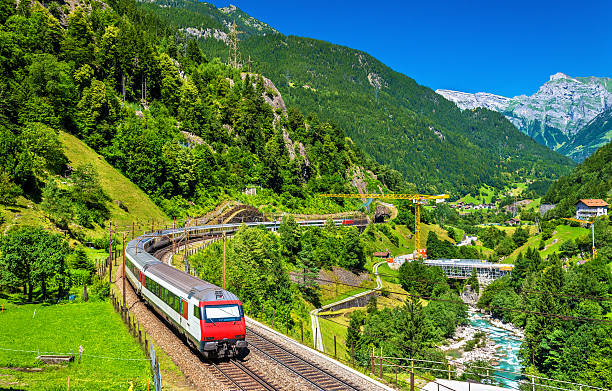

Srinagar, Indian administered Kashmir — India’s Ministry of Railways has approved a final location survey (FLS) for a proposed railway line between Jammu and the pilgrimage town of Vaishno Devi (Katra), marking another step in its effort to expand transportation infrastructure in Jammu & Kashmir.
The survey will cover a distance of approximately 77.96 kilometres, with an estimated cost of 125.9 million rupees (about $1.5 million). According to officials, the Northern Railway zone will oversee the survey, which is intended to pave the way for future construction.
Authorities describe the proposed rail link as part of a broader plan to improve mobility in the region, which remains physically and politically fragmented. Alongside the Jammu–Katra line, five other surveys are currently underway in the Kashmir Valley:
Baramulla to Uri (46 km)
Sopore to Kupwara (37 km)
Anantnag to Pahalgam (78 km)
Awantipora to Shopian (28 km)
A proposed double track between Banihal and Baramulla (118 km)



While these projects are presented as steps toward better regional connectivity, several other ambitious railway plans in Jammu & Kashmir have been shelved over the years due to high costs and low projected ridership.
One such project, the Srinagar–Kargil–Leh line — which would have stretched 480 km across the Himalayas at an estimated cost of 558.96 billion rupees (roughly $6.7 billion) — was dropped after surveys in 2016–17 indicated insufficient demand. Similarly, the proposed Jammu–Poonch line via Akhnoor and Rajouri (223 km) was halted despite a completed survey and an estimated cost of 227.71 billion rupees (about $2.7 billion).


The approval of the Jammu–Katra survey comes just weeks after India inaugurated its largest rail project in the region, the Udhampur–Srinagar–Baramulla Rail Link (USBRL), which took nearly three decades to complete. That 272-km line features 36 major tunnels spanning about 120 km, eight escape tunnels, and 943 bridges crossing rivers, valleys, and rugged mountains.
Independent observers note that while improved transport links can facilitate economic activity and personal mobility, they also raise questions about who benefits from these investments and how they fit into the region’s unresolved political context.