
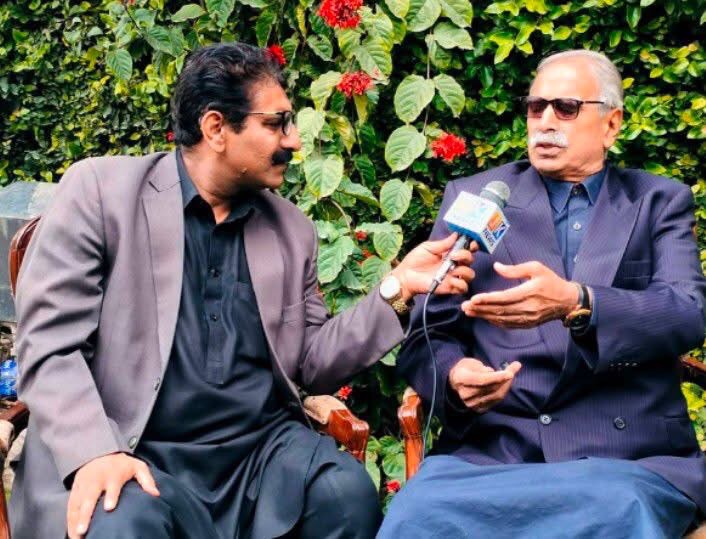

The Azadi Times | Location: Muzaffarabad, (AJK) Pakistan administered Kashmir: A day after stepping down from a 15-year career on the bench, former Chief Justice of Azad Jammu & Kashmir (AJK) Supreme Court Justice Muhammad Azam Khan has delivered an unusually blunt indictment of Pakistan-administered Kashmir’s electoral architecture, describing 12 legislative seats reserved for Kashmiri refugees living in Pakistan as “100 per cent illegal” and demanding their immediate abolition.
Speaking exclusively to Daily Jammu & Kashmir in Mirpur on Wednesday, Justice Khan said the seats were “engineered from Islamabad to dilute the vote of the 4.5 million people who actually live in AJK” and warned that they “violate the spirit, if not the letter, of the UN resolutions on Kashmir”.
The judge’s remarks quickly gained traction online, with critics highlighting his silence during his 15-year tenure. The hashtag #TooLateJudge began trending across Pakistan-administered Kashmir, as social media users questioned why such truths only emerge post-retirement.

“Another classic case of speaking truth to power only after leaving power,” wrote a prominent diaspora account with hundreds of thousands of followers.
What Are AJK Refugee Seats?
Under the AJK Interim Constitution — drafted in 1974 and revised several times — 12 of the 53 seats in the Legislative Assembly are reserved for refugees who fled Indian-administered Jammu & Kashmir between 1947 and 1989 and are now settled across Pakistan. Critics say the arrangement allows federal authorities to influence AJK politics because these “refugee representatives” are elected by an electorate that resides outside the territory.
This statement arrives at a critical time for the region:

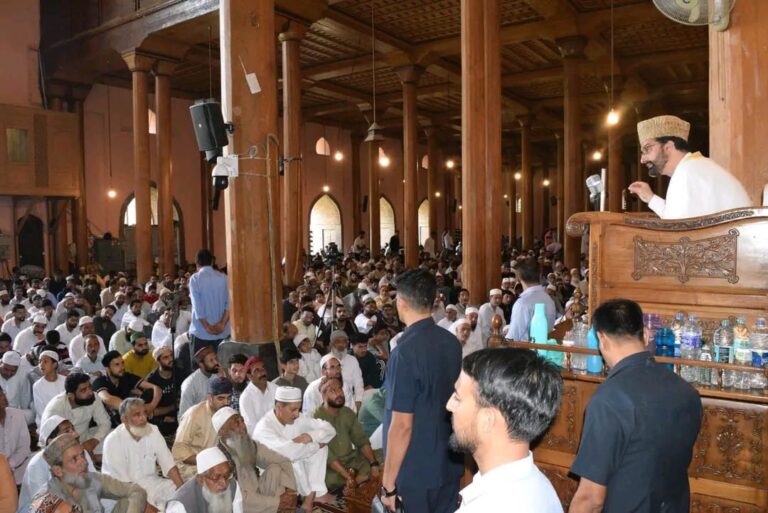

General elections are weeks away in AJK, and the Jammu Kashmir Joint Awami Action Committee (JKJAAC), known for mobilizing mass protests over electricity tariffs and basic rights, is preparing for territory-wide protests.
A 2024 poll by a policy think-tank revealed that:
- Only 11% of AJK residents believe refugee seats promote Kashmiri unity.
- 64% see them as tools of electoral manipulation.
Silence in Service, Truth in Retirement
The ex-chief justice, known for uncontroversial rulings on administrative matters, never dissented on the refugee seat issue during his judicial career. When asked why he spoke up now, he said:

“While in office, institutional discipline binds you. Now, I speak as a citizen with a conscience.”
Legal experts note this trend is common across South Asia, where retired judges and generals often reveal inconvenient truths only after leaving office.
In the UK, the Kashmiri Youth Forum hosted a town-hall titled “Why Do Leaders Speak After Retirement?”, attracting over 1,000 participants. Analysts described this as part of a wider civil-military imbalance in Pakistan.
“When institutions are captured, silence is the price of survival,” noted one political scientist during the panel.
Pakistan’s Ministry of Kashmir Affairs refused to comment, citing ongoing petitions in the Islamabad High Court challenging the AJK constitutional structure. The Prime Minister’s office has not responded to media queries.
For many residents of AJK, the judge’s statement—though delayed—is seen as a long-awaited validation.
“We’ve been saying this for years,” said a schoolteacher from Hattian Bala. “At least now the world is listening.”
Assembly Seat Breakdown (AJK Legislative Assembly)
- Territorial (General) Seats: 41
- Refugee Seats (Non-Resident): 12
- Reserved (Women & Technocrats): 10
Sources: AJK Election Commission, UN Human Rights Office, Public Opinion Poll (2023)