
Home Blog Page 83

China’s Inverex Launches Pakistan’s Most Affordable Electric Car, XiO EV

In a significant move towards sustainable transportation, Chinese company Inverex has introduced the XiO EV, touted as Pakistan’s most affordable electric vehicle. This launch marks a pivotal step in the country’s shift towards eco-friendly mobility solutions.

XiO EV: A Game Changer in Pakistan’s Automotive Landscape

The XiO EV is a compact, four-door electric hatchback designed to cater to urban commuters. Manufactured in China, it comes in three variants, each offering different driving ranges to suit diverse needs:

  • XiO 140: Offers a range of 140 km per charge, priced at PKR 3,499,000 with a booking amount of PKR 500,000.

  • XiO 220: Provides a 220 km range, priced at PKR 4,199,000, currently available at a promotional price of PKR 3,999,000. Booking requires PKR 600,000.

  • XiO 320: Delivers a 320 km range, priced at PKR 5,199,000, with a promotional offer of PKR 4,999,000. The booking amount is PKR 700,000.

Advanced Features and Fast Charging Capability

One of the standout features of the XiO EV is its support for DC fast charging technology. This allows the battery to charge from 30% to 80% in just 30 minutes, making it highly practical for daily urban use. Additional features include:

  • Built-in radar system for enhanced safety.

  • Smart safety features to ensure driver and passenger protection.

  • Complimentary one-year insurance coverage.

Implications for Pakistan’s Electric Vehicle Market

The introduction of the XiO EV by Inverex signifies a growing interest in electric vehicles within Pakistan. As the country grapples with environmental challenges and seeks to reduce its carbon footprint, affordable electric cars like the XiO EV could play a crucial role in transforming the transportation sector.

For more information on the XiO EV and its specifications, visit Inverex’s official website.

India’s Move to Reconsider Indus Water Projects Raises Alarms in Pakistan

Muzaffarabad: In a potentially destabilizing move, the Indian government is reportedly considering the initiation of new water infrastructure projects on the rivers allocated to Pakistan under the historic Indus Waters Treaty (IWT). The development has raised deep concerns in Pakistan, where a majority of the country’s agricultural economy relies heavily on uninterrupted access to these transboundary rivers.

According to a report by Reuters, Indian Prime Minister Narendra Modi has directed relevant authorities to explore new construction on the Chenab, Jhelum, and Indus rivers—rivers that are designated for Pakistan’s use under the 1960 Indus Waters Treaty, brokered by the World Bank.

Among the proposed projects is a significant extension—approximately 120 kilometers—of the Ranbir Canal in Indian-administered Jammu & Kashmir, which draws water from the Chenab River. If materialized, such actions could alter water flow into Pakistan, potentially impacting millions of livelihoods in the already climate-stressed region.

Pakistan’s foreign minister, Ishaq Dar, has formally raised objections, labeling any disruption or unilateral interference with the treaty a breach of international law. He cautioned that any attempt to divert or reduce Pakistan’s share of water could be interpreted as an “act of war.”

This geopolitical shift comes amid heightened tensions following the recent tragic incident in Pahalgam, where over two dozen individuals lost their lives. Critics argue that the Indian government may be leveraging internal unrest to advance aggressive infrastructural and territorial strategies in the disputed region of Jammu & Kashmir.

Water remains a critical and sensitive issue in South Asia, particularly between nuclear-armed neighbors India and Pakistan. For Kashmir, a region caught at the crossroads of both nations’ strategic ambitions, the implications of any alteration to natural water flows could be profound—economically, ecologically, and politically.

Mexican Beauty Influencer Shot Dead During TikTok Livestream in Suspected Femicide

Zapopan, Mexico — A prominent 23-year-old beauty influencer, Valeria Márquez, was fatally shot during a TikTok livestream at her beauty salon in Zapopan, Mexico, in what authorities are investigating as a suspected case of femicide.

According to international news agencies, Márquez—who had over 200,000 followers across TikTok and Instagram—was interacting with her audience live when she briefly left the frame to receive a package. Moments later, she returned to her chair and was suddenly shot, collapsing on-screen as the livestream continued broadcasting.

Police reports confirm that an armed assailant entered the salon and opened fire at close range, targeting Márquez. Emergency services arrived shortly after, but the influencer was pronounced dead at the scene.

Authorities are treating the incident as a possible femicide—a gender-based killing of a woman—amid growing concern over violence against women in the country.

Read Also: Popular Kashmiri TikToker YAR G’s Account Banned, Igniting Free Speech Concerns in Kashmir

The brutal killing has reignited debate over Mexico’s struggle with gender-based violence and the effectiveness of its justice system. According to human rights organisations, femicide remains a deeply rooted issue in the country, with hundreds of cases reported annually—many of which go unpunished.

Online, followers expressed shock and grief, with tributes pouring in for Márquez, who had built a dedicated following through beauty tutorials, fashion content, and candid personal updates.

As the investigation continues, no arrests have been made, and the identity or motive of the attacker remains unknown. Authorities have appealed for witnesses and relevant information from the public to assist in the case.

UN Doors Shut for Kashmiris? Pro-Independence Parties in AJK March for Peace Amid Rising Tensions

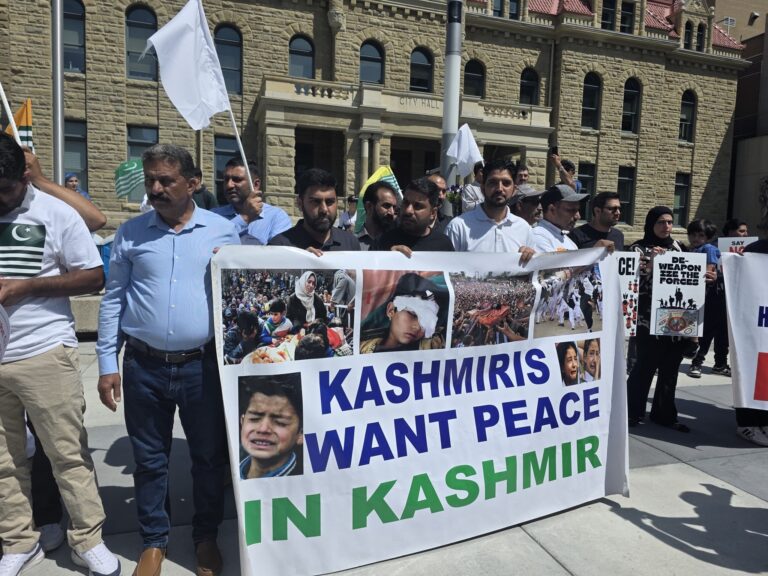
Kotli, Pakistan-administered Jammu and Kashmir — In the aftermath of recent cross-border hostilities between India and Pakistan, which left several civilians dead or injured across the Line of Control (LoC), pro-independence political parties in Pakistan-administered Kashmir launched a peaceful march towards the United Nations Military Observer Group (UNMOGIP) office in Kotli, demanding attention to the plight of Kashmiris trapped in the decades-long conflict.

The march, which was organized jointly by leading pro-independence groups including the Jammu Kashmir Liberation Front (JKLF), aimed to appeal for international intervention and the demilitarization of the region. Heavy police deployment under Section 144 was observed in Kotli to prevent the rally, yet the protestors proceeded peacefully and reached the gates of the UN office without incident.

However, upon arrival, protestors were informed that the UN officials were not present, allegedly having relocated to Islamabad due to the security situation.

“Even the UN Doors Are Now Closed for Kashmiris” – Aman Kashmiri

In a strongly worded video message, Aman Kashmiri, Chief Organizer of JKLF in Pakistan-administered Kashmir, condemned the absence of UN officials at a time when tensions along the LoC are at a peak.

“The UN officials, whose responsibility is to monitor military movements along the LoC, are missing during a crisis that has left both lives and infrastructure in ruins. This negligence raises serious concerns about their commitment to peacekeeping in Kashmir,” he stated.

Kashmiri also emphasized that the people of Jammu & Kashmir must be recognized as the first party in any dialogue or resolution process related to the region’s future. He reiterated the long-standing demand for the withdrawal of all foreign military forces and the restoration of Kashmiri self-determination under international law.

Growing Distrust in International Institutions

The symbolic march comes at a time when local communities across Azad Jammu & Kashmir (AJK) and Indian-administered Kashmir feel increasingly alienated from both the regional powers and international institutions. Despite multiple resolutions and observer mandates, the UN has failed to offer substantial protection or mediation on the ground, according to many rights advocates.

This protest marks yet another chapter in the continued struggle of stateless Kashmiris who remain caught between geopolitical rivalries and broken promises of self-rule.

Kashmir’s Civil Response to Border Violence: Emergency Shelters and Aid for Affected Families

Muzaffarabad, Pakistan-administered Kashmir — In response to recent cross-border shelling along the Line of Control (LoC), local community action groups across several towns in Pakistan-administered Jammu and Kashmir rapidly mobilized emergency support networks to shelter and feed families displaced by the violence.

Though a ceasefire has now taken hold, the days of bombardment left dozens of families without homes or basic necessities. Grassroots emergency committees, particularly in towns like Sehnsa, Holar, and Sudhnoti, established temporary shelters, food distribution points, and blood donation networks in what residents are calling an unprecedented example of “people-powered relief.”

250+ Families Provided Shelter

In Sehnsa and Holar alone, over 150 families have been provided with immediate housing. Keys to 100 ready homes in Holar were handed over to an “Emergency Contact Committee,” which is also managing resource distribution. Sehnsa’s local committees arranged shelter for another 50 families, while simultaneously addressing urgent food shortages.

In neighboring Sudhnoti district, public action committees created similar emergency response structures. Other regions including Ali Sojal, Khai Gala, Tararkhal, Garala, and Pallandri have reported preparation of over 100 family shelters each.

These volunteer-run committees are also forming specialized units for managing food, essential supplies, and blood donations—a critical need in any future escalation.

Humanitarian Hotline Network

To streamline coordination, contact points were set up across affected regions. Citizens were urged to reach out for housing or food aid via dozens of volunteer coordinators. These include Rashid Naeem (03425438068), Tabrez (03435824098), Akmal (03464768308), and others across various zones. In Balouch, 100 additional shelters were arranged under the supervision of advocates and local leaders like Sardar Shamsheer (03465094760) and Faizan Fayaz (03439530180).

In high-altitude areas like Toli Peer and Srinagar Guest House, emergency hospitality has also been extended, particularly by guesthouse managers Sohail Ismail (03334620776) and Osama (03170891581), among others.

Civil Society’s Role in Wartime Response

These efforts highlight the critical role of community self-help in times of conflict, especially in regions like Kashmir where infrastructure is often limited and state response may be delayed. While the latest round of hostilities has calmed under the recent ceasefire, the preparedness and solidarity shown by local residents could serve as a model for future humanitarian response in conflict zones.

The committees remain active, and organizers say they are keeping shelters and aid on standby in case of any future flare-ups.

“This is not just about reacting to war—it’s about taking care of each other when no one else will,” said one local volunteer from Sehnsa.

High Court Approves Housing Scheme on Forest Land in Pakistan-Administered Kashmir, Dismissing Petition

Rawalakot, Pakistan-administered Jammu & Kashmir – May 14, 2025: In a controversial verdict, the High Court of Pakistan-administered Jammu and Kashmir has allowed the construction of a private housing scheme on forest land, dismissing a public petition that challenged the legality and environmental impact of the allotment.

The land in question, located in the Paddat area of Rawalakot’s town limits, comprises 100 kanals (approximately 12.5 acres) of valuable forest land. It was allotted to a private developer under the “Naya Pakistan Housing Scheme” at a nominal rate of just PKR 2,000 per kanal—amounting to a total of PKR 200,000 (around $700).

Local residents became aware of the land transfer only after construction work began. They subsequently filed a writ petition in January 2023, arguing that the land was designated as reserved forest and must be used solely for ecological and conservation purposes. The petitioners offered to pay five times the allotment price to preserve the forest.

However, on April 25, 2025, the High Court dismissed the petition. In its ruling, the court stated that the challenge came too late and was based on selective interpretation of previous Supreme Court rulings. The High Court noted that decisions regarding land use in the public interest fall under the jurisdiction of the state government.

Citing another Supreme Court precedent, the judgment emphasized the importance of transparent procedures in executing public-interest projects, particularly those aimed at providing affordable housing. The court also noted that the petitioners failed to establish themselves as “aggrieved parties” since they had no legal claim to the land.

The court did not address whether the land’s status as forest property was legally changed, or whether environmental regulations and no-objection certificates (NOCs) from the Forest Department were obtained before the allotment.

The judgment stated:

“The land belongs to the government, which has decided to use it for public welfare. Hence, any project initiated in the public interest cannot be halted.”

The ruling also stated that the petitioners failed to demonstrate any legal violation or procedural irregularity in the allotment process.

Contradictions with Previous Rulings

This ruling appears to contradict several previous decisions by higher courts in Pakistan. In August 2023, the Supreme Court barred the Mangla Dam Housing Authority in Mirpur from allotting public-use spaces for private development. Similarly, the Supreme Court revoked the notification for a housing scheme in forest land managed by the Pearl Development Authority (PDA) in Banjosa, Rawalakot—ordering the land to be returned to the Forest Department.

In other cases across Pakistan, the courts have consistently ruled against the conversion of forest and agricultural land for private housing. Notably, in February 2020, the Supreme Court ordered the Sindh government to cancel all illegal forest land allotments and reclaim the properties. In 2018, it criticized the provincial administration for allegedly enabling land grabs, including allotments to Bahria Town and other developers.

Most recently, in November 2024, the Lahore High Court ordered the Punjab government to ban housing societies on agricultural land as part of a broader anti-smog policy.

Environmental Concerns Unaddressed

The latest ruling in Rawalakot has raised concerns among environmentalists and civil society groups, who argue that forest land should be strictly protected amid rising deforestation and ecological degradation in the region. The lack of transparency in the allotment and absence of environmental safeguards have further intensified criticism.

Despite multiple court precedents upholding environmental protections, the High Court’s latest decision appears to open the door to private development on ecologically sensitive land, setting a worrying precedent for similar cases in the future.

UN Silent as Kashmiris March Against ‘Genocide’—Authorities Impose Brutal Crackdown

    0

    Kotli, AJK, (Pakistan administered Kashmir) – The Jammu Kashmir Liberation Front (JKLF), led by the Toqeer Gilani faction, has announced a protest rally to submit a memorandum to United Nations Military Observers, condemning the alleged genocide of Kashmiris amid ongoing conflict in the region. The march, organized in collaboration with other pro-independence groups, is set to proceed toward Kotli the largest city and and distrcit headquater in Pakistan administered kashmir.

    However, local authorities have moved swiftly to suppress the demonstration. The Deputy Commissioner of Kotli imposed Section 144, banning public gatherings, while police and administrative officials have been put on high alert to prevent the protest.

    Background: Calls for International Intervention

    The protest was announced two days ago during a press conference by Sardar Aman Kashmiri, a prominent organizer of the JKLF, alongside other Kashmiri leaders. They accused Indian forces of human rights violations in Indian-administered Kashmir and demanded urgent UN intervention.

    “The world cannot remain silent while Kashmiris face systematic violence,” Aman stated during the press briefing. “We will take our voices to the UN observers, no matter the obstacles.”

    Government Crackdown

    Authorities in Kotli have deployed additional security forces, citing concerns over potential unrest. Section 144, which prohibits assemblies of four or more people, has been enforced to block the rally.

    “This protest is a threat to public order,” a district administration official stated anonymously. “We will not allow any unauthorized gatherings.”

    Critics, however, argue that the ban is an attempt to stifle dissent. “The right to peaceful protest is fundamental,” said a human rights activist monitoring the situation. “Suppressing these voices only deepens the crisis.”

    Regional Implications

    The planned march highlights escalating tensions in the region, where Kashmiri groups continue to push for self-determination amid heightened militarization. The JKLF and allied organizations have long demanded an independent Kashmir, free from both Indian and Pakistani control.

    As security forces brace for clashes, international observers are closely watching whether the protest will proceed despite the crackdown—or if Kashmir’s struggle for recognition will face yet another setback.

    Updates to follow as the situation develops.

    (Published by The Azadi Times– Reporting from Kotli, AJK,  (Pakistan administered Kashmir)

    Born Together, Died Together: Zain & Zoya Youngest Victims of LoC Crossfire

    Cross-border violence escalates as children become victims of ongoing conflict along LoC

    Srinagar, May 13 — The tragic story of 12-year-old twins Zoya and Zain has become a painful symbol of the human cost of continued hostilities along the Line of Control (LoC). The siblings, who shared an inseparable bond since birth, lost their lives on May 7 when artillery shells fired by Pakistani forces struck their home in Poonch district.

    Their mother, Arusa Khan, remains in shock, unable to process that her children will never return. Their father, Rameez Khan, a local schoolteacher, lies critically injured in hospital, unaware that his twins have been buried.

    A Childhood Cut Short

    The twins’ story highlights the devastating impact of cross-border violence on Kashmiri civilians. Zoya and Zain, who had just begun to dream of their futures, became casualties of escalating tensions following India’s Operation Sindoor—a military action that came in response to earlier violence in the region.

    Eyewitnesses report that multiple shells landed near civilian areas in Poonch, with at least 16 casualties reported, including women and children. Local residents describe scenes of chaos as families scrambled for safety amid the bombardment.

    A Grieving Community

    The deaths have sparked outrage across Kashmir, with many questioning why civilian populations continue to bear the brunt of the conflict.

    “These children had their whole lives ahead of them,” said a neighbor, who wished to remain anonymous. “When will the world take notice of our suffering?”

    Funeral prayers for Zoya and Zain were attended by hundreds, their small coffins a stark reminder of the fragility of life in the conflict zone.

    Calls for Accountability

    Human rights organizations have long documented civilian casualties on both sides of the LoC, urging India and Pakistan to respect international humanitarian law. However, with tensions remaining high, there are fears of further violence.

    “The targeting of civilian areas is a clear violation of human rights,” said a spokesperson for a Srinagar-based rights group. “The international community must intervene before more innocent lives are lost.”

    A Mother’s Unimaginable Loss

    As the twins’ mother struggles to come to terms with her loss, their father remains hospitalized in critical condition. The family, like many others in the region, had hoped for a peaceful life away from the frontlines—a hope now shattered.

    Their story serves as a grim reminder that behind the headlines of geopolitical tensions, it is ordinary Kashmiris who continue to pay the highest price.

    (Reporting from Srinagar; names of survivors have been changed for their safety.)

    District Police Anantnag Arrests Four Drug Peddlers, Seizes Heroin-like Substances

      0

      Anantnag, Jammu & Kashmir: In a decisive move against the growing drug menace in the region, District Police Anantnag has successfully apprehended four drug peddlers in separate operations, seizing significant amounts of heroin-like substances from their possession.

      The crackdown was part of the police’s ongoing commitment to combating the illicit drug trade that continues to plague local communities.

      Lady Drug Peddler Arrested Near Bangidar Bridge

      The first major success occurred near the Bangidar Bridge, where a notorious female drug peddler, Khushbu Jan, daughter of Farooq Ahmad Sheikh, was arrested. Police seized 07 grams of heroin-like substance from her possession. Khushbu Jan, a resident of Bangidar, is now facing charges under Section 8/21 of the Narcotic Drugs and Psychotropic Substances (NDPS) Act. A case (FIR No. 100/2025) has been filed at the Police Station Anantnag, and investigations are ongoing.

      Two More Arrests in Separate Drug Seizures

      In another significant operation, two male drug peddlers were apprehended in possession of heroin-like substances. Nargis, wife of Mohammad Ali from Bawana JJ Colony, Delhi, was arrested with 03 grams of the substance, while Mohammad Irfan, a resident of Ghaziabad, Uttar Pradesh, was caught with 06 grams. Both individuals have been booked under the NDPS Act, and FIR No. 104/2025 has been registered at Police Station Anantnag. The investigation is continuing.

      Arrest in Dooru Shahabad

      In a third operation, Ishfaq Ahmad Hajam, son of Gul Mohammad Hajam, a resident of Saidwara in Dooru Shahabad, was arrested with 06 grams of heroin-like substance. The seizure was made by the Anantnag police as part of their larger campaign to dismantle drug trafficking networks. A case (FIR No. 105/2025) has been filed under the NDPS Act, and investigations are underway.

      Police Commitment to Zero-Tolerance Against Drugs

      District Police Anantnag has reaffirmed its zero-tolerance policy towards drug trafficking and drug abuse in the region. Authorities have urged the public to be vigilant and report any suspicious drug-related activities in their communities. The police are committed to ensuring a drug-free society, with efforts being made to apprehend drug traffickers and disrupt illicit networks.

      Read Also: Anantnag Student Sheyrub Parvaiz Secures 4th Rank in Commerce Stream Across Kashmir

      “We cannot fight this battle alone, and we urge the community to come forward with any information related to drug peddling,” a police spokesperson stated. “Together, we can create a safer, drug-free environment for our children and future generations.”

      As the investigation progresses, the police are expected to intensify their operations, targeting both street-level drug dealers and larger syndicates operating in the region.

      Public Awareness and Support

      With increasing concerns about the impact of drug abuse on public health and safety, the police have also called for greater public cooperation. Citizens are encouraged to report drug-related activities to local authorities to help combat the pervasive issue.

      Ongoing Investigation

      The investigation into the arrests is still ongoing, and the police have assured the public that they will continue to work tirelessly to eliminate the drug trade from the region. Authorities have also vowed to expand their outreach programs to raise awareness about the dangers of drug abuse and addiction.

      Gaasu Khimber: Kashmir’s Strawberry Village Thrives During Harvest Season

        0

        Gaasu Khimber, Srinagar, Indian administered Kashmir: In the foothills outside Srinagar, the village of Gaasu Khimber is experiencing its peak strawberry harvest — a season that has become central to the livelihoods of nearly a thousand local farmers.

        Known for its fertile soil and cool climate, Gaasu Khimber has emerged as Kashmir’s leading strawberry-producing region, with daily yields of over 2,000 kilograms during harvest months.

        Read Also: Govt Empowering Agriculture in AJK- Livestock and Agriculture Departments Forge Strong Farmer Connections

        Farming in the area has traditionally centred around apple orchards, but over the last 15 years, strawberries have taken root as a valuable early-season crop. Supported by agricultural initiatives and local know-how, families here have turned the bright red fruit into a symbol of economic resilience.

        “Strawberries from Gaasu are larger, juicier, and sweeter than those from elsewhere in the valley,” says Ghulam Rasool, a veteran grower. “That’s why they fetch higher prices in the markets.”

        A Family Affair

        During the harvest season, men, women, and children work side by side, moving through strawberry fields with baskets in hand. The sight of rows of ripe strawberries and the buzz of morning harvests has become a daily rhythm in the village between May and June.

        While Tangmarg in north Kashmir and parts of south Kashmir also cultivate strawberries, farmers and vendors alike agree that Gaasu’s produce stands out in terms of quality and demand.

        “Gaasu strawberries are always the first to reach the market,” said a trader in Srinagar’s Fruit Mandi. “Buyers ask for them by name.”

        Numbers Tell the Story

        According to local estimates, Gaasu Khimber produces nearly 1,000 trays of strawberries per day, making it a major contributor to Kashmir’s horticultural economy in early summer. The crop is often sold fresh within hours of harvest — either directly in Srinagar or sent to nearby districts.

        The success of the strawberry industry has also sparked interest among younger farmers, some of whom are exploring packaging, cold storage, and branding opportunities for expansion.

        Agriculture and Identity

        While strawberries have added a new layer to Gaasu Khimber’s identity, the region remains known for its apple orchards, which sustain farmers through the autumn. Together, these crops form a vital source of income in an area where seasonal farming is a way of life.

        Local growers are now calling for better infrastructure, cold storage facilities, and access to markets, saying such support could help expand production and reduce post-harvest loss.

        “With government support, Gaasu can become the strawberry capital of Kashmir,” said one hopeful farmer.