

MUZAFFARABAD – In a move that has sent ripples across the region, the Jammu Kashmir Joint Awami Action Committee (JKJAAC) has issued a call for a complete, territory-wide shutdown (bandh) across Azad Jammu and Kashmir (AJK) starting Sunday, September 29. The announcement signals a significant escalation in the ongoing standoff between the grassroots movement and the state administration over a sweeping 38-point charter of demands centered on economic rights, political autonomy, and social justice.
The call for an indefinite strike threatens to bring daily life to a standstill, echoing the massive and successful protests led by the same coalition last year that forced the government into negotiations.
A Movement Rekindled: From Last Year’s Victory to This Year’s Stalemate
The JKJAAC is not a new actor on the political stage. It is a powerful coalition of diverse civil society groups, including traders’ unions, transport associations, lawyers’ forums, and student organizations. Its strength lies in its cross-cutting appeal that transcends traditional political party lines.
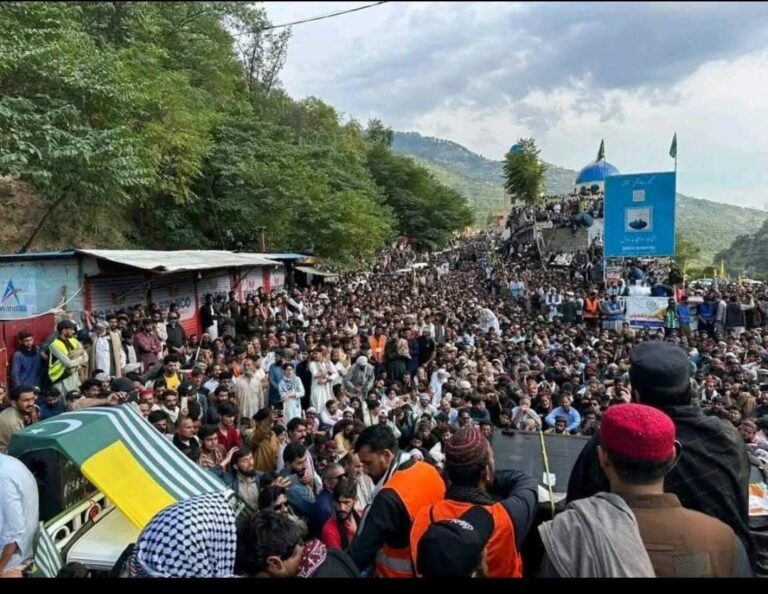
Last year, the committee mobilized one of the largest protest movements in recent AJK history. Thousands took to the streets in Muzaffarabad, Mirpur, Kotli, and other cities, protesting skyrocketing inflation, exorbitant electricity bills, and the perceived erosion of the region’s special status. The protests, characterized by widespread sit-ins and marches, culminated in a decisive victory for the JKJAAC. The state government, under immense pressure, agreed to a substantial relief package, including subsidies on wheat flour and electricity.
However, the committee’s core argument today is that the government’s implementation of these agreements has been half-hearted, incomplete, and in some cases, entirely neglected. “The government signed agreements to placate us, but their promises remain confined to paper,” a JAAC spokesperson stated in a press conference. “Our patience has run out. The people of Jammu Kashmir will no longer accept empty promises.”
The Heart of the Matter: Decoding the 38-Point Charter of Demands
The JKJAAC’s mandate is comprehensive, moving beyond immediate economic relief to address deeper structural issues. The 38 demands paint a picture of a population seeking dignity, accountability, and self-determination in its daily affairs.
Key themes from the charter include:
Economic Justice & Subsidies: Demands for continued and expanded subsidies on essential commodities like wheat and electricity, reflecting the severe cost-of-living crisis.
Employment and Pension Rights: Calls for the regularisation of contract employees, increased job quotas for locals, the release of pending dearness allowances for government employees, and the resolution of pension disputes.
Protection of Local Resources: A central demand revolves around the ownership and royalty rights from major hydroelectric power projects like the Mangla Dam, seeking a fair share of the revenue generated from AJK’s natural resources for its people.
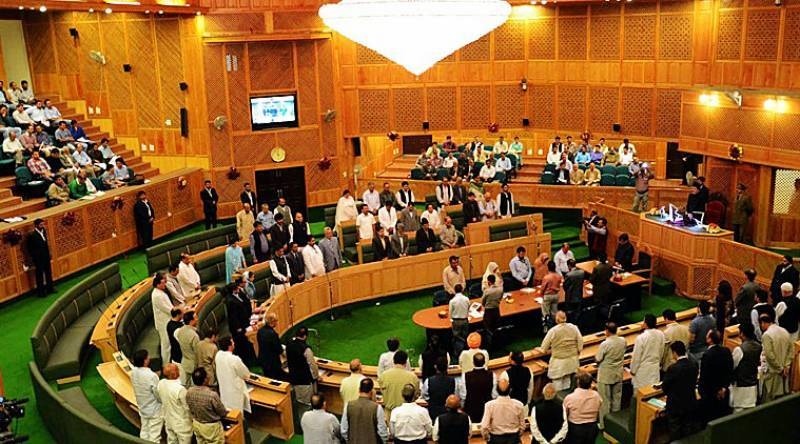
Political Autonomy & Governance: Demands for greater legislative and financial autonomy for the AJK government, challenging what is seen as overreach from the federal government in Islamabad.
Social Welfare & Development: Calls for investment in health infrastructure, educational facilities, and road networks, particularly in remote and underdeveloped districts.

This expansive list demonstrates the JAAC’s evolution from a protest movement into a potent force advocating for systemic change.
Breaking Down the 38-Point Charter of Demands
JAAC’s comprehensive demands span economic justice, political rights, and governance reform. Here’s a condensed version (in no particular order):
1–24: Core welfare and structural rights
25–38: Civil liberties, systemic fairness, and reforms
| Demand # | Summary |
|---|---|
| 1–3 | Enhanced allowances (household, health), pension & gratuity |
| 4–6 | Housing lease benefits, quota jobs for widows, job permanency |
| 7–10 | Solar systems (5KVA), tribal area benefits, constitutional rights |
| 11–13 | Inflation-linked wages, housing bank, facility upgrades in schools |
| 14–16 | Free education and employment for martyrs’ families, pan energy plan review |
| 17–20 | Stadium in Kotli, pension policy, educational reforms, HE grant institutions |
| 21–24 | Lower-grade upgrades, WAPDA benefits, general allowances |
| 25–28 | Address allowances gaps, pensioner benefits, exam facilitation |
| 29–32 | Review delimitation laws, improve civil servants’ rights, election timing issues, transport policy fixes |
| 33–36 | Gratuity for pensioners, end strike bans, job restraint reduction, youth participation |
| 37–38 | Tax relief, wage security during inflation |
Government Response and the Specter of Escalation
In anticipation of the September 29 shutdown, the state administration has adopted a dual strategy of tentative dialogue and security preparedness. While officials have expressed a willingness to talk, they have also condemned the strike call as a move that “disrupts public peace.”
Security forces have been placed on high alert in major urban centers. There is a palpable fear that the situation could mirror last year’s protests, which saw brief clashes between demonstrators and law enforcement.
Independent analysts suggest the government is walking a tightrope. “The JAAC has proven its ability to mobilize the masses. The state’s credibility is on the line,” says [Insert Name, a hypothetical local political analyst]. “A heavy-handed response could inflame passions further, while conceding too much could be seen as a weakness by the federal establishment. The path forward is dialogue, but it must be sincere this time.”
What to Expect on September 29 and Beyond
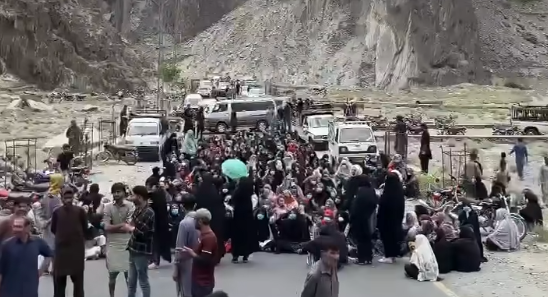
As the date approaches, markets in Muzaffarabad and other cities are expected to remain shut, and public transport is likely to be suspended. The JAAC has announced plans for peaceful sit-ins and rallies.
The international community, often focused on the Kashmir issue across the Line of Control, watches these internal dynamics within AJK with growing interest. The movement underscores the complex political and socio-economic realities within the territory.
The coming days are critical. The success of the shutdown and the government’s response will be a crucial test of power. Will the state address the grievances laid out in the 38 demands, or will Jammu Kashmir brace for a prolonged period of civil unrest?
One thing is clear: the voice from the streets, organized under the banner of the Joint Awami Action Committee, has become too loud to ignore.