

The streets of Muzaffarabad still remember. On 29 September, as the Jammu Kashmir Joint Awami Action Committee (JKJAAC) led protests demanding rights and reform, violence erupted. Those who had taken to the streets seeking justice were met with bullets. Their only crime was that they were Kashmiris demanding their rights.
The toll was devastating. In the aftermath, homes across Pakistan-administered Kashmir were plunged into mourning. Fathers did not return. Children were left orphaned. The streets that had echoed with calls for justice fell silent under the weight of grief and gunpowder.
In the wake of the violence, Islamabad moved to negotiate. Amir Muqam, representing federal (Pakistani) interests, sat at the table with the Action Committee. The talks yielded an agreement—a peace deal meant to address grievances and chart a path forward. The committee expressed hope; the government promised change.
Yet beneath the formal handshakes, a more complex reality was unfolding.
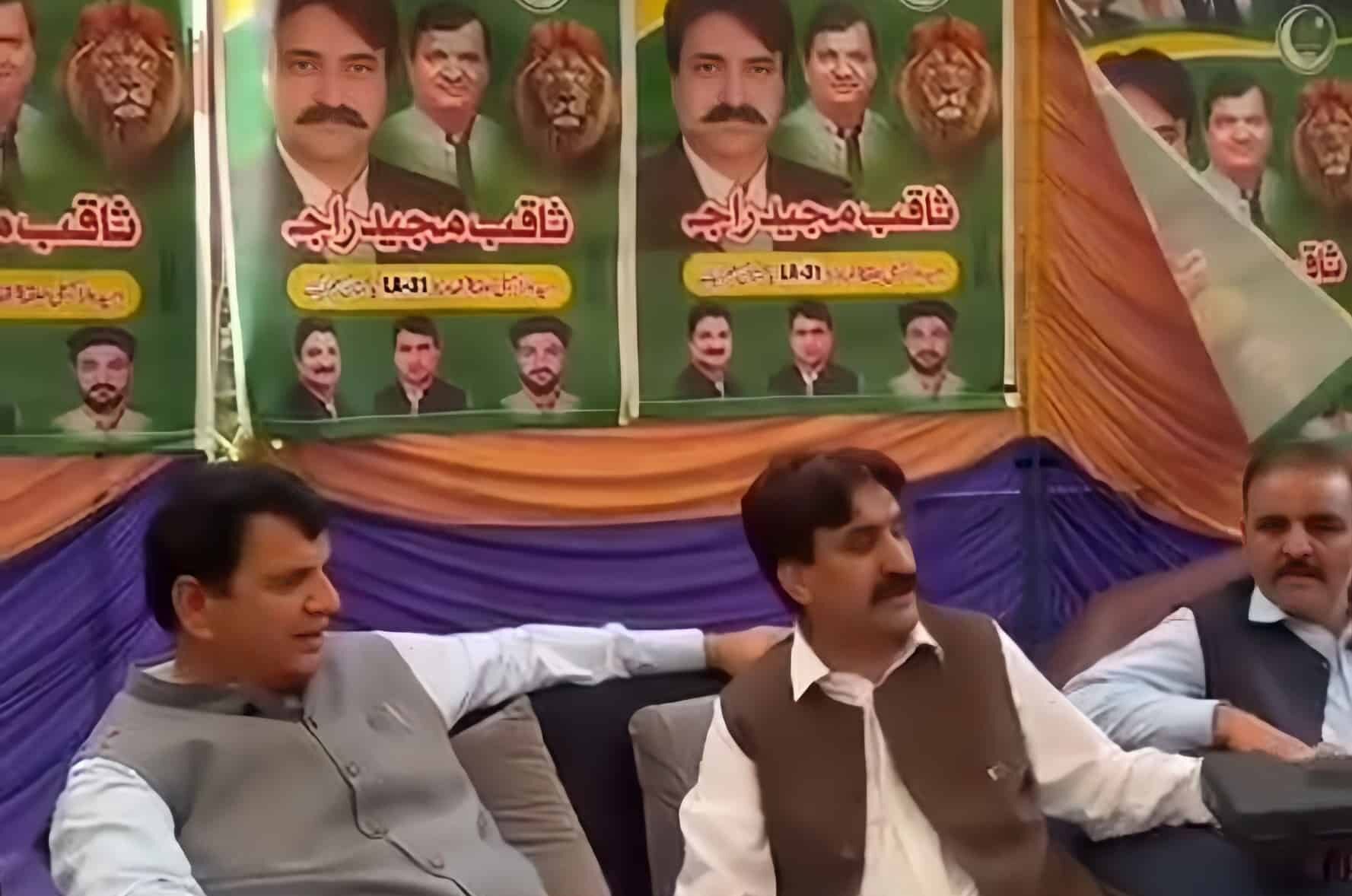
It was what happened next—away from the cameras and the formal protocol—that ignited fresh outrage. According to widespread local accounts, Amir Muqam, the same Pakistani federal minister who had negotiated with the Jammu Kashmir Joint Action Committee, subsequently visited the residence of the individual accused of firing on protesters on 29 September. The figure in question had allegedly opened fire on unarmed Kashmiris, yet now received a ministerial visit while victims’ families still awaited justice.
For the Action Committee and its supporters, the visit represented more than a political misstep—it symbolized a profound moral failure. Here was a government negotiator, ostensibly mediating to address the grievances of slain protesters, extending courtesy to a figure linked to the very violence that had claimed Kashmiri lives.
The optics were devastating. “Talks by day, betrayal by night,” became the refrain circulating across local discourse. Activists argued that if individuals implicated in protester deaths could receive ministerial visits, then the negotiation process itself was exposed as hollow—a temporary measure to pacify public anger while the underlying power structures remained intact.
The controversy cuts to the heart of a deeper crisis in Pakistan-administered Kashmir: the question of who truly speaks for the Kashmiri people.
When a federal minister engages with protest leaders while simultaneously courting figures linked to violence against those same protesters, it reinforces a pervasive local belief: that the political elite serves multiple masters, balancing public pacification with private allegiances to power. The accusation is not merely of political opportunism, but of moral duplicity—of treating Kashmiri blood as a negotiable commodity in a larger game of patronage.
The person accused of firing on the people has reportedly joined the Pakistan Muslim League-N without fear or consequence. No accountability, no inquiry, no shame. This has led many to question: Was this the promised accountability? Was this the pledge of justice?
When an accused can join a ruling party, then talking of negotiations becomes outright deception. It proves, critics argue, that the Action Committee talks were merely a drama—a political performance to cool public anger while the real game continued behind closed doors.
For the families of those who perished on 29 September, justice remains elusive. No senior official has been held accountable for the deaths. No transparent investigation has yielded visible results. The figures accused of involvement in the violence remain politically active, navigating the territory’s landscape with apparent impunity.
This pattern—where violence against Kashmiri protesters results in neither accountability nor ostracism—fuels a growing conviction among activists that the state protects its own while dispensing platitudes to the governed.
In Pakistan-administered Kashmir, governance has long been criticized as a facade of local autonomy over a reality of external control. In this context, the negotiations and their aftermath fit a familiar pattern: crisis, followed by cosmetic concession, followed by normalization without structural change.
The visit by Amir Muqam—if confirmed in its details—would not be an aberration but a revelation: a glimpse behind the curtain at how power actually operates, where the architects of violence and the brokers of peace share the same spaces, and where Kashmiri lives are weighed against political expediency.
The streets of Muzaffarabad are quiet now, but the silence is uneasy. The Action Committee has made its position clear: such duplicitous and hypocritical actions are utterly rejected. They declare that Kashmiri blood is not cheap.
The question that haunts the valleys is whether justice is possible within a framework that denies genuine self-determination. When negotiators shake hands with both the victims and the accused, when the blood of protesters becomes a footnote in political calculations, the answer seems foreordained.
Until structural contradictions are addressed—until Kashmiris can genuinely chart their own political future without interference, until accountability replaces impunity—the cycle will repeat. The talks will come, the promises will be made, and the betrayals, subtle or overt, will follow.
And in the homes where fathers did not return, where children ask why their brothers never came home, the wait for justice will continue—measured not in diplomatic timelines, but in the enduring grief of a people who have learned that in the politics of this disputed land, blood is cheaper than power.