
Taliban Imposes Conditional Permission for Women to Work, Mandating Marriage as a Prerequisite

Date:

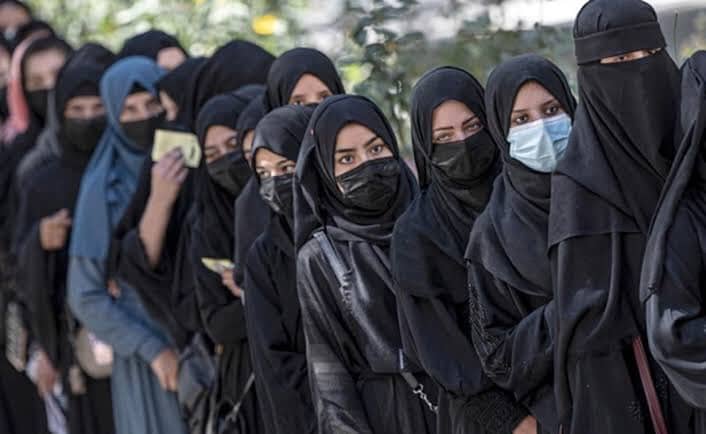
Muzaffarabad: In a recent development, the Taliban government in Afghanistan has granted conditional permission for women to engage in employment, with a significant caveat attached. According to reports from foreign media sources, the Taliban has outlined new conditions specifying that women seeking employment must be married.

Officials from the Taliban have asserted that it is deemed inappropriate for unmarried women to be part of the workforce. Under these new directives, unmarried women desiring employment, particularly in the health sector, are required to get married to retain their jobs.

This development comes on the heels of earlier restrictions imposed by the Taliban government, which included a ban on women visiting beauty salons. Salon owners were given a one-month window to wind up their businesses in compliance with the directive.
The Azadi Times – Inline Article Block
Support Independent Journalism

Help us expose the truth

The Azadi Times is funded by readers like you. No corporate sponsors. No government influence. Just fearless reporting.

2,400+ supporters
Support $5/mo

In addition to limiting women’s employment opportunities, the Taliban authorities have also banned girls from pursuing higher education and participating in relief work. These stringent measures contribute to the broader framework of restrictions placed on women under the Taliban regime.

A notable aspect of the recent conditions is the requirement for women to be married in order to work, a move that has sparked concerns about individual freedoms and raises questions about the inclusivity of the Taliban’s governance. The imposition of such conditions reflects the ongoing challenges faced by women in Afghanistan under the Taliban’s rule.

Adding to the restrictions, the Taliban has enforced a prohibition on women traveling by air without a male guardian, further curtailing their mobility and independence.

As these new conditions come into effect, there is heightened scrutiny and international concern regarding the implications for the rights and opportunities of Afghan women. The evolving situation underscores the complex dynamics at play and the impact of policy decisions on the lives and aspirations of women in Afghanistan.

Saba Anjum
Saba Anjumhttps://azaditimes.com
Saba Anjum is a senior producer at Azadi Times, hailing from Capital city of Pak-administered Kashmir's Muzaffarabad, Azad Kashmir. With a deep connection to her roots, Saba brings the latest updates and insightful articles about Muzaffarabad and surrounding regions. Her expertise in local news, culture, and current events provides readers with a comprehensive understanding of the area's developments. Read more of Saba Anjum's articles to stay informed on the latest happenings in Muzaffarabad and beyond.

LEAVE A REPLY

Please enter your comment!
Please enter your name here

EDITOR'S NOTEAzadi Times – Compact Patron Block
Editor's Note

The Truth They Hide

Do you want to know the truth that state-controlled media won't show you? Across the ceasefire line, millions of Kashmiri voices are being silenced. The Azadi Times brings those voices to you — powered by 2,400+ patrons who refuse to look away.

No Paywalls
Reader Funded
Award Winning
Join our Community From $5/month • Cancel anytime
Secure Payment
256-bit Encrypted

Related articles

New Mirpur City: How Mangla Dam Wiped Out an Old City and Built a New One — And Why It Still Defines Kashmir’s Diaspora

In the early 1960s, the old city of Mirpur began to disappear. The Jhelum River was rising, slowly...

Ranbir Penal Code: The Kashmir Law That Survived 87 Years — And Why It Still Matters

The Ranbir Penal Code (RPC) was the criminal law of Jammu and Kashmir for nearly nine decades —...

Ceiling Design in 2026: How the Fifth Wall Became the Focal Point of Modern Architecture

Walk into any newly constructed home or renovated commercial space in 2026, and the first thing that captures...

Flags of Kashmir: A Visual History of Division, Identity, and Sovereignty

In the disputed territory of Kashmir, a piece of cloth is never just a piece of cloth. It...